
Sumburgh based Ness Engineering is expanding its existing site with support from Highlands and Islands Enterprise. The investment will add workshop, storage and yard capacity, create new employment and apprenticeship opportunities, and improve productivity in a business providing practical engineering services across Shetland.
Ness Engineering is building a new facility at its Sumburgh site after securing up to £172,234 from Highlands and Islands Enterprise to support capital expansion and job creation.
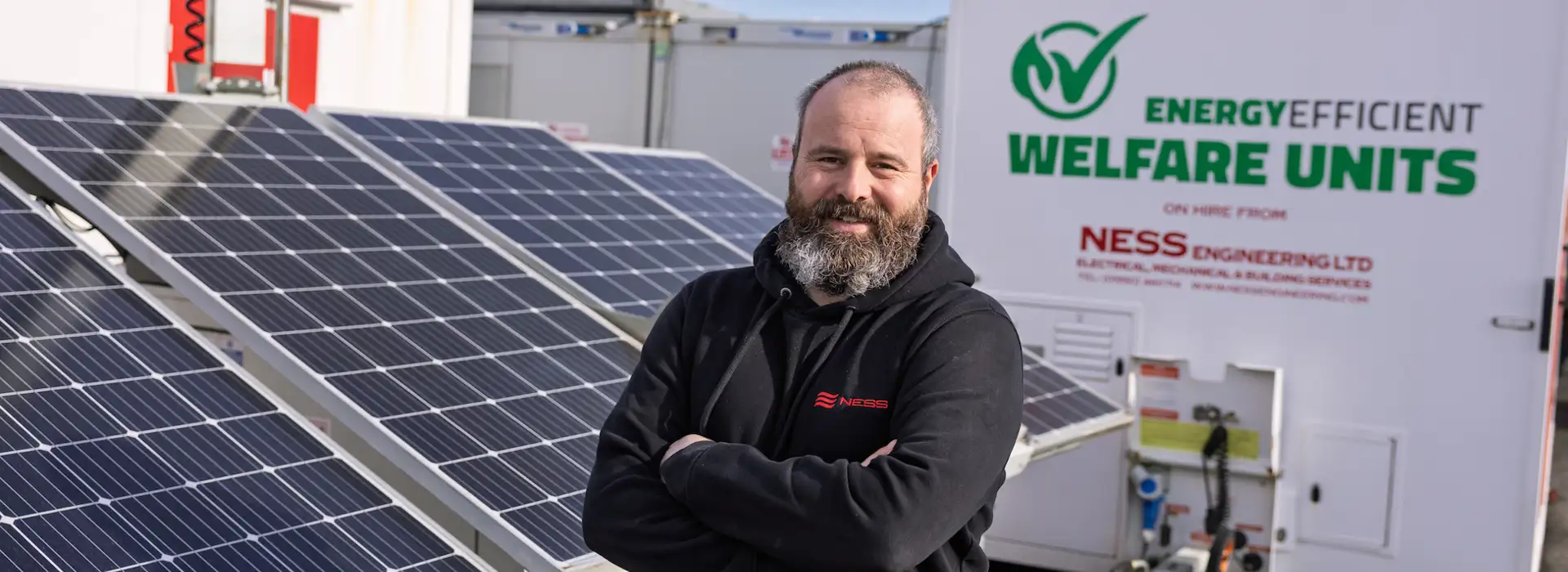
The Shetland firm, which employs 46 people, provides electrical, mechanical and general engineering services, alongside site support including welfare units, temporary lighting and on site power generation. The new building will add workshop, storage and yard space, support the company’s growing fleet of plant, equipment and welfare units, and free existing buildings for improved office accommodation.
The company has also received £18,580 from HIE for new software intended to improve productivity, reduce administrative pressure and integrate with its existing accountancy system.
The expansion matters because Shetland’s economy depends on locally based firms with the skills, equipment and people to keep essential work moving. Engineering capacity in the islands is not only a commercial matter. It supports construction, maintenance, energy, transport, public services and private clients in a place where distance, weather and logistics make outside support harder and more expensive.
Ness Engineering’s growth is a reminder that island economies are sustained by practical businesses as much as by headline industries. Shetland is often discussed through fishing, aquaculture, energy and tourism, but each of those sectors depends on a wider base of skilled services: electricians, mechanics, plant operators, welders, drivers, office staff, apprentices and managers able to respond locally.
The company describes itself as a Shetland based contractor delivering electrical, mechanical, building and waste management services across the Highlands and Islands. Its wider services include plant hire, welfare units, crane trucks, suction excavators, road sweepers and drainage solutions.
That range helps explain why additional space matters. A business with plant, equipment, welfare units and site support services needs more than offices. It needs yard capacity, storage, maintenance space and room to organise work efficiently. In an island setting, where supply chains and transport times can be more demanding, the ability to hold and manage equipment locally can be part of resilience.
The HIE funding is intended to support that next stage. Katrina Wiseman, area manager for HIE’s Shetland and Orkney team, said Ness Engineering plays an important role in the local economy, providing skilled jobs and essential services across Shetland. She said the investment would increase capacity, create employment opportunities and improve productivity.
HIE’s role is significant. The agency is the economic and community development body for the Highlands and Islands, working with businesses, communities and social enterprises across a region extending from Shetland to Argyll and from the Outer Hebrides to Moray. Its support includes funding, advice, property, innovation and productivity assistance.
For Shetland, support of this kind is most useful when it strengthens local capability rather than simply subsidising growth for its own sake. Ness Engineering’s expansion appears to do that by adding capacity to an existing island firm, while also creating a new role and further apprenticeship opportunities. Shetland News reported that the expansion is expected to create one new role and two additional apprentice positions.
The apprenticeship element should not be overlooked. Skills retention is one of the central economic questions for island communities. Young people need routes into skilled work without leaving home permanently, and local firms need a pipeline of trained staff who understand both the trade and the geography in which it is carried out. Ness Engineering’s own careers material shows recent engagement with apprenticeships, including first stage electrical apprentices taking part in the North of Scotland Apprentice of the Year competition in 2025.
The company has also received previous HIE support connected to sustainable services. In 2023, HIE backed a Ness Engineering project to invest in zero emission welfare units, with the aim of reducing carbon emissions in its operations and trialling the technology in Shetland conditions.
That earlier work gives useful context to the current expansion. Ness Engineering is not only adding space. It has been investing in equipment, welfare unit services and operational improvements that reflect wider changes in construction, energy and site management. The new software support is part of the same pattern: a practical business using digital systems to manage growth more efficiently.
Alistair Leslie, managing director of Ness Engineering, said the support from HIE had helped the company invest in its future and strengthen operations in Shetland. He said the new workshop and yard facilities would provide the space and capacity needed to meet growing demand, while the software would streamline administrative processes and allow staff to focus more time on higher value tasks.
The public interest is clear. A locally based engineering firm is receiving public agency support to expand capacity, improve productivity and create skilled employment in one of Scotland’s most remote council areas. The sums involved are modest beside large national infrastructure announcements, but their local effect may be more direct.
Shetland’s economy depends on firms that can do essential work close to where it is needed. Ness Engineering’s expansion is therefore not only a business development. It is part of the practical infrastructure that allows island communities and industries to keep building, repairing and operating.