
ScottishPower Renewables has consent for a wind, solar and battery project near Mey after a public inquiry. But in north east Caithness, the decision sits inside a much older landscape.
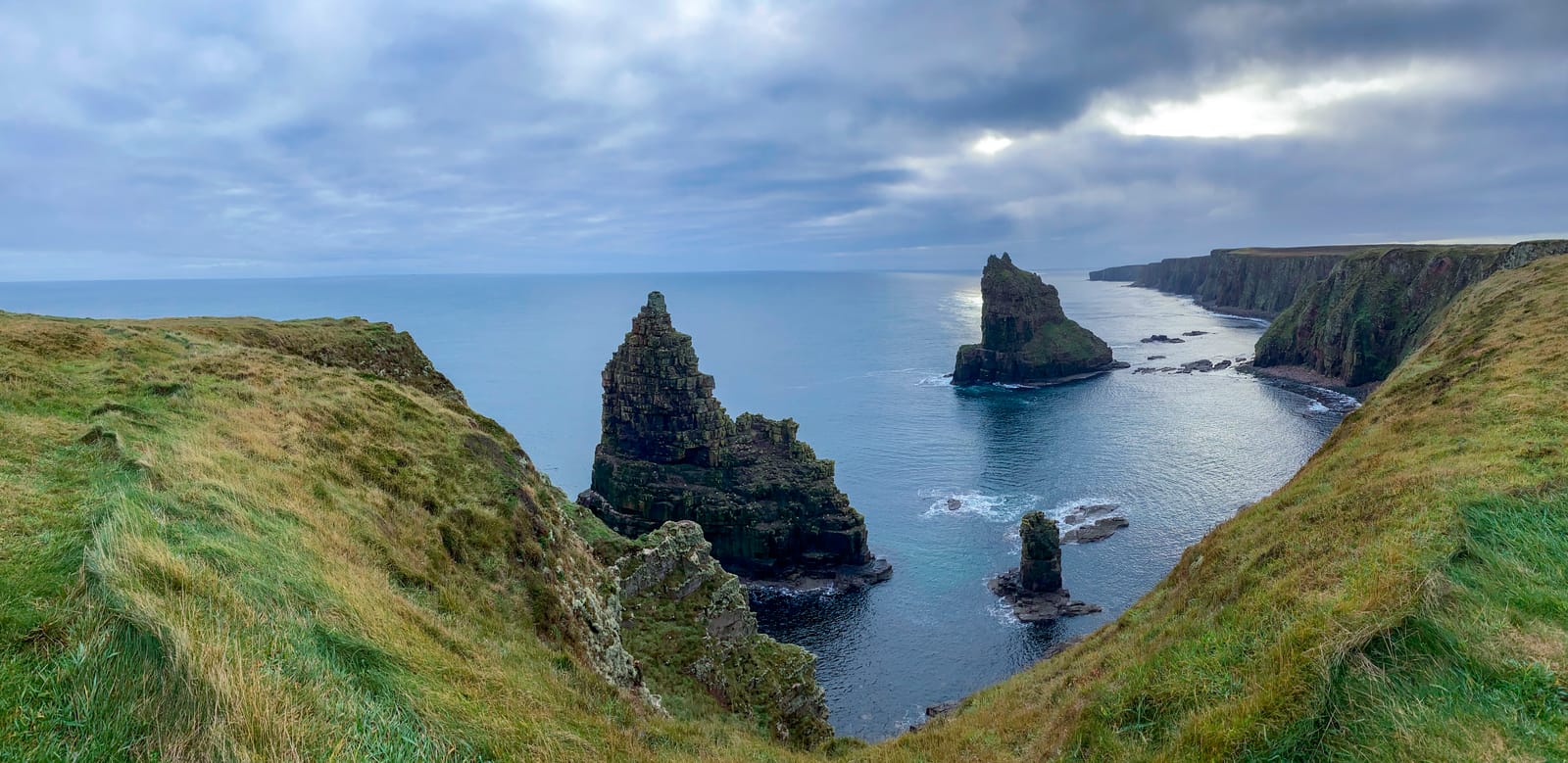
North east Caithness has never been empty country. The land around Mey and Canisbay holds a long history: prehistoric remains, coastal farms, old parish life, views across the Pentland Firth, and the nearby Castle of Mey, one of the most recognisable historic places in Scotland’s far north. It is now set to host some of the most advanced renewables technology.
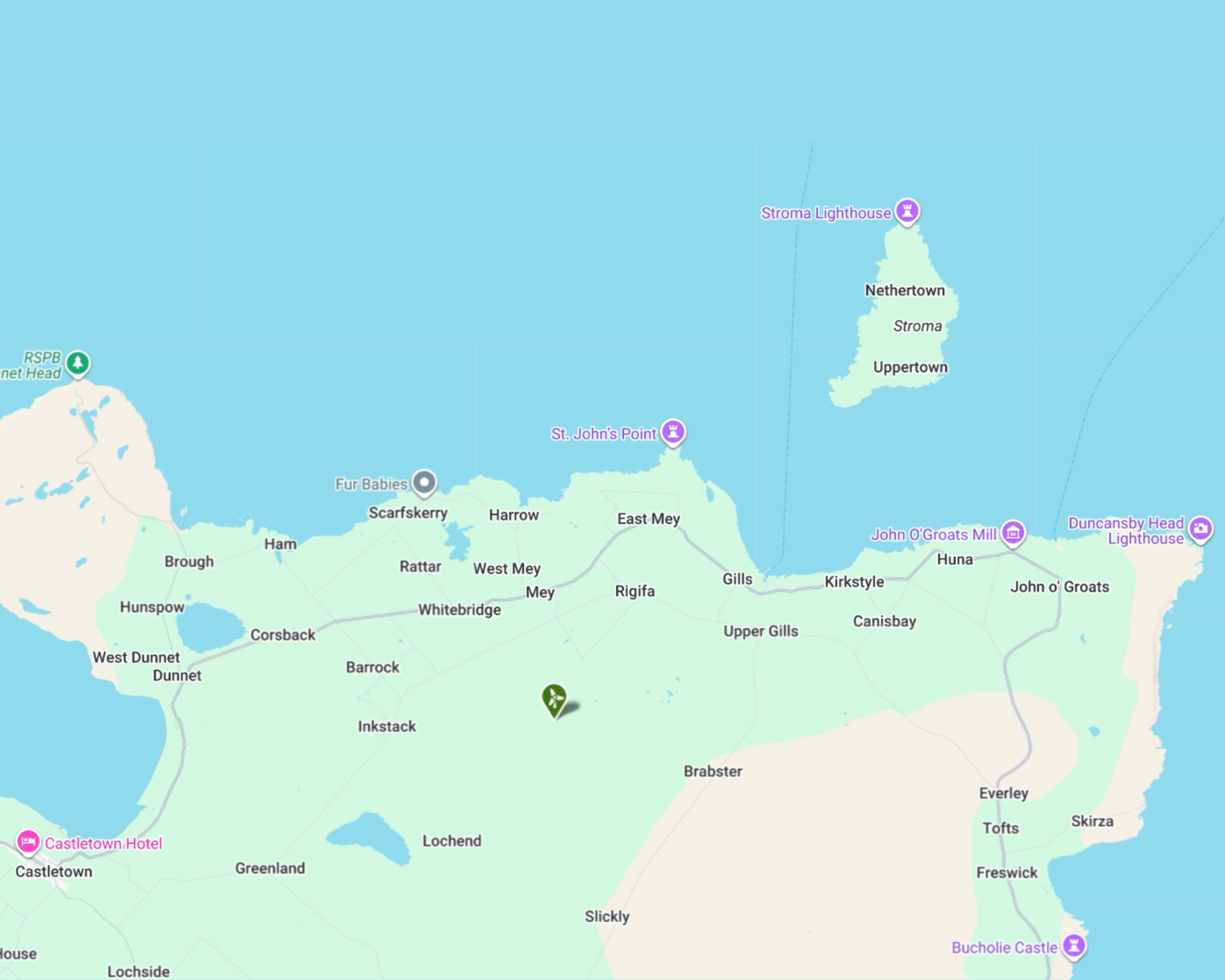
ScottishPower Renewables’ Hollandmey Renewable Energy Development, around 8 kilometres south west of John o’ Groats and 16 kilometres east of Thurso, received consent from Scottish Ministers on 16 September 2024 after a Public Local Inquiry held in October 2023. The project consists of 10 wind turbines up to 149.9 metres to blade tip, around 50 megawatts of wind generation, about 15 megawatts of ground mounted solar arrays and approximately 15 megawatts of battery energy storage.
Hollandmey became one of those planning cases in which Scotland’s clean energy ambition met the particular weight of a place. The project was not outright refused by ministers. But neither was it just waved through as a minor rural development. Highland Council raised an objection after the planning officer’s report was circulated to members in November 2022, and a hearing session later took place in October 2023 covering policy, landscape and visual impact before Scottish Ministers made the final decision.
That process matters because it shows that the dispute was not simply local grumbling, and issues were serious enough to move into the machinery of national consent.
ScottishPower’s own project history shows that the application was submitted in November 2021, referred to the Scottish Government’s Planning and Environmental Appeals Division in March 2023, and considered at a Public Local Inquiry covering landscape and visual impact assessment, energy policy and planning conditions. The development reached approval in September 2024.
After the bumpy start, locals are now asking when construction will begin.
No confirmed construction start date appears to have been publicly announced. The project documents and public material support the conclusion that Hollandmey has moved beyond consent and remains in the pre construction phase, but a declared start date should not be inferred without a formal company or government statement. Global Energy Monitor describes Hollandmey as pre construction, while the consent records confirm the approval but not a build date.
The scheme itself is part of a wider shift in Scottish renewable development. More than a wind farm, it will combine turbines, solar generation and battery storage. Hollandmey reflects that energy projects are increasingly moving toward a system of generation, storage and grid management rather than separate pieces. The Energy Consents Unit describes the proposal as renewable energy with wind, solar and battery storage.
For its supporters, that combination strengthens the case. Wind output varies, solar output varies, and storage can help manage power across time. In a country trying to reduce emissions and expand clean generation, such developments are presented as practical infrastructure rather than symbolic gestures.
For its opponents and concerned neighbours, the same facts can look different. Ten turbines of nearly 150 metres are not discreet. Solar arrays, access tracks, borrow pits, battery storage, masts and associated infrastructure alter land in ways that do not vanish behind planning language. Highland Council’s major development update described the proposal as including turbines, ground mounted solar arrays, battery energy storage, access tracks, a permanent met mast and LiDAR, temporary met masts, borrow pits and associated infrastructure.
The heart of the matter is not whether Scotland needs renewable energy. It does. The question is how that need is carried by individual communities, especially in places where landscape is part of identity, and livelihood.
The Castle of Mey gives the case its sharpest historical edge. The castle, formerly known as Barrogill Castle, is associated with the Sinclair family and later became closely identified with Queen Elizabeth The Queen Mother, who acquired it in 1952 and restored it as a private Scottish home. It remains one of the north coast’s most recognisable historic and visitor landmarks. The project’s own published materials include additional information relating to Castle of Mey mitigation planting, which is itself evidence that the castle’s setting formed part of the planning conversation.
The presence of the castle does not give the landscape a veto over all change. Scotland is not a museum, and Caithness is not a backdrop for sentiment. People live there, work there, farm there, travel there and need economic opportunity there. But heritage does require seriousness. It asks that development be judged by what is being placed into public view and what will remain there long after consent.
Scotland needs clean energy. The Highlands need investment. The electricity system needs more renewable generation and storage. At the same time, rural communities are entitled to ask whether they are becoming the visible working floor of a transition whose benefits are often described nationally while its physical consequences are experienced locally.
Hollandmey also sits within a broader Caithness pattern. The far north has seen repeated energy proposals, from wind farms and grid works to battery storage and other associated infrastructure. A single project may be assessed on its own merits, but residents experience cumulative change in the round: one skyline, one road network, one sense of place, one community meeting after another.
That is why the public inquiry process was important. It gave formal space to issues that cannot be resolved by saying renewable energy is good and therefore every proposal must be good in the same way. The planning system had to consider policy, landscape and visual impact, and ministers ultimately granted consent. Approval, however, does not end the public interest.
The questions are practical now. When will construction begin? How will traffic be managed? How will conditions be enforced? How will local communities be kept informed? What visible mitigation will take place? What benefits will be felt locally? What will happen if construction assumptions slip? Those questions should be answered plainly before heavy work begins.
In Caithness, the future is not being built on blank ground. It is being built on a place that already has a story – one that will continue to belong to the people of Caithness.