
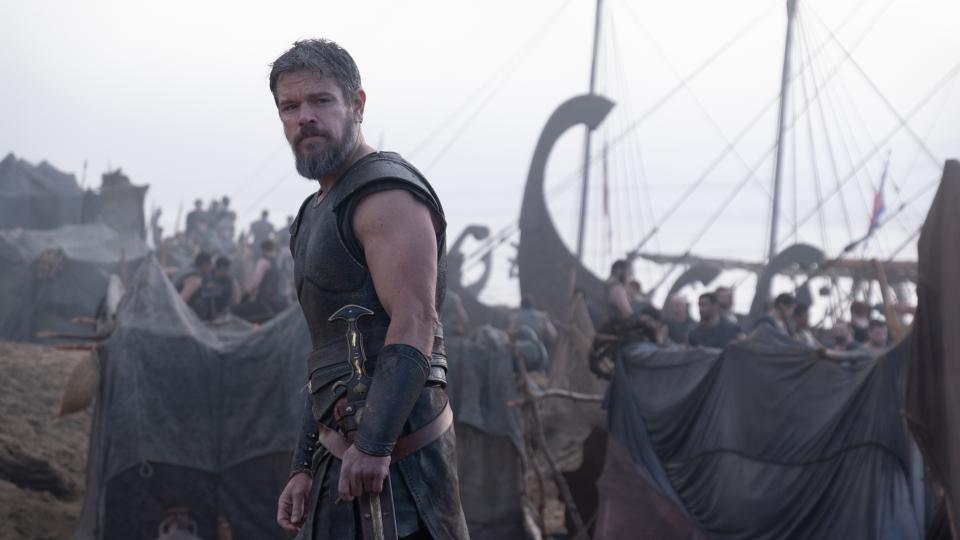
Findlater Castle, Sunnyside Beach and Culbin appear in Christopher Nolan’s The Odyssey, which opened with worldwide ticket sales of almost $264 million. Moray and Aberdeenshire are now trying to turn brief screen exposure into visits, local spending and a longer place in Scotland’s film economy.
A ruined Scottish castle above the Moray Firth has become a mythical island in one of the largest cinema releases of the year.
Findlater Castle and Sunnyside Beach in Aberdeenshire, together with Culbin Forest and Culbin Sands in Moray, appear in Christopher Nolan’s The Odyssey, released internationally on 17 July.
“The release of The Odyssey marks a truly proud moment for Aberdeenshire and the wider north-east of Scotland. Audiences across the world will now experience the breathtaking beauty of our coastline, with the dramatic cliffs, seascapes and iconic ruins of Findlater Castle taking centre stage in one of the most anticipated cinematic events of recent years,” said Cllr Judy Whyte, Provost of Aberdeenshire.
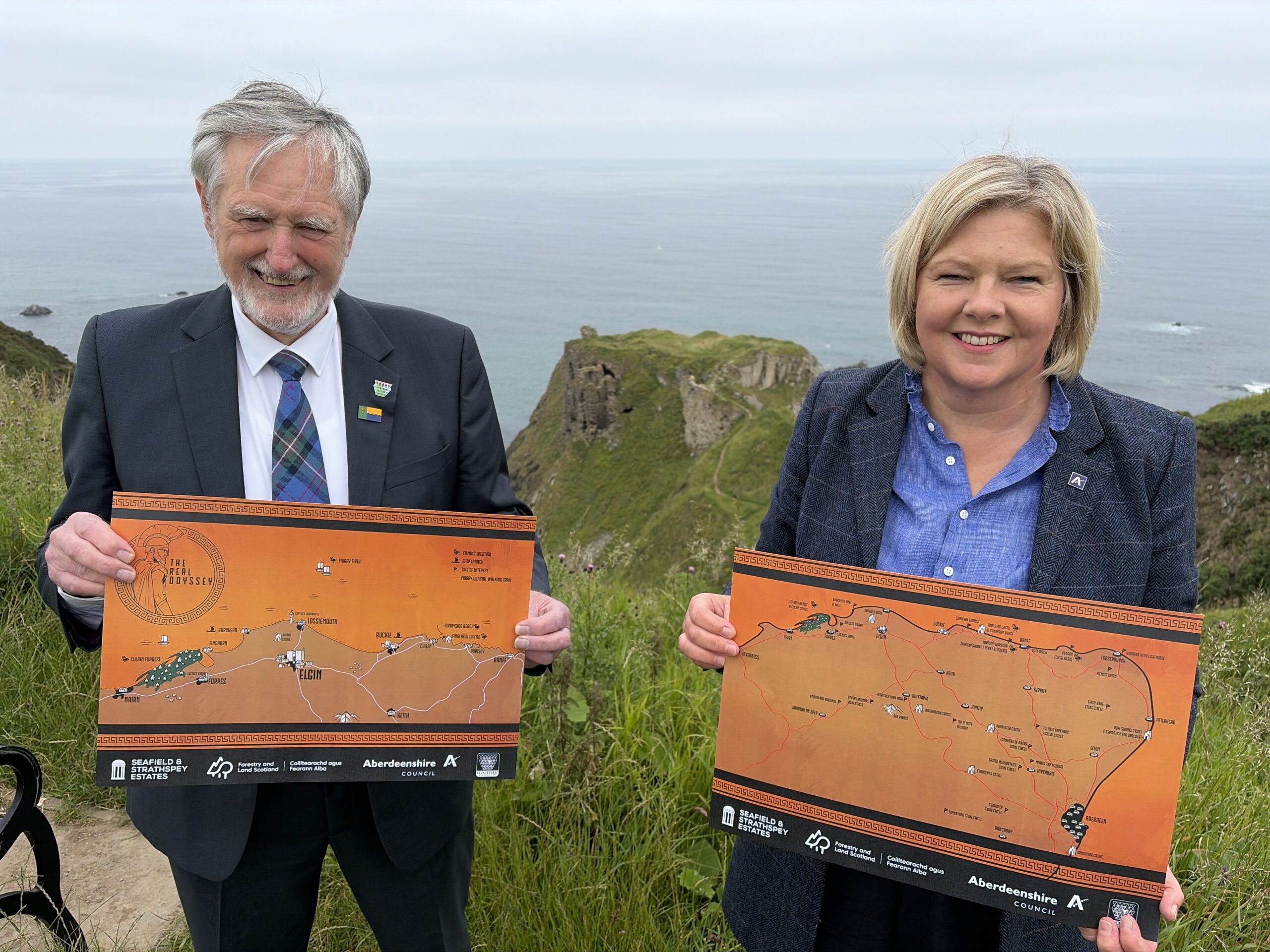
“We hope that audiences who fall in love with the landscapes they see on screen will be inspired to visit North East Scotland for themselves, experience our world-class natural environment and heritage, and enjoy the warm welcome that awaits them here,” said Cllr John Cowe, Civic Leader of Moray Council.
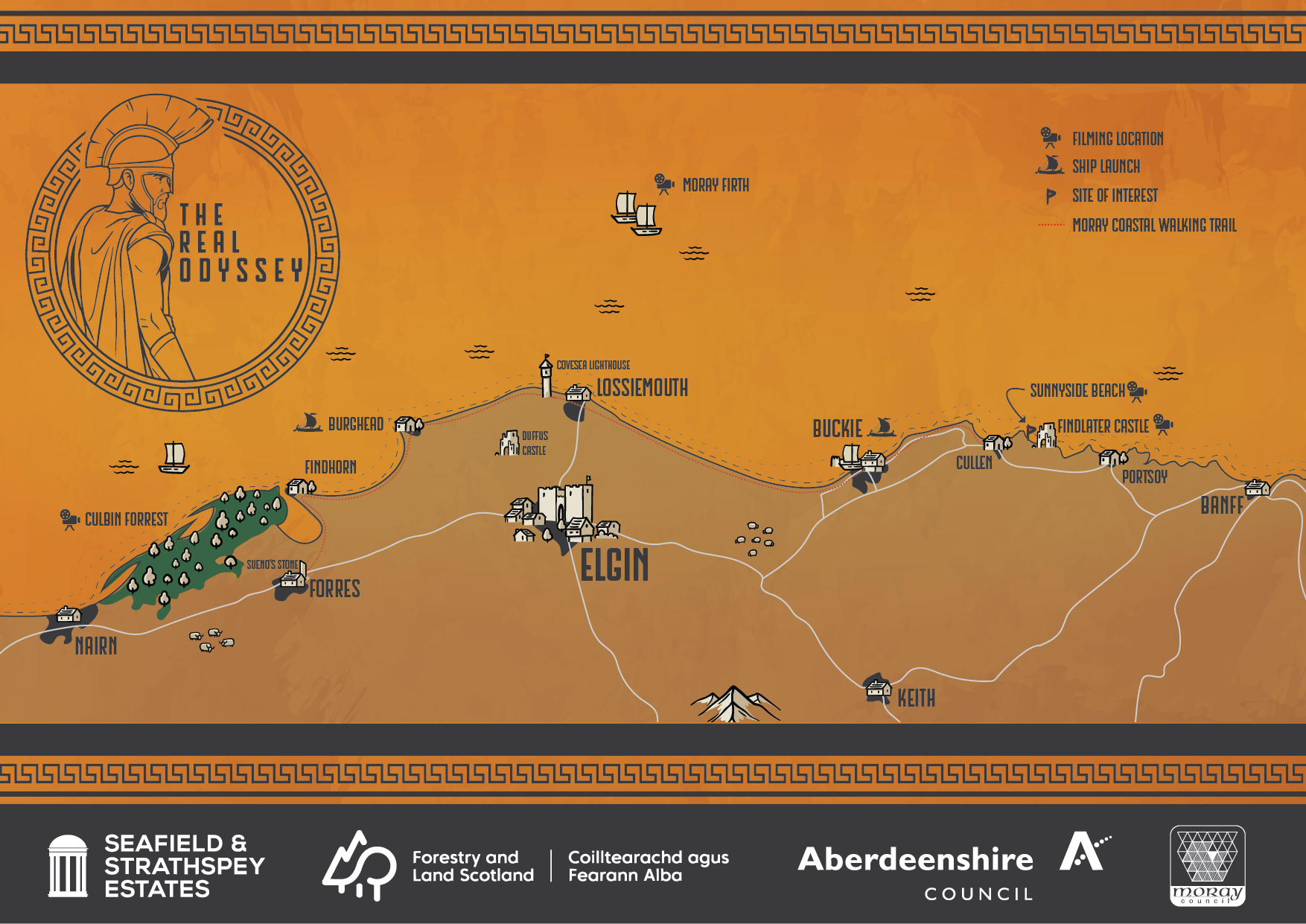
The locations were used to represent parts of the ancient world through which Odysseus travels during his long return from the Trojan War. Findlater Castle provided the setting for Aeaea, the island associated with Circe, while Sunnyside Beach and Culbin were used for scenes in which Odysseus and his crew arrive on shore and move inland. Buckie and Burghead harbours also supported the production’s logistical work.
Moray and Aberdeenshire councils have responded by producing a visitor map linking the filming locations with coastal communities, heritage attractions, walking routes and archaeological sites across the north-east.
The opportunity is considerable. Universal Pictures reported that The Odyssey opened at number one worldwide with ticket sales of approximately $263.8 million, around £197 million, during its first weekend. The studio described it as Nolan’s largest global opening, ahead of the initial unadjusted totals for The Dark Knight Rises, The Dark Knight and Oppenheimer.
The film opened in 73 international markets and was shown at more than 12,700 locations on 25,600 screens. It earned an estimated $123.5 million in North America and $140.3 million internationally, according to Universal’s opening figures.
That does not mean every audience member will recognise the Scottish coast or know where to find it. It does mean that landscapes in Moray and Aberdeenshire have been placed before an audience on a scale far beyond the reach of an ordinary regional tourism campaign.
Scotland presented at IMAX scale
Nolan described Homer’s epic as “not a story – it’s the story” when he presented footage to cinema owners at CinemaCon in Las Vegas earlier this year.
He said filming The Odyssey entirely with IMAX cameras had been his longest-held ambition. The equipment was used for intimate dialogue as well as ships, battles and large exterior scenes, making the physical landscape part of the film’s intended spectacle.
IMAX says the production used approximately 2.1 million feet of film. It was the first complete feature filmed using IMAX film cameras, including a quieter new-generation camera and enclosure that allowed synchronised dialogue to be recorded during scenes shot in the large format.
IMAX cinemas accounted for $52 million of the opening weekend, around 20% of the film’s global total. The company said the release set new opening records across comparable international markets, with $29.6 million earned from 444 IMAX screens in North America and $22.2 million from 441 international screens.
For the north-east, this is more than an incidental credit at the end of a film. The cliffs, beaches and woods were photographed for presentation on some of the world’s largest cinema screens.
Matt Damon plays Odysseus, with Anne Hathaway as Penelope and Tom Holland as their son Telemachus. The cast also includes Charlize Theron, Zendaya, Robert Pattinson and Lupita Nyong’o. Nolan wrote and directed the film and produced it with Emma Thomas.
Findlater’s history is separate from the myth
The visitor promotion identifies Findlater Castle with Aeaea, but the ruin has its own history rooted in medieval Scotland.
The castle occupies a high, detached rock connected to the mainland by a narrow approach. Archaeological records describe defensive ditches, ramparts and probable drawbridges guarding an extensive fortress whose buildings once covered much of the promontory. Only parts of the vaulted structure and high ruined walls survive.
The site was held by the St Clair family from the reign of David II and later passed to the Ogilvies, who became Earls of Findlater. It is protected as a scheduled monument of national importance.
Its exposed position and isolation made it convincing as a mythical island, but it is not a conventional managed visitor attraction. The surviving structures are ruinous, the approach crosses uneven coastal ground and the surrounding cliffs require care.
That presents the councils with a practical problem. The image likely to attract visitors is also the location least able to absorb large, unmanaged numbers without pressure on paths, parking and the historic fabric.
Economic benefit may therefore depend on persuading film visitors to spend time in nearby communities such as Cullen, Portsoy, Sandend and Banff rather than treating the castle as a single photograph-and-depart stop.
Culbin carries a different Scottish story
Culbin supplied the production with a combination of forest, dunes, beach and open coast. The landscape extends for more than eight miles between the Nairn area and Findhorn Bay and contains an extensive network of paths and forest tracks.
The modern forest conceals a landscape altered repeatedly by people, wind and sea.
The councils’ promotion refers to lost settlements and shifting sand, while Forestry and Land Scotland presents Culbin as an ever-changing coastline in which woodland now grows across large dune systems. The forest is managed for environmental value, timber production and public recreation.
The area also retains evidence of wartime defence. Culbin formed part of the coastal system intended to hinder a German invasion during the Second World War. Anti-glider poles and other defensive remains were placed along the shore, and traces can still be seen at Culbin Sands.
Its environmental value is substantial. Culbin’s shoreline includes saltmarsh, mudflats, sand, shingle and feeding areas used by wading and water birds. Most of the shoreline between the forest and the low-water mark is managed as an RSPB reserve, while Culbin Sands, Culbin Forest and Findhorn Bay form a designated Site of Special Scientific Interest.
The qualities that made Culbin useful to the film — open shore, apparent remoteness and dense woodland — also make visitor management necessary. Increased attention should be directed towards established car parks and paths rather than encouraging uncontrolled access to sensitive dunes and bird habitat.
Screen tourism has measurable value in Scotland
The councils expect the film to bring longer-term interest in the north-east. There is evidence that cinema and television can influence where visitors travel.
VisitScotland’s 2023 survey found that 19% of visitors said film, television or literature had helped inspire their decision to visit Scotland. The proportion rose to 36% among European visitors and 37% among visitors from long-haul markets.
Research commissioned by Screen Scotland estimated that Scotland received 1.14 million overnight screen tourists in 2023. Those visitors spent £787 million in total, of which £161.4 million was attributed directly to screen-tourism activity in Scotland. The research calculated a direct economic contribution of £89.4 million and support for 2,260 full-time-equivalent jobs.
Those national figures show the size of the market. They are not a forecast for Moray or Aberdeenshire, and they do not demonstrate that The Odyssey will produce comparable local results.
Long-term benefit depends on whether viewers know that the places are in Scotland, whether the film gives them enough reason to travel, and whether local businesses can convert interest into accommodation bookings, meals, tours, transport and visits to other attractions.
Screen tourism also has a long life when the connection becomes established. VisitScotland continues to record visitors influenced by films such as Local Hero, Braveheart and The Wicker Man decades after their release.
The north-east already has experience of that effect. Pennan’s association with Local Hero remains part of its visitor identity more than 40 years after the film was released. Aberdeenshire held anniversary screenings and events in 2023, with the village’s red telephone box continuing to attract visitors.
Whether The Odyssey creates a comparable legacy will depend on how clearly the Scottish locations are identified and how well the new interest is sustained after the initial release campaign ends.
Aberdeenshire Council said hundreds of cast, crew and support workers stayed or worked in the area, bringing business to hotels, restaurants, shops and transport companies.
WATCH THE TRAILER