
Scottish ministers have approved two offshore wind farms with a combined anticipated capacity of 2GW. The decision removes a major regulatory barrier, but construction still depends on a seabird compensation plan, a UK electricity contract, final investment approval, finance and workable transmission charges.
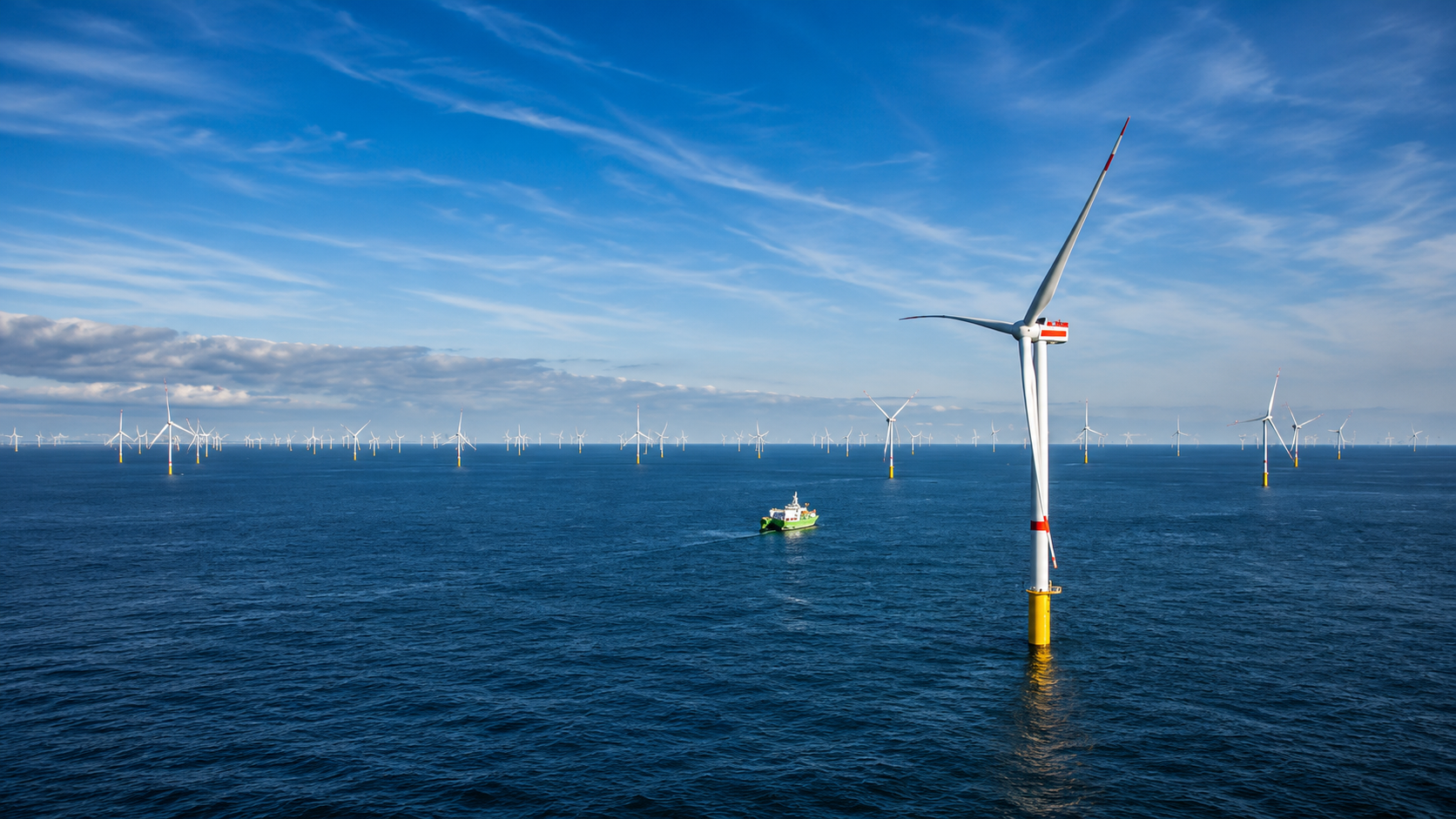
The Caledonia offshore wind development has secured consent for up to 140 turbines in the outer Moray Firth, although permission does not guarantee that the project will be built.
Scottish ministers granted Section 36 consents and marine licences for Caledonia North and Caledonia South on 17 July. Together, the two areas cover approximately 429 square kilometres and have an anticipated generating capacity of 2GW. Ocean Winds estimates that their annual output could be equivalent to the average electricity use of around two million homes.
The household figure is an annual energy comparison rather than a promise of continuous electricity for two million identified properties. Wind production varies, and electricity generated in the Moray Firth would enter the wider transmission system alongside power from other sources.
Caledonia North would be a fixed-foundation wind farm with an anticipated capacity of 1GW. It has consent for up to 77 turbines and would lie approximately 28 kilometres from the Wick coastline and 48 kilometres from Banff.
Caledonia South would also have an anticipated capacity of 1GW but may combine fixed and floating foundations. Its consent permits up to 78 turbines, no more than 39 of which may be floating. It would lie approximately 45 kilometres from Wick and 35 kilometres from Banff. Although the individual limits add up to 155 turbines, the combined development cannot exceed 140.
The application envelope permits turbines with a maximum tip height of 355 metres, up to four offshore substation platforms and four export cables. Those cables are intended to come ashore at Stake Ness on the Aberdeenshire coast. The final turbine number, dimensions and foundation choices will depend on detailed engineering and commercial decisions.
Consent is not a construction decision
Ocean Winds describes the consent as the final major regulatory hurdle, following Aberdeenshire Council’s approval of the associated onshore infrastructure. The company expects offshore construction to begin around 2030, subject to the project securing a Contract for Difference and then reaching a final investment decision.
A Contract for Difference is a long-term agreement between a low-carbon generator and the government-owned Low Carbon Contracts Company. It protects a project from wholesale-price volatility by making payments around an agreed strike price, while requiring the generator to return money when the market reference price rises above that level. The scheme is the UK Government’s principal mechanism for supporting new low-carbon electricity generation.
Obtaining a contract would provide greater revenue certainty, but it would not itself be a final commitment to build. Ocean Winds must still complete engineering and procurement work, arrange finance and decide that the expected revenue justifies the capital expenditure.
Caledonia also currently holds seabed rights through the ScotWind option process rather than a full operating lease. Crown Estate Scotland says a full lease enabling construction and operation is offered after a developer has secured the necessary consents, licences and finance.
The developer’s current timetable places onshore construction from 2028, offshore work around 2029–30 and operation in 2031–32. Those dates remain forecasts rather than guaranteed delivery dates.
Transmission charges remain a commercial concern
Ocean Winds has publicly identified transmission charges as a critical remaining issue for Caledonia.
Adam Morrison, the company’s UK country manager, said uncertainty over those charges would help determine whether the project could proceed to final investment approval as planned. He called for changes to Transmission Network Use of System charging, commonly known as TNUoS.
TNUoS charges vary by location and are intended to reflect the effect that generators and consumers have on the transmission network. Projects in northern Scotland can face higher generator charges because they are distant from the largest centres of electricity demand.
The argument from Scottish generators is that the system may discourage renewable projects in the parts of Britain with some of the strongest wind resources. The counterargument is that transmission has a real cost: electricity generated in the Moray Firth must be carried through substantial offshore and onshore infrastructure before it reaches consumers.
Consent answers whether the project may be developed within the approved area. It does not determine whether Ocean Winds will consider the eventual cost of generating and transmitting the electricity commercially workable.
£1.7 billion is not money already spent
The Scottish Government said Ocean Winds’ latest Supply Chain Development Statement commits the company to £1.7 billion of expenditure in Scotland across Caledonia North and South. The potential work includes engineering, manufacturing, foundations, electrical equipment, ports, vessels, construction services and long-term operations.
That figure should not be reported as money already invested or as signed contracts with Scottish businesses.
Crown Estate Scotland describes Supply Chain Development Statements as records of anticipated economic activity. Developers update them as project timing, design, technology and supply-chain availability become clearer. The latest portfolio data also acknowledges continuing obstacles including grid delays, supply-chain bottlenecks, rising costs and shortages of suitable skills.
The £1.7 billion is therefore a substantial commitment within the ScotWind leasing process, but its eventual value to Scotland will depend on procurement decisions. Scottish companies and ports must have the capacity, finance, workforce and competitive offers required when contracts are awarded.
Ocean Winds says Caledonia, Moray East and Moray West together would take its long-term operational workforce in the Moray Firth to more than 200 skilled roles. That is a combined figure across the three developments, not 200 new permanent jobs created solely by Caledonia.
Construction would involve a larger temporary workforce, but the government announcement and current public project information do not give a confirmed number of Scottish construction jobs or identify where all of those workers would be based.
The useful measure will be how much of the stated expenditure becomes firm orders with Scottish suppliers, how much work passes through Scottish ports and fabrication facilities, and how many posts remain after construction ends.
Seabird compensation remains unresolved
The consent requires Ocean Winds to prepare a detailed compensation plan addressing adverse effects on seabirds. Scottish ministers must approve that plan before Caledonia North and South proceed.
The condition means the ecological question has not ended with the consent decision. Ocean Winds must minimise environmental harm and provide compensatory measures for residual effects that cannot be dealt with through avoidance and mitigation alone.
Scottish offshore-wind guidance says compensatory measures should ordinarily be delivered before the predicted impact where possible. Any departure from that approach must be justified, supported by evidence and consistent with the precautionary principle.
The government’s announcement does not identify the final Caledonia measures. Their adequacy will depend on the species affected, the evidence connecting each measure to the predicted harm, the timing of delivery and the arrangements for monitoring whether the compensation works.
The plan should therefore be treated as a substantive condition of development rather than paperwork following an otherwise complete approval.
Fishing and other marine users
The project would also occupy an area used by fishing vessels, commercial shipping and other marine interests.
The Scottish Government said it would continue working with Ocean Winds, fishing organisations and conservation interests to minimise effects on the marine environment and other sea users.
Caledonia’s environmental assessment proposes a Fisheries Management and Mitigation Strategy covering continuing liaison during construction and operation. It also includes proposed navigation measures, including lighting, marking and minimum blade-clearance requirements.
Those arrangements may reduce disruption, but they do not remove competition for marine space. The eventual construction programme, cable routes, safety zones and vessel movements will determine how the effects are experienced by individual fishing businesses and other users.
Floating wind remains an option
The Scottish Government has highlighted Caledonia South as an opportunity to advance Scotland’s floating-wind industry.
The consent allows no more than 39 floating turbines. It does not require Ocean Winds to install that number, or any particular balance between floating and fixed foundations.
The final design will depend on seabed conditions, engineering, turbine selection, supply-chain capacity and cost. Floating wind may create opportunities for Scottish ports, anchor manufacturers, fabricators and marine contractors, particularly where experience can be transferred from offshore oil and gas.
Commercial-scale floating wind remains less mature and generally more expensive than conventional fixed-bottom development. Permission to deploy floating turbines is therefore an industrial opportunity, not a guarantee that the option will be used at its maximum approved scale or that the equipment will be manufactured in Scotland.
Sources
https://www.gov.scot/news/offshore-wind-farms-approved/
https://www.caledoniaoffshorewind.com/the-project/faq/
https://www.caledoniaoffshorewind.com/caledonia-offshore-wind-farm-receives-full-onshore-consent/
https://www.caledoniaoffshorewind.com/the-project/public-engagement/400kv/
https://www.crownestatescotland.com/supply-chain-information
https://www.gov.uk/government/collections/contracts-for-difference