
Newly published government minutes confirm that Scotland’s Chief Constable is actively considering live facial recognition, including its possible use against football disorder. The technology could allow police to identify individuals automatically through cameras in public places, but would also involve scanning people suspected of no offence. No deployment has been authorised, and the legal and operational safeguards remain unresolved.
Police Scotland is actively considering introducing live facial recognition technology, six years after a Scottish Parliament committee concluded that the technology then available was not fit for use by the country’s police service. The renewed consideration is confirmed in minutes of an August meeting between Chief Constable Jo Farrell and Justice Secretary Neil Gray, published by the Scottish Government on 12 October 2026.
The discussion followed calls from Scotland’s Chief Inspector of Constabulary for facial recognition to be examined as a means of identifying people banned from football matches and preventing serious disorder. It also reflects wider interest in technology capable of locating wanted individuals and identifying potential threats in crowded public places.
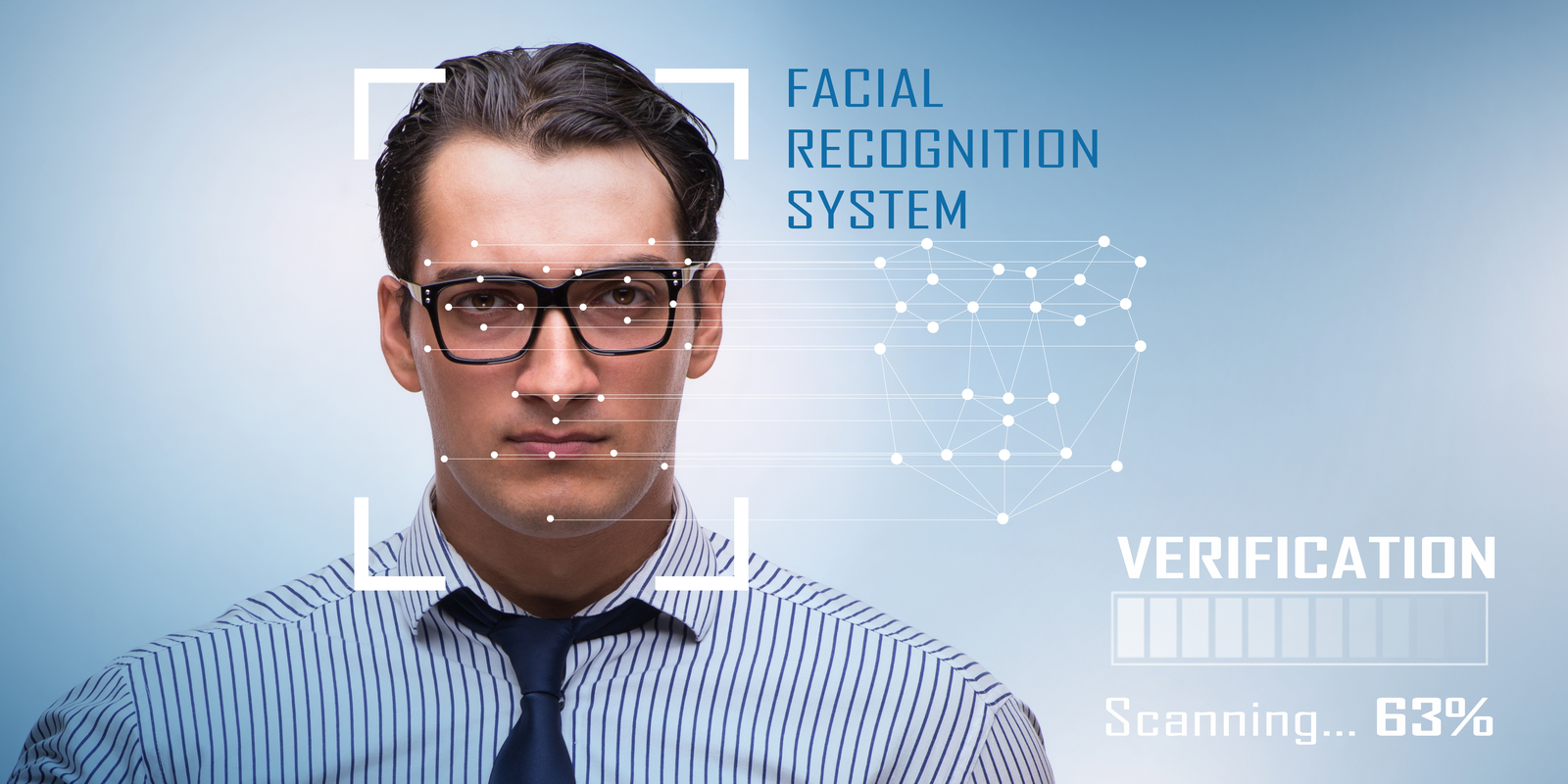
The implications extend far beyond football. Live facial recognition would allow cameras to analyse the faces of people passing through a designated area and compare them automatically against a police watchlist. Although the intended targets might be individuals wanted for serious offences or subject to court orders, the technology would also process the facial characteristics of other people who entered the cameras’ field of view.
That capability raises questions about who could be placed on a watchlist, which public spaces might be monitored, what happens when someone is incorrectly identified and what safeguards would prevent surveillance being extended beyond its original purpose.
The Chief Constable told the Justice Secretary on 20 August that Police Scotland was giving the technology active consideration. She referred to its use by other UK police forces and Border Force, highlighted its potential benefits for identifying high-risk individuals and acknowledged the ethical issues involved.
Any formal proposal, she confirmed, would require a clear business case and consideration through the Scottish Police Authority’s governance arrangements.
The published minutes do not record approval for deployment, identify any proposed locations or establish that equipment has been purchased for live facial recognition.
Football Disorder Revives the Debate
The immediate background was the disorder surrounding the Rangers-Celtic Scottish Cup quarter-final at Ibrox on 8 March 2026.
An independent review commissioned by the Scottish Football Association identified serious failures in planning, communication and matchday safety. The disorder included pitch incursions, assaults and pyrotechnics, with injuries and significant threats to public safety.
In his annual report published in August, Chief Inspector of Constabulary Craig Naylor described the incident as a turning point for Scottish football and urged stronger action to prevent further violence.
More than 550 police officers were deployed to the match, according to the Inspectorate. Naylor argued that such operations divert officers from other communities and generate substantial policing costs. He also warned that increasing disorder outside stadiums could place further demands on police resources.
His recommendations included stronger enforcement of football banning orders, possible restrictions on spectator numbers, improved stewarding and consideration of facial recognition to identify people prohibited from attending matches.
The proposal addresses a legitimate operational difficulty. Identifying someone subject to a banning order among thousands of spectators can be challenging, particularly when officers are managing crowd movements and potential disorder.
Facial recognition might assist officers in locating such individuals. But no Scottish operational trial has established how reliably it would perform at football matches, how many additional offenders it would identify or whether it would reduce the number of police officers required.
There is also an important distinction between identifying a named individual and examining everyone who passes a camera to determine whether they match that individual.
A system deployed near a stadium could potentially analyse supporters, stadium employees, local residents and pedestrians using surrounding public streets. The eventual scope would depend on camera placement, the designated surveillance area and the operational rules governing deployment.
The August meeting minutes do not specify those boundaries.
Holyrood’s 2020 Finding Has Not Been Superseded by a New Scottish Trial
The strongest institutional question arises from the Scottish Parliament’s earlier investigation.
In February 2020, the Justice Sub-Committee on Policing concluded that the live facial recognition technology then available was not fit for use by Police Scotland.
The committee had examined evidence concerning inaccurate identification, racial and gender bias, privacy, the legal basis for surveillance and the potential consequences for public confidence in policing.
It welcomed Police Scotland’s decision not to introduce live facial recognition at that time.
The finding was not a permanent legislative prohibition. The committee recognised that the technology could develop and that Police Scotland might reconsider it, but insisted that any future proposal should be supported by evidence of necessity, accuracy, proportionality and adequate legal safeguards.
It also called for comprehensive human rights, equality, community impact, data protection and security assessments. The Justice Secretary was asked to ensure a robust legal and regulatory basis for any introduction, while the police were expected to demonstrate public consent.
Six years later, those requirements remain relevant.
Facial recognition technology has advanced since 2020, and its present performance cannot automatically be judged by the limitations of earlier systems. Equally, improvements in technology used elsewhere do not establish that a particular system will perform accurately under Scottish operational conditions.
Crowd movement, lighting, camera positioning, the quality of watchlist photographs and the demographic characteristics of people being scanned can all affect performance.
The parliamentary committee’s previous finding therefore places a clear evidential responsibility on the authorities considering its introduction: they must demonstrate what has changed, rather than assume that technological development has resolved the concerns.
As of March 2026, that evidence had not emerged from a Scottish operational trial.
In a Freedom of Information response issued on 10 March, the Scottish Police Authority confirmed that live facial recognition had not been trialled, piloted, tested, procured, evaluated for feasibility or operationally deployed by or on behalf of Police Scotland.
The Authority also stated that it held no operational business case, procurement contract, pilot documentation or formal risk assessments for such a system.
Those statements establish the position at the time of the response. The subsequently published August meeting minutes confirm continued consideration but do not disclose a later trial or authorisation.
What Happens When a Camera Identifies the Wrong Person?
Live facial recognition differs fundamentally from the conventional use of CCTV.
Ordinary CCTV may record an incident for subsequent examination. Live facial recognition analyses images as they are captured, detects faces and converts facial characteristics into mathematical representations that can be compared with a database of selected individuals.
When the software detects a possible match, it may generate an alert for a police officer to review.
A match is not proof of identity. It is a system-generated indication that requires assessment, and incorrect matches are possible.
The consequences of such errors depend on how officers respond. Someone wrongly identified could be stopped, questioned or subjected to further checks despite having no connection to the person being sought.
The accuracy of the technology is therefore only one part of the assessment. Equally important are the procedures governing human review, the threshold for intervention and the information officers must establish before taking action.
The treatment of people who are not matched also requires scrutiny.
Live facial recognition systems may be configured to discard non-matching biometric data rapidly. However, a future Police Scotland system would need specific rules governing the processing and deletion of those images, the retention of possible matches and the storage of associated CCTV footage.
The Scottish Police Authority has not approved a final operational code establishing these arrangements.
In February 2026, Alasdair Hay, chair of the Authority’s Policing Performance Committee, stated that any proposed introduction would require a dedicated code of practice covering authorised uses, watchlist compilation, retention, deployment thresholds, public notification and who could authorise its operation.
Those provisions would be central to determining whether the technology remained restricted to specific policing objectives or could subsequently be used in a wider range of circumstances.
The composition of police watchlists is particularly important. A system intended to identify people subject to football banning orders would operate differently from one containing individuals wanted for arrest, suspects under investigation or people selected through intelligence assessments.
A comprehensive policy would need to establish which categories were permitted, who approved inclusion, how long information could remain on a watchlist and how mistakes would be corrected.
None of those rules has yet been finalised for a Police Scotland live facial recognition deployment.
The Legal and Political Decision
Policing is largely devolved in Scotland, but biometric surveillance must comply with human rights and data protection legislation.
Article 8 of the European Convention on Human Rights protects the right to respect for private life. Interference with that right must have a lawful basis and meet requirements of necessity and proportionality.
Police processing of personal information for law-enforcement purposes is governed principally by Part 3 of the Data Protection Act 2018.
Scotland also has a statutory Biometrics Commissioner, established under the Scottish Biometrics Commissioner Act 2020, with responsibilities for promoting lawful, effective and ethical use of biometric information by specified policing bodies.
These legal arrangements do not amount to automatic permission for every form of facial recognition. Any particular deployment would require appropriate justification and safeguards.
The Scottish Biometrics Commissioner, Dr Brian Plastow, supports the possible future adoption of live facial recognition. In March 2026, he outlined legislative options intended to secure parliamentary scrutiny, and in May he raised the question of whether Scotland should develop its own legal framework following UK Government proposals for England and Wales.
He has identified potential applications involving serious organised crime, counter-terrorism and violence against women and girls.
Human rights organisations have taken a different position.
The Scottish Human Rights Commission has raised concerns about surveillance technologies and their implications for privacy, due process, peaceful assembly and other democratic freedoms. Amnesty International has opposed plans to introduce live facial recognition in Scotland, arguing that its use in public places presents unacceptable risks to fundamental rights.
The disagreement concerns both the effectiveness of the technology and the powers that would accompany it.
Supporters argue that facial recognition could enable officers to locate dangerous individuals more quickly and prevent serious harm. Opponents question whether the indiscriminate scanning involved can be justified, particularly where people attending lawful events or simply using public spaces are subjected to biometric analysis.
The Scottish Government must also determine whether existing legislation provides a sufficiently clear legal basis or whether dedicated Scottish legislation should establish specific powers, limits and safeguards.
The UK Government’s proposed arrangements for England and Wales would not automatically determine the rules governing Police Scotland.
What the Public Has Been Asked
Police Scotland and the Scottish Police Authority have already consulted on their broader Joint Biometrics Strategy.
Feedback published in August 2026 recorded 1,040 online responses, alongside engagement with 45 young people.
Police Scotland reported that many participants supported the responsible use of biometric technology, particularly where it could assist investigations and public safety. Respondents also expressed concerns about proportionality, oversight, retention, information sharing and the clarity of safeguards.
The organisation acknowledged that live facial recognition attracted substantially greater concern than other biometric technologies.
It subsequently amended the strategy to explain different forms of facial recognition more clearly and strengthen its description of rights-based decision-making.
However, the consultation concerned the overall biometrics strategy. It was not a referendum on live facial recognition, nor an assessment of a particular proposed deployment.
The responses also cannot be treated as a representative measure of Scottish public opinion because participation was voluntary.
Further consultation would be required if Police Scotland advanced a specific operational proposal.
The Scottish Police Authority has said that such a proposal would need to follow Police Scotland’s Rights Based Pathway, introduced in June 2023, and include impact assessments, public engagement, a dedicated code of practice and a comprehensive business case.
In February, Alasdair Hay estimated that completing the necessary work could take between 18 and 24 months. That was his assessment of the likely process, not an approved implementation timetable.
The Authority has therefore set out a scrutiny framework, but has not yet received and approved the completed evidence required to authorise the technology.
Aberdeen’s CCTV Proposal Is a Separate Development
Police Scotland is already examining another form of automated video analysis, although it must not be confused with live facial recognition.
In September, the Scottish Police Authority considered a proposed three-month pilot of BriefCam software using public-space CCTV at Marischal College in Aberdeen.
BriefCam can help investigators search recorded footage for objects, vehicles, clothing and other visual characteristics. Its proposed use would assist officers reviewing large quantities of CCTV material without necessarily identifying individuals through biometric facial matching.
The software was jointly procured by Aberdeen City Council and Police Scotland in 2020 and is used by the council. The Police Authority’s September report acknowledged previous Police Scotland use, which had been paused pending governance review.
The proposed pilot expressly excludes BriefCam’s facial recognition capability. Access to that function would remain restricted, and Police Scotland’s planned use would concern object recognition rather than biometric identification.
This distinction is important because the presence of software capable of facial recognition does not establish that its facial recognition function has been authorised or used.
Nevertheless, the Aberdeen proposal demonstrates that automated examination of public CCTV footage is already an active area of policing development, with separate questions about data handling, oversight and future deployment.
What Police Scotland Must Establish Before Deployment
The publication of the August meeting minutes confirms that live facial recognition remains under serious consideration by Scotland’s police leadership and has been discussed directly with the Justice Secretary.
The technology could offer operational benefits, particularly in identifying people wanted for serious offences or individuals legally prohibited from attending particular events. But Police Scotland has not publicly demonstrated those benefits through an operational Scottish trial, and the safeguards governing any deployment have yet to be settled.
The outstanding decisions concern the circumstances in which cameras could be used, the categories of people included on watchlists, the handling of incorrect matches, the deletion and retention of biometric information, and the legal authority required before surveillance begins.
They also concern whether the public will have sufficient information to understand where and when live facial recognition is operating.
The Scottish Parliament’s 2020 committee report established that the technology then available did not meet the standard required for its introduction. The Scottish Police Authority has since committed to an extensive process of assessment before any future approval.
The August discussions do not overturn that earlier finding or establish that the required evidence has now been produced.
The decision confronting Scotland is therefore more substantial than whether facial recognition might help police manage football disorder. It concerns the circumstances in which police should be permitted to identify individuals automatically by examining the faces of everyone passing through a monitored public space.
That authority has not yet been granted to Police Scotland for live facial recognition. Before it is, the police and the government will have to establish both the operational necessity and the legal limits of the powers they propose to exercise.
Sources
Scottish Government — Police Scotland and Scottish Government Meeting: August 2026, meeting held 20 August, published 12 October 2026. https://www.gov.scot/publications/police-scotland-and-scottish-government-meeting-august-2026/
HM Inspectorate of Constabulary in Scotland — Annual Report 2025–26, 20 August 2026. https://www.hmics.scot/publications/hmics-annual-report-2025-26/
HM Inspectorate of Constabulary in Scotland — Introduction by HM Chief Inspector of Constabulary in Scotland, 20 August 2026. https://www.hmics.scot/publications/hmics-annual-report-2025-26/introduction-by-hm-chief-inspector-of-constabulary-in-scotland/
Scottish Parliament — Facial Recognition: How Policing in Scotland Makes Use of This Technology, Justice Sub-Committee on Policing, 11 February 2020. https://www.parliament.scot/chamber-and-committees/committees/committee-reports/jsp/2020/2/11/jsps0520r01
Scottish Police Authority — Live Facial Recognition: Update, Alasdair Hay, 9 February 2026. https://www.spa.police.uk/news-insights/insights/blog-live-facial-recognition-update/
Scottish Police Authority — FOI 2025-26-119: Live Facial Recognition Technology, issued 10 March 2026. https://www.spa.police.uk/publication-library/foi-2025-26-119-live-facial-recognition-lfr-technology/response/
Police Scotland — Joint Biometrics Strategy 2025–30 Consultation: Feedback, updated 3 August 2026. https://consult.scotland.police.uk/strategy-insight-and-innovation/joint-biometrics-strategy/
Scottish Biometrics Commissioner — Commissioner Outlines Legislative Options on Live Facial Recognition, 16 March 2026. https://www.biometricscommissioner.scot/news/commissioner-outlines-legislative-options-on-live-facial-recognition-lfr/
Scottish Biometrics Commissioner — Commissioner Writes to New Cabinet Secretary for Justice About Live Facial Recognition, 27 May 2026. https://www.biometricscommissioner.scot/news/commissioner-writes-to-new-cabinet-secretary-for-justice-about-live-facial-recognition/
Scottish Human Rights Commission — Policing and New Technologies. https://www.scottishhumanrights.com/our-law-and-policy-work/policing/
Amnesty International UK — Consultation Response: Police Scotland and Scottish Police Authority Forensic Services Joint Biometrics Strategy, 24 March 2026. https://www.amnesty.org.uk/knowledge-hub/all-resources/consultation-response-police-scotland-and-scottish-police-authority-forensic-services-joint-biometrics-strategy-march-2026/
Scottish Police Authority — Police Scotland Use of CCTV: Object Tracking Pilot, 3 September 2026, published 15 September 2026. https://www.spa.police.uk/publication-library/police-scotland-use-of-cctv-object-tracking-pilot-3-september-2026/report-detail/
Scottish Biometrics Commissioner Act 2020. https://www.legislation.gov.uk/asp/2020/8
Data Protection Act 2018. https://www.legislation.gov.uk/ukpga/2018/12/contents