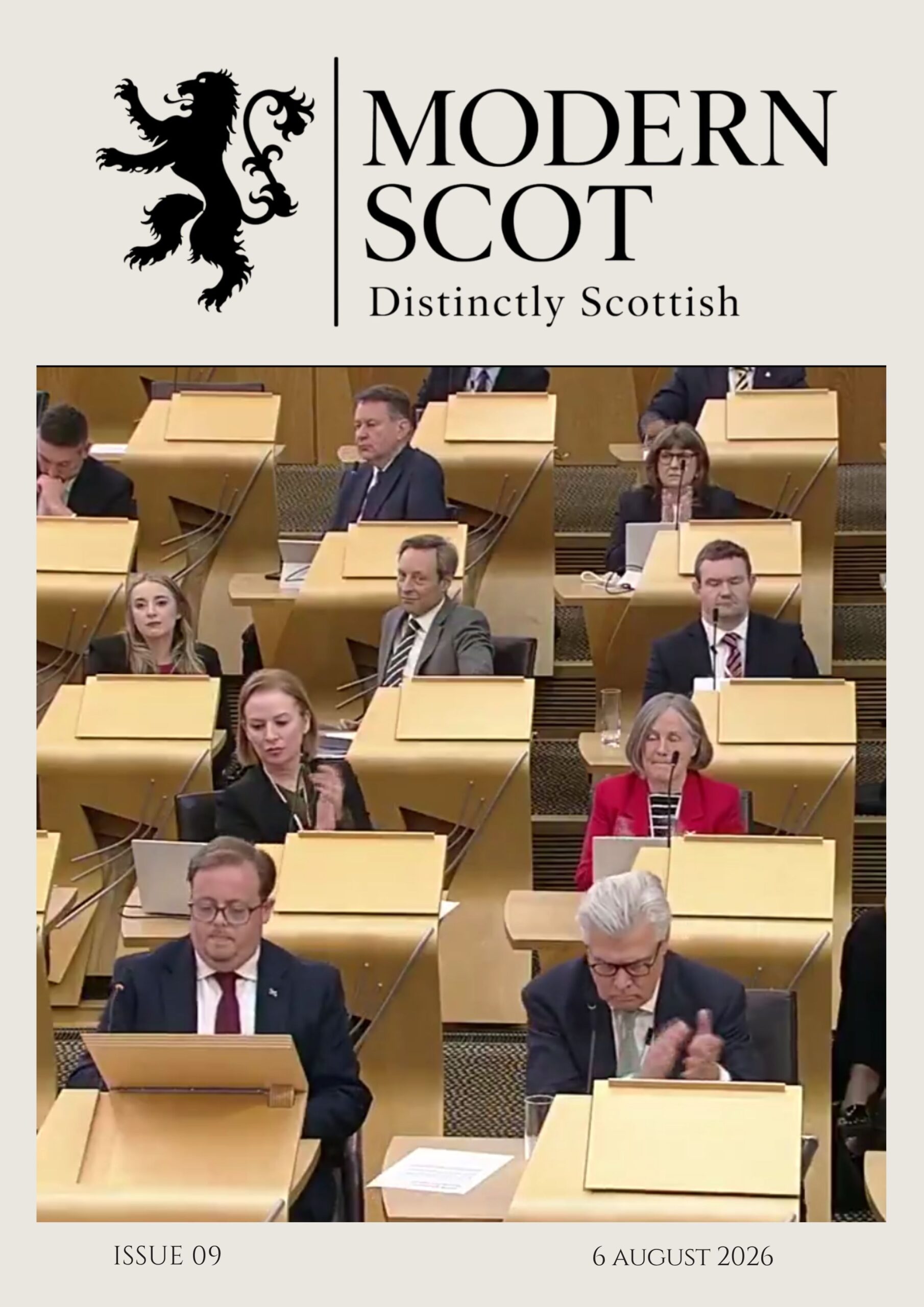


MSPs have voted to call on the UK Government to transfer the legal power needed for a second Scottish independence referendum. The vote gives John Swinney a parliamentary mandate, but not the constitutional authority to act without Westminster.
The Scottish Parliament has voted to call on the UK Government to make a Section 30 order under the Scotland Act 1998, giving Holyrood the power to hold a second referendum on Scottish independence.
The motion, lodged by First Minister John Swinney under the title Ambitious for Scotland, was agreed on Tuesday 26 May 2026 by 72 votes to 55, with no abstentions and two MSPs not voting. It was supported by 57 SNP MSPs and 15 Scottish Green MSPs. Reform UK, Scottish Labour, the Scottish Conservatives and most Scottish Liberal Democrats voted against it.
The vote does not itself authorise a referendum. Its significance is political rather than legal. It confirms that the new Holyrood session begins with a pro-independence majority prepared to press Westminster again, while also exposing the central weakness of the strategy: under the present constitutional settlement, the power to legislate for an independence referendum remains reserved unless the UK Government and UK Parliament agree to transfer it.
The wording passed by MSPs says that Scotland has returned “the largest pro-independence majority ever elected to the Scottish Parliament” and calls on the UK Government to make a Section 30 order to devolve referendum powers. The final text also includes a Scottish Green amendment stating that support for independence should be built through “more effective use of existing devolved powers” and noting that no single party holds a majority in the current Parliament.
The election arithmetic behind the vote is plain but contested. The SNP remained the largest party after the 7 May 2026 Scottish Parliament election, winning 58 seats, down six from 2021. The Greens rose to 15 seats. Together, the two pro-independence parties hold 73 of Holyrood’s 129 seats. Reform UK and Scottish Labour each won 17 seats, the Conservatives 12 and the Liberal Democrats 10.
For Mr Swinney, that seat majority is the mandate. Speaking as First Minister, he said the election result had produced “the largest ever pro-independence majority within the Scottish Parliament” and argued that Scotland should be given “the legal right to decide its own future”, with independence framed as a route to prosperity, security, fairness and eventual European Union membership.
Unionist parties rejected that interpretation. Their argument rests on a different reading of democratic consent: not seats in Holyrood, but votes cast across Scotland, polling on independence, and public priorities such as the NHS, living costs, education and economic pressure. Opposition amendments from Labour, the Conservatives and Liberal Democrats all sought to replace the constitutional demand with language urging the Scottish Government to focus on devolved services and day to day concerns.
The dispute is not new. It sits inside the long unfinished settlement created by devolution. The Acts of Union in 1707 joined the English and Scottish Parliaments into the Parliament of Great Britain, with the first Parliament of Great Britain meeting later that year. After nearly three centuries without a separate Scottish legislature, voters backed devolution in the 1997 referendum, with 74.3 per cent supporting a Scottish Parliament and 63.5 per cent supporting tax varying powers. The Scotland Act 1998 followed, and Holyrood opened in 1999.
That settlement gave Scotland its Parliament, but not sovereignty over the Union. Schedule 5 of the Scotland Act 1998 reserves key constitutional matters to Westminster, including the Union of the Kingdoms of Scotland and England and the Parliament of the United Kingdom. That is why the 2014 referendum was preceded by the Edinburgh Agreement and a Section 30 order, which put the legal competence of that vote beyond doubt.
The 2014 referendum remains the fixed point in the modern argument. Scotland voted by 55.3 per cent to 44.7 per cent to remain in the United Kingdom, on an 84.6 per cent turnout. The result settled the immediate question, but not the constitutional pressure beneath it. Two years later, Scotland voted by 1,661,191 to 1,018,322 to remain in the European Union, while the UK as a whole voted to leave. That divergence became the central political reason advanced by the SNP for reopening the independence question.
The legal route narrowed further in 2022. The UK Supreme Court ruled unanimously that the Scottish Parliament could not legislate for an independence referendum without Westminster consent, because such a Bill would relate to reserved matters. The judgment did not decide whether Scotland should become independent. It decided where the legal power currently sits.
But the legal barrier is not the same thing as political finality.
If the UK Government refuses to grant a Section 30 order, Scotland is not left with silence as its only constitutional instrument. It would not have a clean domestic legal route to independence under the present settlement, but it would still have political, electoral, diplomatic and constitutional options.
A refusal by Westminster would not make independence disappear. It would force Scotland into the more dangerous territory where law, democratic consent and political legitimacy begin to pull against one another. A pro-independence Scottish Parliament could continue to seek lawful transfer of powers. It could frame a future Scottish Parliament or UK general election as a direct mandate for independence negotiations. It could pass further motions, continue to explore the political limits of the devolution settlement, appeal to international opinion and build the case that a country repeatedly returning pro-independence majorities cannot be held indefinitely inside a constitutional arrangement while being denied any lawful democratic mechanism to reconsider its future.
None of those steps would automatically create independence. There is no hidden mechanism in the Scotland Act that allows Holyrood to end the Union by declaration alone. The secure legal route remains Westminster consent, just as the 2014 referendum required an agreed Section 30 process to put Holyrood’s power beyond doubt.
But politics has its own force. If a request for a referendum is refused once, that is a decision. If it is refused repeatedly after successive electoral mandates, that becomes a constitutional question of a different order. At that point, Scotland’s argument would no longer be merely that it wants another vote. It would be that the democratic route to asking the question has itself been blocked.
That is the point now entering the debate. The Scottish Government cannot lawfully declare independence by motion. Holyrood cannot simply legislate around the Supreme Court. But a state cannot assume that legal authority and democratic consent will always remain aligned if one part of the Union repeatedly asks for a vote and is repeatedly told it may not have one.
For those who support the Union, that is the risk. Refusing a referendum may prevent a vote in the short term. It may also deepen the grievance that keeps the constitutional question alive. The more Westminster insists the matter is closed by law, the more nationalists will argue that the law has become the instrument preventing Scotland from testing its consent.
The question, then, is not whether Tuesday’s vote creates independence. It does not. The question is whether Westminster’s refusal, if it comes again, leaves Scotland with no options. It plainly does not. Those options are political, electoral, diplomatic and constitutional rather than immediately legal. They are slower, less tidy and more combustible. But they exist.
And when a country is told that it may vote in a UK election, vote in a Scottish election, return a pro-independence Parliament, pass a parliamentary motion, and still not be permitted to ask its people the central constitutional question, the argument moves beyond procedure. It becomes an argument about whether the Union rests on continuing consent or merely on the legal power to refuse a test of it.
That is why Tuesday’s vote matters. It gives the Scottish Government a fresh parliamentary instruction to seek powers. It does not compel the UK Government to grant them. Unless Westminster changes position, the motion becomes another formal entry in Scotland’s constitutional ledger: politically potent, legally constrained, and destined to be argued over by people who will insist they are defending democracy from opposite sides of the same chamber.
The public position remains divided. What Scotland Thinks, which tracks polling on constitutional attitudes, lists independence voting intention polls up to 4 May 2026 and shows a continuing pattern of fluctuation rather than a settled majority either way. The Institute for Government similarly notes that, more than a decade after the 2014 vote, Scotland remains divided, with nearly half of voters consistently saying they would vote Yes if another referendum were held.
The practical question now is not whether Holyrood can pass motions. It can. The question is whether a pro-independence parliamentary majority, without an SNP majority and without Westminster’s consent, can turn constitutional pressure into a lawful referendum. At present, the answer remains no. But politically, Mr Swinney has ensured the issue is back where it most often becomes difficult for everyone: on the record.
SOURCES
Scottish Parliament, Motion S7M-00105, Ambitious for Scotland, vote result and final amended text.
Scottish Parliament Information Centre, Election 2026, published 15 May 2026.
Scottish Government, Ambitious for Scotland, First Minister statement, 26 May 2026.
Scotland Act 1998, Schedule 5, reserved matters.
UK Supreme Court, 2022 judgment on Scottish independence referendum competence.
House of Commons Library, Scottish Independence Referendum 2014.
Electoral Commission, EU Referendum 2016 Scotland result.
Scottish Parliament, The path to devolution.
UK Parliament, Act of Union 1707.
What Scotland Thinks, Scottish independence polling tracker.