
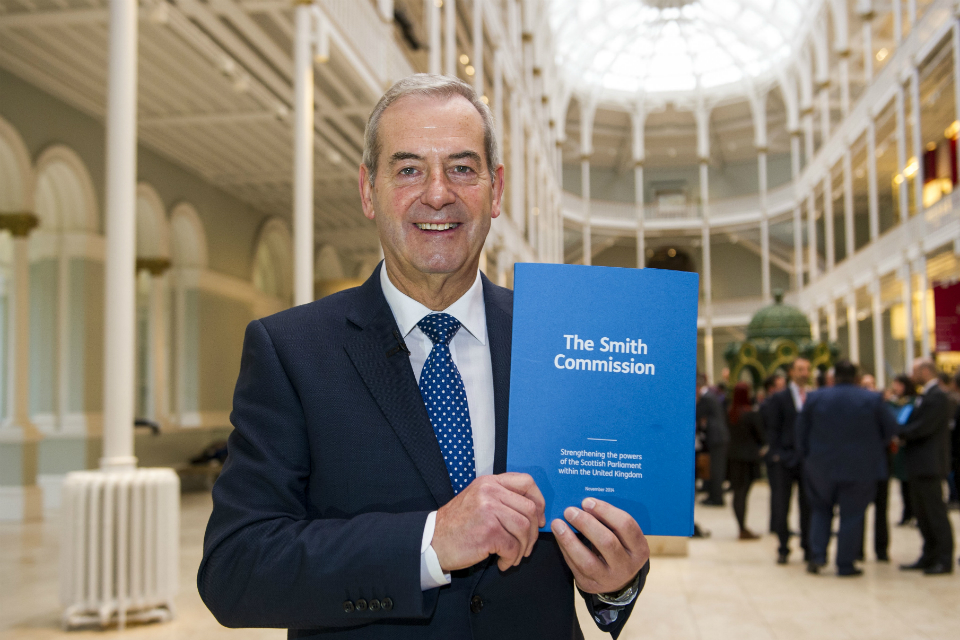
Download the Smith Commission Report
- The Smith Commission was created after the 2014 No vote.
- It recommended more powers for Holyrood.
- It said independence was not ruled out in future if Scots chose it.
- It did not give Holyrood the power to hold another referendum without Westminster.
- That is why it matters again now.
The Smith Commission was created after Scotland voted No in the 2014 independence referendum, as part of a promise that more powers would come to Holyrood. Its most important sentence has now returned to the centre of Scotland’s constitutional argument: nothing in the report prevents Scotland becoming independent in future if the people of Scotland so choose.
A 2014 report written in the days after Scotland’s independence referendum has returned to public debate after the Scottish Parliament voted again to ask Westminster for the legal power to hold a second referendum.
The Smith Commission report was published on 27 November 2014. It was not a nationalist document, nor a unionist manifesto. It was a cross-party agreement on further devolution, reached after the No vote, involving the Conservatives, Greens, Labour, Liberal Democrats and the SNP. Its purpose was to strengthen the Scottish Parliament within the United Kingdom. But it also contained one sentence that is now politically impossible to ignore.
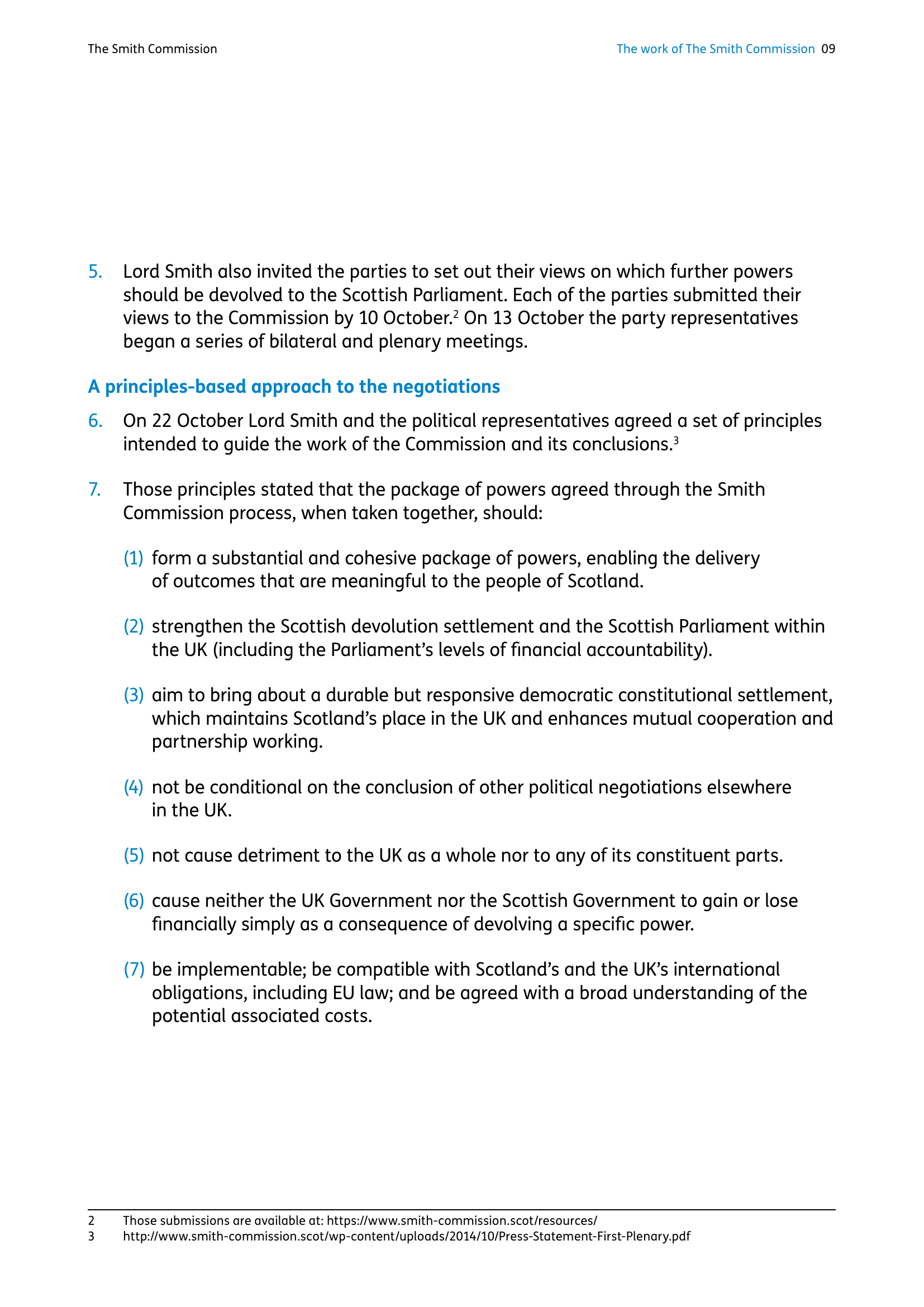
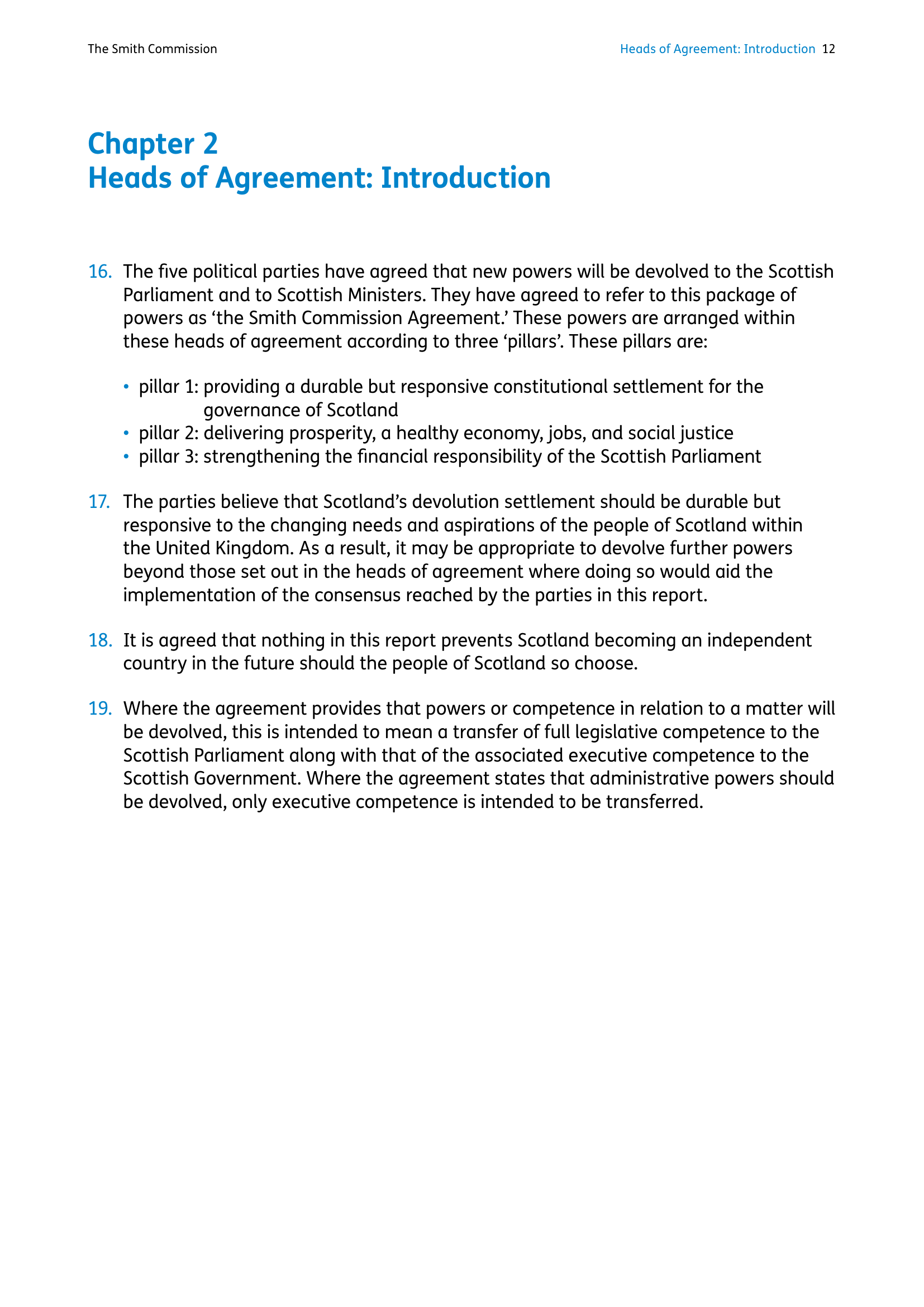
Paragraph 18 states: “It is agreed that nothing in this report prevents Scotland becoming an independent country in the future should the people of Scotland so choose.”
That sentence does not give Holyrood the automatic legal power to hold another referendum. It does not override the Scotland Act 1998, and it does not undo the UK Supreme Court’s 2022 judgment that the Scottish Parliament cannot legislate for an independence referendum without Westminster consent. But politically, it matters. The Smith Commission was part of the post-2014 settlement. It promised more devolution after Scotland voted to remain in the UK. It did not say the independence question was forbidden, finished or permanently closed.
The Smith Commission was announced by Prime Minister David Cameron on 19 September 2014, the morning after Scotland voted No in the independence referendum. In the final days of that campaign, the leaders of the three main pro-Union UK parties had promised more powers for Scotland if voters rejected independence, in what became known as “The Vow”. That pledge included a permanent Scottish Parliament, further devolved powers, and continuation of the Barnett formula.
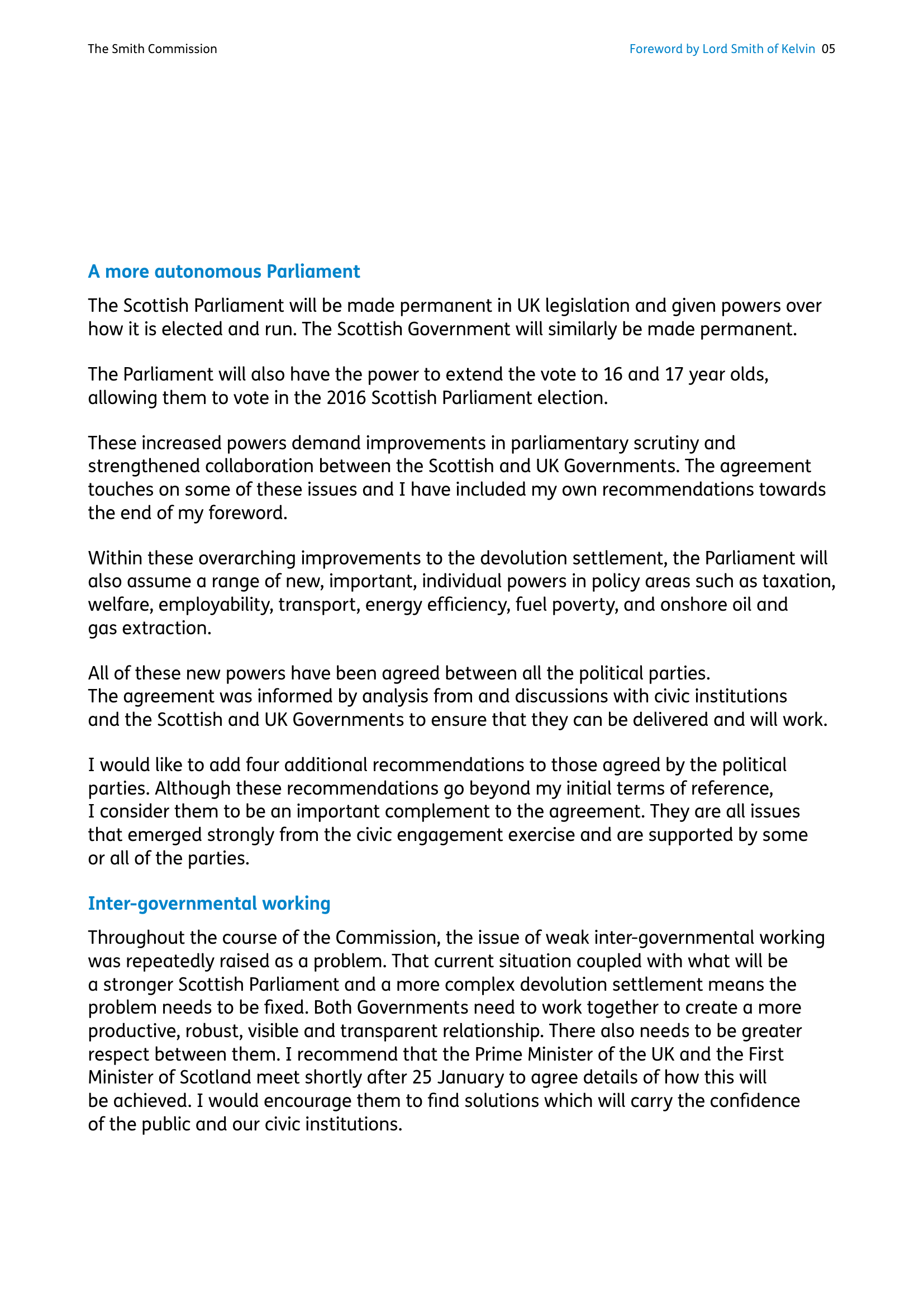
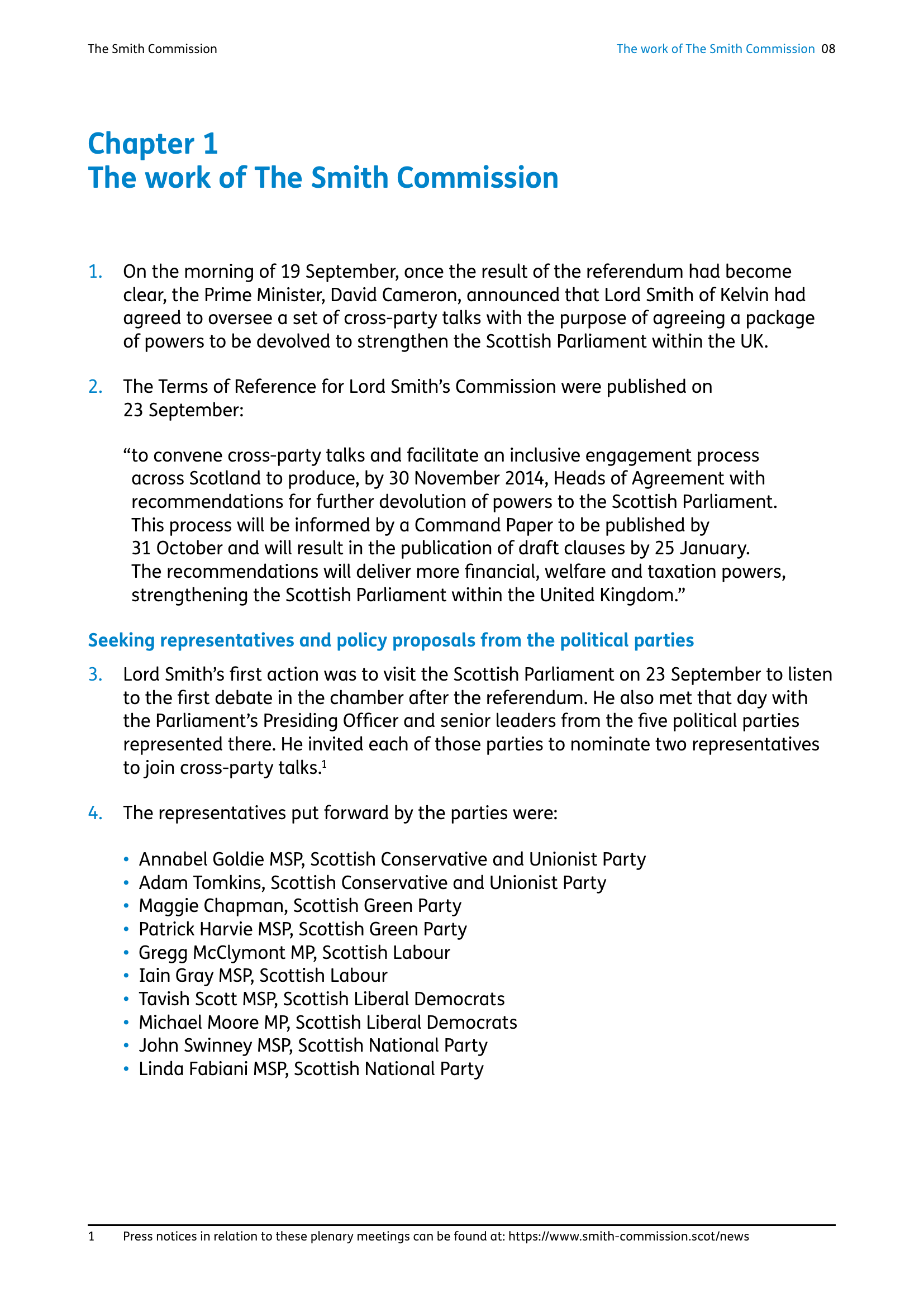
Lord Smith of Kelvin was asked to oversee cross-party talks. The Commission’s terms of reference were published on 23 September 2014. Its task was to produce, by 30 November, Heads of Agreement with recommendations for further devolution of powers to the Scottish Parliament. The stated aim was to deliver more financial, welfare and taxation powers, strengthening the Scottish Parliament within the United Kingdom.
The five parties represented in the Scottish Parliament each nominated two representatives. They were Annabel Goldie and Adam Tomkins for the Scottish Conservatives, Maggie Chapman and Patrick Harvie for the Scottish Greens, Iain Gray and Gregg McClymont for Scottish Labour, Tavish Scott and Michael Moore for the Scottish Liberal Democrats, and John Swinney and Linda Fabiani for the SNP.
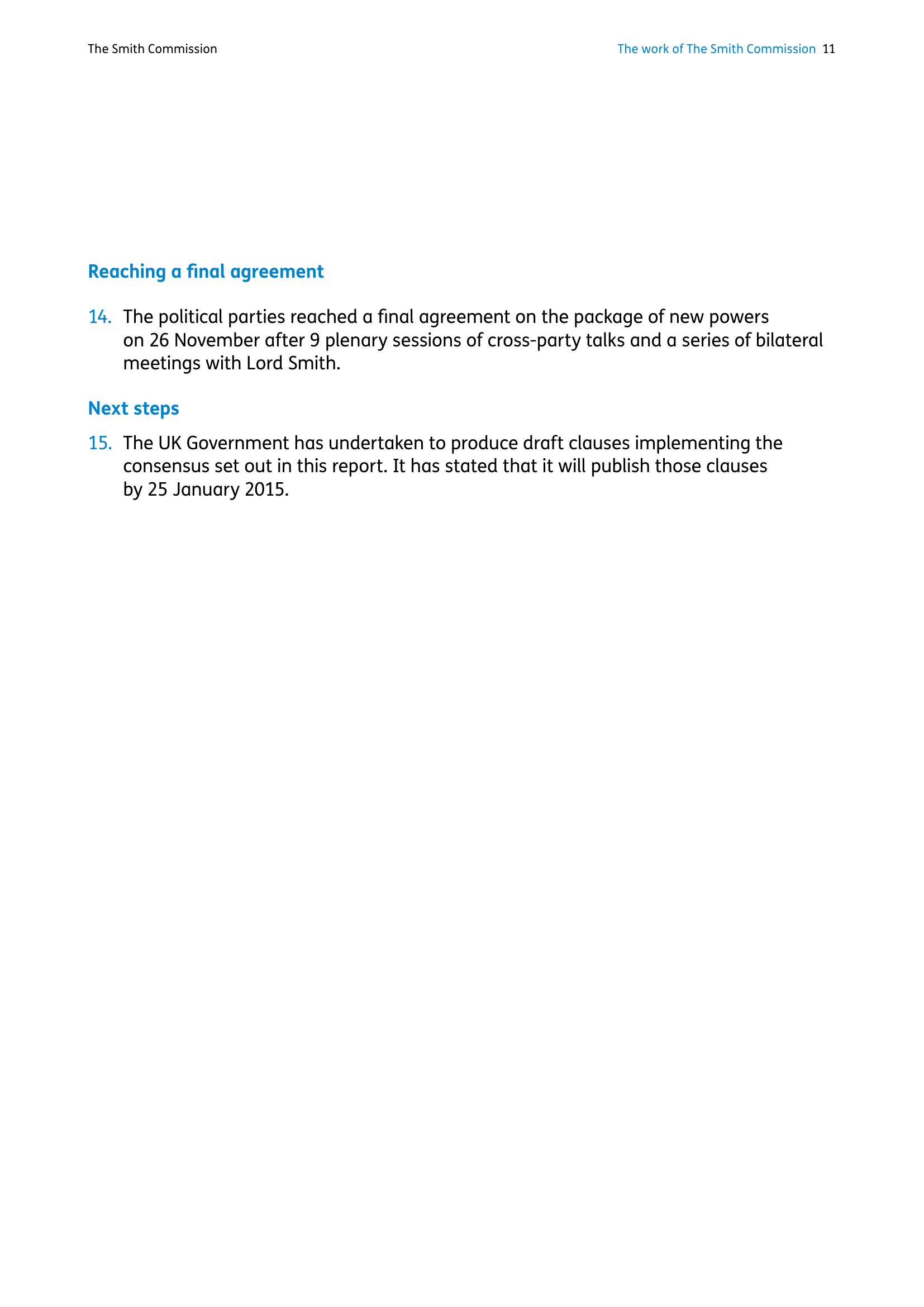
The process was fast. The parties began detailed work in October and reached final agreement on 26 November after nine plenary sessions and a series of bilateral meetings with Lord Smith. The report was published the following day.
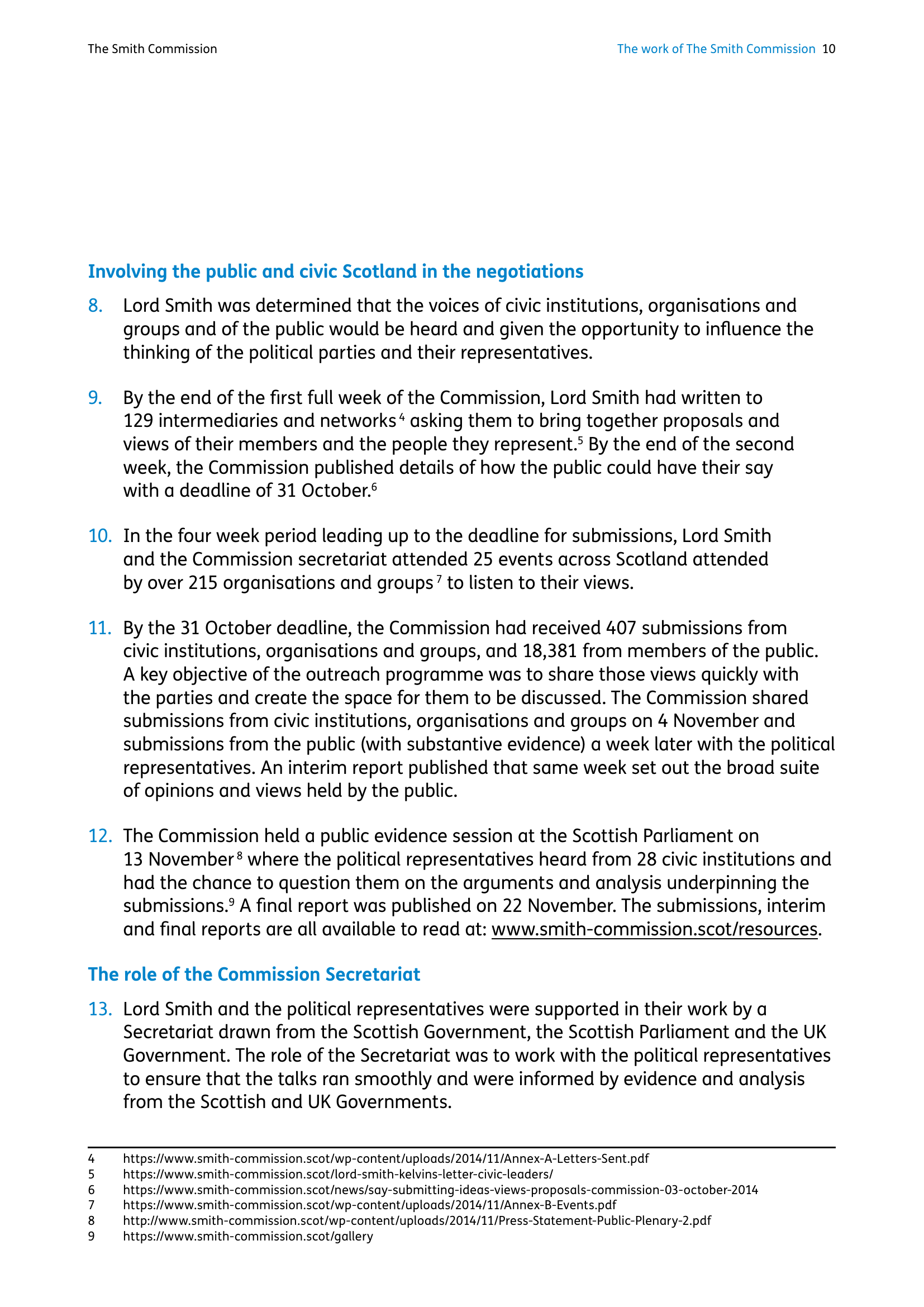
It was also wider than a private party negotiation. The report says Lord Smith wrote to 129 intermediaries and networks, attended 25 events across Scotland with more than 215 organisations and groups, received 407 submissions from civic bodies and organisations, and received 18,381 submissions from members of the public. A public evidence session was also held at the Scottish Parliament on 13 November, where party representatives heard from 28 civic institutions.
The Smith agreement was arranged around three pillars. The first was to provide a durable but responsive constitutional settlement for Scotland’s governance. The second was to deliver prosperity, a healthy economy, jobs and social justice. The third was to strengthen the financial responsibility of the Scottish Parliament.
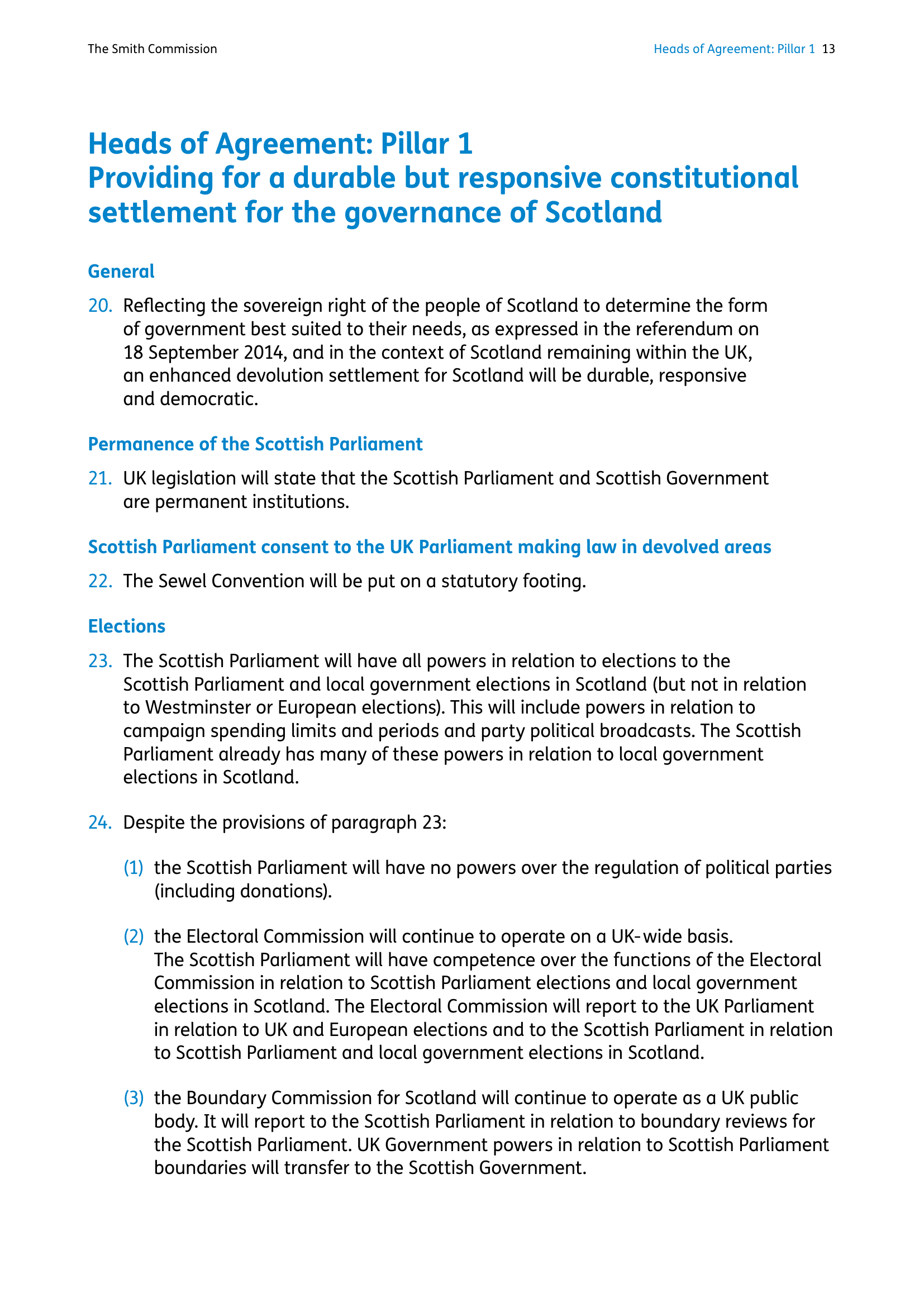
The first pillar is the one most relevant to the independence debate now. Paragraph 17 says Scotland’s devolution settlement should be “durable but responsive” to the changing needs and aspirations of the people of Scotland within the UK. Paragraph 18 then states that nothing in the report prevents Scotland becoming independent in future should the people of Scotland so choose. Paragraph 20 adds that the enhanced devolution settlement reflects “the sovereign right of the people of Scotland to determine the form of government best suited to their needs”, in the context of Scotland remaining within the UK.
Those words are carefully framed. The report was not saying Scotland had already chosen independence. It was not creating a standing referendum power. It was not authorising unilateral action by Holyrood. But it did preserve an important political principle: Scotland’s constitutional future remained open to the people of Scotland.
That is why the report is being cited again now.
The Scottish Parliament has voted to call on the UK Government to make a Section 30 order, the mechanism under the Scotland Act 1998 that can temporarily or permanently alter Holyrood’s legislative competence. The motion Ambitious for Scotland, lodged by First Minister John Swinney, was taken in the Chamber on 26 May 2026.
A Section 30 order matters because it can alter the list of reserved powers under Schedule 5 of the Scotland Act 1998. The House of Commons Library explains that such orders can increase or restrict the Scottish Parliament’s authority, either temporarily or permanently. The 2013 order used before the 2014 independence referendum temporarily gave Holyrood the legal competence to hold that vote.
That is the legal route the Scottish Government is now asking Westminster to reopen. Without it, Holyrood faces the barrier confirmed by the UK Supreme Court in 2022. The Court held that a Scottish Parliament Bill for an independence referendum would relate to reserved matters, including the Union of the Kingdoms of Scotland and England and the Parliament of the United Kingdom.
The Smith Commission does not remove that legal barrier. This point is essential. Campaign graphics that quote paragraph 18 are right to say the report did not prevent future independence. They are wrong if they imply that Smith itself gives Holyrood the power to hold a referendum without Westminster consent.
The report is a political authority, not a hidden legal trapdoor.
Its force lies elsewhere. The Smith Commission was agreed by all five main Scottish parties after the 2014 referendum. It was part of the answer offered to Scotland after the No vote. It strengthened devolution within the UK, but it did not close the door on a different constitutional future. If Westminster now refuses a referendum route, supporters of a second vote can argue that the post-2014 settlement recognised Scotland’s right to choose but left no practical mechanism for testing that choice unless Westminster agrees.
That is the unresolved knot.
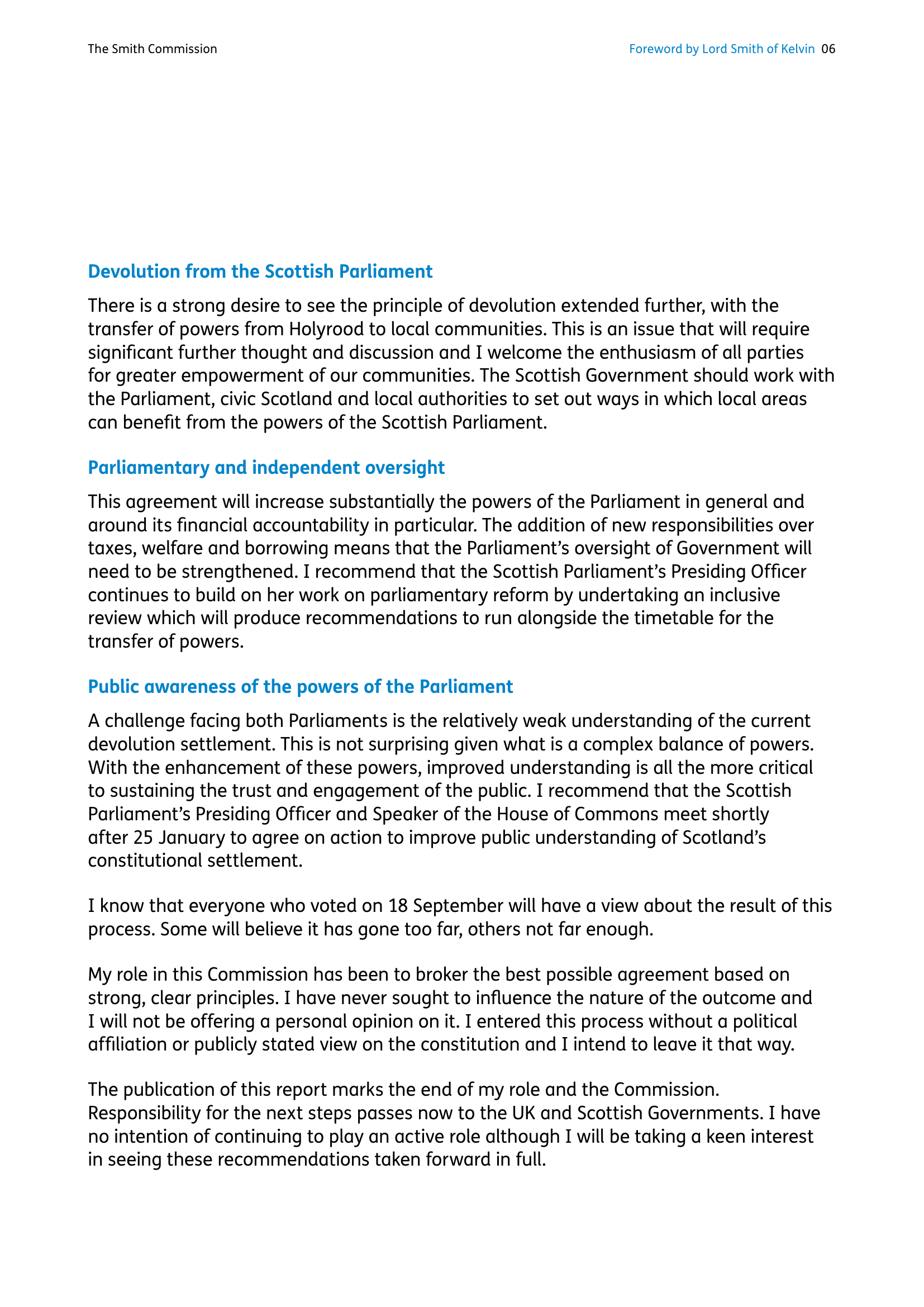
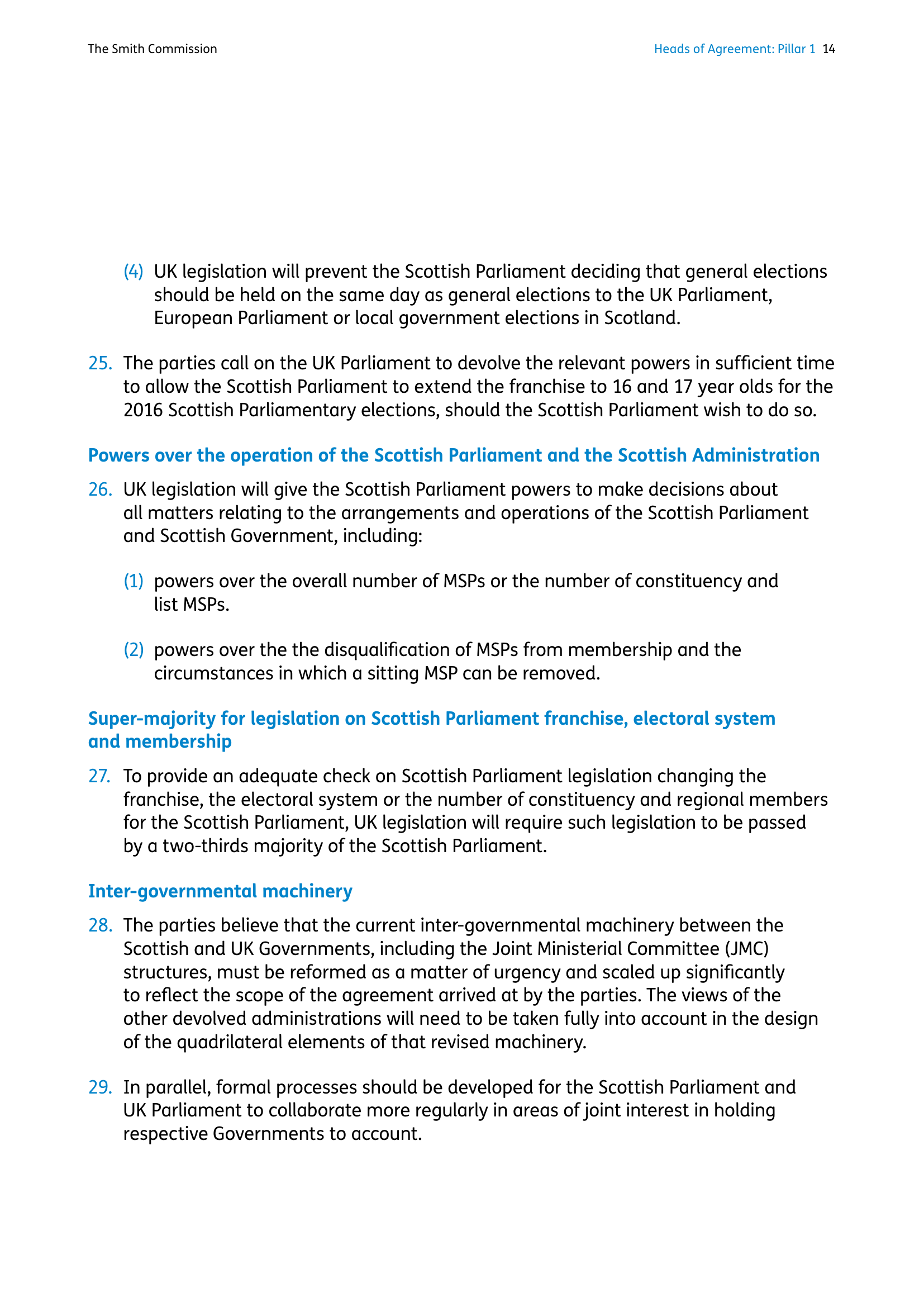
The Smith Commission’s practical recommendations were substantial. It called for the Scottish Parliament and Scottish Government to be recognised as permanent institutions in UK legislation. It recommended powers over Scottish Parliament elections and local government elections in Scotland, though not Westminster or European elections. It called for the Scottish Parliament to be able to extend the vote to 16 and 17 year olds for the 2016 Scottish Parliament election.
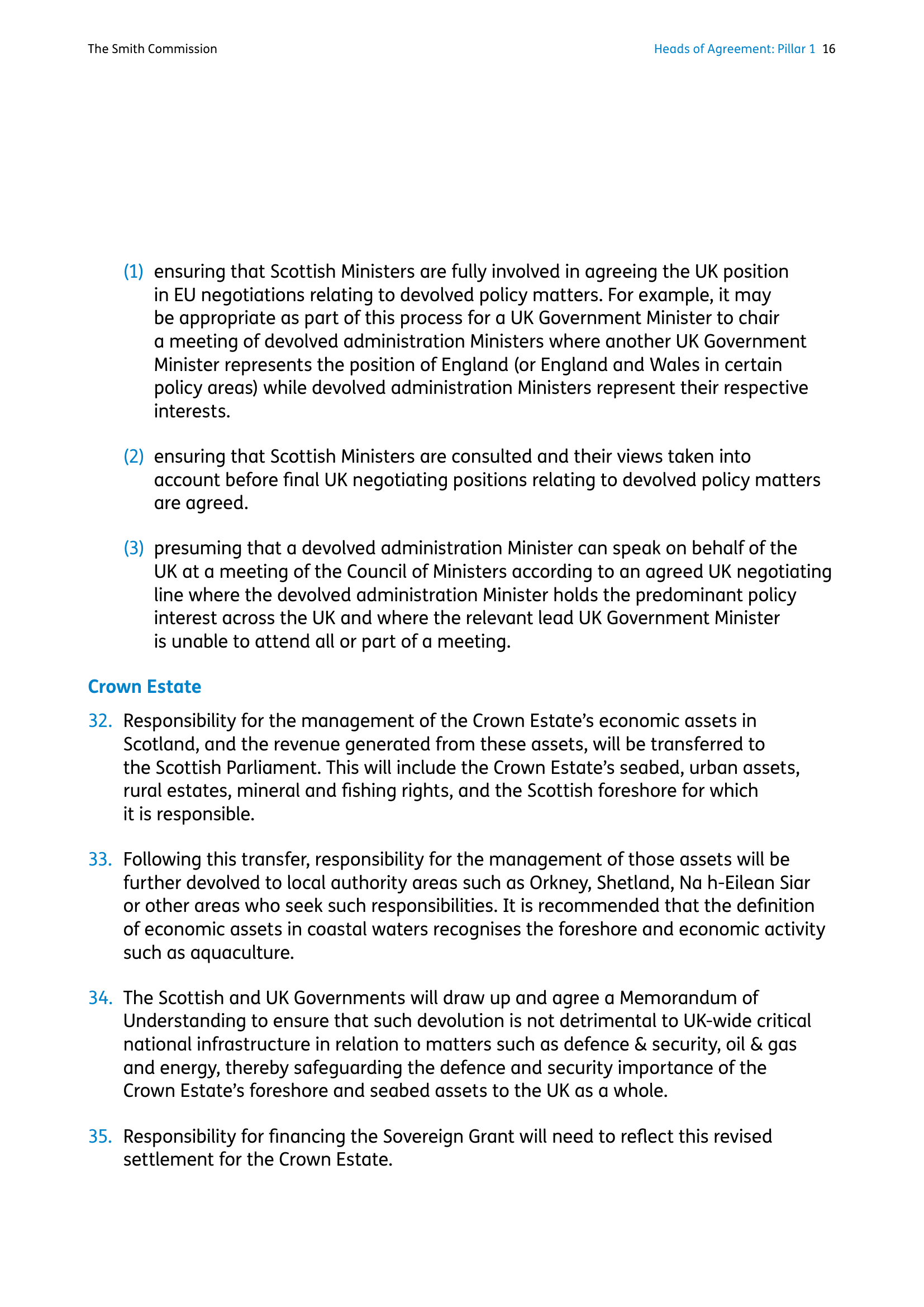
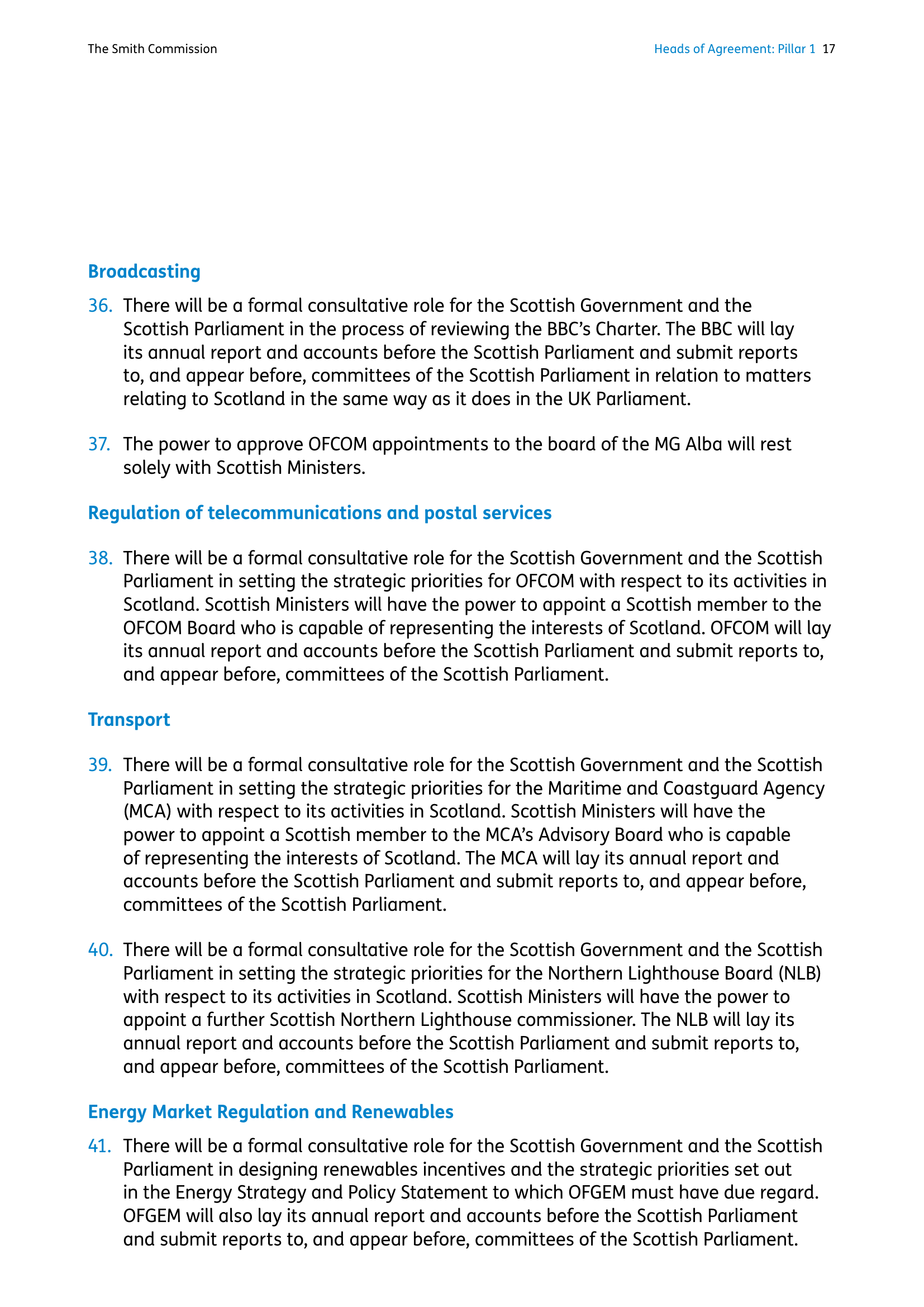
It also recommended devolution of major responsibilities over the Crown Estate’s economic assets in Scotland, including the seabed, foreshore, mineral and fishing rights. It proposed new roles for Scottish Ministers and Holyrood in relation to the BBC, OFCOM, the Maritime and Coastguard Agency, the Northern Lighthouse Board and energy regulation.
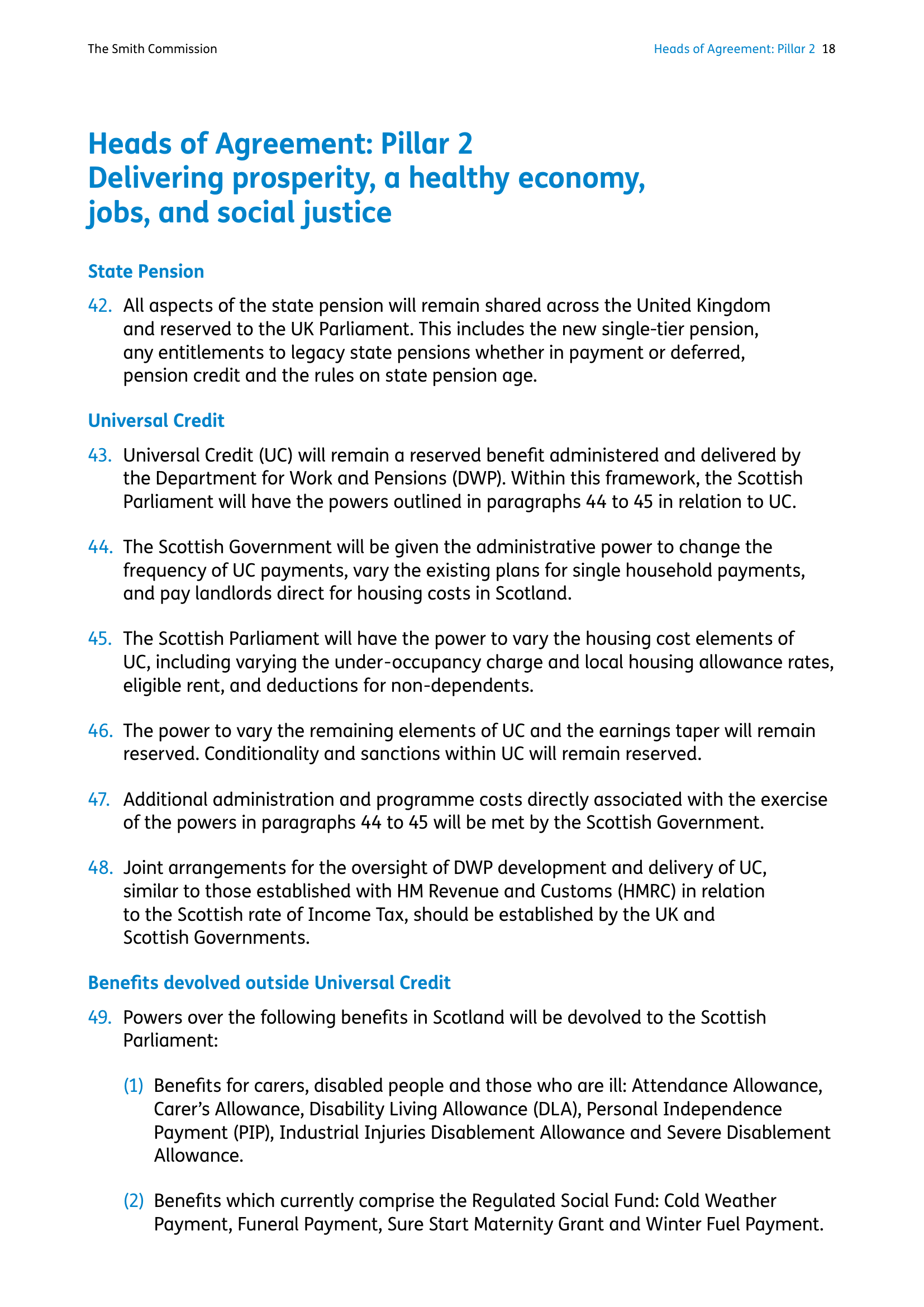
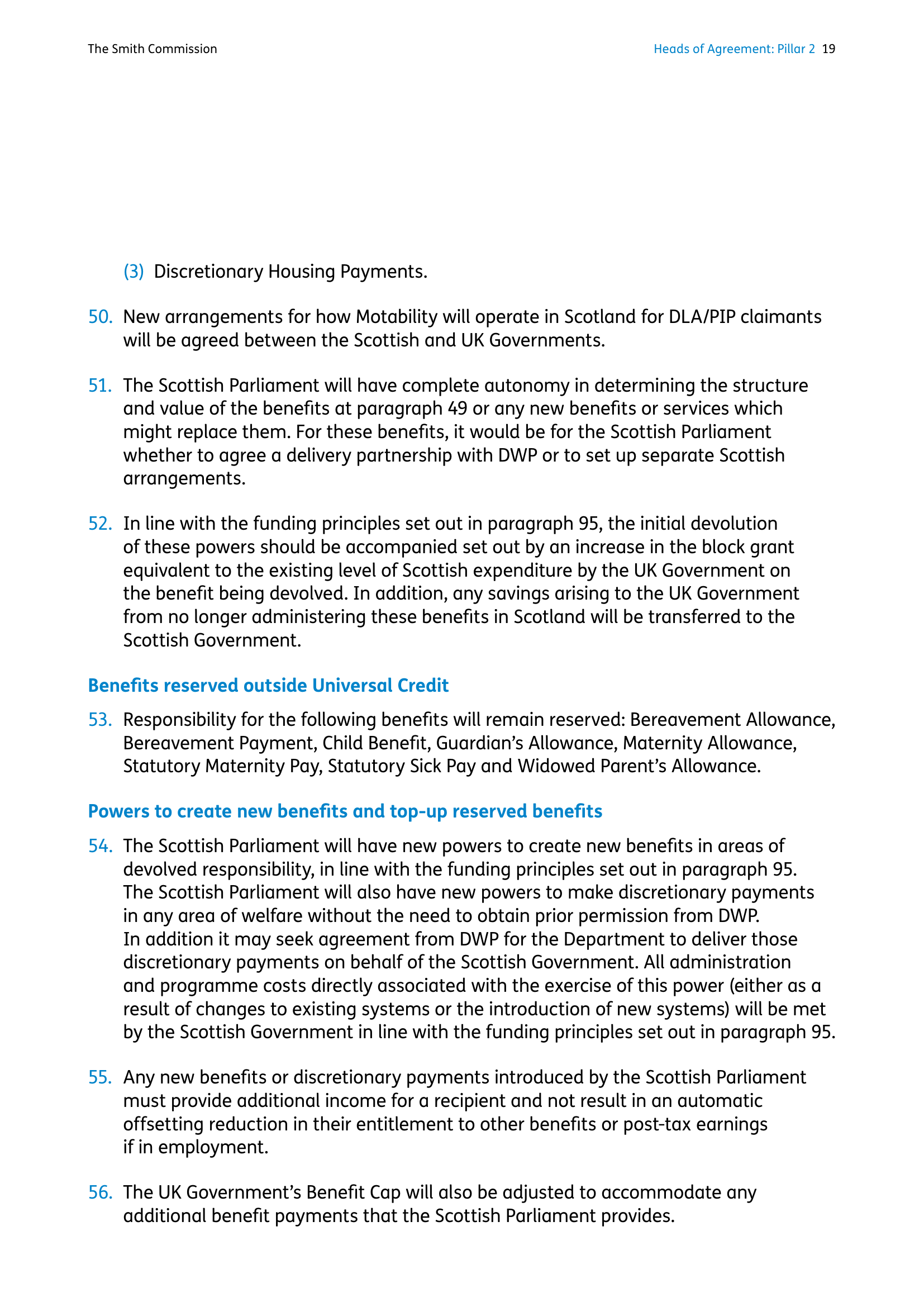
On welfare, the report recommended devolution of powers over benefits for carers, disabled people and those who are ill, along with parts of the regulated Social Fund, discretionary housing payments, and powers to create new benefits in devolved areas. It also gave Scotland limited powers over aspects of Universal Credit, including payment frequency, direct payments to landlords and housing cost elements, while keeping Universal Credit itself reserved.
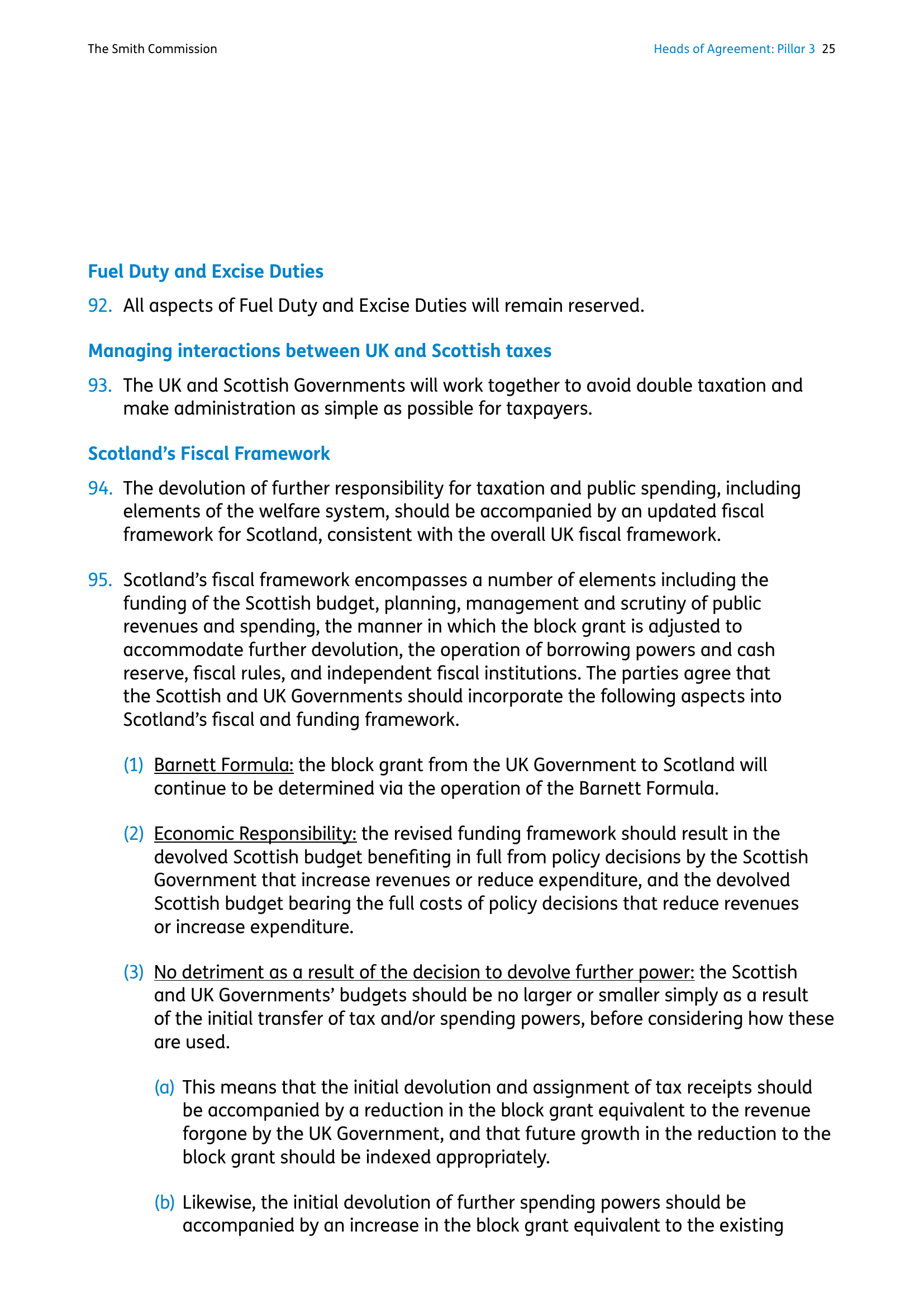
On tax, the Commission recommended that income tax should remain a shared tax, but that the Scottish Parliament should be able to set rates and thresholds for non-savings and non-dividend income. It recommended that Scotland receive receipts from the first ten percentage points of VAT raised in Scotland, while the VAT rate itself remained reserved. It also recommended devolution of Air Passenger Duty and Aggregates Levy, while keeping National Insurance, corporation tax, capital gains tax, inheritance tax, fuel duty, excise duties and oil and gas taxation reserved.
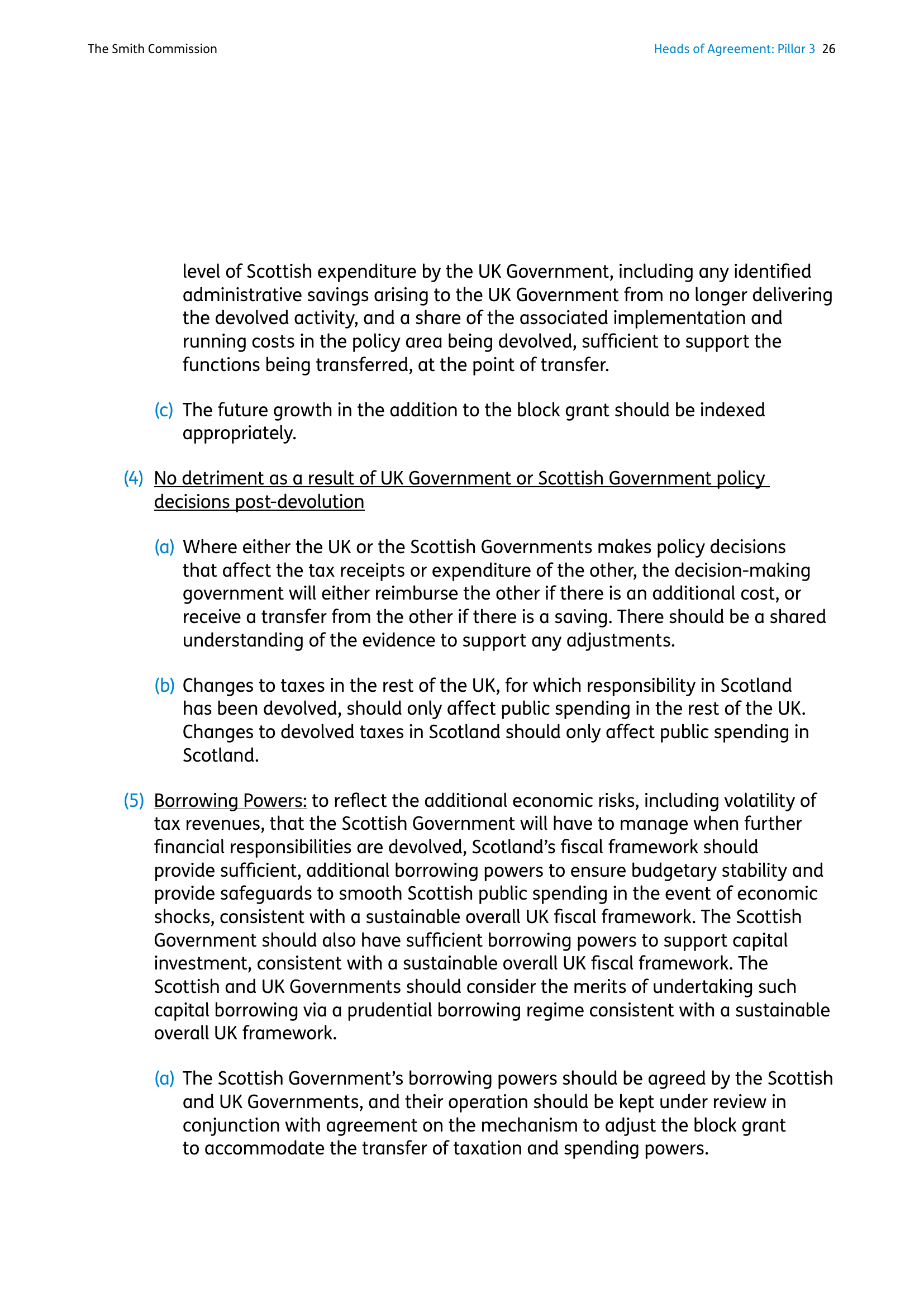
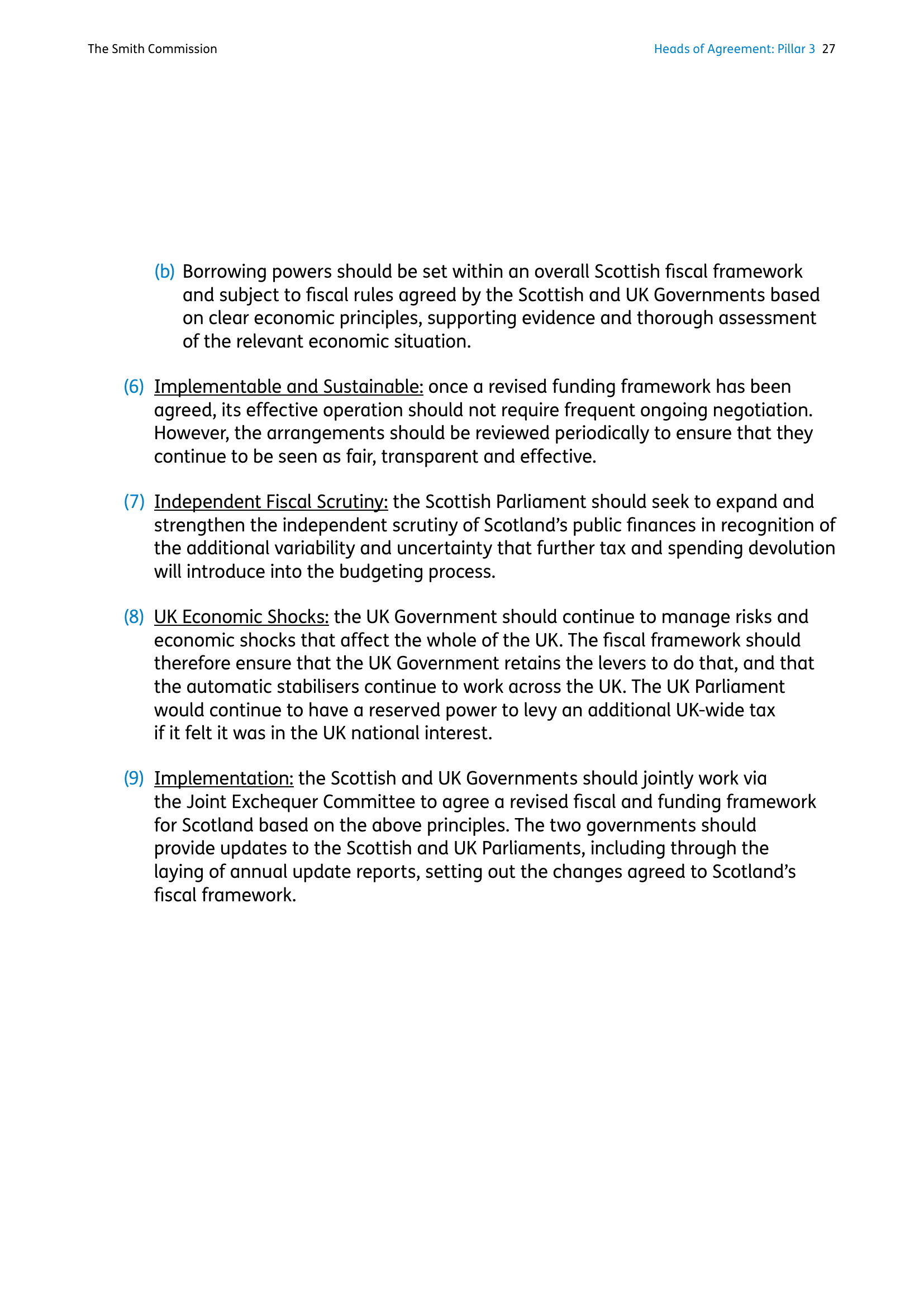
The Smith settlement was later implemented principally through the Scotland Act 2016. UK Government explanatory material states that the Act sought to increase the financial accountability of the Scottish Parliament and was accompanied by a new fiscal framework for Scotland.
This matters because Smith was not merely a historical footnote. It helped shape the Scotland that exists now. It helped create the current balance of devolved powers, shared powers and reserved powers. It is part of the architecture of modern Scottish government.
But it also contains the sentence now being carried back into the constitutional argument: nothing in the report prevents Scotland becoming independent in the future if the people of Scotland so choose.
For unionist parties, the answer is that Scotland already made that choice in 2014 and chose to remain in the UK. They can also argue, accurately, that the Smith Commission was about further devolution within the Union, not independence. Its whole remit was to strengthen the Scottish Parliament within the United Kingdom.
For supporters of another referendum, the answer is that the Smith Commission itself did not describe the 2014 vote as permanently closing Scotland’s future. It recognised that Scotland could become independent in future if the people of Scotland chose that course. They argue that a democratic principle without a democratic mechanism becomes increasingly difficult to defend.
Both arguments draw on real parts of the record. That is why this is not a simple argument about one sentence on a campaign graphic.
The Smith Commission is important because it holds together two truths that now sit in tension. First, Scotland remained in the UK and received further devolved powers. Second, the possibility of future independence was expressly left open should the people of Scotland choose it.
The question now is not whether Smith gives Holyrood an automatic legal route to a referendum. It does not. The question is whether Westminster can rely on the post-2014 settlement while refusing the only secure mechanism by which Scotland could test the future choice that settlement itself preserved.
That is why the Smith report should be read, not merely quoted. Paragraph 18 is powerful. But it sits within a wider document about devolution, democratic responsiveness, financial accountability, public engagement and Scotland’s place inside the United Kingdom.
The report did not settle the constitutional question forever. It tried to stabilise the Union after 2014 by giving Holyrood more power. More than a decade later, the same report is being used to ask whether that settlement can still be called durable and responsive if Scotland’s Parliament again asks for a referendum and Westminster again says no.
The Smith Commission was born from a promise made after a No vote. It delivered a programme of further devolution. But it also left a sentence on the record that Scotland’s political class cannot now unread.
Independence was not prevented. The people of Scotland were not written out of the future. The unresolved question is who now controls the democratic route by which that future may be tested.
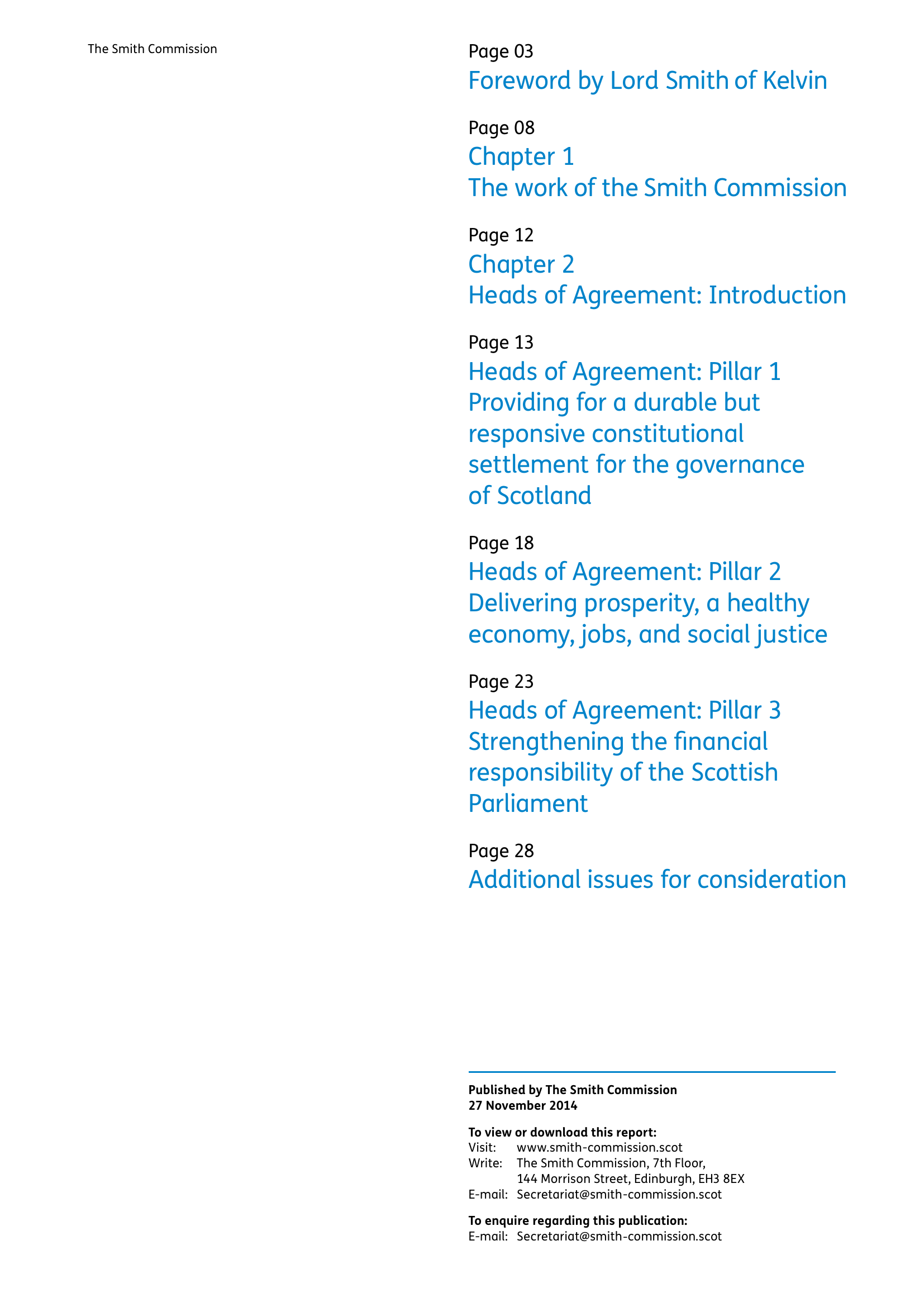
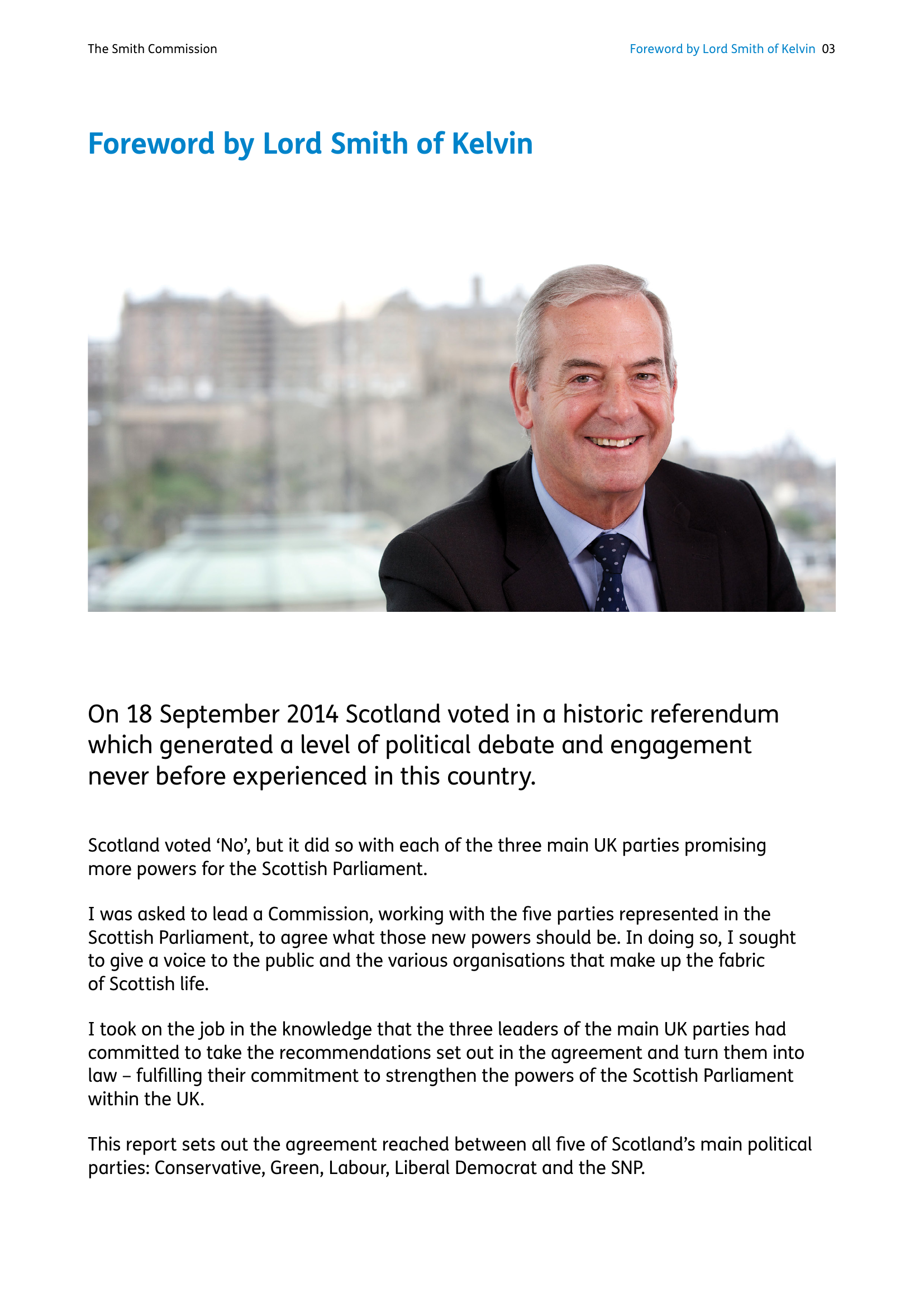
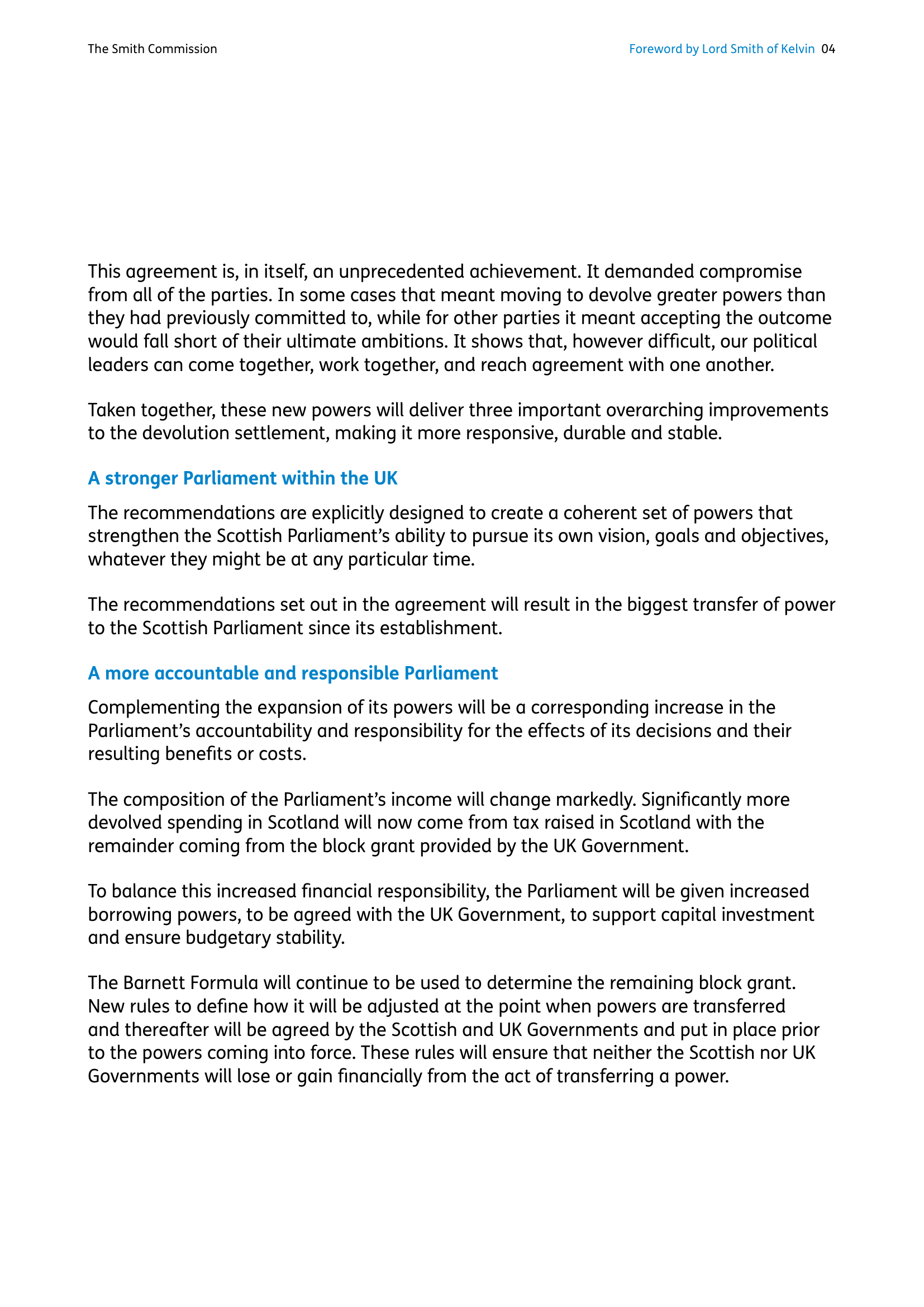
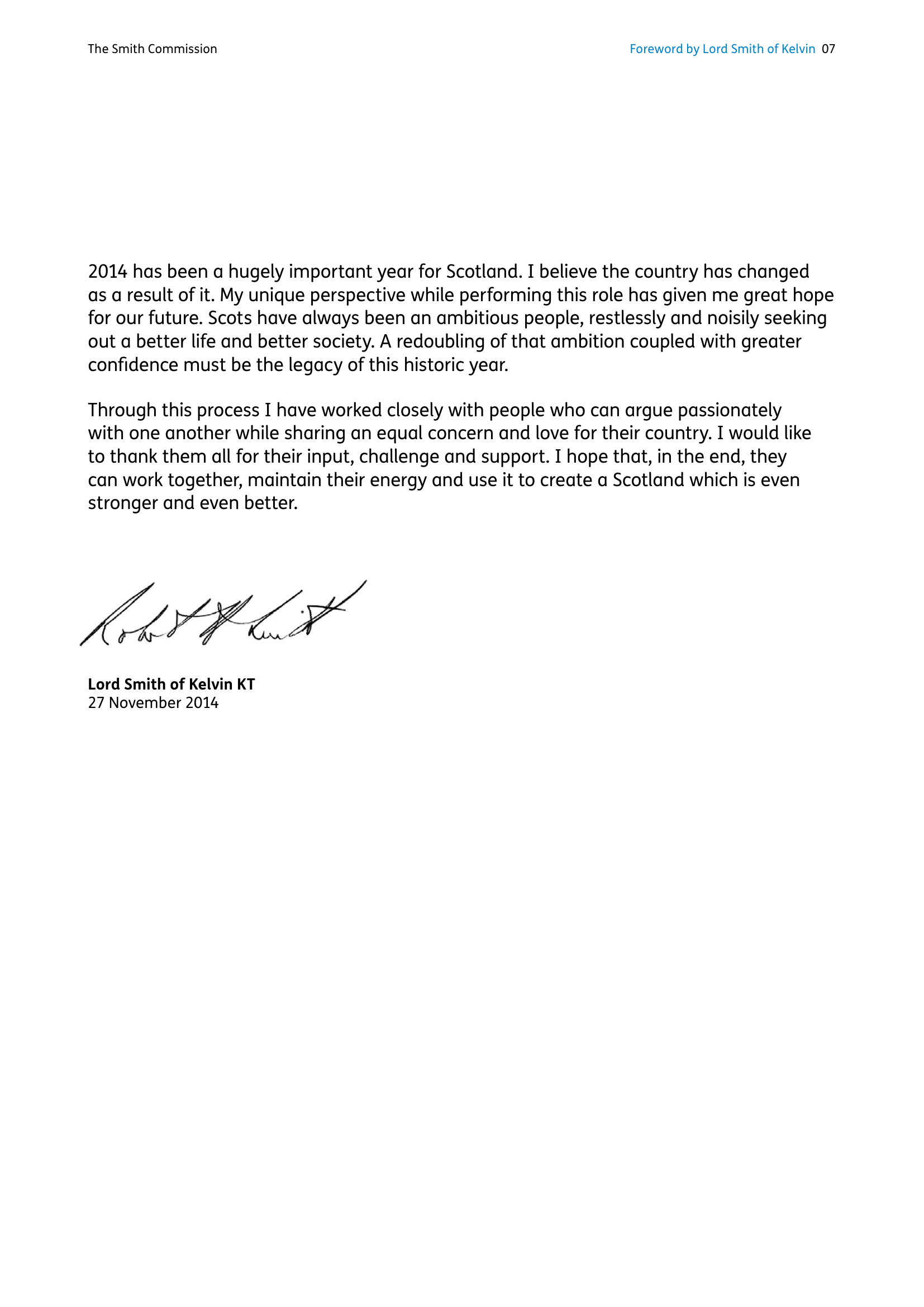
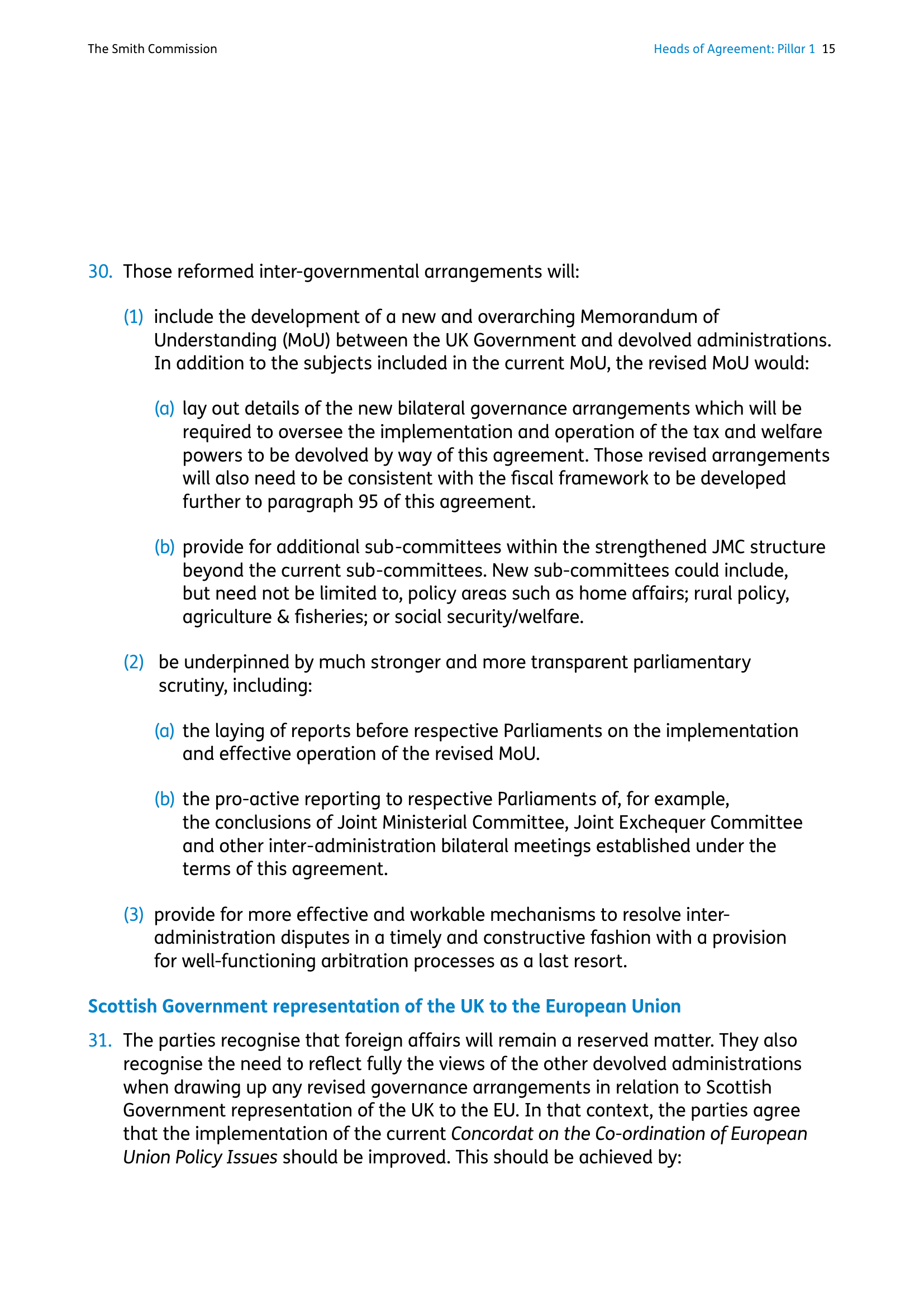
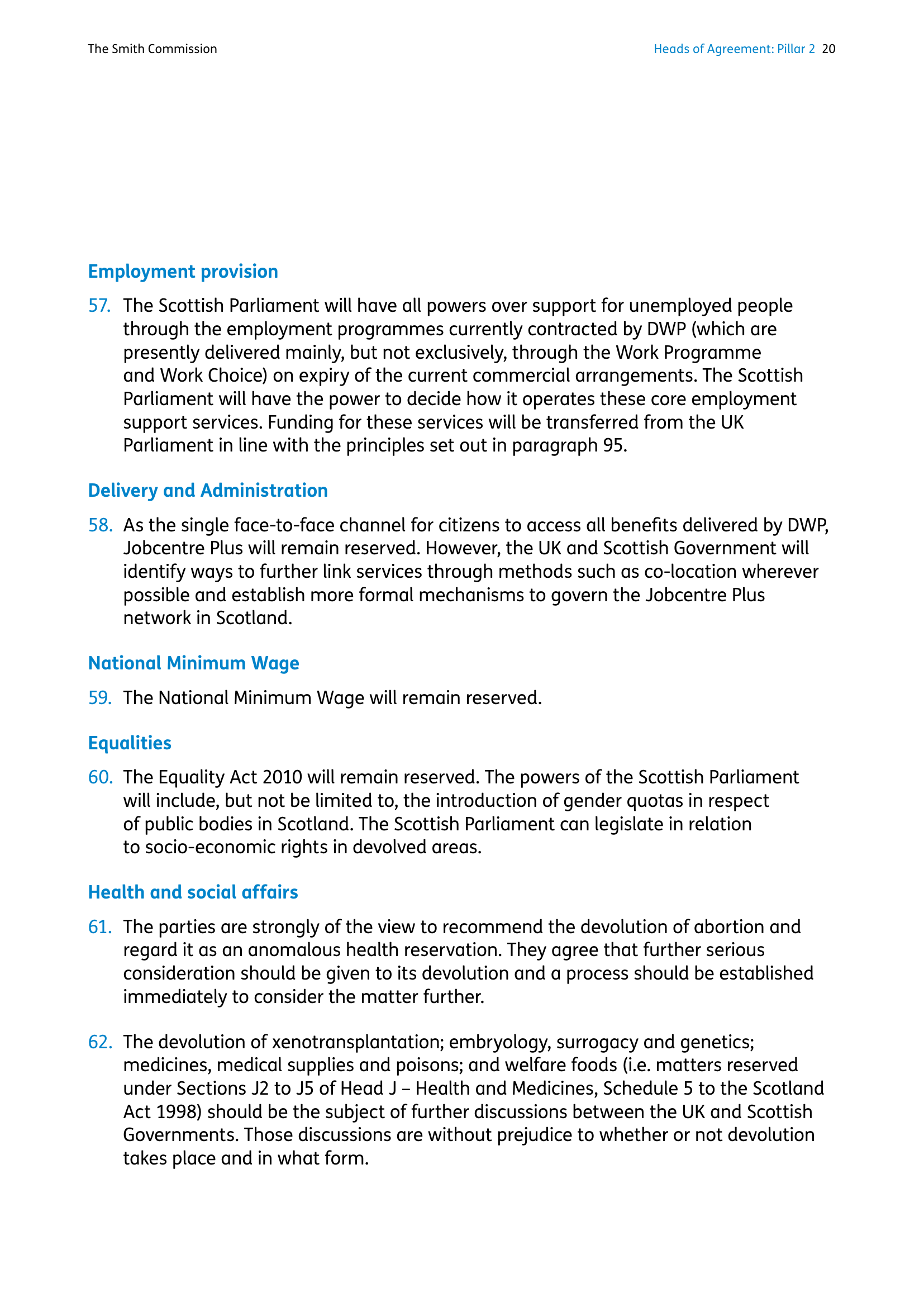
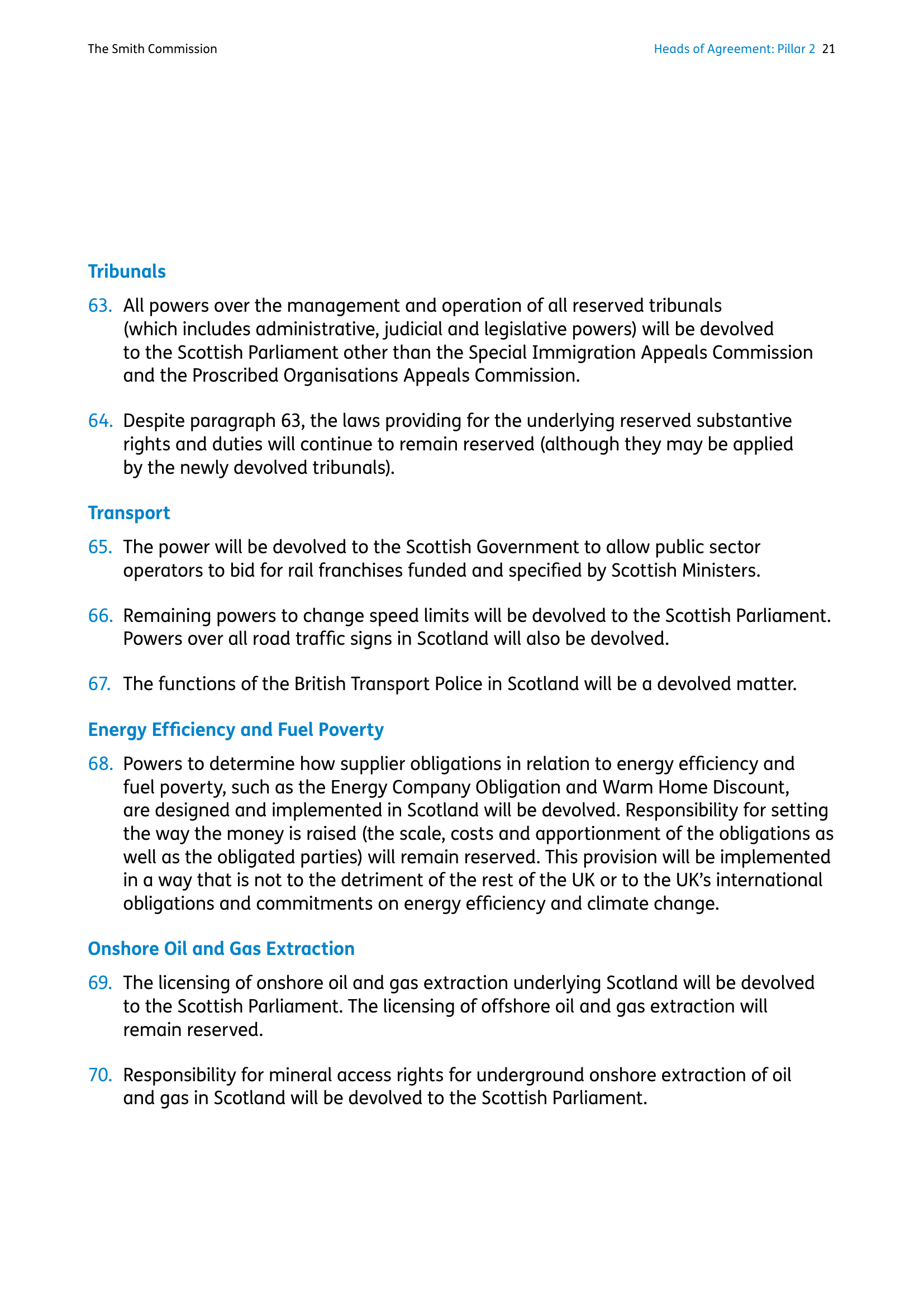
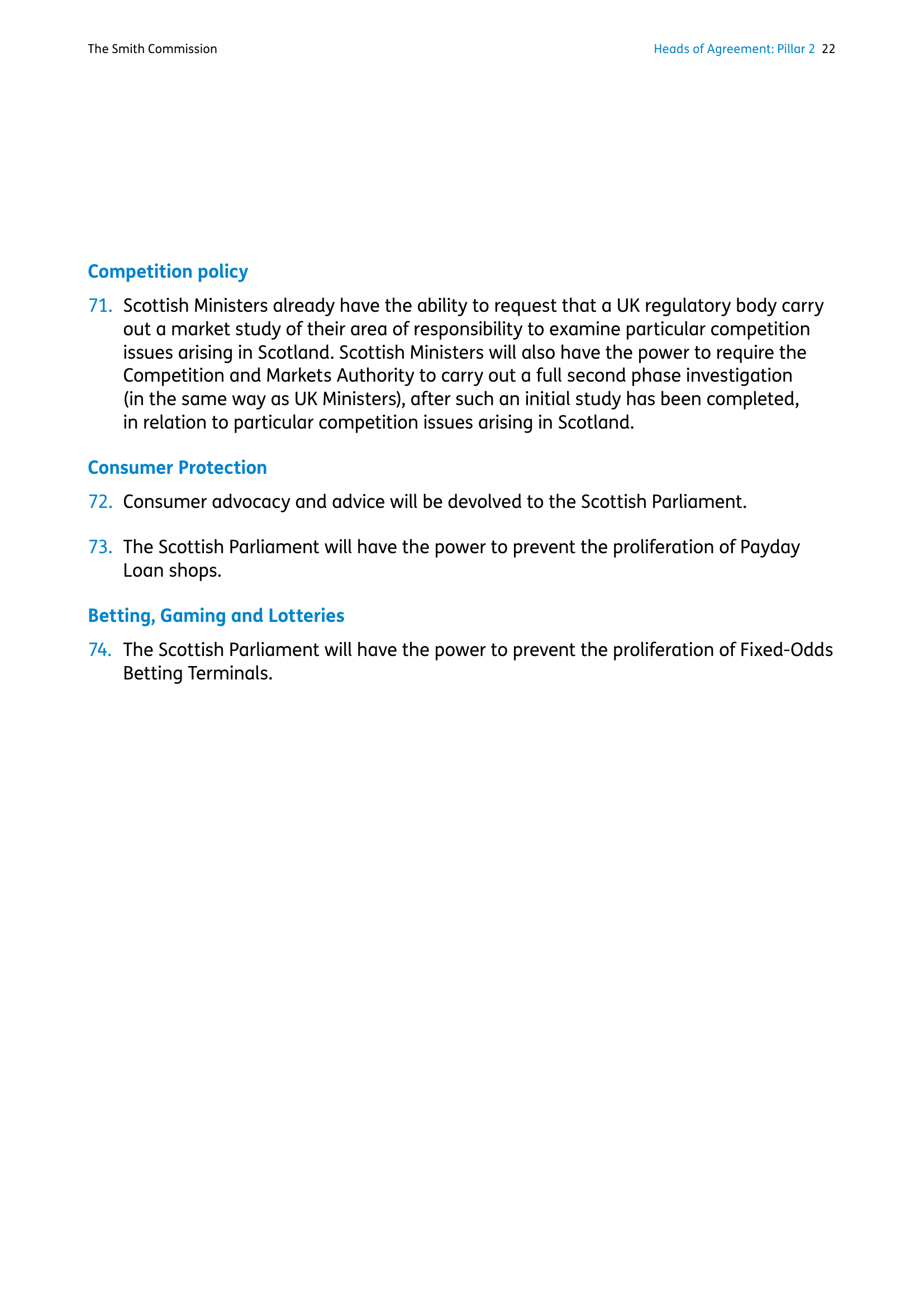
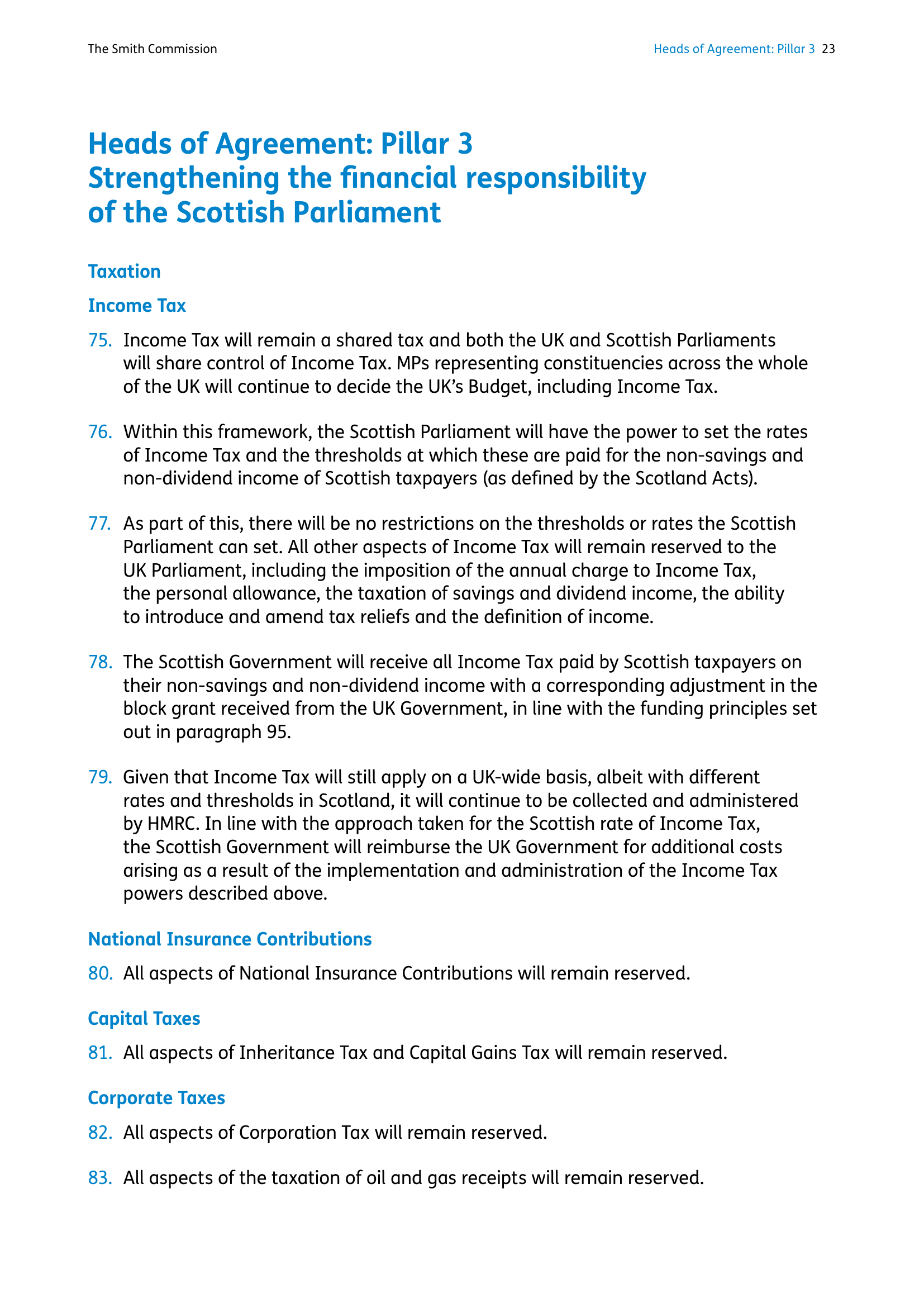
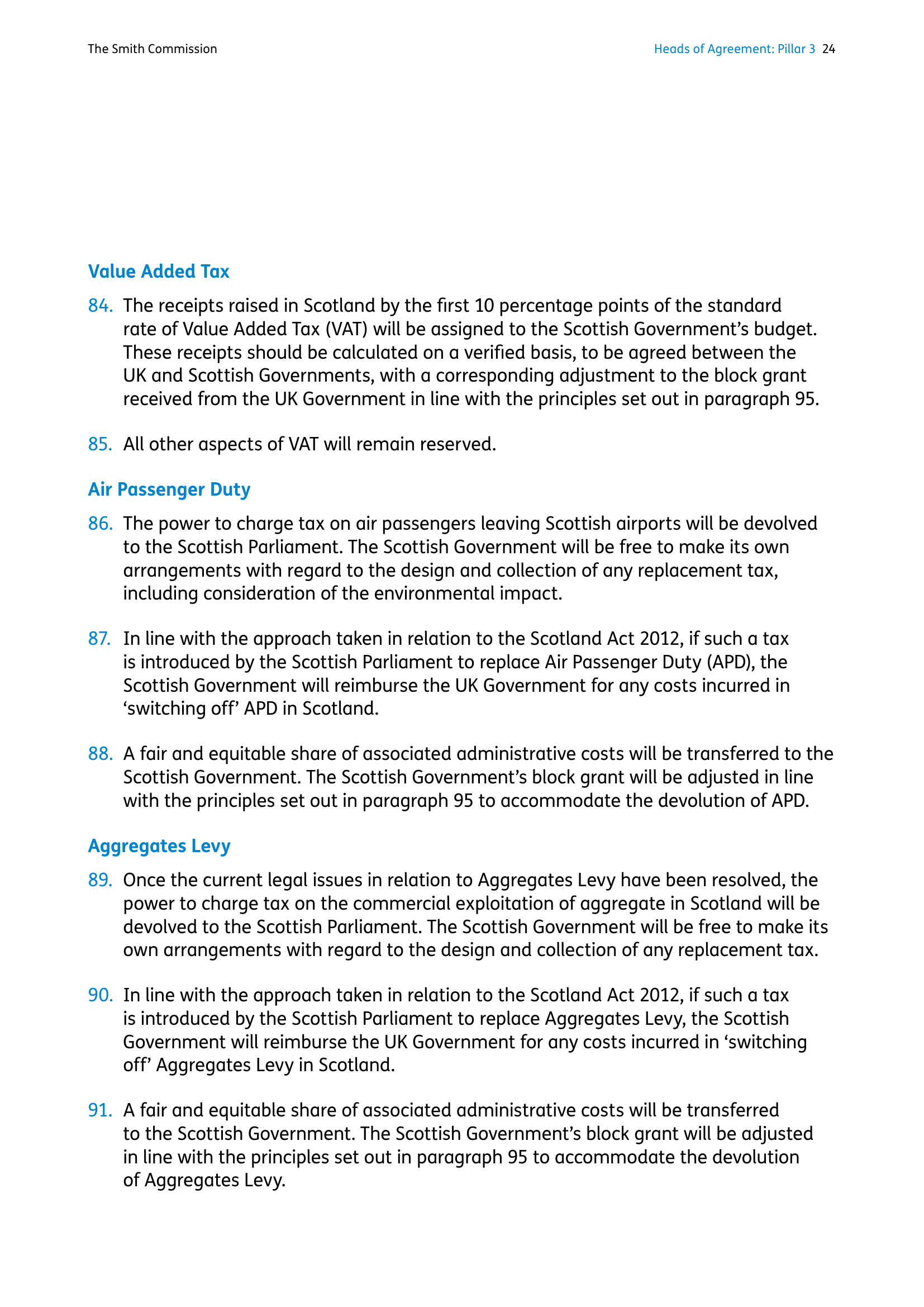
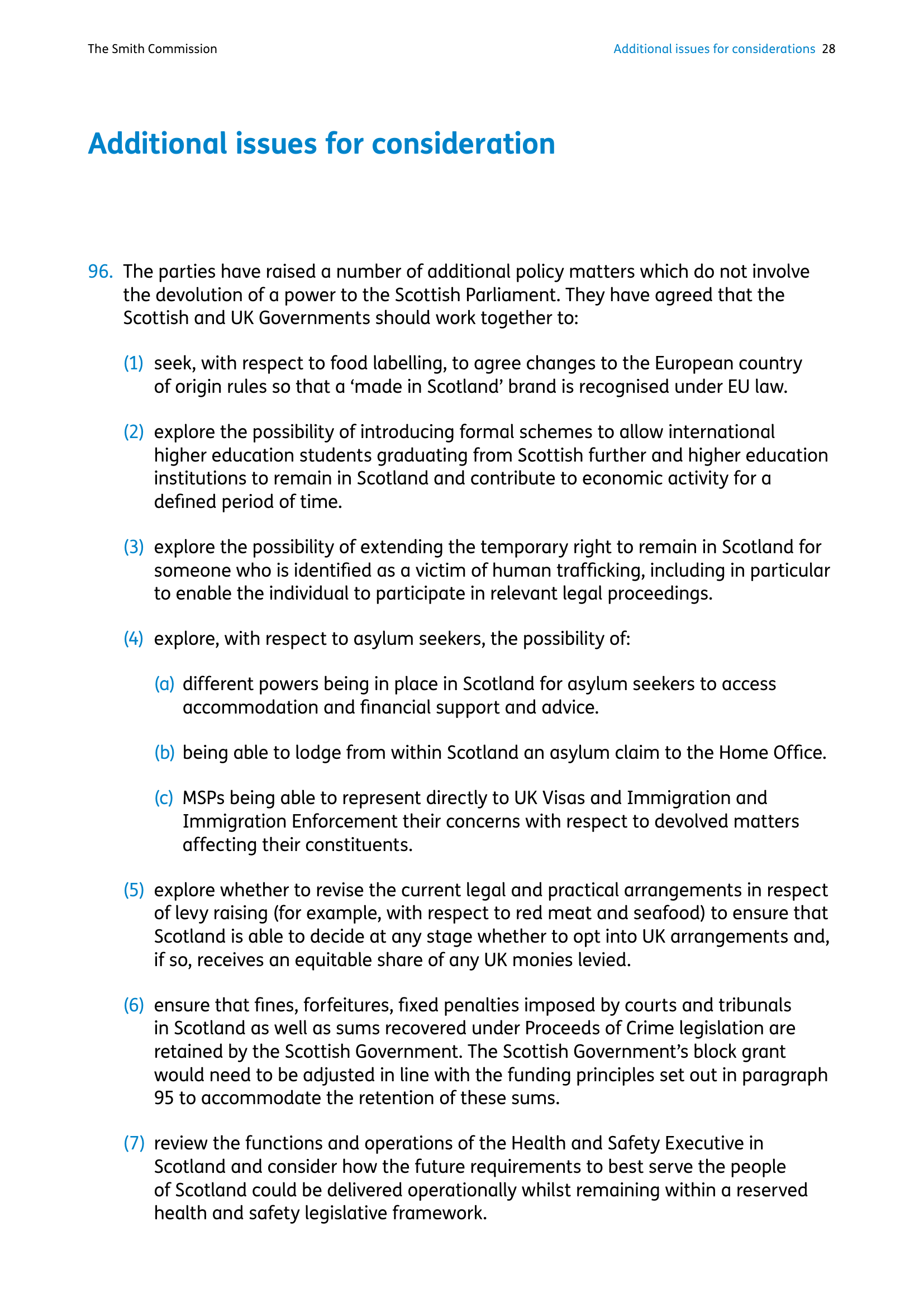
BELOW ARE IMAGES OF THE 28 PAGE REPORT FOR THOSE WHO CANNOT DOWNLOAD THE PDF
SOURCES
Scottish Parliament, Motion S7M-00105, Ambitious for Scotland.
Holyrood Magazine, report on Scottish Parliament vote for referendum powers, 26 May 2026.
UK Parliament Scottish Affairs Committee, The Smith Commission: Proposals for further Devolution to Scotland.
UK Government, Advocate General statement on the Smith Commission, 27 November 2014.
Archived Smith Commission report, Report of the Smith Commission for further devolution of powers to the Scottish Parliament, 27 November 2014.
House of Commons Library, Scottish Devolution: Section 30 Orders, 25 May 2026.
UK Supreme Court, Reference by the Lord Advocate of devolution issues under paragraph 34 of Schedule 6 to the Scotland Act 1998, judgment 23 November 2022.
Scottish Government, Your Right to Decide, 4 September 2025.