
Holyrood has backed a transfer of broadcasting responsibility from Westminster following plans to close the BBC Scotland television channel. The vote raises wider questions about Scottish journalism, public funding, editorial independence and who should control decisions affecting the country’s television and radio services.
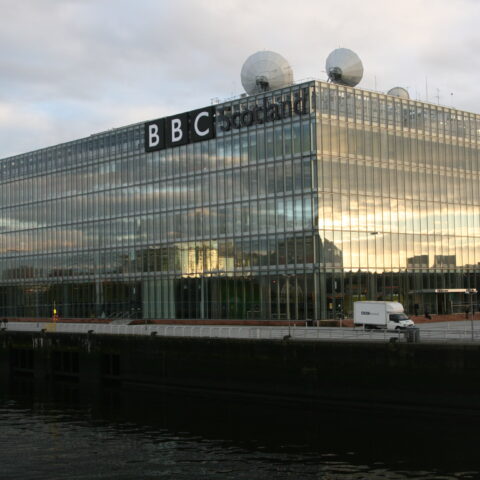
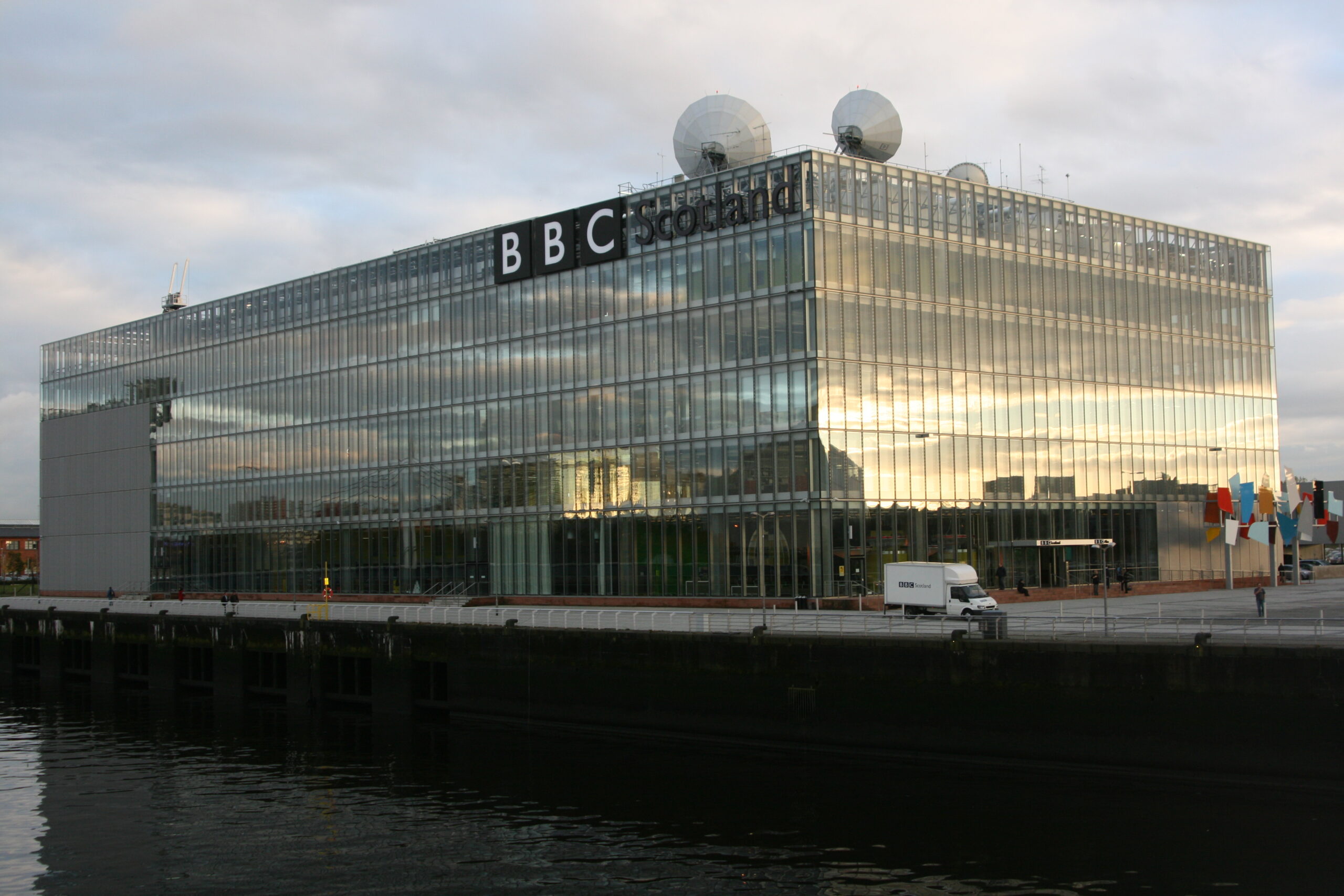
The Scottish Parliament has voted by 70 to 48 to demand that broadcasting powers be transferred from Westminster to Holyrood, following the BBC’s decision to close its dedicated Scotland television channel in spring 2027.
The vote on Tuesday, 10 November, represents a significant escalation of a longstanding constitutional dispute over Scottish broadcasting. It comes as the UK Government prepares decisions on the BBC’s next Royal Charter, which will determine how the corporation is governed, regulated and funded from January 2028.
The Scottish Government opposes the closure of the BBC Scotland linear television channel and the planned discontinuation of Reporting Scotland: News at Seven, arguing that the changes would weaken Scotland-specific journalism and reduce access to public-service broadcasting.
Although the parliamentary vote does not change the law, it establishes Holyrood’s demand for a greater say over broadcasting policy, funding and regulation.
The dispute extends beyond the future of one television channel. It concerns how licence fee income is spent, where television programmes are commissioned, how Scottish communities are represented and what protections would prevent governments from interfering in journalism.
BBC Scotland Channel to Close in Spring 2027
The immediate cause of the parliamentary dispute was the BBC’s announcement on 20 October that its dedicated Scotland television channel would cease operating as a conventional linear service in spring 2027.
Launched on 24 February 2019, the channel provided a separate schedule of Scottish news, documentaries, sport, drama, entertainment and current affairs.
Its creation was intended to strengthen Scotland-specific programming and give audiences a dedicated television service covering Scottish affairs.
Under the announced changes, BBC Scotland will continue as a channel on BBC iPlayer, while selected programmes will appear on BBC One Scotland and BBC Two in Scotland.
BBC Two will regain the ability to provide Scotland-only programming, something that was removed when the dedicated BBC Scotland channel launched in 2019.
The BBC therefore intends to retain a substantial Scottish television presence, rather than transfer every programme exclusively to online viewing.
However, Reporting Scotland: News at Seven will close when the linear channel ends. The programme will not continue in its existing form on iPlayer or another television channel.
That distinction matters. Preserving documentaries, entertainment programmes and sporting coverage is not the same as retaining a dedicated news operation producing daily Scottish journalism.
The closure is expected to involve approximately 10 posts, in addition to 60 BBC Scotland role reductions announced earlier in 2026.
Those figures refer to announced or proposed reductions and should not be interpreted as confirmation that every position has already disappeared.
The changes form part of a wider BBC savings programme intended to achieve approximately £500 million in reductions by 2028.
The corporation has also announced plans to remove BBC Three from linear television and close Radio 4 Extra as a conventional broadcast service, with programming moving to digital platforms.
Its central argument is that audiences increasingly watch programmes through streaming and on-demand services, making it necessary to reconsider the cost of maintaining separate television schedules.
The BBC argues that resources should be concentrated on producing programmes and reaching audiences through the platforms they increasingly use.
There is evidence supporting the broader change in viewing habits. Traditional television audiences have declined as streaming services have expanded.
However, whether audiences can still find Scottish programming as easily when it is distributed through larger platforms remains a separate question.
The loss of a dedicated channel could reduce the prominence of Scotland-focused content even where individual programmes remain available.
The proposed closure of News at Seven also raises a different concern: the loss of an established outlet for Scottish journalism rather than simply a change in the technology used to distribute programmes.
Ofcom Figures Show Why Television Access Matters
Research published by Ofcom on 29 July 2026 provides important context for the debate.
Its Media Nations 2026: Scotland report found that television remains a major source of news about Scotland, although audiences now use a combination of broadcasting, websites, social media and streaming services.
In Ofcom’s survey of 600 adults in Scotland, 34% identified STV or ITV1 as a source of news about Scotland during the previous month, while 33% identified BBC One.
The dedicated BBC Scotland television channel was identified by 15%.
Across television, radio and online services, 54% of respondents reported using at least one BBC source for news specifically about Scotland.
The distinction between news about Scotland and news generally is important.
In the same research, 81% reported using at least one BBC service for news of any kind, illustrating that the corporation’s overall news audience is substantially larger than the audience using its dedicated Scotland television channel.
The 15% figure does not mean that only 15% of Scottish adults watch BBC Scotland programmes. It measures the proportion of respondents who identified the channel as a source of news about Scotland within the survey period.
Ofcom also found that conventional television distribution remains important to many households.
In the first quarter of 2026, 92% of Scottish households had at least one working television.
Approximately 23% used digital terrestrial television as their only television reception platform, meaning they received television through an aerial rather than through cable, satellite or internet-protocol television services.
That does not mean those households had no internet connection or could not watch programmes on smartphones, computers or other devices.
Nevertheless, it demonstrates the continuing importance of conventional terrestrial broadcasting.
At the same time, 76% of Scottish households had at least one television connected directly to the internet.
Ofcom reported that superfast broadband was available to 97% of residential premises in Scotland in January 2026, while full-fibre broadband was available to approximately 75% of households.
Those figures measure availability rather than universal subscription or use.
Broadband coverage does not establish that every household can afford an appropriate connection, possesses suitable equipment or is comfortable using streaming platforms.
These distinctions are especially relevant in rural communities and among households experiencing financial or digital exclusion.
There is also an important difference between moving a particular television channel online and discontinuing digital terrestrial television altogether.
The BBC Scotland proposal concerns one channel. The wider future of terrestrial television distribution involves substantially more services and regulatory decisions.
Nevertheless, the Scottish Parliament explicitly connected the two issues.
A Scottish Green amendment, approved by 78 votes to 39, called on the UK Government to ensure that digital terrestrial television services are not discontinued until every household has an affordable alternative.
That provision became part of the final parliamentary motion.
It extends the debate beyond the BBC Scotland channel to the long-term principle that publicly supported television should remain accessible to people who cannot, or choose not to, rely entirely on internet services.
What the Scottish Parliament Actually Approved
The successful motion was introduced by Cabinet Secretary for Education, Culture and Gaelic Màiri McAllan.
It opposed the proposed closure of the BBC Scotland linear channel and the discontinuation of Reporting Scotland: News at Seven.
It expressed concern about reduced access to Scottish news, possible job losses, investment in the broadcasting industry and the representation of Scottish communities.
It also called for fairer and more sustainable support for Gaelic-language broadcasting.
The motion argued that television licence fee revenue raised in Scotland should be reinvested fully in Scotland.
Its central demand was for the UK Government to devolve responsibility for broadcasting to the Scottish Parliament.
The Scottish Greens secured an amendment from MSP Q Manivannan concerning Scottish production, commissioning decisions, programme ownership and the preservation of universal public-service broadcasting.
The amendment called for creative origination and commissioning decisions to be centred in Scotland, with intellectual property ownership resting with independent producers based in Scotland.
It also argued for sustainable public funding and protections against the commercialisation of core BBC services.
The final motion, incorporating that amendment, was approved by 70 votes to 48, with no abstentions.
It is a parliamentary resolution expressing a political position, not legislation. The UK Government is not legally required to implement its demands.
Scotland’s Political Parties Disagreed on the Solution
The debate revealed broad concern about the future of Scottish broadcasting, but substantial disagreement over whether devolution would provide the answer.
McAllan argued that the present arrangements leave Scottish Ministers with insufficient influence over decisions affecting broadcasting in Scotland.
She maintained that the proposal was not intended to give the Scottish Government control over news coverage or editorial decisions, but to provide Scotland with powers over broadcasting policy comparable to those exercised by UK Ministers.
Scottish Labour supported stronger protection for Scottish broadcasting but did not endorse full devolution.
Katherine Sangster acknowledged concerns about job losses and reduced Scotland-specific journalism while arguing that broadcasters must also respond to changes in audience behaviour.
Labour placed greater emphasis on protecting programming, supporting creative industries, developing professional skills and strengthening Scotland’s position through the BBC Charter Review.
Its amendment was rejected by 93 votes to 26.
Scottish Conservative MSP Murdo Fraser questioned what practical benefits transferring broadcasting powers would provide unless Scottish Ministers were also prepared to increase funding.
The Conservatives argued for maintaining a strong and independent UK-wide BBC while improving Scottish representation, accountability and production investment.
Their alternative amendment called for stronger safeguards through the BBC’s constitutional arrangements rather than full broadcasting devolution.
It was rejected by 69 votes to 48.
The Scottish Liberal Democrats also opposed full devolution as the immediate solution.
David Green raised concerns about the decline in licence fee income and the need to protect regional journalism, Gaelic broadcasting and the BBC’s public-service responsibilities.
His amendment proposed that future permanent BBC Charters should require ratification by the Scottish Parliament.
That would provide Holyrood with a formal constitutional role without necessarily transferring the entire broadcasting policy area.
The proposal was rejected by 109 votes to nine.
Reform UK argued that the BBC’s difficulties were rooted in declining audiences, changing viewing habits and financial pressures.
Victor Currie said the closure reflected a broader failure to adapt to the shift towards digital viewing.
He questioned whether creating an additional layer of broadcasting governance in Edinburgh would address declining television audiences or improve the corporation’s finances.
Reform’s amendment sought a wider review of the BBC’s structure and funding, including consideration of abolishing the television licence fee.
It was rejected by 105 votes to 14.
The Scottish Greens supported the principle of broadcasting devolution while placing particular emphasis on independent producers, public funding and continued access to traditional television services.
Their amendment was the only opposition-party amendment approved.
The outcome demonstrates that MSPs share concerns about Scottish broadcasting’s future but differ considerably over how its financial, constitutional and technological problems should be addressed.
What Powers Scotland Already Holds
Under Schedule 5 of the Scotland Act 1998, broadcasting remains reserved to the UK Parliament. The principal legal arrangements governing television and radio, including the BBC’s Royal Charter and Ofcom’s broadcasting responsibilities, are therefore determined at UK level.
Internet services policy and telecommunications are also reserved matters.
Press regulation occupies a different constitutional position. The explanatory notes accompanying the Media Act 2024 expressly recognise that press regulation is not reserved in Scotland.
This means the Scottish Parliament already has devolved competence in that area, subject to other applicable laws and limits on its legislative powers.
Independent newspapers and digital publishers remain subject to the relevant legal framework, including defamation, privacy and other regulatory obligations. Certain aspects of data protection and online services are governed by UK-wide legislation.
The broadcasting devolution proposal does not extend automatically to newspapers or independent news websites.
Although broadcasting is reserved, Scotland already has a formal role in BBC governance.
Under Article 23 of the current Royal Charter, the BBC must have a non-executive board member designated for Scotland. That appointment requires the agreement of Scottish Ministers.
The BBC board oversees the corporation’s governance and delivery of its public purposes, while Ofcom independently regulates its compliance with applicable broadcasting requirements.
Scottish Ministers can contribute to consultations, make representations to the regulator and raise concerns about proposed changes. Holyrood can also conduct inquiries and publish recommendations.
These powers allow scrutiny and participation but do not give the Scottish Government authority to determine the BBC’s overall structure or compel it to retain a particular channel.
On 26 October, McAllan wrote to Ofcom chief executive Melanie Dawes and Scotland director Glenn Preston asking the regulator to examine the proposed closure.
Her letter raised concerns about accessibility, Scotland-specific journalism, cultural representation and the effect on the wider broadcasting industry.
It also questioned how Scottish audiences would be consulted about a significant change to public-service broadcasting.
Whether Ofcom can require changes depends on the BBC’s regulatory obligations.
A transfer of broadcasting powers would need to define the responsibilities being devolved, their relationship with UK-wide services and the arrangements for funding and independent regulation.
There would also need to be credible protections against political interference.
Public-service broadcasting scrutinises governments and public institutions, including the Scottish Government itself. Any new settlement would need to preserve that function through statutory safeguards, independent oversight and transparent governance.
The present BBC Charter contains protections for the corporation’s editorial and operational independence, while Ofcom operates as an independent regulator.
Supporters of devolution argue that decisions should be made closer to Scottish audiences. Opponents question whether a separate regulatory system would improve services or create additional complexity and opportunities for political pressure.
These concerns would require detailed consideration before any transfer of powers could proceed.
An Earlier Parliamentary Inquiry Considered a Different Model
The November vote follows a parliamentary investigation completed earlier in the year.
On 20 March 2026, the Scottish Parliament’s Constitution, Europe, External Affairs and Culture Committee published its report on broadcasting in Scotland.
The committee raised concerns about the BBC’s representation of Scottish communities and the ability of UK-wide broadcasting arrangements to reflect Scotland’s political and cultural circumstances.
One criticism concerned the failure of some UK-wide news reporting to distinguish clearly between policies applying only in England and those applying in Scotland.
The committee argued that public-service broadcasters should be more precise when explaining the responsibilities of the different governments and legislatures.
It also considered whether the BBC could operate through a more federal structure.
Under such an arrangement, BBC Scotland could gain greater editorial and commissioning authority while remaining part of the wider UK corporation.
A federal structure might allow more programming decisions to be made in Scotland without establishing a separate Scottish broadcasting system.
Its effectiveness would depend on the authority given to Scottish management, the resources available and the powers retained by the central BBC board.
The committee also raised concerns about the weakening of local journalism.
It encouraged Ofcom to scrutinise centralisation that could reduce regional news provision.
Those recommendations remain relevant because the proposed closure of the BBC Scotland channel is taking place alongside wider financial pressures affecting local newspapers, commercial broadcasters and independent news organisations.
Who Controls Scotland’s Licence Fee Money?
The financial argument is central to the Scottish Government’s position.
Figures published in the BBC’s 2025–26 annual reporting estimate that approximately £313 million in television licence fee income was attributable to Scotland.
The BBC reported approximately £278 million in expenditure associated with Scotland.
Within that total, £116 million related to Scotland-specific services, while approximately £103 million was attributed to network programmes produced in Scotland.
Those are important figures, but they require careful interpretation.
The estimated Scottish licence fee income is calculated by applying the distribution of licensed premises to UK-wide licence income.
It does not represent a separate Scottish fund collected and retained exclusively for expenditure in Scotland.
Similarly, the reported territorial expenditure figures measure costs associated with programmes and services produced or delivered in Scotland under the BBC’s accounting arrangements.
They do not represent the full value of BBC services received by Scottish audiences.
People in Scotland also have access to UK-wide and international news, drama, sport, educational programmes, radio and online services produced elsewhere.
Consequently, the difference between £313 million in estimated income and £278 million in reported expenditure does not establish that £35 million has simply been removed from Scotland.
Nor does it establish that Scottish audiences receive no benefit from spending outside Scotland.
The figures also do not demonstrate how much it would cost to maintain the same range of UK-wide and international services under an alternative funding system.
Nevertheless, they reveal a genuine question about how public-service broadcasting expenditure is allocated and reported.
The Scottish Government argues that a larger proportion of licence fee revenue attributable to Scotland should be spent directly on Scottish programming and production.
The BBC operates a UK-wide funding and production model under which programmes produced in one nation may serve audiences throughout the United Kingdom.
A devolved system would need to decide whether licence fee revenue remained pooled, whether Scotland received a dedicated allocation and how any new arrangements would finance shared services.
Those decisions would affect not only television programmes and staffing but also independent production companies, regional facilities and the wider creative economy.
The question is therefore more complex than comparing two annual totals.
It concerns the balance between locally controlled broadcasting resources and the benefits of maintaining a larger shared broadcasting system.
Gaelic Broadcasting Reveals a Separate Funding Dispute
The future of Gaelic broadcasting was another prominent issue in Tuesday’s debate.
MG ALBA, which works with the BBC to provide BBC ALBA, receives its core funding from the Scottish Government.
That support amounts to approximately £15 million annually, alongside BBC expenditure associated with the Gaelic television service.
The BBC’s 2025–26 accounts recorded approximately £10 million in expenditure on BBC ALBA, mainly supporting personnel, news, current affairs and children’s programming.
In evidence to a Westminster parliamentary inquiry, the UK Government estimated that MG ALBA supports approximately 340 full-time equivalent jobs and contributes £17.2 million in gross value added to the economy.
A substantial proportion of that activity supports production in rural and island communities, including the Western Isles and Skye.
The Scottish Government argues that Gaelic-language broadcasting receives significantly less overall funding than Welsh-language broadcasting.
Its principal comparison is with S4C, the Welsh-language public-service broadcaster, which receives approximately £100 million in licence fee funding alongside other BBC support.
The overall funding arrangements for the two services are plainly different.
However, the UK Government disputes the interpretation that the disparity necessarily establishes unequal treatment.
In evidence submitted to Parliament, it calculated combined public support at approximately £358.68 per Gaelic speaker compared with £222.92 per Welsh speaker.
Those figures were also the subject of a formal correction issued by the UK Government in October after earlier calculations used outdated census information and overstated BBC investment in S4C.
The revised figures are based on different population totals and funding arrangements.
They are not a complete measure of whether Gaelic and Welsh-language broadcasting provide equivalent services.
Television production costs do not increase or decrease in direct proportion to the number of people speaking a language.
The range of programmes, geographic distribution of audiences, cultural objectives, availability of services and need to sustain production skills all affect the amount of funding required.
Gaelic broadcasting also serves learners and audiences beyond those recorded as Gaelic speakers in census figures.
The two broadcasting systems differ in their statutory status and long-term funding arrangements.
The UK Government has acknowledged that the future support of MG ALBA and Gaelic broadcasting warrants consideration through the BBC Charter Review.
The Scottish Government argues that Gaelic-language media should receive greater funding certainty and a more secure long-term settlement.
The dispute concerns whether the present arrangements provide Gaelic broadcasting with the stability, resources and institutional protections needed to sustain its public-service role.
Scottish Production Jobs and Intellectual Property
The parliamentary motion also raises questions about the economic benefits of television production.
Broadcasting employs more than presenters, journalists and programme makers.
It supports camera operators, sound engineers, technicians, editors, designers, researchers, writers, production managers and independent creative businesses.
The location of commissioning decisions can influence where these jobs are created and sustained.
It can also determine whether Scottish companies retain ownership of the programmes they develop.
A production filmed in Scotland does not necessarily deliver the same long-term economic benefits as one conceived, commissioned and owned by a Scottish company.
Where intellectual property rights are held elsewhere, income from future licensing, international distribution and programme sales may also flow outside Scotland.
That distinction was reflected in the successful Scottish Green amendment.
The amendment called for creative origination and commissioning decisions to be centred in Scotland, with ownership of intellectual property resting with independent producers based in the country.
The issue extends beyond the BBC.
Scottish production companies compete for commissions within a wider UK and international market increasingly shaped by large broadcasters and streaming platforms.
Greater production expenditure in Scotland could support employment, but the location of business ownership and the retention of programme rights are also important to the long-term value created.
A successful programme can generate income and employment long after its original broadcast.
The final parliamentary motion establishes a political objective. It does not create a new procurement requirement or legally compel broadcasters to award contracts to Scottish companies.
Any binding changes would require separate decisions about commissioning, funding, contractual requirements or regulation.
The BBC Charter Review Creates a Deadline
The immediate opportunity to reconsider broadcasting governance lies in the BBC’s Royal Charter Review.
The present Charter expires on 31 December 2027.
Its replacement is expected to take effect on 1 January 2028.
The UK Government launched its review and public consultation on 16 December 2025.
The consultation closed on 10 March 2026 and received more than 124,000 responses.
In a parliamentary answer issued on 12 October, UK Ministers confirmed that they were examining those submissions and expected to publish a White Paper setting out policy decisions before the end of 2026.
The White Paper could address BBC governance, funding, accountability, the licence fee and responsibilities to audiences throughout the United Kingdom.
It could strengthen Scottish representation, revise governance arrangements or introduce additional commitments to Scottish programming.
However, full broadcasting devolution would require legislative changes beyond the ordinary renewal of the Royal Charter.
No agreed timetable for such a transfer has been established, and no detailed financial or regulatory model has been published showing how the proposed system would operate.
The Charter Review therefore provides an immediate opportunity to influence broadcasting policy, while the broader question of devolution remains unresolved.
The Wider Question for Scotland’s Media
The parliamentary debate has drawn attention to pressures extending beyond the BBC.
Scottish media organisations operate in a market where traditional television audiences are declining, advertising expenditure has increasingly shifted towards major online platforms and the economics of local journalism remain difficult.
Regional newspapers and independent digital publishers face different financial pressures from publicly funded broadcasters.
They depend on combinations of advertising, subscriptions, commercial partnerships, reader support and other income to sustain reporting.
A reduction in Scotland-specific television journalism can affect the range and diversity of news available to audiences.
However, protecting independent local journalism requires more than changing broadcasting responsibilities.
It also involves sustainable financing, access to public information, distribution, professional reporting capacity and the ability of smaller organisations to remain operational.
The March parliamentary inquiry recognised concerns about the weakening of local news provision, and those concerns were raised again during Tuesday’s debate.
The BBC’s decisions influence more than its own television schedules.
They affect commissioning budgets, employment opportunities, specialist skills, production facilities and the availability of Scotland-focused news.
Commercial broadcasters, newspapers and independent digital publishers provide additional journalism and cultural coverage that the BBC cannot supply alone.
The constitutional dispute will now continue through the Royal Charter Review and any subsequent discussions over devolution.
Yet the underlying challenge remains whether Scotland can maintain a diverse and financially sustainable media environment in which public-service broadcasters, commercial organisations and independent publishers all have the capacity to operate.
The immediate parliamentary decision was a demand for broadcasting powers.
The wider issue is how Scotland preserves access to independent journalism, Scottish programming and reliable public information as both broadcasting technology and the economics of news continue to change.
Sources
The BBC and Public Service Broadcasting in Scotland — Official Report and Parliamentary Division. Scottish Parliament, 10 November 2026.
https://www.parliament.scot/chamber-and-committees/official-report/search-what-was-said-in-parliament/meeting-of-parliament-10-11-2026?iob=226772&meeting=20328
The BBC and Public Service Broadcasting in Scotland — Motion S7M-01962. Scottish Parliament, 9 November 2026.
https://www.parliament.scot/chamber-and-committees/votes-and-motions/S7M-01962
The BBC and Public Service Broadcasting in Scotland — Amendment 4. Scottish Parliament, 9 November 2026.
https://www.parliament.scot/chamber-and-committees/votes-and-motions/S7M-01962-4
The BBC and Public Service Broadcasting in Scotland — Amendment 3 (Reform UK). Scottish Parliament, 9 November 2026.
https://www.parliament.scot/chamber-and-committees/votes-and-motions/S7M-01962-3
Media Nations 2026: Scotland. Ofcom, 29 July 2026.
https://www.ofcom.org.uk/media-use-and-attitudes/media-habits-adults/media-nations-2026
Closure of BBC Scotland Channel: Culture Secretary Letter to Ofcom. Scottish Government, 26 October 2026.
https://www.gov.scot/publications/closure-of-bbc-scotland-channel-culture-secretary-letter-to-ofcom/
BBC Group Annual Report and Accounts for 2025 to 2026. BBC, published by the UK Government, 14 July 2026.
https://www.gov.uk/government/publications/bbc-group-annual-report-and-accounts-for-2025-to-2026
Committee Calls for BBC to Have Stronger Scottish Voice and to Distinguish Devolved Powers in News Coverage. Scottish Parliament, 20 March 2026.
https://www.parliament.scot/about/news/news-listing/committee-calls-for-bbc-to-have-stronger-scottish-voice
Scotland Act 1998, Schedule 5 — Reserved Matters. UK Parliament, 1998, as amended.
https://www.legislation.gov.uk/ukpga/1998/46/schedule/5
Media Act 2024 — Explanatory Notes, Territorial Extent and Application. UK Parliament, 2024.
https://www.legislation.gov.uk/ukpga/2024/15/notes/division/5/index.htm
BBC Royal Charter and Framework Agreement. UK Government, 2016.
https://www.gov.uk/government/publications/bbc-charter-and-framework-agreement/bbc-charter
Written Evidence on Gaelic Broadcasting, FOGB0022. Department for Digital, Culture, Media and Sport, submitted to the UK Parliament, 2026.
https://committees.parliament.uk/writtenevidence/169773/html/
Correction of Figures for Gaelic and Welsh-Language Broadcasting. Department for Digital, Culture, Media and Sport, UK Parliament, 12 October 2026.
https://questions-statements.parliament.uk/written-statements/detail/2026-10-12/HLWS366
BBC Royal Charter Review — Green Paper and Public Consultation. Department for Culture, Media and Sport, 16 December 2025.
https://www.gov.uk/government/consultations/britains-story-the-next-chapter-the-bbc-royal-charter-review-green-paper-and-public-consultation
BBC Royal Charter Review — Written Parliamentary Answer. UK Parliament, 12 October 2026.
https://questions-statements.parliament.uk/written-questions/detail/2026-09-14/29528