
Scotland’s Public-Sector Reorganisation Now Reaches Local Government
Scotland’s public administration is entering a five-year reorganisation affecting health boards, councils, environmental agencies, transport bodies, regulators, public records, corporate services and digital systems. A proposal published on 21 September has now added the clearest local-government model yet: Scotland’s existing arrangements could be replaced by six to ten regional authorities and 120 to 160 community authorities, while separate national reforms reduce health boards and public bodies and expand shared administrative and digital infrastructure. Modern Scot maps the organisations that exist now, the changes the Scottish Government has actually announced, and what remains unresolved about powers, jobs, offices, records and where functions will eventually be carried out.
The Scottish Government began September with a public-sector structure containing 14 territorial NHS boards, 32 councils, 31 health and social-care integration areas and a national public-body directory extending across executive agencies, regulators, commissioners, public corporations, health organisations and other statutory bodies.
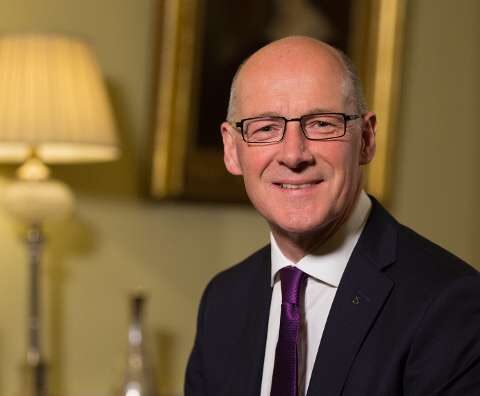
On 1 September, First Minister John Swinney announced a five-year programme intended to alter that structure substantially.
The Government describes the programme as a “rewiring” of the Scottish state. Its Programme for Government says the number of public bodies will be substantially reduced, some named organisations will be combined or brought into government, other sectors will be reviewed for merger, and more administrative functions will operate through common systems and shared services.
Twenty days later, the local-government element became considerably more specific.
The Government published an opening proposition under which existing local-government arrangements could be replaced by six to ten regional authorities responsible principally for strategic decisions and 120 to 160 community authorities operating closer to individual towns, districts, neighbourhoods and islands.
Councillors would continue to be elected at the existing ward level and would sit on both the relevant community authority and regional authority. The same overall regional administrative and corporate structures would support both levels.
The Government also proposes a statutory obligation requiring regional authorities to devolve appropriate functions to community authorities, while island communities could receive bespoke Single Authority Models.
That does not amount to a completed replacement map.
The local-government paper explicitly describes the model as a starting point for discussion rather than the Government’s final position. Boundaries have not been drawn. The final allocation of statutory powers has not been agreed. Funding arrangements and local or regional revenue-raising powers remain unresolved.
Other parts of the programme are at different stages.
Replacing 14 territorial health boards with two strategic boards is an announced government policy. Exploring a single ferries body is not yet a decision to establish one. Investigating consolidation of organisations managing public land does not identify which bodies will eventually disappear.
Nor does the disappearance of an organisational name necessarily mean that its work disappears.
Environmental regulation will still be required if environmental bodies are combined. Roads and rail will still require administration if Transport Scotland ceases to operate as a separate executive agency. Hospitals and community health services will continue to function when the territorial-board structure changes.
The questions are therefore no longer confined to how many organisations remain.
They include which functions move upwards, which move downwards, who controls them, which local structures survive, where records are held, who employs the staff, where administrative work is located and how much practical independence remains when several legally separate authorities use the same corporate or digital systems.
Scotland’s Reorganisation at a Glance
Territorial NHS Boards
Scotland currently has 14 territorial NHS boards:
| Existing territorial NHS board | Announced change |
|---|---|
| NHS Ayrshire & Arran | |
| NHS Borders | |
| NHS Dumfries & Galloway | |
| NHS Fife | |
| NHS Forth Valley | |
| NHS Grampian | The 14 territorial boards are to be replaced by two Strategic Health Boards. |
| NHS Greater Glasgow and Clyde | |
| NHS Highland | |
| NHS Lanarkshire | |
| NHS Lothian | |
| NHS Orkney | |
| NHS Shetland | |
| NHS Tayside | |
| NHS Western Isles |
The Government has not yet published the final boundaries, headquarters, membership or detailed division of responsibilities of the two replacement boards.
The current 14-board structure and the Government’s intention to replace it with two strategic boards are both explicit in the official record.
National and Special NHS Bodies
Alongside the territorial boards, the current national health-body landscape includes:
| Current national or special health body | Present position |
|---|---|
| Healthcare Improvement Scotland | Government intends further reduction of special health boards |
| Mental Welfare Commission for Scotland | Final future structure not published |
| National Waiting Times Centre Board / NHS Golden Jubilee | Final future structure not published |
| NHS 24 | Final future structure not published |
| Public Health Scotland | Final future structure not published |
| Public Services Delivery Scotland | Created in 2026 from NHS Education for Scotland and NHS National Services Scotland |
| Scottish Ambulance Service Board | Final future structure not published |
| State Hospital Board for Scotland | Final future structure not published |
The Programme for Government says the reduction from 14 territorial boards to two will be accompanied by further reduction in the number of special boards. It does not yet identify the complete next-stage structure.
Local Government: 32 Councils, a Proposed 6–10 Regions and 120–160 Community Authorities
Scotland’s 32 councils continue to exist under the present statutory arrangements:
| Council | Council |
|---|---|
| Aberdeen City Council | Aberdeenshire Council |
| Angus Council | Argyll and Bute Council |
| City of Edinburgh Council | Clackmannanshire Council |
| Comhairle nan Eilean Siar | Dumfries and Galloway Council |
| Dundee City Council | East Ayrshire Council |
| East Dunbartonshire Council | East Lothian Council |
| East Renfrewshire Council | Falkirk Council |
| Fife Council | Glasgow City Council |
| Highland Council | Inverclyde Council |
| Midlothian Council | Moray Council |
| North Ayrshire Council | North Lanarkshire Council |
| Orkney Islands Council | Perth and Kinross Council |
| Renfrewshire Council | Scottish Borders Council |
| Shetland Islands Council | South Ayrshire Council |
| South Lanarkshire Council | Stirling Council |
| West Dunbartonshire Council | West Lothian Council |
The legal structure has not yet changed. The Government has not abolished the 32 councils or published legislation creating their replacements.
It has, however, now gone considerably further than the general commitment to regional government contained in the 1 September Programme for Government.
Its opening proposition is that present local-government arrangements should be replaced by between six and ten regional authorities and between 120 and 160 community authorities.
Regional authorities would concentrate on strategic functions.
The Government identifies regional economic development and business support, housing, strategic planning, employability support and transport among the areas that could operate at that scale.
Regional authorities would also continue to assure delivery of major services currently provided by councils, including environmental services such as waste and cleansing, civil defence and resilience, regulatory services, early learning and education.
The proposed community authorities would operate at a smaller geographical scale.
The Government gives examples such as Kilmarnock, Leith, Blairgowrie and Rattray and says authorities could be organised around towns, districts, villages or islands where people recognise a distinct community.
Functions considered for that level include householder planning applications, community planning, licensing decisions, management of historic environments, open space and greenspace, town-centre regeneration and the provision and maintenance of local leisure, sport and cultural facilities.
Community authorities could also have a role in planning, commissioning and delivering joined-up community support.
The proposal does not create another class of elected politician.
Councillors would continue to be elected at existing ward level and would sit on both the relevant community authority and the associated regional authority.
The same overall regional administrative and corporate structures would support both levels.
That creates an important separation between the geographical scale at which a decision is made and the scale at which the machinery supporting that decision operates.
A community authority could therefore make a local licensing, planning or greenspace decision while depending upon a regional structure for finance, human resources, procurement, technology or other corporate administration.
The Government says the model should include a statutory obligation requiring regional authorities to devolve appropriate functions to community authorities.
It also says functions currently sitting within national public bodies could potentially be brought into the regional or local democratic sphere.
For island communities, the Government proposes separate consideration of Island Single Authority Models rather than assuming that Orkney, Shetland and the Western Isles must fit the same structure as mainland Scotland.
No boundaries have yet been published for the proposed regions or community authorities.
No final list of powers has been allocated to either level.
The Government says the division of responsibility between national, regional and community levels should be determined first. Funding arrangements would then follow, including consideration of local and regional revenue-raising powers.
Health and Social-Care Integration
Scotland also has 31 health and social-care integration areas:
| Integration area | Integration area |
|---|---|
| Aberdeen City | Aberdeenshire |
| Angus | Argyll and Bute |
| Clackmannanshire and Stirling | Dumfries and Galloway |
| Dundee City | East Ayrshire |
| East Dunbartonshire | East Lothian |
| East Renfrewshire | Edinburgh |
| Falkirk | Fife |
| Glasgow City | Highland |
| Inverclyde | Midlothian |
| Moray | North Ayrshire |
| North Lanarkshire | Orkney Islands |
| Perth and Kinross | Renfrewshire |
| Scottish Borders | Shetland Islands |
| South Ayrshire | South Lanarkshire |
| West Dunbartonshire | West Lothian |
| Western Isles / Na h-Eileanan Siar |
Their future now sits at the intersection of two restructuring programmes.
The Government is replacing the 14 territorial health boards with two strategic boards while also proposing regional and community local government.
Its 21 September paper says all options for social care services and social work should be considered in light of those new structures.
It says the current integration arrangements are not meeting people’s needs in all circumstances and places social care, primary and community health, housing and family support within the same discussion.
No final replacement structure for the 31 integration areas has been agreed.
Environment
Four existing organisations are explicitly identified in the environmental restructuring:
| Existing organisation | Government plan |
|---|---|
| Scottish Environment Protection Agency — SEPA | |
| NatureScot | Single overarching environmental body |
| Zero Waste Scotland | |
| Scottish Forestry | Potential inclusion in the same structure |
SEPA, NatureScot and Zero Waste Scotland are explicitly intended to enter the new environmental organisation.
Scottish Forestry may also be included.
The Government has not yet published the final statutory structure, headquarters, regional office arrangements or workforce design.
Food Regulation and Scrutiny
| Existing organisation | Proposed change |
|---|---|
| Food Standards Scotland | Becomes institutional home for additional functions |
| Scottish Food Commission | Integrate into Food Standards Scotland |
| Scottish Pubs Code Adjudicator | Integrate into Food Standards Scotland |
The Government says the independent scrutiny functions of the Scottish Food Commission and Scottish Pubs Code Adjudicator are to be maintained after integration.
Architecture and Housing
| Existing organisation | Proposed change |
|---|---|
| Architecture & Design Scotland | Embed within More Homes Scotland |
This is an announced government measure rather than a general review.
Transport
Transport Scotland itself is only one organisation within the national transport structure.
| Existing organisation | Announced position |
|---|---|
| Transport Scotland | Return to core Scottish Government |
| Mobility and Access Committee for Scotland | Consultation on transfer into Scottish Government |
| National Smart Ticketing Advisory Board | Functions under review |
| Caledonian Maritime Assets Ltd | Within wider transport and ferry landscape under consideration |
| David MacBrayne Ltd | Within wider transport and ferry landscape under consideration |
| Highlands and Islands Airports Ltd | Remaining transport bodies subject to merger review |
| Scottish Canals | Remaining transport bodies subject to merger review |
| Scottish Road Works Commissioner | Remaining transport bodies subject to merger review |
| Scottish Rail Holdings Ltd | Remaining transport bodies subject to merger review |
The Programme for Government does not say that all of the latter organisations will merge.
It says remaining transport bodies will be reviewed to identify merger opportunities.
The 21 September local-governance proposal adds another possible route for restructuring.
The Government says regional authorities could take responsibility for relevant areas of transport, specifically including Regional Transport Partnerships and potentially some functions currently held by Transport Scotland.
Scotland currently has seven statutory Regional Transport Partnerships:
| Regional Transport Partnership | Area |
|---|---|
| HITRANS | Highlands and Islands |
| NESTRANS | North East Scotland |
| SEStran | South East Scotland |
| SWestrans | South West Scotland |
| Strathclyde Partnership for Transport — SPT | Strathclyde |
| TACTRAN | Tayside and Central Scotland |
| ZetTrans | Shetland |
The Government has not announced that all seven partnerships will be abolished.
The new paper instead places their functions within the discussion about what a future regional authority could do.
That leaves several possible outcomes open: existing partnerships could remain, functions could move, structures could be combined, or different arrangements could emerge in different parts of Scotland.
Clyde and Western Isles Ferries
The present publicly controlled ferry structure divides responsibilities between several organisations.
| Organisation | Current role |
|---|---|
| Transport Scotland | Government policy, sponsorship and contract functions |
| Caledonian Maritime Assets Ltd — CMAL | Vessel and harbour asset ownership |
| David MacBrayne Ltd | Publicly owned parent company |
| CalMac Ferries Ltd | Ferry operator |
The Government says it will explore creation of a single ferries body for Clyde and Western Isles services.
No final replacement organisation has been published.
The proposed regional-government model could also affect the wider transport landscape, but the 21 September paper does not state that ferry responsibilities will be transferred to regional authorities.
Records and Registers
| Existing organisation | Government position |
|---|---|
| National Records of Scotland | Reform activity announced |
| Registers of Scotland | Reform activity announced |
The Programme for Government does not state that these organisations will merge.
It commits the Government to reform activity involving both.
National Records of Scotland is responsible for functions including the national archives, civil registration, census and demographic work. Registers of Scotland maintains Scotland’s principal land and property registers.
Parliamentary Commissioners and Ombudsmen
The present directory includes:
| Body |
|---|
| Ethical Standards Commissioner |
| Patient Safety Commissioner |
| Scottish Biometrics Commissioner |
| Scotland’s Commissioner for Children and Young People |
| Scottish Human Rights Commission |
| Scottish Information Commissioner |
| Scottish Public Services Ombudsman |
| Standards Commission for Scotland |
The Government says it intends to work with the Scottish Parliament on previous reviews of this landscape with a view to reducing the number of bodies while protecting their functions.
No final structure has been published.
Revenue Scotland
Revenue Scotland remains a separate non-ministerial office.
The Government intends to explore whether it can take on a broader range of revenue functions.
That represents possible expansion of its responsibilities rather than an announced merger.
Inspectorates, Audit and Scrutiny
The Programme for Government commits ministers to rationalising the number of bodies performing inspectorate functions and to working with Audit Scotland on simplification of the audit and scrutiny landscape.
Current nationally listed inspectorate and scrutiny organisations include, among others:
| Existing body |
|---|
| Audit Scotland |
| Care Inspectorate |
| Healthcare Improvement Scotland |
| HM Inspector of Constabulary in Scotland |
| HM Chief Inspector of Education in Scotland |
| HM Chief Inspector of Prisons in Scotland |
| HM Chief Inspector of Prosecution in Scotland |
| HM Fire Service Inspectorate in Scotland |
| Mental Welfare Commission for Scotland |
| Scottish Housing Regulator |
| Environmental Standards Scotland |
| Scottish Information Commissioner |
The Government has not published a definitive list saying which of these organisations will be merged, retained or otherwise structurally altered.
Culture
The Government says it will assess whether management of Scotland’s national cultural assets can be simplified.
It has not announced a completed national cultural merger plan.
Current national bodies in this field include:
| National cultural or heritage body |
|---|
| Creative Scotland |
| Historic Environment Scotland |
| National Galleries of Scotland |
| National Library of Scotland |
| National Museums Scotland |
| Royal Botanic Garden Edinburgh |
None should be described as a confirmed merger target unless and until the Government identifies a proposed structure.
The local-government proposal introduces a separate cultural question.
Community authorities could potentially take responsibility for local leisure, sport and cultural facilities and aspects of the historic environment.
That is distinct from the Government’s examination of national cultural organisations.
Public Land
The Programme for Government commits ministers to investigating consolidation of public bodies involved in management of public land assets.
Bodies with significant land-management, land-policy or estate functions include Forestry and Land Scotland, Scottish Forestry, NatureScot, Crown Estate Scotland, Scottish Land Commission, Historic Environment Scotland, the national park authorities and others.
The Government has not yet published an authoritative final list of the organisations to be included in that consolidation exercise.
The local-governance proposal also leaves open the possibility that some functions currently within national public bodies could move into regional or local democratic control.
It does not identify which land-management functions, if any, would do so.
Shared Corporate Government Already Exists
The proposed institutional changes are only one layer of the reform.
A second layer already exists underneath a substantial number of organisations.
On 1 October 2024, the Scottish Government implemented Oracle Cloud for its own corporate administration and for 32 other public-sector organisations.
The shared service covers corporate functions including human resources, finance and payroll.
The Scottish Government supplied the full list in a 2025 Freedom of Information response.
The 32 Organisations Using the Scottish Government Oracle Cloud Shared Service
| No. | Organisation |
|---|---|
| 1 | Accountant in Bankruptcy |
| 2 | Boundaries Scotland |
| 3 | Community Justice Scotland |
| 4 | Consumer Scotland |
| 5 | Crofting Commission |
| 6 | Disclosure Scotland |
| 7 | Education Scotland |
| 8 | Environmental Standards Scotland |
| 9 | Food Standards Scotland |
| 10 | Mental Welfare Commission for Scotland |
| 11 | National Records of Scotland |
| 12 | Office of the Advocate General for Scotland |
| 13 | Office of the Scottish Charity Regulator |
| 14 | Office of the Secretary of State for Scotland |
| 15 | Parole Board for Scotland |
| 16 | Police Investigations and Review Commissioner |
| 17 | Redress Scotland |
| 18 | Revenue Scotland |
| 19 | Risk Management Authority |
| 20 | Scottish Courts and Tribunals Service |
| 21 | Scottish Criminal Cases Review Commission |
| 22 | Scottish Fiscal Commission |
| 23 | Scottish Housing Regulator |
| 24 | Scottish Law Commission |
| 25 | Scottish Parliamentary Corporate Body |
| 26 | Scottish Public Pensions Agency |
| 27 | Scottish Road Works Commissioner |
| 28 | Scottish Social Services Council |
| 29 | Care Inspectorate |
| 30 | Social Security Scotland |
| 31 | Student Awards Agency Scotland |
| 32 | Transport Scotland |
The significance of this arrangement is not that those organisations have become one organisation.
They have not.
It shows instead that institutional independence and administrative independence are different things.
Separate bodies can retain different statutory powers, boards and accountability arrangements while sharing the same underlying corporate platform.
That separation becomes particularly relevant under the Government’s new local-authority proposal.
The 21 September model envisages community and regional authorities having different decision-making responsibilities while relying upon the same regional administrative and corporate structure.
The Programme for Government also proposes further consolidation of functions including estates and procurement and says public-sector payments, call handling and shared services will be examined for further simplification.
The Named Digital and Data Infrastructure
The phrase “multiple public-service data systems” conceals a more detailed architecture.
Several distinct systems and common digital components are being developed or expanded.
They perform different functions and should not be treated as one database.
| System or programme | Function |
|---|---|
| ScotAccount | Common Scottish Government account and digital identity-verification capability |
| ScotGov App | Planned common entry point through which citizens can engage with multiple government services |
| Digital Mailbox | Secure digital correspondence from public services |
| ScotPayments | Shared payments capability |
| ePass | Common approach for services including licences, permits, casework and related functions |
| Data Exchange | Infrastructure intended to make data held by one organisation available to another under privacy and security controls |
| “Tell us once” | Service-design policy intended to reduce repeated provision of the same information across public services |
| Shared data definitions and datasets | Standardisation intended to enable greater reuse of information across organisations |
| MyCare.scot | National digital health and social-care service |
| Digital Health and Care Record | Planned integrated digital health and care record |
| Oracle Cloud shared service | Common corporate HR, finance and payroll infrastructure rather than a citizen-service database |
Scottish Government digital-service material identifies ScotAccount, Digital Mailbox, ScotPayments and ePass as reusable common components.
The Programme for Government adds the ScotGov App, Data Exchange, shared datasets and “tell us once” to the current reform programme.
MyCare.scot is being built using common capabilities including ScotAccount and Digital Mailbox and is intended over time to provide access to integrated health and social-care information.
These systems should not be described as one consolidated Scottish database.
The published architecture is more complicated.
The Government is, however, explicitly seeking greater interoperability and reuse.
Data Exchange is described as making data held by one organisation available to other organisations while protecting privacy and security.
“Tell us once” is intended to reduce the number of occasions on which people must provide the same information to different public services.
That is a different form of consolidation from formally merging institutions.
The Entire National Public-Body Landscape
The phrase “more than 130 public bodies” is difficult to interpret without seeing the names.
The following is the national directory maintained by the Scottish Government and updated on 16 September 2026.
The directory divides the landscape into formal categories.
The list does not mean every organisation has been selected for merger.
The Government has named some bodies for specific action and has separately committed to reviewing remaining public bodies for efficiency, joint working or possible merger.
Executive Non-Departmental Public Bodies
| No. | Organisation |
|---|---|
| 1 | Accounts Commission for Scotland |
| 2 | Architecture and Design Scotland |
| 3 | Bòrd na Gàidhlig |
| 4 | Cairngorms National Park Authority |
| 5 | Care Inspectorate |
| 6 | Children’s Hearings Scotland |
| 7 | Community Justice Scotland |
| 8 | Creative Scotland |
| 9 | Crofting Commission |
| 10 | David MacBrayne Ltd |
| 11 | Ferguson Marine (Port Glasgow) Holdings Ltd |
| 12 | Highlands and Islands Airports Ltd |
| 13 | Highlands and Islands Enterprise |
| 14 | Historic Environment Scotland |
| 15 | Independent Living Fund Scotland |
| 16 | Loch Lomond and The Trossachs National Park Authority |
| 17 | National Galleries of Scotland |
| 18 | National Library of Scotland |
| 19 | National Museums Scotland |
| 20 | NatureScot |
| 21 | Police Investigations and Review Commissioner |
| 22 | Qualifications Scotland |
| 23 | Quality Meat Scotland |
| 24 | Redress Scotland |
| 25 | Risk Management Authority |
| 26 | Royal Botanic Garden Edinburgh |
| 27 | Scottish Agricultural Wages Board |
| 28 | Scottish Canals |
| 29 | Scottish Children’s Reporter Administration |
| 30 | Scottish Criminal Cases Review Commission |
| 31 | Scottish Enterprise |
| 32 | Scottish Environment Protection Agency — SEPA |
| 33 | Scottish Food Commission |
| 34 | Scottish Funding Council |
| 35 | Scottish Futures Trust |
| 36 | Scottish Land Commission |
| 37 | Scottish Legal Aid Board |
| 38 | Scottish Legal Complaints Commission |
| 39 | Scottish National Investment Bank |
| 40 | Scottish Rail Holdings Ltd |
| 41 | Scottish Social Services Council |
| 42 | Skills Development Scotland |
| 43 | South of Scotland Enterprise |
| 44 | sportscotland |
| 45 | VisitScotland |
| 46 | Water Industry Commission for Scotland |
| 47 | Zero Waste Scotland |
Advisory Non-Departmental Public Bodies
| No. | Organisation |
|---|---|
| 1 | Boundaries Scotland |
| 2 | Judicial Appointments Board for Scotland |
| 3 | Mobility and Access Committee for Scotland |
| 4 | National Smart Ticketing Advisory Board |
| 5 | Poverty and Inequality Commission |
| 6 | Scottish Advisory Committee on Distinction Awards |
| 7 | Scottish Commission on Social Security |
| 8 | Scottish Fuel Poverty Advisory Panel |
| 9 | Scottish Law Commission |
Public Corporations
| No. | Organisation |
|---|---|
| 1 | Caledonian Maritime Assets Ltd |
| 2 | Glasgow Prestwick Airport |
| 3 | Scottish Water |
| 4 | Crown Estate Scotland |
Health Bodies
| No. | Organisation |
|---|---|
| 1 | NHS Ayrshire & Arran |
| 2 | NHS Borders |
| 3 | NHS Dumfries & Galloway |
| 4 | NHS Fife |
| 5 | NHS Forth Valley |
| 6 | NHS Grampian |
| 7 | NHS Greater Glasgow and Clyde |
| 8 | NHS Highland |
| 9 | NHS Lanarkshire |
| 10 | NHS Lothian |
| 11 | NHS Orkney |
| 12 | NHS Shetland |
| 13 | NHS Tayside |
| 14 | NHS Western Isles |
| 15 | Healthcare Improvement Scotland |
| 16 | Mental Welfare Commission for Scotland |
| 17 | National Waiting Times Centre Board / NHS Golden Jubilee |
| 18 | NHS 24 |
| 19 | Public Health Scotland |
| 20 | Public Services Delivery Scotland |
| 21 | Scottish Ambulance Service Board |
| 22 | State Hospital Board for Scotland |
Executive Agencies
| No. | Organisation |
|---|---|
| 1 | Accountant in Bankruptcy |
| 2 | Disclosure Scotland |
| 3 | Education Scotland |
| 4 | Forestry and Land Scotland |
| 5 | National Social Work Agency |
| 6 | Scottish Forestry |
| 7 | Scottish Prison Service |
| 8 | Scottish Public Pensions Agency |
| 9 | Social Security Scotland |
| 10 | Student Awards Agency Scotland |
| 11 | Transport Scotland |
Non-Ministerial Offices
| No. | Organisation |
|---|---|
| 1 | Consumer Scotland |
| 2 | Environmental Standards Scotland |
| 3 | Food Standards Scotland |
| 4 | National Records of Scotland |
| 5 | Office of the Scottish Charity Regulator |
| 6 | Registers of Scotland |
| 7 | Revenue Scotland |
| 8 | Scottish Courts and Tribunals Service |
| 9 | Scottish Fiscal Commission |
| 10 | Scottish Housing Regulator |
Commissioners and Ombudsmen
| No. | Organisation |
|---|---|
| 1 | Ethical Standards Commissioner |
| 2 | Patient Safety Commissioner |
| 3 | Scottish Biometrics Commissioner |
| 4 | Scotland’s Commissioner for Children and Young People |
| 5 | Scottish Human Rights Commission |
| 6 | Scottish Information Commissioner |
| 7 | Scottish Public Services Ombudsman |
| 8 | Standards Commission for Scotland |
Other Significant National Bodies
| No. | Organisation |
|---|---|
| 1 | Audit Scotland |
| 2 | Convener of School Closure Review Panels |
| 3 | Court of Lord Lyon |
| 4 | Drinking Water Quality Regulator |
| 5 | HM Inspector of Constabulary in Scotland |
| 6 | HM Chief Inspector of Education in Scotland |
| 7 | HM Chief Inspector of Prisons in Scotland |
| 8 | HM Chief Inspector of Prosecution in Scotland |
| 9 | HM Fire Service Inspectorate in Scotland |
| 10 | Justices of the Peace Advisory Committees — six committees |
| 11 | King’s Printer for Scotland |
| 12 | Police Negotiating Board for Scotland |
| 13 | Scottish Fire and Rescue Service |
| 14 | Scottish Police Authority |
| 15 | Scottish Pubs Code Adjudicator |
| 16 | Scottish Road Works Commissioner |
The six separate Justices of the Peace Advisory Committees mean that a simple count of headings does not necessarily produce the same number as a count of organisations.
That is one reason the Government generally describes the landscape as containing “more than 130” public bodies rather than relying on one static total.
The directory is also changing while the wider reform proceeds.
Qualifications Scotland replaced the Scottish Qualifications Authority in February 2026. Public Services Delivery Scotland replaced NHS Education for Scotland and NHS National Services Scotland. The Scottish Food Commission was added in September.
The First-tier Tribunal for Scotland and Upper Tribunal for Scotland were removed from the directory on 3 September because they are judicial bodies supported by the Scottish Courts and Tribunals Service.
The 21 September proposal creates a further possible route for functions to move without necessarily appearing as a straightforward merger.
The Government says responsibilities presently exercised by national public bodies could in some cases move into regional or local democratic structures.
It has not yet identified a comprehensive list of those functions.
What Happens to the Jobs?
The organisational changes sit inside a wider programme to reduce corporate expenditure and change the public-sector workforce.
The Public Service Reform Strategy sets a target to reduce annualised Scottish Government and public-body corporate costs by £1 billion over five years.
The workstreams contributing to that target include workforce change, shared services, digital resources, intelligent automation, national collaborative procurement and the Scottish Single Estate.
That does not establish how many jobs will be lost or relocated in Inverness, Dundee, Glasgow, Stirling, Kirkwall, Lerwick, Stornoway, Aberdeen, Dumfries or elsewhere.
Nor does the Government’s local-governance paper provide a geographical workforce plan.
It does, however, make clear that reducing “backroom duplication” is part of the proposed regional and community model and that the same regional corporate structure would support both levels.
The distinction between operational and corporate employment will therefore matter.
Environmental regulation still requires environmental officers. Ferries still require crews and operational support. Hospitals still require clinical staff. Public records still require custodianship.
The functions explicitly targeted for greater sharing or efficiency include finance, human resources, payroll, procurement, estates, administration and technology.
The Government has not published a body-by-body staffing consequence for the September restructuring.
Ministers have also told Parliament that there are no plans for compulsory redundancies.
That does not determine the eventual headcount. Workforce numbers can change through turnover, vacancy controls, redeployment, organisational redesign and decisions not to refill posts.
The Missing Workforce Map
| Question | Position at September 2026 |
|---|---|
| Is workforce change part of reform? | Yes |
| Are mergers part of the programme? | Yes |
| Are shared corporate services part of it? | Yes |
| Is automation part of it? | Yes |
| Is there a financial target? | Yes — £1 billion reduction in annualised corporate costs over five years |
| Has a body-by-body job-loss figure been published? | No comprehensive figure located |
| Has Government published the number of NHS administrative posts that will remain after 14 boards become two? | Not yet |
| Have the headquarters of the two strategic health boards been announced? | Not yet |
| Has the headquarters of the proposed environmental body been announced? | Not yet |
| Have the headquarters of the proposed regional authorities been announced? | No — regions have not yet been geographically defined |
| Has a Scotland-wide list of public offices to be closed been published? | No |
| Has Government said where consolidated HR, finance, procurement and payroll work will be located? | No comprehensive geographical plan has been published |
| Does a merger automatically mean operational jobs disappear? | No |
| Has Government announced compulsory redundancies? | Ministers say there are no plans for compulsory redundancies |
| Can workforce numbers fall without compulsory redundancies? | Yes, including through turnover, vacancy controls, redeployment and organisational redesign |
Local Employment Matters
Public bodies are not only lines on an administrative chart.
They are employers distributed around Scotland.
Bòrd na Gàidhlig, NatureScot, the Crofting Commission, Forestry and Land Scotland and Highlands and Islands Enterprise have important employment presences in Inverness.
Food Standards Scotland is based in Aberdeen.
The Care Inspectorate and Scottish Social Services Council are based in Dundee.
The Scottish Public Pensions Agency is based at Tweedbank in the Borders.
Transport Scotland is headquartered in Glasgow.
The Scottish Land Commission is based at Inverness Campus.
South of Scotland Enterprise is based at the Crichton in Dumfries.
The territorial health boards maintain administrative employment throughout Scotland, including Orkney, Shetland and the Western Isles.
A national merger does not necessarily mean that those jobs move.
An organisation can combine senior management or corporate services while leaving operational staff in existing locations.
It can also remove duplicated corporate teams, redesign posts or move functions into a smaller number of administrative structures.
The new local-government proposal adds another possibility.
Administrative functions currently maintained separately by 32 councils could, under the proposed model, operate through six to ten regional corporate structures while decisions on specified local matters are taken through 120 to 160 community authorities.
That is not yet an announced staffing plan.
The Government has not said where those regional administrative centres would be located, how existing council workforces would transfer, or which functions would remain physically based in existing council areas.
It has therefore still not published a Scotland-wide geographical workforce plan showing which functions will remain local, which will become regional, which will become national and where the resulting teams will work.
Before and After
The direction of reform can now be described more precisely:
| Scotland today | Announced or proposed direction |
|---|---|
| 14 territorial NHS boards | 2 strategic health boards |
| 8 current national/special health bodies | Further reduction in special boards |
| 32 councils | Opening proposal for 6–10 regional authorities and 120–160 community authorities |
| Existing council wards | Councillors proposed to remain elected at ward level and sit on both community and regional authorities |
| Separate council corporate structures | Proposal for common regional administrative/corporate structures supporting both regional and community authorities |
| Current island councils and governance | Bespoke Island Single Authority Models to be explored |
| 31 health and social-care integration areas | Future governance unresolved; all options for social care and social work to be considered alongside NHS and local-government restructuring |
| SEPA + NatureScot + Zero Waste Scotland + potentially Scottish Forestry | One overarching environmental body |
| Scottish Food Commission + Scottish Pubs Code Adjudicator + Food Standards Scotland | Functions consolidated within Food Standards Scotland |
| Architecture & Design Scotland | Embedded within More Homes Scotland |
| Transport Scotland as an executive agency | Transport Scotland inside core Scottish Government |
| Seven Regional Transport Partnerships | Functions explicitly within discussion about future regional authorities; final structure unresolved |
| Several remaining national transport bodies | Merger opportunities under review |
| CMAL + David MacBrayne + CalMac + government ferry functions | Single ferries body being explored |
| National Records of Scotland and Registers of Scotland | Reform activity; final model not specified |
| Eight commissioner/ombudsman bodies in the current directory | Consolidation to be considered with Parliament |
| Multiple inspectorates and scrutiny bodies | Rationalisation and integration under review |
| Separate national cultural institutions | Management simplification to be assessed |
| Multiple public-land organisations | Consolidation to be investigated |
| 32 named organisations already using shared Oracle corporate infrastructure | Further expansion of shared functions envisaged |
| Separate citizen-service systems | ScotAccount, ScotGov App, Digital Mailbox, ScotPayments, ePass, Data Exchange, MyCare and other common components increasingly reused across services |
| Organisation-specific data holdings | Greater sharing and reuse through Data Exchange, shared datasets and “tell us once” |
| More than 130 national public bodies | Remaining bodies subject to review for efficiency, joint working or possible merger |
The local-government row now requires the greatest caution.
The health-board reduction is an announced government policy.
The six-to-ten regional authorities and 120-to-160 community authorities are an opening proposition for negotiation rather than an enacted replacement structure.
The Government says the proposals do not represent its final views and expects more detailed proposals to emerge through discussions with Parliament, local authorities and communities.
The Outline Is Now Visible. The Final Map Is Not.
Before 21 September, the Government had provided a clear direction of travel but little institutional detail about what “regional local government” and stronger community governance would mean.
That has changed.
There is now an outline model.
It contains a national level, six to ten proposed strategic regional authorities and 120 to 160 proposed community authorities.
It describes dual membership by councillors, shared regional corporate structures, a statutory mechanism for downward devolution and possible separate island models.
It also identifies examples of functions that could operate at each level.
What Scotland still does not have is the final map.
There are no agreed regional boundaries.
There are no agreed community-authority boundaries.
There is no complete division of statutory responsibilities.
There is no final funding formula.
There is no agreed allocation of local or regional tax-raising powers.
There is no published transfer scheme showing which council staff, property, contracts, records, liabilities or assets would move to which successor authority.
The relationship between the new local-government model and the two strategic NHS boards has not been fully designed.
The future of the 31 health and social-care integration arrangements remains open.
The final position of Regional Transport Partnerships is unresolved.
The Government has not identified all functions that might move out of national public bodies and into regional or community democratic structures.
The employment geography is similarly unfinished.
If 14 health boards no longer require 14 separate sets of corporate functions, the Government has not shown where the replacement work will be located.
If environmental organisations operate beneath one structure, the Government has not said where that organisation will be headquartered or which existing offices will continue to perform corporate rather than operational functions.
If 32 councils are eventually replaced by six to ten regional authorities supported by common corporate structures, the Government has not said where those structures will be located or what happens to existing council headquarters and administrative employment.
If shared human resources, payroll, finance and procurement continue to expand, no Scotland-wide map shows which communities will retain that work.
The same applies to the digital layer.
Scotland already has 32 named organisations sharing the Oracle corporate platform.
ScotAccount, Digital Mailbox, ScotPayments and ePass are reusable common components.
The ScotGov App is intended to allow people to engage with multiple services through a common platform.
Data Exchange is intended to allow information held by one organisation to be made available to another under controlled arrangements.
MyCare.scot uses common infrastructure within health and social care.
None of those facts establishes that Scotland is creating a single database or transferring every public function into one organisation.
They do show that the reorganisation is occurring simultaneously at several levels.
Some national organisations are being merged or absorbed.
Some strategic responsibilities could move into larger regional authorities.
Some decisions could move down into much smaller community authorities.
Some functions currently held nationally could move into regional or local democratic control.
Corporate services are being shared.
Common digital components are being reused.
Data is intended to move more readily between services.
Automation forms part of the efficiency programme.
The result is not a simple movement from local administration to central administration.
The emerging model combines consolidation and decentralisation while increasing the amount of administrative and technological infrastructure shared between organisations.
The next stage will determine not simply how many names remain in the national public-body directory.
It will determine which institutions possess statutory power, which control the money and assets, who employs the staff, where records are held, which technology operates underneath them, where administrative jobs are based and how much practical authority exists at national, regional and community level once the new structure is built.
Sources
Scottish Government — Programme for Government 2026 to 2031, 1 September 2026
https://www.gov.scot/publications/programme-government-2026-2031/
Scottish Government — Programme for Government 2026 to 2031: First Minister’s speech, 1 September 2026
https://www.gov.scot/publications/programme-for-government-2026-to-2031-first-ministers-speech/
Scottish Government — National Renewal Through Public Sector Reform: A Proposal for Reform of Local Governance, 21 September 2026
https://www.gov.scot/publications/public-sector-reform-proposal/
Scottish Government — Local Governance Reform, 21 September 2026
https://www.gov.scot/news/local-governance-reform/
Scottish Government — National Public Bodies: Directory, updated 16 September 2026
https://www.gov.scot/publications/national-public-bodies-directory/
Scottish Government — Scottish Government HR System Oracle Information: FOI Release, FOI/202500468811, 22 September 2025
https://www.gov.scot/publications/foi-202500468811/
Scottish Government Digital Directorate — Building Joined-up Digital Public Services in Scotland, 18 June 2026
https://blogs.gov.scot/digital/2026/06/18/building-joined-up-digital-public-services-in-scotland/
Scottish Government — Digital Strategy for Scotland: Sustainable Digital Public Services — Delivery Plan 2025–2028, 18 November 2025
https://www.gov.scot/publications/digital-strategy-scotland-sustainable-digital-public-services-delivery-plan-2025-2028/
Scottish Government — MyCare.scot: National Rollout — High-Level Summary, 26 September 2025
https://www.gov.scot/publications/health-social-care-app-mycare-scot-national-rollout-high-level-summary/
Scottish Government — Scotland’s Public Service Reform Strategy: Delivering for Scotland, 19 June 2025
https://www.gov.scot/publications/scotlands-public-service-reform-strategy-delivering-scotland/
Scottish Government — Public Service Reform Strategy: Impact Assessments, 11 July 2025
https://www.gov.scot/publications/scotlands-public-service-reform-strategy-impact-assessments/
Scottish Government — Fiscal Sustainability Delivery Plan, 25 June 2025
https://www.gov.scot/publications/scottish-governments-fiscal-sustainability-delivery-plan/
Scottish Government — Public Sector Employment in Scotland Statistics for 2nd Quarter 2026, 15 September 2026
https://www.gov.scot/publications/public-sector-employment-in-scotland-statistics-for-2nd-quarter-2026/
Scottish Parliament — Official Report, Meeting of the Parliament, 9 September 2026
https://www.parliament.scot/chamber-and-committees/official-report/search-what-was-said-in-parliament/meeting-of-parliament-09-09-2026
Transport Scotland — Transport Scotland Annual Report and Accounts 2024–25, 31 October 2025
https://www.transport.gov.scot/publication/transport-scotland-annual-report-and-accounts-2024-25/
Transport Scotland — Corporate Plan 2024–27, 19 June 2025
https://www.transport.gov.scot/publication/corporate-plan-2024-27/
Transport Scotland — Regional Transport Partnerships
https://www.transport.gov.scot/our-approach/strategy/regional-transport-partnerships/
NatureScot — Equality and Mainstreaming Report 2025
https://www.nature.scot/doc/naturescot-equality-and-mainstreaming-report-2025
Scottish Forestry — Annual Report and Accounts 2024–25
https://www.forestry.gov.scot/publications/91
Scottish Parliament — Net Zero, Energy and Transport Committee, Evidence from Zero Waste Scotland, 6 May 2025
https://www.parliament.scot/chamber-and-committees/official-report