
Scotland says disabled people should be able to travel with the same freedom, choice, dignity and opportunity as everyone else. Its trains now meet modern accessibility standards. But the last national count found that 227 of 360 railway stations did not provide unrestricted step-free access to every platform, and the major UK programme funding station accessibility is now operating with less money than in the previous five-year period.
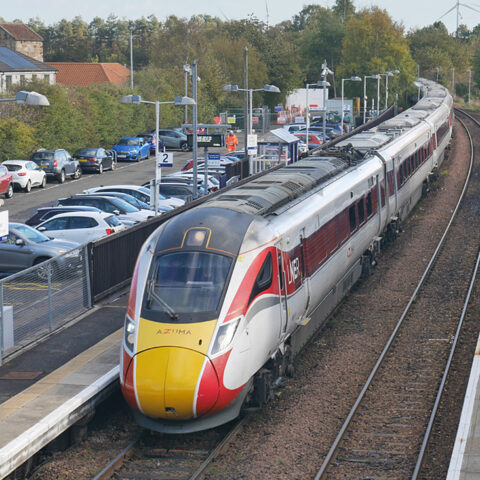
A modern ScotRail train can arrive carrying wheelchair spaces, audible and visual passenger information and emergency call-for-aid equipment, all built to accessibility standards intended to allow disabled passengers to travel.
But for some passengers, the difficulty begins before they can reach that train.
The most recent national assessment of Scotland’s stations found that only 133 of 360 — 37 per cent — provided step-free access to every platform. Another 184 offered some degree of step-free access, while 43 had no step-free route to any platform at all.
That meant 227 stations, 63 per cent of the network examined, did not provide unrestricted step-free access to every platform.
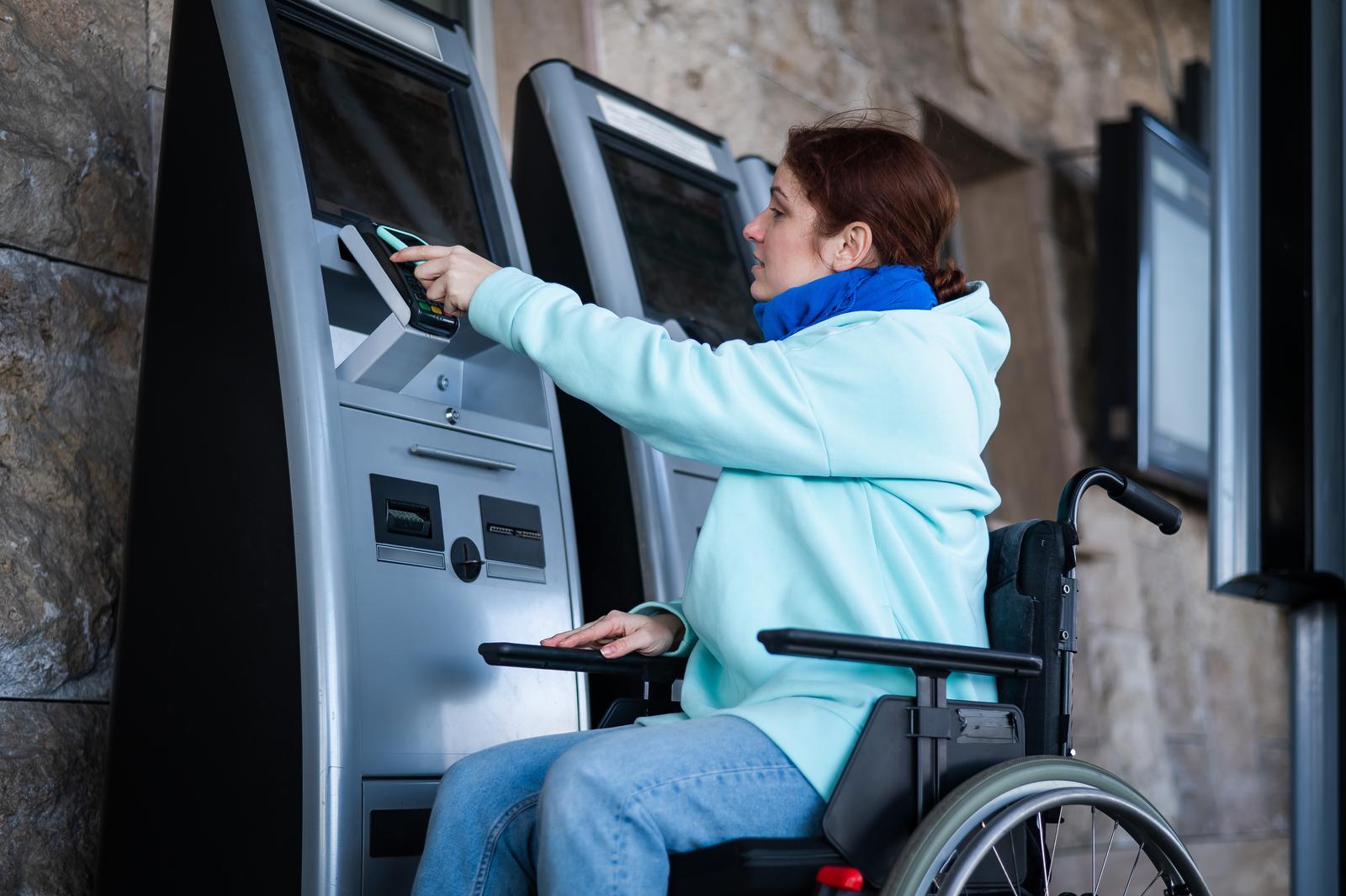
For a passenger who can use stairs, that may be little more than a statistic about old railway architecture. For someone who cannot, it can decide whether a train shown on the timetable is actually a train they can catch.
A wheelchair user, a passenger who cannot safely manage stairs, or somebody whose mobility makes a long or steep route difficult may have to know considerably more about the railway before leaving home. They may need to establish which platform their train normally uses, whether that platform can be reached without stairs, whether a lift is available and working, whether a ramp will be provided, whether staff will be present and what happens if disruption suddenly sends the train from another platform.
The train can be accessible while the journey is not.
The Trains Have Been Made Accessible. The Stations Have Not.
There is an important difference between the accessibility of Scotland’s trains and the accessibility of the infrastructure around them.
Transport Scotland says the entire Scottish rail fleet now complies with the Persons with Reduced Mobility National Technical Specification Notice. Every train provides two dedicated wheelchair spaces, audible and visual passenger information and on-board call-for-aid systems.
The position at stations is markedly different.
The national station figure still cited in 2026 comes from Transport Scotland analysis undertaken in 2020 for the second Strategic Transport Projects Review. Of 360 stations examined, 133 were classified as providing step-free access to all platforms. A further 184 had only some degree of step-free access. Forty-three had none.
There has been progress since then. Stations have been rebuilt, six received improvements through the principal Access for All programme during the following control period, and new fully accessible stations have opened at places including Leven and Cameron Bridge.
But Scotland has not published a replacement national percentage in the sources examined by Modern Scot, even though current station-by-station information now exists.
The result is that the national accessibility figure still being used to describe Scotland’s railway is six years old.
What “Some Step-Free Access” Can Actually Mean
The railway’s accessibility classifications explain why simply combining fully and partly accessible stations would give a misleading impression of the network available to disabled passengers.
A Category A station provides step-free access to all platforms while trains are running, using level access, lifts or compliant ramps.
Category B is much broader. A station can fall within it while containing long or steep ramps, lengthy street-level routes between platforms, difficult surfaces or access to only some of its platforms. The Office of Rail and Road’s classification guidance explicitly recognises that major barriers within this category may restrict some disabled and older people from using the station.
Category B3 is clearer still: step-free access exists to fewer than the total number of platforms.
A passenger may therefore be able to reach the platform for an outward train but not the platform required to return. A planned journey can become inaccessible if a service is moved from one platform to another. An interchange that appears straightforward on a timetable can require a route outside the station that is much longer than the route available to passengers using stairs.
Current ScotRail records show how varied those barriers remain.
At Achnasheen, the January 2026 station accessibility document records level access to platform one but a connecting footbridge with stairs to platform two. Achnashellach is described as having a low platform, rough ground and access through a cattle gate. Altnabreac is recorded with rough ground and a low platform. Aberdour has level access to one platform and a steep ramp to the other, with stairs on the connecting footbridge.
These are not identical barriers and they will not affect every disabled passenger in the same way. But a description such as “some step-free access” can conceal a journey that requires considerably more planning than the phrase suggests.
Some Stations Still Have No Step-Free Access at All
ScotRail’s January 2026 accessibility information continues to identify stations in Category C, meaning there is no step-free access to any platform.
Alexandra Parade in Glasgow is recorded as requiring stairs to both platforms. Argyle Street is recorded as requiring escalators and stairs to reach its below-ground island platform. Ardlui and Arrochar & Tarbet require stairs to island platforms. Attadale requires stairs to its single platform. Garelochhead, Garscadden, Gilshochill and a number of south Glasgow stations also remain in Category C in the current document.
The existence of these stations does not mean the railway simply abandons passengers who cannot use them. ScotRail operates assistance arrangements and, where a station is inaccessible to a passenger, says it will arrange an appropriate taxi at no additional charge between that station and the nearest or most convenient accessible station for the journey.
That is an important safeguard.
It also demonstrates the underlying physical problem. One passenger arrives at the station and boards the train. Another passenger holding a ticket for the same railway journey may have to be driven by road to a different station before being able to use the railway.
The destination may eventually be reached. The journey is not the same.
The Difference Shows Up in How Much Disabled People Travel
Transport Scotland’s own statistics show a large gap in rail use.
In 2024, 17 per cent of disabled adults said they had used a local train during the previous month. Among non-disabled adults, the figure was 35 per cent.
Among people whose disability limited their everyday activities “a lot”, only 11 per cent had used a train during the combined 2022–24 period. For those whose activities were limited “a little”, the proportion was 22 per cent.
Station accessibility cannot be presented as the sole cause of those differences. Disabled and non-disabled populations also differ by age, employment, income, geography, access to cars, health and the journeys they need to make.
But physical access exists within a wider documented mobility gap. Transport Scotland also records fewer journeys overall among disabled adults and lower feelings of safety on public transport. In 2024, 63 per cent of disabled people said they felt safe and secure travelling by train in the evening, compared with 81 per cent of non-disabled people.
The railway is therefore being used less by the population for whom barriers in stations, information, assistance and the wider journey can carry the greatest consequences.
Scotland Set Its Own Standard Ten Years Ago
Scotland did not wait until 2026 to recognise this problem.
Its first national Accessible Travel Framework was published in September 2016 following work with disabled people, their representatives and transport organisations.
The vision was unusually clear: “All disabled people can travel with the same freedom, choice, dignity and opportunity as other citizens.”
The framework described travel as part of something larger than transport. Being able to move around determines access to employment, education, healthcare, social life, culture and other parts of ordinary citizenship.
It also explicitly described its purpose as removing disabling barriers rather than asking disabled people continually to adapt themselves to an inaccessible system.
The framework was established for ten years. It reaches the end of that period in 2026.
Transport Scotland’s final 2024–26 delivery plan acknowledges that work remains to be done and contains a dedicated workstream for developing a successor framework. It also calls for stronger baseline information and annual evidence capable of showing whether the mobility gap is actually narrowing.
The end of the ten-year framework therefore arrives with an uncomfortable measurement problem. The national figure still being quoted for full station step-free access comes from its fourth year, 2020, rather than its final year.
This Is About Independence, Not Special Treatment
Passenger assistance is an essential part of an accessible railway. Across Great Britain, operators recorded 1,914,172 pre-booked passenger assists during the year to March 2026 and another 1,491,588 requests made by passengers who arrived without advance booking.
The volume shows how important assistance is to ordinary rail operation.
But assistance and accessibility are not interchangeable.
A passenger who can independently reach a platform does not have to establish beforehand whether somebody will be available to help them get there. They do not have to consider whether a staff shortage changes the viability of the journey. They do not have to arrange a taxi because the railway station nearest their home cannot be used.
For many disabled passengers, the ability to travel can depend upon several systems working together: the physical station, information about accessibility, a functioning lift, staff, Passenger Assist, a boarding ramp and accessible infrastructure at the destination.
If one essential link fails, the journey can fail with it.
The Office of Rail and Road’s Accessible Travel Policy guidance recognises this explicitly. Operators must have arrangements to provide alternative accessible transport without additional charge where a passenger cannot travel from a station because the station is inaccessible, or where disruption makes the railway inaccessible.
The regulator says operators should, where reasonably possible, provide an alternative that most closely resembles the service available to passengers who do not require assistance.
That requirement protects passengers when infrastructure fails to provide equal access. It does not make the infrastructure itself equally accessible.
Accessibility Is Not Merely a Customer-Service Aspiration
The issue also sits inside a legal framework.
Disability is a protected characteristic under the Equality Act 2010. Where a physical feature places disabled people at a substantial disadvantage compared with people who are not disabled, the Act contains a duty to take reasonable steps to avoid that disadvantage or, where appropriate, provide a reasonable alternative means of delivering the service.
Failure to comply with the reasonable-adjustment duty can amount to unlawful discrimination.
That does not mean that every station containing stairs is automatically unlawful. What constitutes a reasonable adjustment depends upon the circumstances, and Britain’s railway includes old structures, constrained sites, listed buildings and locations where major engineering work is complex and expensive.
But the age of an asset does not remove disabled people from equality law.
The Equality and Human Rights Commission published new principles for accessible transport in March 2026. It said transport should be designed and consistently operated so disabled and older people have choice and control over how and when they travel, safely and with dignity. It also emphasised that service providers should anticipate disabled people’s needs rather than waiting until an individual encounters a barrier.
That principle closely resembles the promise Scotland made for itself in 2016.
Scotland Has Changed Transport at National Scale Before
The physical rebuilding of old railway stations is expensive and technically different from changing fares or concessionary schemes. But Scotland’s recent transport history demonstrates that government policy can change the way millions of journeys are made when a national priority is established.
Free bus travel for people under 22 has generated more than 289 million journeys since its introduction, according to Transport Scotland. The Scottish Government permanently removed peak fares from ScotRail in September 2025 and froze ScotRail fares for twelve months from April 2026. More than two million people are covered by Scotland’s wider concessionary bus schemes.
Those policies address different problems and should not be treated as money that could simply have been transferred to station reconstruction. Rail infrastructure funding also crosses the boundary between devolved and reserved responsibilities.
They do demonstrate something more basic: accessibility, affordability and participation in transport are shaped by policy decisions as well as engineering constraints.
Step-free access is one of those decisions, even where the work required to provide it is difficult.
Responsibility Is Divided Between Governments
The institutional arrangements make railway accessibility unusually complicated.
Rail accessibility is reserved to the UK Government. The main Access for All programme is funded by the Department for Transport, which makes the final decisions about which stations receive money.
Transport Scotland and Scottish Ministers work with the Department for Transport to identify Scottish priorities. The Scottish Government can also include accessibility work within wider rail investments that it funds, and ScotRail itself is publicly owned by Scottish Ministers.
Network Rail owns and operates much of the infrastructure on which improvements have to be delivered.
Responsibility is therefore divided. The physical obstacle encountered by a passenger is not.
A person standing at the foot of a staircase cannot use one government’s reserved powers to reach the platform and another government’s devolved powers to descend at the destination. They encounter one railway journey.
Six Stations Were Improved in Five Years
There has been tangible investment.
Network Rail told the Scottish Parliament this month that six Scottish stations received step-free improvements through Access for All during Control Period 6, which ran to 2024.
They were Croy, Johnstone, Port Glasgow, Dumfries, Anniesland and Uddingston.
At Port Glasgow, a project costing about £5 million installed two lifts and a new footbridge, giving passengers step-free movement between the platforms. Other accessibility improvements have been incorporated into larger projects rather than funded separately through Access for All.
Transport Scotland says 31 Scottish stations had benefited from step-free access through Access for All by March 2024 over the longer life of the programme.
Those improvements have altered individual journeys. A station that previously prevented someone reaching the opposite platform can become a station they can use independently.
The difficulty is the scale and pace remaining.
The Current Major Programme Has Less Money
Network Rail Scotland route director Liam Sumpter gave MSPs a particularly important update on 16 September.
He said the Access for All programme has less funding during the current Control Period 7 than it had during the preceding five-year period.
At present, Bellgrove in Glasgow is the only Scottish station committed to receive the full Access for All treatment during CP7. Funding has also been provided for detailed design work at Falkirk Grahamston.
The position is narrower than the list announced by the UK Department for Transport in May 2024, when Bellgrove, Dumbarton Central, Falkirk Grahamston and Inverurie were among Scottish stations named for the next Access for All programme.
Being selected for programme development does not mean that full construction funding has been committed. Network Rail’s September evidence provides the later account of what is presently expected to receive complete treatment within CP7.
A separate Railway for Everyone programme is intended to provide smaller accessibility interventions at other stations.
Those improvements may remove individual barriers, but they are not equivalent to providing a fully step-free route through a station.
The Railway Still Contains Two Different Experiences
The January 2026 ScotRail station document demonstrates both how far accessibility has moved and how incomplete it remains.
Aberdeen is Category A. Airdrie is Category A. Anniesland is now Category A. Arbroath is Category A. New stations at Leven and Cameron Bridge were built fully accessible.
At the same time, other stations remain accessible only through steep ramps, lengthy alternative routes or particular platforms, while some retain no step-free access at all.
For passengers unaffected by those barriers, the complexity can remain almost invisible.
They can decide to travel, buy a ticket and reasonably assume that a station marked on a railway map is available to them. If a platform changes, they walk to another platform. If a connecting train uses the opposite side of the station, they cross to it.
A disabled passenger may instead have to examine the architecture of the journey before deciding whether it can be made.
That difference reaches beyond railway engineering. It affects whether somebody can accept work involving travel, attend an appointment independently, visit family without arranging help, travel with friends, make an unplanned journey or arrive in an unfamiliar Scottish town without first studying whether the station itself will let them out.
A Six-Year-Old Figure at the End of a Ten-Year Promise
Scotland’s last published national station calculation found that 63 per cent of the stations examined were not fully step-free.
That calculation is now six years old.
The railway has changed since then, meaning the precise percentage today may be better than it was in 2020. Six stations received full Access for All improvements in the following control period. Other projects have altered stations independently of that programme. New accessible stations have opened.
Current information for individual stations is already published by ScotRail and the Office of Rail and Road. What remains absent from the public record examined by Modern Scot is a new national calculation showing precisely how much of the Scottish network is now fully step-free.
That absence is particularly striking in 2026 because Scotland’s ten-year Accessible Travel Framework is itself reaching its end.
The promise made in 2016 was not that disabled people would be provided with a special transport system. It was that they should be able to use transport with the same freedom, choice, dignity and opportunity as other citizens.
Scotland has now reached the final year of that promise with an accessible train fleet, continuing investment in selected stations and a successor accessibility framework under development.
It also retains stations where current passenger information still says there is no step-free access to any platform, others where only part of the station can be reached without stairs, and a major accessibility programme which Network Rail says has less funding than it did during the previous five-year period.
The contradiction can be reduced to an ordinary journey.
The timetable can show the train. The train can meet the accessibility standard. A ticket can be valid for the service. Yet for a passenger standing on the wrong side of an inaccessible staircase, the railway can still be out of reach.
Sources
Strategic Transport Projects Review 2: Infrastructure to Provide Access for All at Rail Stations
Transport Scotland, 3 February 2021; station analysis undertaken in 2020
https://www.transport.gov.scot/media/49064/stpr2-phase-1-ast-project-12-infrastructure-to-support-access-to-rail-3-feb-2021.pdf
Improving Rail Accessibility in Scotland
Transport Scotland, current page accessed 24 September 2026
https://www.transport.gov.scot/public-transport/rail/improving-rail-accessibility-in-scotland/
ScotRail Station Accessibility Information — January 2026
ScotRail, January 2026
https://www.scotrail.co.uk/media/95679/download?c=1785148758&inline=
Disability and Transport 2024
Transport Scotland, 11 March 2026
https://www.transport.gov.scot/publication/disability-and-transport-2024/
Going Further: Scotland’s Accessible Travel Framework
Transport Scotland, 21 September 2016
https://www.transport.gov.scot/publication/going-further-scotland-s-accessible-travel-framework/
Scotland’s Accessible Travel Framework — Delivery Plan 2024–2026
Transport Scotland, 4 October 2024
https://www.transport.gov.scot/publication/scotlands-accessible-travel-framework-delivery-plan-2024-2026/
Official Report: Meeting of the Parliament, 16 September 2026
Scottish Parliament, 16 September 2026
https://www.parliament.scot/chamber-and-committees/official-report/search-what-was-said-in-parliament/meeting-of-parliament-16-09-2026?iob=225827&meeting=20236
Passenger Assistance
Office of Rail and Road, 30 June 2026
https://dataportal.orr.gov.uk/statistics/passenger-accessibility/passenger-assistance/
Annual Rail Consumer Report 2025 to 2026: Accessible Travel
Office of Rail and Road, 9 July 2026
https://www.orr.gov.uk/annual-rail-consumer-report-2025-2026/accessible-travel
Accessible Travel Policy — Guidance for Train and Station Operators
Office of Rail and Road, 29 October 2025
https://www.orr.gov.uk/media/10955/download
Accessible Travel
ScotRail, current passenger guidance accessed 24 September 2026
https://www.scotrail.co.uk/plan-your-journey/accessible-travel
Guiding Principles for Accessible Transport
Equality and Human Rights Commission, 25 March 2026; updated 28 August 2026
https://www.equalityhumanrights.com/our-work/our-compliance-work/guiding-principles-accessible-transport
Equality Act 2010
UK Parliament, 8 April 2010
https://www.legislation.gov.uk/ukpga/2010/15
Railway Stations Awarded Access for All Accessibility Funding
Department for Transport, 24 May 2024
https://www.gov.uk/government/publications/railway-stations-awarded-access-for-all-accessibility-funding/railway-stations-awarded-access-for-all-accessibility-funding
Port Glasgow Access for All — One Year On
Network Rail, 6 December 2024
https://www.networkrailmediacentre.co.uk/news/port-glasgow-access-for-all-one-year-on
National Transport Strategy: Fifth Delivery Plan — Reduces Inequalities
Transport Scotland, information correct at 18 March 2026
https://www.transport.gov.scot/publication/national-transport-strategy-fifth-delivery-plan/reduces-inequalities/
ScotRail Fares Frozen for 12 Months
Scottish Government, 12 February 2026
https://www.gov.scot/news/scotrail-fares-frozen-for-12-months/