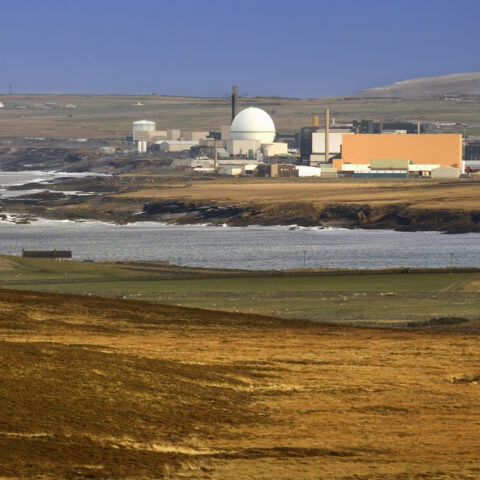

Scotland’s first expanded PFAS scoping programme tested 29 compounds at 97 surface-water and 37 groundwater locations. PFAS were detected at just under 90 per cent of the surface-water sites and around 60 per cent of groundwater sites, but SEPA says none of the 2025 samples exceeded the relevant environmental or groundwater standards. Monitoring is being expanded again in 2026.
PFAS were detected at almost nine out of ten Scottish surface-water sites examined in an expanded monitoring programme carried out by the Scottish Environment Protection Agency during 2025.
The chemicals were also detected at around 60 per cent of the groundwater sites included in the work.
Those figures establish widespread detection within the locations SEPA chose to investigate. They do not establish that 90 per cent of all Scottish rivers, lochs or other surface waters contain PFAS, because the programme was a scoping exercise rather than a statistically representative national survey and site selection included locations where releases could plausibly occur.
They also do not record breaches of the relevant environmental standards. SEPA says none of the samples collected through the 2025 programme exceeded the applicable environmental or groundwater standards against which it made its initial comparison.
The combination of frequent detection and no recorded exceedance is central to understanding the first large dataset. Scotland has begun to establish where PFAS can be found in its water environment, but the monitoring programme is still being developed into a larger and more systematic picture.
134 locations and 29 PFAS compounds
SEPA examined 29 PFAS compounds at 97 surface-water sites and 37 groundwater sites during 2025. The agency carried out 283 samples in total and is increasing that to around 500 during 2026.
PFAS — per- and polyfluoroalkyl substances — are a large family of synthetic chemicals used because of properties including resistance to heat, water, oil and stains. They have been employed in products and industrial processes ranging from firefighting foams to coatings and consumer materials. Their persistence means some members of the family can remain in the environment for long periods.
Scotland has not started from zero. SEPA has PFAS monitoring data extending back to 2009. What changed in 2025 was the scale and design of the programme, giving the regulator a much broader initial map of occurrence in surface water and groundwater.
The first results show a geographical connection that will now require further monitoring. SEPA says higher concentrations were generally associated with locations where PFAS sources were already known or expected, including activities connected with higher historical use or emissions such as airports and landfill sites.
PFOS, one of the more established regulated PFAS compounds, was found at elevated levels most frequently in rivers close to activities or sites with the potential to release PFAS.
Groundwater concentrations were generally lower than those recorded in surface water. SEPA also said its early comparison suggests Scottish levels were generally lower than those observed in England, although the agency describes the programme as an initial scoping exercise and further monitoring is required before broader conclusions can be drawn.
Detection is not the same as a standards breach
The sensitivity of modern chemical analysis allows substances to be detected at concentrations far below regulatory thresholds. A reported detection therefore answers a different question from a reported exceedance.
In the 2025 SEPA dataset, PFAS were common in the sampled locations. None of those samples, however, exceeded the relevant environmental or groundwater standards used in the agency’s initial assessment.
SEPA has also cautioned against using measurements in rivers and groundwater as a direct measure of human health exposure. Environmental monitoring identifies what is present in the environment and at what concentration. Drinking-water regulation, food exposure and other pathways require separate evidence.
That separation becomes particularly important because Scotland has a different monitoring regime for public drinking water.
What the drinking-water record shows
The Drinking Water Quality Regulator for Scotland applies a regulatory standard of 0.1 micrograms per litre for the sum of 20 individually named PFAS compounds in public supplies.
Its annual report for 2024 records that Scottish Water analysed 5,615 samples for the sum of those PFAS compounds and none failed the standard. Scottish Water also monitored a further 29 PFAS compounds; the regulator reported that none exceeded the 0.1 micrograms-per-litre value either individually or in combination with the other monitored PFAS.
Those drinking-water results should not be merged with SEPA’s environmental-water figures. They involve different samples, different monitoring purposes and different regulatory questions.
The broader public-water record has also remained highly compliant. The Scottish Government reported in August that 99.88 per cent of regulatory tests at consumers’ taps in 2025 met required standards. That figure covers drinking-water parameters generally and is not a PFAS-specific compliance rate.
Scotland is increasing the search
The next stage is larger rather than conclusive.
SEPA is expanding from 283 PFAS samples in 2025 to around 500 during 2026. The UK PFAS Plan, published in February and updated in August, records the Scottish programme alongside monitoring elsewhere in the UK and states that Scotland will continue annual PFAS monitoring and reporting.
The plan also records that SEPA and the Scottish Government will consider whether a geographical information system approach being used in England to identify and prioritise potential PFAS source areas should be applied in Scotland.
Such an approach could bring together monitoring results with the known geography of airports, landfills, industrial sites, wastewater infrastructure and other possible sources. The 2025 findings already indicate why that spatial work may be useful: concentrations were not distributed randomly across the sampled locations, with higher values generally associated with known or expected source areas.
At the same time, the present dataset places a limit on what can be said nationally. Ninety-seven surface-water sites are a small fraction of Scotland’s complete water environment. The locations were selected for a scoping programme, not to produce a national prevalence estimate. PFAS detection does not establish a regulatory breach, and environmental detection does not establish exposure through drinking water.
What the programme now provides is a baseline that did not previously exist at this scale.
SEPA found PFAS at just under 90 per cent of the surface-water sites and around 60 per cent of the groundwater sites it examined in 2025. It found no sample exceeding the relevant environmental or groundwater standards. It also found a pattern in which higher concentrations tended to occur around locations with known or expected PFAS sources.
With the sampling programme increasing to approximately 500 tests in 2026, Scotland is moving from an initial map of where PFAS can be detected towards a larger record capable of showing whether those patterns persist, where further investigation is required and how concentrations change over time.
Sources
PFAS 2025 Monitoring
Scottish Environment Protection Agency, 9 July 2026
https://beta.sepa.scot/topics/chemicals/pfas/pfas-2025-monitoring/
SEPA Publish Results from Expanded PFAS Monitoring Programme
Scottish Environment Protection Agency, 9 July 2026
https://beta.sepa.scot/news/2026/sepa-publish-results-from-expanded-pfas-monitoring-programme/
PFAS Plan: Building a Safer Future Together
UK Government, 3 February 2026; updated 17 August 2026
https://www.gov.uk/government/publications/pfas-plan/pfas-plan-building-a-safer-future-together
Drinking Water Quality in Scotland 2024
Drinking Water Quality Regulator for Scotland, September 2025
https://dwqr.scot/media/wnsh0mb2/public-supplies-annual-report-2024.pdf
Drinking Water in Scotland 2025
Scottish Government, 27 August 2026
https://www.gov.scot/news/drinking-water-in-scotland-2025/