
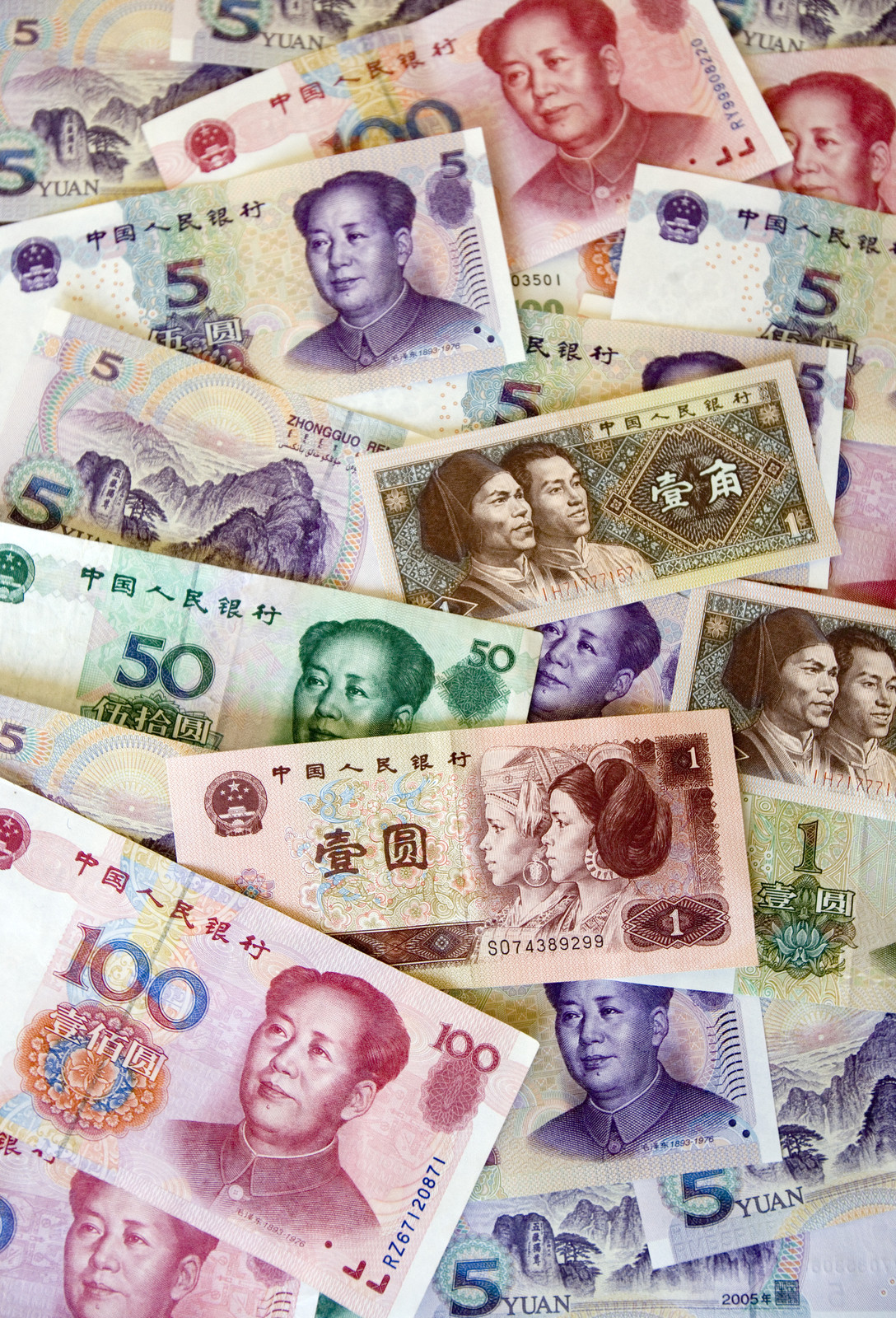
Deutsche Bank has become the first non-Chinese bank in Europe authorised to clear China’s renminbi directly. It sounds like a Frankfurt banking story. For Scottish whisky producers, manufacturers, food exporters and businesses buying Chinese goods, it could eventually change how they are paid, what they pay and who carries the currency risk.
A Scotch whisky producer sells a shipment to a distributor in Shanghai.
An engineering company in Aberdeen supplies machinery to a Chinese industrial customer.
A Scottish retailer orders electrical equipment manufactured in China.
All three transactions have something in common that rarely appears on the invoice or container manifest.
Somebody has to move the money. And the system through which that money moves has just changed.
On 10 August, the People’s Bank of China appointed Deutsche Bank as a renminbi clearing bank in Frankfurt. It is the first non-Chinese bank in Europe to receive that designation. Deutsche can now provide direct processing, clearing and settlement of cross-border transactions in China’s currency, connecting European financial institutions and companies more directly with Chinese payment systems.
That does not mean Scotland is changing currency or that the pound is being replaced by the renminbi. Nor does it mean a Scottish company must bank with Deutsche Bank.
It means another substantial piece of financial infrastructure has been created through which European businesses can conduct trade with China in Chinese currency.
For Scotland, that is not a remote financial concern.
China is already embedded in Scotland’s supply chains and export markets. Scotland exported £24 billion of goods internationally in 2025. Drink accounted for £4.9 billion, power-generating machinery £4.3 billion and general industrial machinery £1.7 billion. Scottish goods imports reached £24.9 billion, with particularly strong growth in power-generating machinery, telecommunications equipment and office machinery.
Scottish companies therefore already stand on both sides of the transaction.
They sell to China.
They buy from China.
And every time they do either, currency matters.
What has actually changed
The renminbi, usually abbreviated RMB and also commonly called the yuan, is China’s currency.
Suppose a Scottish business sells something to a Chinese customer.
The Scottish seller would naturally prefer to be paid in pounds. Its wages, taxes, rent and many other costs are in sterling.
The Chinese buyer may prefer to pay in renminbi because its revenues and domestic costs are in RMB.
Someone therefore has to accept the cost, inconvenience and risk of converting one currency into another.
Banks sit in the middle of that transaction.
An RMB clearing bank outside mainland China provides a route through which renminbi payments can be processed and settled and through which banks and companies can obtain access to RMB liquidity.
Deutsche Bank says its new designation will allow it to offer direct RMB processing and settlement, payments and collections, offshore RMB liquidity, trade finance and liquidity management to European businesses and financial institutions. It says the system should provide faster payments and reduce some operational and counterparty risks.
Those are Deutsche Bank’s claims for the service, rather than guaranteed savings for every customer.
London has already had official renminbi clearing infrastructure for more than a decade, so Scottish businesses have not suddenly acquired access to something that was previously impossible.
China Construction Bank was appointed the official RMB clearing bank in London in June 2014. What is changing now is the depth and competition of Europe’s RMB infrastructure.
China has given a major European-owned international bank direct clearing status in Frankfurt. Deutsche already operates across London, Frankfurt, Singapore, Hong Kong and China and has participated directly in China’s Cross-Border Interbank Payment System since 2015.
In plain English, China is making it easier for European money and Chinese money to meet.
That is where Scotland enters the story.
Imagine a Scottish distiller
Take a hypothetical independent Scotch whisky producer with a Chinese distributor prepared to buy a substantial shipment.
The distiller might quote £250,000.
That is convenient for the Scottish company. If it receives £250,000, it knows exactly what has arrived.
But the Chinese purchaser must obtain sterling and may carry both conversion costs and the risk that sterling becomes more expensive before payment is due.
The distributor could instead ask the Scottish producer to quote in renminbi.
Deeper RMB banking infrastructure makes that easier for a European company to consider. Its bank may be able to settle the transaction more efficiently, convert the proceeds, hedge the currency exposure or provide trade finance against the payment.
There is a genuine Scottish market behind the example.
China bought £161 million of Scotch whisky in 2025. Although export value was broadly unchanged from 2024, volumes increased by 14 per cent to the equivalent of 34 million bottles.
Then, in January 2026, China agreed to halve its tariff on Scotch whisky from 10 per cent to 5 per cent, a reduction the UK Government estimated could be worth £250 million to the UK economy over five years.
For a Scottish distiller trying to expand in China, being able to deal more easily in the customer’s own currency could therefore become another competitive tool.
But there is a catch.
If the distiller agrees today to receive a fixed amount of renminbi three months from now and the renminbi falls against sterling before payment arrives, the company receives fewer pounds when it converts the money.
The clearing system has not eliminated currency risk.
It has changed who carries it.
Large international businesses routinely manage such exposure. A small Scottish exporter may have neither a treasury department nor much experience of currency hedging.
For that company, easier access to RMB could create an opportunity and a new risk at precisely the same time.
Now reverse the transaction
The consequences may be just as relevant for Scottish importers.
Imagine a Scottish company buying machinery from a Chinese manufacturer.
The Chinese factory pays its workers and many domestic suppliers in renminbi, yet the international order might traditionally be priced in dollars or pounds.
The Chinese supplier may therefore be paying conversion costs or protecting itself against exchange-rate movements.
If the Scottish buyer offers to settle directly in renminbi, the supplier may be prepared to offer different commercial terms.
The price might be better. A deposit might move more quickly. A supplier might prefer a customer willing to transact in its domestic currency.
None of those benefits is automatic. They depend upon the contract, the banks involved, exchange rates and the bargaining strength of the companies.
But the development matters because the currency of the transaction becomes another part of the negotiation.
Scotland imported £24.9 billion of goods in 2025, up 8 per cent in real terms from the previous year, while non-EU imports increased by 13 per cent. Machinery, telecommunications equipment and office machinery were among the areas driving that increase.
A financial change that makes Asian-European settlement easier therefore concerns Scottish companies bringing goods into the country as much as those sending Scottish products out.
An Aberdeen engineering order could look different too
Consider another hypothetical exporter.
An Aberdeen engineering company wins a contract worth the equivalent of £2 million to manufacture specialised equipment for a Chinese customer.
The equipment will take six months to produce.
The Scottish company must buy materials and components and pay engineers long before receiving the final payment.
The problem may therefore not be winning the Chinese customer.
It may be financing the six months between the order and the money arriving.
Trade finance exists for precisely this reason.
If deeper European RMB banking allows the company to receive an RMB deposit more efficiently, finance an RMB receivable or obtain better banking support around the Chinese contract, that can affect working capital inside the Scottish factory.
The difference is not glamorous.
Nobody cuts a ribbon because an invoice cleared sooner.
But companies can be profitable on paper and still fail because they run out of cash waiting to be paid.
Deutsche specifically identifies trade finance and liquidity management among the services its new RMB status is intended to support.
That is how something happening inside Frankfurt’s banking system can eventually reach a payroll in Aberdeen.
Scotland has other goods China wants
Whisky is merely the obvious example.
China reopened its market to some British pork processors in December 2024, including a major Scottish processor, after pandemic-era restrictions. The Scottish Government has treated improved market access for pork, crab and whisky as part of its wider trade work.
Scottish Government export analysis also identifies opportunities in China for food and drink, engineering and advanced manufacturing, technology, chemicals and business services.
The Scottish question is therefore practical.
If Chinese customers increasingly prefer to trade in renminbi, will Scottish companies have banking arrangements that allow them to compete comfortably?
Imagine a Scottish engineering company and a German competitor bidding for the same Chinese order.
Their products are equally good. Their prices are similar.
The Chinese purchaser asks both companies to quote and finance the contract in renminbi.
The German company already has RMB banking, hedging and trade-finance arrangements in place.
The Scottish business insists upon sterling because the financial side is unfamiliar or expensive.
The contract may be decided without either machine being demonstrably better.
Financial infrastructure can become industrial infrastructure remarkably quickly.
There is a larger Chinese strategy here
The Frankfurt decision is also part of something bigger.
China has spent years encouraging greater international use of the renminbi.
That should not be confused with the imminent replacement of the US dollar. The dollar remains overwhelmingly more important to the international financial system.
But international currencies require infrastructure. Businesses need to be able to invoice, borrow and invest in them; banks need to clear them; and payment systems must allow them to move reliably across borders.
One clearing bank does not revolutionise a currency.
Thousands of ordinary transactions gradually can.
Deutsche Bank describes its appointment as part of the continuing internationalisation of the renminbi and expects greater RMB use between European and Chinese businesses.
Its own analysis goes considerably further than simple trade settlement. Deutsche Bank Research argues that China is attempting to develop the renminbi from a currency used heavily for trade into one that is increasingly used for investment and financing. Its analysts say capital and financial-account transactions now account for around three-quarters of total cross-border RMB settlement.
That makes Frankfurt part of a wider financial project rather than an isolated banking appointment.
Scotland should understand that process without either celebrating or fearing it.
China represents commercial opportunity, but dependence upon any single market, currency or financial system creates exposure too.
A Scottish company earning significant revenues in renminbi becomes more exposed to movements in that currency. A business heavily dependent upon Chinese customers becomes more exposed to Chinese economic conditions. One reliant upon Chinese suppliers becomes more exposed to trade restrictions, geopolitics and disruption between China and the West.
Easier payments remove none of those risks.
They simply make the underlying trade easier to conduct.
Sources
“Deutsche Bank appointed as RMB Clearing Bank for Europe”
Deutsche Bank
10 August 2026
https://www.db.com/news/detail/20260810-deutsche-bank-appointed-as-rmb-clearing-bank-for-europe?language_id=1
“A new chapter for the renminbi – and what it means for European corporates”
Deutsche Bank, flow
10 August 2026
https://flow.db.com/Topics/cash-management/a-new-chapter-for-the-renminbi-and-what-it-means-for-european-corporates
“Inflation Adjusted HMRC Regional Trade Statistics for Scotland Q4 2025”
Scottish Government
19 March 2026
https://www.gov.scot/publications/inflation-adjusted-hmrc-regional-trade-statistics-for-scotland-q4-2025/
“Scotch Whisky Exports to United States down 15% since tariffs implemented”
Scotch Whisky Association
12 February 2026; figures subsequently revised following HMRC’s March 2026 export release
https://www.scotch-whisky.org.uk/newsroom/2025-export-figures/
“Prime Minister secures Scotch whisky tariff cut in China worth £250 million”
UK Government — Scotland Office and Prime Minister’s Office, 10 Downing Street
29 January 2026
https://www.gov.uk/government/news/prime-minister-secures-scotch-whisky-tariff-cut-in-china-worth-250-million
“Scotland’s Vision for Trade: annual report January 2026”
Scottish Government
30 January 2026
https://www.gov.scot/publications/scotlands-vision-trade-annual-report-january-2026/
“Chancellor welcomes London renminbi clearing bank”
HM Treasury, UK Government
18 June 2014
https://www.gov.uk/government/news/chancellor-welcomes-london-renminbi-clearing-bank
“A Trading Nation – Updating Scotland’s Country and Sector Prioritisation”
Scottish Government
11 September 2025
https://www.gov.scot/publications/trading-nation-updating-scotlands-country-sector-prioritisation/