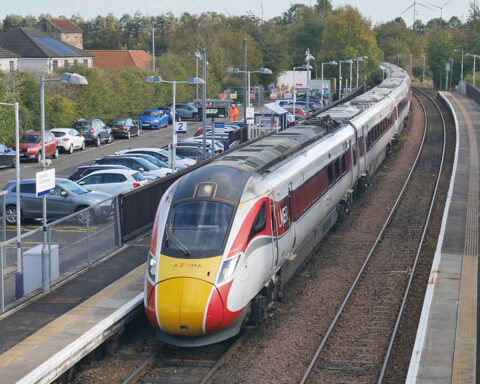
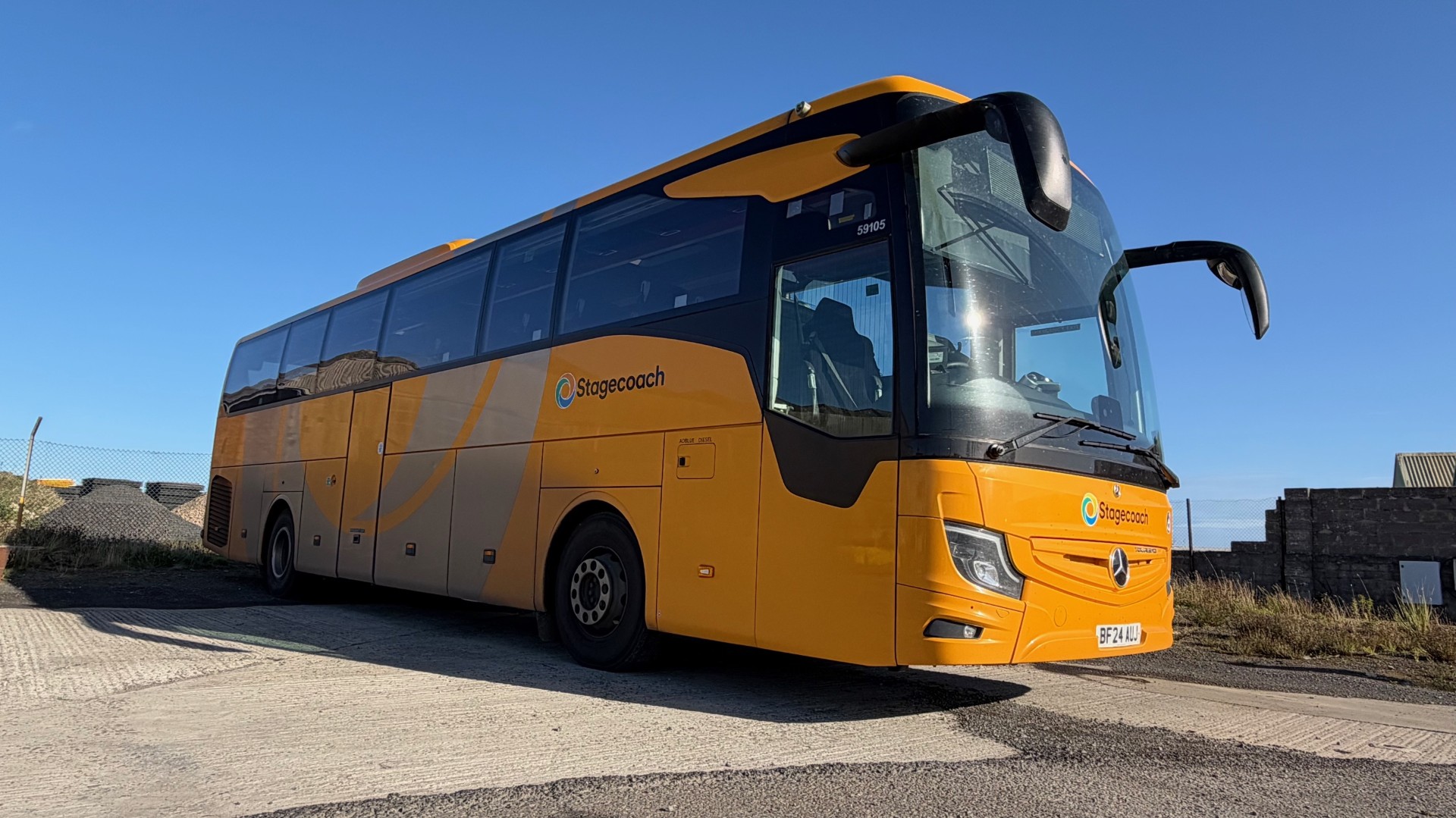
A Highland coach company that began nearly 30 years ago with a single minibus is preparing to take over Stagecoach’s bus operations in Thurso and Wick, bringing another part of Scotland’s commercial transport network into public ownership.
D&E Coaches, which Highland Council acquired in February 2025, will assume responsibility for the Caithness business on Monday, 19 October 2026. The acquisition includes 26 employees, the existing bus fleet, depots and operational facilities serving the two towns.
All 20 drivers and six maintenance staff are expected to transfer to D&E Coaches under employment protection arrangements, with no redundancies resulting from the change of operator.
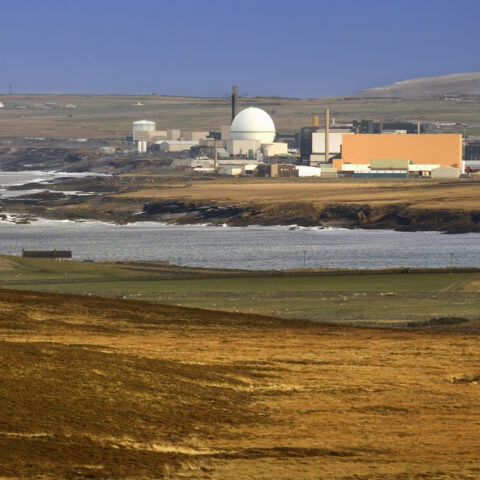
The purchase covers local public bus services, school transport, private hire contracts and services associated with the Dounreay nuclear site. Highland Council, Stagecoach North and D&E Coaches have confirmed that these operations will continue following the transfer.
For passengers, the immediate significance is continuity of services that provide connections across a sparsely populated part of northern Scotland. For Highland Council, the transaction represents another stage in its expansion into the direct ownership and operation of transport businesses.
A Family Business That Began with One Minibus
D&E Coaches has an unusually personal history for a company now forming part of a local authority’s transport operations.
Its founder, Donald Mathieson, established the business almost three decades ago with a single minibus. Over the following years, the company grew into one of the Highlands’ established coach operators, providing school transport, private hire and other passenger services.
By January 2025, Mathieson had decided to retire and the company was approaching another change in its history. Rather than sell to another private coach operator, the family agreed to transfer ownership to Highland Council.
The council announced its intention to purchase the business on 22 January 2025, following negotiations and due diligence. The acquisition was subsequently completed in February.
Although Mathieson stepped away from ownership, the family connection continued. His daughter, Gayle McEwan, took on the role of general manager when the council acquired the company.
The council said at the time that it intended to retain D&E as an operating business, preserving its commercial activities and established workforce rather than immediately absorbing it into the council’s existing bus department.
That decision has now provided the authority with a company capable of undertaking another commercial acquisition, this time involving part of Stagecoach’s North Scotland operation.
What Is Included in the Caithness Purchase?
The agreement covers more than the transfer of individual bus routes. D&E Coaches is acquiring the operational resources needed to continue the Thurso and Wick business, including vehicles, depot facilities and the existing workforce.
This matters because running a rural bus service involves considerably more than obtaining a vehicle and employing a driver. Operators need maintenance facilities, spare vehicles, qualified staff, administrative support and suitable premises from which services can be organised.
Retaining the existing staff and infrastructure allows D&E to inherit an established operation rather than having to reconstruct its working arrangements.
The employees will transfer under the Transfer of Undertakings (Protection of Employment) regulations, commonly known as TUPE. These provide important protections for employment contracts and continuity of service when a business changes hands.
Stagecoach North Scotland managing director David Beaton said the company would work with D&E Coaches and Highland Council to support employees and customers through the changeover.
D&E Coaches director Malcolm MacLeod also confirmed the company’s intention to maintain established standards of service while working with the transferred staff and other partners.
The joint announcement does not disclose the purchase price or provide a detailed financial breakdown of the assets involved.
Why Highland Council Is Buying Bus Businesses
Highland Council’s expansion into public transport ownership has developed partly from the rising cost of purchasing bus services from private operators.
When the authority acquired D&E Coaches in 2025, it reported spending approximately £25 million on school and public transport across more than 300 separate contracts.
The council said the previous tendering round had increased its transport costs by approximately £8 million in a single financial year, contributing to the decision to establish an in-house bus operation.
That service began in January 2023, initially operating with ten vehicles. By February 2026, the council reported that the in-house fleet had grown to 25 vehicles, undertaking school transport, public bus services and educational trips.
The authority also published financial comparisons showing that contracts previously tendered to outside operators had an annual value of £4.19 million, compared with approximately £2.4 million in annual running costs when delivered internally.
Those figures relate to Highland Council’s in-house bus service, not the newly purchased Stagecoach operation. They nevertheless explain the financial reasoning behind the council’s broader transport strategy.
Instead of relying entirely on external companies to bid for every transport contract, Highland Council now has its own operating capacity and a separately managed commercial coach business.
The Caithness acquisition expands that capacity further and gives the authority additional vehicles, employees and facilities in the far north.
Rural Transport Has Different Demands
Bus services in Caithness operate across a landscape very different from that of Scotland’s larger towns and cities.
Thurso and Wick serve surrounding communities whose residents may need to travel considerable distances for employment, education, shopping, medical appointments and essential public services.
A bus connecting smaller settlements may carry fewer passengers than an urban service, but it can provide an important means of travel for people who do not drive or have access to a car.
School transport is another significant part of the network. Rural school journeys can involve long distances and relatively small numbers of passengers, while still requiring dependable vehicles and trained drivers.
The Dounreay services included in the purchase also connect transport provision with one of Caithness’s major industrial employment locations.
By taking on several types of transport work, D&E Coaches will inherit an operation serving different passenger groups and contractual requirements.
The council believes combining these activities with its expanding transport business will help reduce costs and improve operational resilience, although the financial benefits of this particular acquisition have not yet been quantified publicly.
Not Every Stagecoach Service Is Being Transferred
The acquisition should not be confused with a commitment to preserve every route previously operated by Stagecoach in northern Scotland.
Stagecoach’s X99 service between Caithness and Inverness is being withdrawn after 18 October and is not included in the D&E Coaches transfer.
The continuation of the Thurso and Wick business does not automatically restore the direct long-distance connections lost through the X99 withdrawal.
Highland Council’s acquisition covers the specified Caithness operations and contracts. Any replacement for a service outside that agreement would require a separate transport decision.
D&E Coaches is expected to issue additional passenger information ahead of the 19 October handover, including details relevant to the services it will operate.
A New Chapter for the Highland Bus Industry
The transfer represents a notable change in ownership within Scotland’s rural transport industry.
Stagecoach is an established national bus operator, while D&E Coaches developed from a small Highland family business into a substantial regional company before passing into local authority ownership.
The two businesses now meet at another point of transition, with Stagecoach withdrawing from the Thurso and Wick operation and D&E preparing to take responsibility for its employees, vehicles and services.
For Highland Council, the purchase is part of a wider effort to establish greater control over transport provision rather than depending exclusively on commercial operators and external contracts.
Whether the enlarged public operation delivers the intended financial savings and service improvements will become clearer after the transfer, once its operating costs and performance can be assessed.
The immediate arrangements are more definite. Twenty-six employees are due to move to D&E Coaches, the existing Caithness operating facilities will pass to the new owner, and the specified passenger services are intended to continue from 19 October.
For a company that began with Donald Mathieson’s single minibus, the purchase marks another substantial expansion. D&E Coaches is no longer simply a Highland family firm’s successor; it is becoming part of the infrastructure through which Highland Council intends to provide transport across one of Scotland’s largest and most geographically challenging local authority areas.
Sources
Jobs Secured and Bus Services Strengthened Through D&E Coaches Acquisition — Highland Council, Stagecoach North and D&E Coaches, 1 October 2026.
Deal for Council to Take Over D&E Coaches Completed — Highland Council, 5 February 2025.
Highland Council to Acquire D&E Coaches Ltd — Highland Council, 22 January 2025.
Committee Welcomes Significant Growth, Savings and Future Plans for Council’s In-House Bus Service — Highland Council, 12 February 2026.