
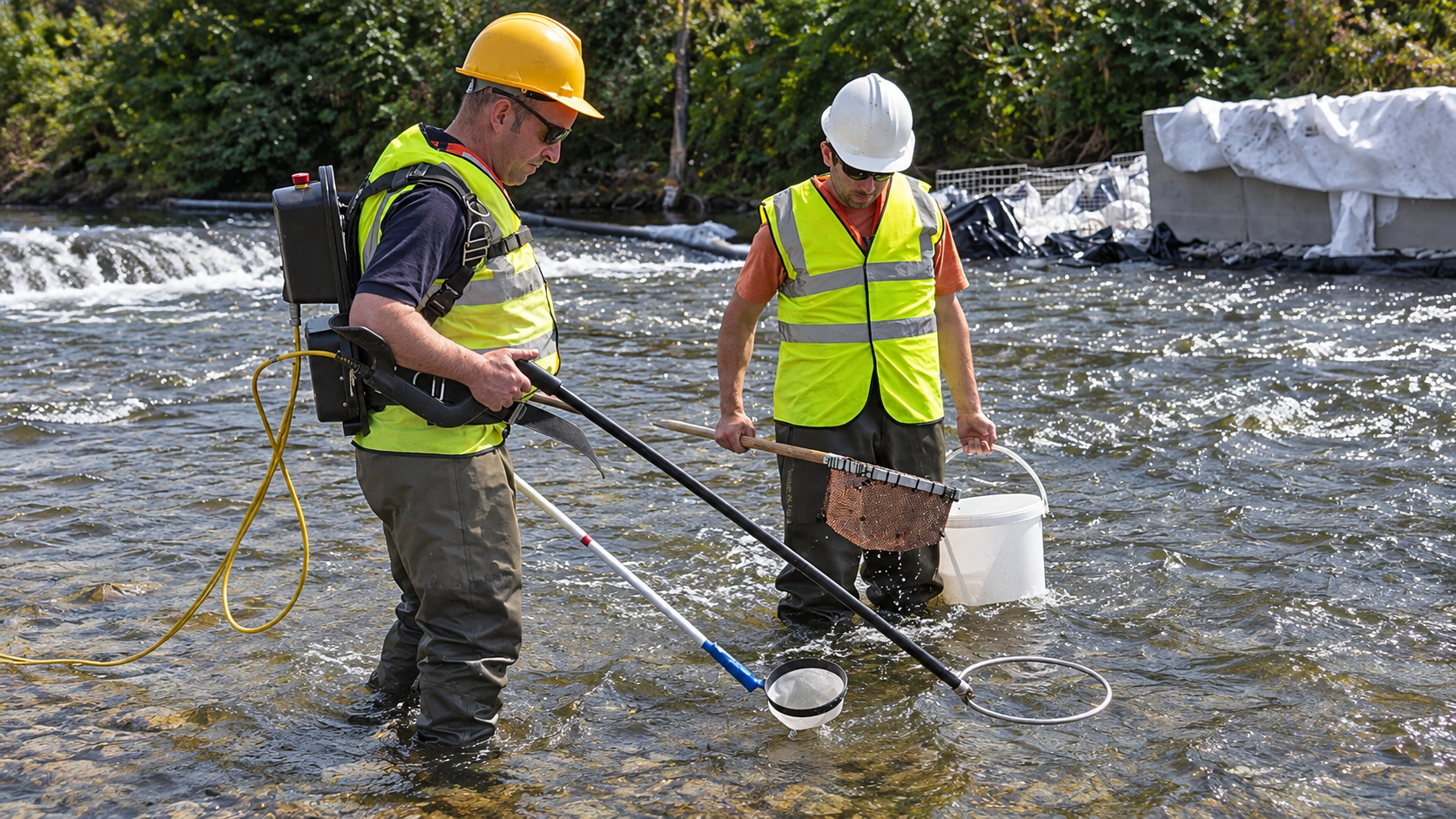
Fifty-eight fish were rescued from a stream in Airdrie and moved to safety before construction began on part of an £8.6 million sewer upgrade supporting the development of the new University Hospital Monklands.
The operation took place near Craigens Road, where specialists from the Clyde River Foundation were brought in to remove fish from a section of watercourse affected by the first phase of the Scottish Water Horizons project. Construction was already under way when Scottish Water announced the rescue on 10 September 2026.
The rescued animals included brown trout, minnows, stone loach and three-spined sticklebacks, four species found living in the stream before the affected section was prepared for engineering work.
Rather than attempt to capture the fish using ordinary nets alone, the team employed a technique known as electrofishing, which uses a carefully controlled electrical current to temporarily influence fish movement so they can be collected.
Each fish was identified and recorded before being relocated to a suitable section of the watercourse outside the construction area.
How Scientists Rescue Fish Using Electricity
Electrofishing is an established technique used by fisheries scientists and conservation organisations to survey fish populations and remove them from areas where construction, drainage or river engineering could place them at risk.
Specialist equipment introduces a controlled electrical field into the water. Fish within the affected area can be temporarily immobilised or drawn towards the equipment, allowing trained workers to capture them using hand nets.
The fish are then transferred to containers of water, where specialists can identify their species, measure them and release them into suitable habitat.
The method requires trained operators and carefully controlled equipment because inappropriate electrical exposure can injure fish. When conducted correctly, however, it provides an effective way of collecting animals that might otherwise be difficult to locate among stones, vegetation and deeper sections of a stream.
At Airdrie, Clyde River Foundation biologist Toby Miller explained that the technique was being used because contractors needed to create a dry working area near the watercourse.
The foundation’s specialists applied a small electrical current while colleagues collected the affected fish in nets and transferred them to buckets.
The organisation also used the opportunity to gather information about the fish inhabiting the stream, identifying and measuring the animals before returning them to the water upstream or downstream of the working area.
The discovery of four species illustrates the variety of wildlife that can occupy relatively small watercourses, including those running through developed urban areas.
Four Different Fish Species Found
The largest and most familiar of the species identified was the brown trout, a native fish found in rivers, burns and lochs across Scotland. Brown trout require suitable freshwater habitat and feed on aquatic insects, other invertebrates and, as they grow, sometimes smaller fish.
Minnows are much smaller, often living in groups in streams and rivers. They form part of freshwater food webs and provide prey for larger fish and other wildlife.
Stone loach are bottom-dwelling fish that spend much of their time close to the riverbed, often sheltering among stones and feeding on small invertebrates.
Three-spined sticklebacks are another small freshwater species, recognisable by the defensive spines along their backs. They are found in a wide range of aquatic habitats, including streams, ponds and ditches.
The presence of these species does not, by itself, establish the overall ecological condition of the watercourse. A fuller assessment would require information about water quality, habitat conditions and the abundance of different species.
Nevertheless, the rescue provided a record of the fish living in the affected stretch before construction disturbed their habitat.
Why the £8.6 Million Sewer Upgrade Is Being Carried Out
The fish rescue formed part of a much larger engineering programme intended to increase the capacity of the local wastewater network.
Scottish Water Horizons, the commercial subsidiary of Scottish Water, is delivering the £8.6 million project with contractor Mackenzie Construction.
The works involve the installation of more than 650 metres of new sewer storage pipework, together with associated manholes and supporting infrastructure.
Construction is scheduled across six locations in Airdrie, Coatbridge, Bargeddie and Uddingston. The first phase, near Craigens Road in Airdrie, was already under way by 10 September.
The additional infrastructure is intended to increase wastewater storage capacity, reduce the risk of sewer flooding and support future development, including the new University Hospital Monklands at Wester Moffat.
A sewer network must be capable of carrying and storing wastewater generated by the properties and facilities it serves. Where existing infrastructure approaches its capacity, additional development can place further demands on the system.
Increasing storage capacity can help manage wastewater flows and reduce the risk of the network becoming overwhelmed, particularly during periods of heavy rainfall or increased demand.
The new hospital is a major regional infrastructure project, and the sewer improvements are intended to provide part of the supporting capacity required for its future operation.
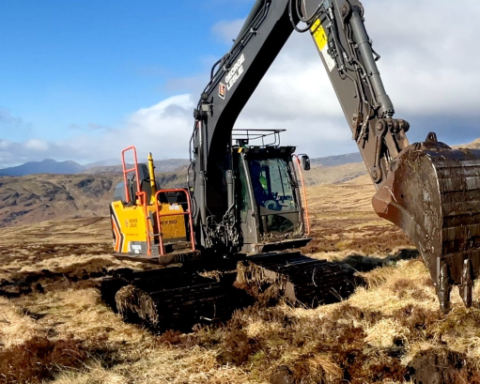
Although much of the construction involves underground infrastructure, sections of the programme intersect with existing watercourses and other habitats. These locations require environmental precautions before excavation and drainage work can proceed.
At Craigens Road, the fish were removed before the affected working area was made dry, preventing them from being trapped or stranded during that part of the construction process.
Protecting Wildlife While Construction Continues
Scottish Water Horizons says environmental surveys and protective measures have also been carried out across the wider programme to minimise disturbance to local habitats during construction.
Project manager John Kerr said the fish rescue demonstrated how environmental protection could be incorporated into major infrastructure work.
The operation was also an opportunity for the Clyde River Foundation to record the fish species present in the watercourse, providing information about a local habitat that might otherwise attract little public attention.
The rescue illustrates an aspect of civil engineering that is often overlooked. Before machinery can begin excavating near a stream, environmental specialists may have to survey the area, identify wildlife and arrange for animals to be moved away from the immediate construction zone.
The same principles apply to other infrastructure projects where building work could disturb rivers, burns, wetlands or sensitive habitats.
For the Airdrie watercourse, the immediate outcome was the relocation of 58 fish before work began in the affected section.
Construction on the wider £8.6 million programme was already under way when the rescue was announced, with further sewer infrastructure planned across North Lanarkshire and neighbouring areas.
The long-term objective is to provide additional wastewater capacity for local communities and the new University Hospital Monklands, while the preliminary environmental work has preserved a small but diverse population of freshwater fish from direct disturbance at the construction site.