
Rev Dr Roderick Macleod MBE, a former member of the first Comhairle nan Eilean Siar and a noted Gaelic scholar, minister, writer and editor, has died.
Comhairle nan Eilean Siar has paid tribute to Rev Dr Roderick Macleod MBE, a former councillor, Church of Scotland minister and Gaelic scholar whose work connected public service, religious life and the written Gaelic tradition over several decades.
Rev Dr Macleod died on Saturday, 9 May 2026. The Comhairle flag is being flown at half mast in his memory and will be lowered again on the day of his funeral.
The tribute is more than a notice of the passing of a former elected member. Rev Dr Macleod belonged to a generation of Gaelic public figures whose work crossed institutions: the church, local government, scholarship, publishing and community life. His public service began in the early years of the Western Isles council, but his wider legacy lies in his long contribution to Gaelic writing, editing and cultural preservation.
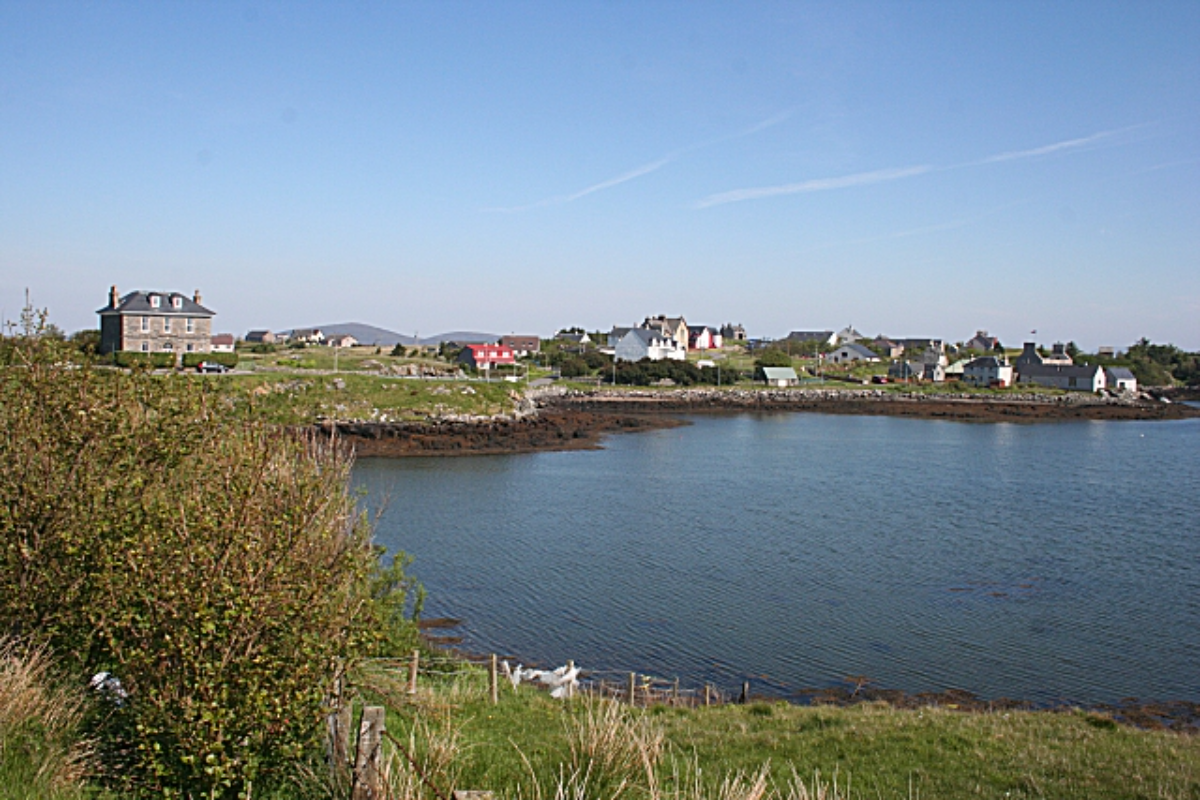
Born in Lochmaddy, Rev Dr Macleod served as minister of Berneray Church of Scotland from 1964 until 1985. He was also elected to the first Comhairle nan Eilean Siar, representing the Paible ward between 1974 and 1982.
That period was significant in the civic history of the islands. The creation of the Comhairle gave the Western Isles a distinctive local authority structure at a time when questions of language, local identity, public services and island governance were bound closely together. Rev Dr Macleod’s service placed him inside that first generation of local representatives, working in a council area where Gaelic was not an abstract cultural asset but part of everyday life.
After leaving the Comhairle in 1982, he later moved to Argyll, where he served as a minister from 1985 until 2012. His MBE, awarded in 2017, recognised services to Gaelic and to his local community in Argyll, according to the Comhairle tribute.
Cllr Kenny Macleod, Convener of Comhairle nan Eilean Siar, described him as “an outstanding community servant and a stalwart of the Gaelic language”. He said Rev Dr Macleod had been dedicated to his work as a councillor, minister, author and Gaelic scholar, and had left an outstanding legacy through his preaching and contributions to the language.
The Gaelic contribution is central to understanding why the tribute matters. Rev Dr Macleod chaired the Scottish Gaelic Texts Society, published several Gaelic books and edited the Gaelic magazine Cruisgean in the 1980s. Western Isles Libraries lists editions of Cruisgean by Roderick Macleod from the early 1980s in its Gaelic non fiction collections.
He also edited the Gaelic supplement of the Church of Scotland magazine Life and Work for around 40 years from 1981, according to the Comhairle. That role placed him in one of the longest running Gaelic periodical traditions in Scotland. The Gaelic supplement of Life and Work, known as Na Duilleagan Gàidhlig, began in January 1880 and has been described in public reference material as having no Gaelic periodical lasting as long as the Gaelic edition of Life and Work. Publicly available records list Rev Dr Roderick MacLeod as editor from 1980 until 2017.
That continuity matters. Gaelic survives through education policy, broadcasting and public funding, but also through regular acts of editing, writing and publication. A monthly supplement, sustained across decades, is not dramatic work. It is the kind of work that keeps a literary and religious language present in ordinary homes and congregations.
Rev Dr Macleod’s scholarship also reached formal learned settings. The Transactions of the Gaelic Society of Inverness list an article by Rev Dr Roderick Macleod titled “Mo Shùil ad Dhèidh: the Story of an Eighteenth Century Romance”, published in volume 57 for 1990 to 1992.
That places his work within a tradition of Gaelic literary and historical study concerned not only with the preservation of texts, but with explaining their setting, meaning and transmission. In a language community where memory is often carried through song, sermon, story and print, such work has public importance beyond the academy.
His work was also recognised outside Scotland. A 1985 Cape Breton publication described Roderick Macleod as editor of the Gaelic newspaper Cruisgean in the Western Isles and noted that he had been invited to Cape Breton to lecture on the state of Gaelic.
That reference is a reminder that Gaelic culture has never belonged only to one geography. The language connects the Western Isles, mainland Scotland and diaspora communities abroad. Figures such as Rev Dr Macleod helped maintain those links through writing, lecturing, religious life and cultural exchange.
The shape of his life also reflects a particularly Scottish form of public service. He was not confined to one office or title. He served as a minister, councillor, editor, scholar and author. In smaller communities, those roles often overlap. The same person may preach, write, represent, advise, preserve memory and carry language from one generation to another.
That breadth should not be reduced to sentiment. It is a matter of record that Rev Dr Macleod’s work touched several institutions that have been central to Gaelic life: the church, the Comhairle, Gaelic publishing, literary scholarship and community service. The Comhairle’s decision to fly its flag at half mast recognises both his service as a former member and the wider standing he held in island life.
There is a larger context here. Gaelic public life has depended on people willing to do unglamorous work for long periods: preparing texts, editing supplements, sustaining societies, preaching in the language, publishing magazines, and treating Gaelic as a language of thought rather than an ornament of identity. Rev Dr Macleod’s career appears to have been rooted in that practical tradition.
His death comes at a time when Gaelic remains the subject of policy concern and cultural pride, but also of demographic pressure. The Western Isles remain one of the most important heartlands of the language. The passing of a figure such as Rev Dr Macleod is therefore not only a personal loss to family, friends and former congregations. It is a moment in the continuing story of how Gaelic knowledge is handed on.
The Comhairle’s tribute describes a man who served both place and language. That is the correct emphasis. Rev Dr Roderick Macleod MBE belonged to the civic and cultural life of the Western Isles and later Argyll, but his work also formed part of a longer written Gaelic tradition.
His legacy is not held in one institution. It lies in council records, sermons, books, magazine pages, Gaelic scholarship and the memory of communities that knew him. For Scotland, and especially for Gaelic Scotland, that is a substantial life of service.