
No cell-cultivated meat has yet been authorised for human consumption in Great Britain. But cultivated chicken has already been approved for use in pet food, and one limited UK dog treat launch has shown how quickly the issue can move from laboratory to retail shelf. For Scotland, consumers need clear answers on labelling, safety evidence, cell-line sources, long-term risk, environmental claims and the effect on Scottish farming.
Cell-cultivated meat is not currently authorised for human consumption in Scotland.
That is the first fact.
Food Standards Scotland says cell-cultivated products must be authorised before they can be placed on the market in Great Britain. It also says no cell-cultivated products have yet been authorised for human consumption in Great Britain or Northern Ireland, although cell-cultivated products have been approved for pet food.
This means the public should not be told that lab-grown meat is already on Scottish dinner plates unless evidence is produced. Modern Scot found no public evidence that cell-cultivated meat for human consumption is being sold in Scottish supermarkets, restaurants, schools, hospitals, care homes or public kitchens.
But that does not mean the issue can be ignored.
The first UK approval has already arrived through pet food. The named product publicly confirmed in the UK is THE PACK’s Chick Bites, made with cultivated chicken supplied by Meatly. It was launched as a limited release through Pets at Home in Brentford, London, in February 2025. Modern Scot found no public evidence that the product is currently on ordinary sale in Scottish Pets at Home stores or Scottish pet shops.
A limited London pet-food launch is not the same as human food reaching Scottish plates. But it shows that the regulatory door has opened in one part of the food system.
Scotland now needs to decide what public transparency should look like before these products move further.
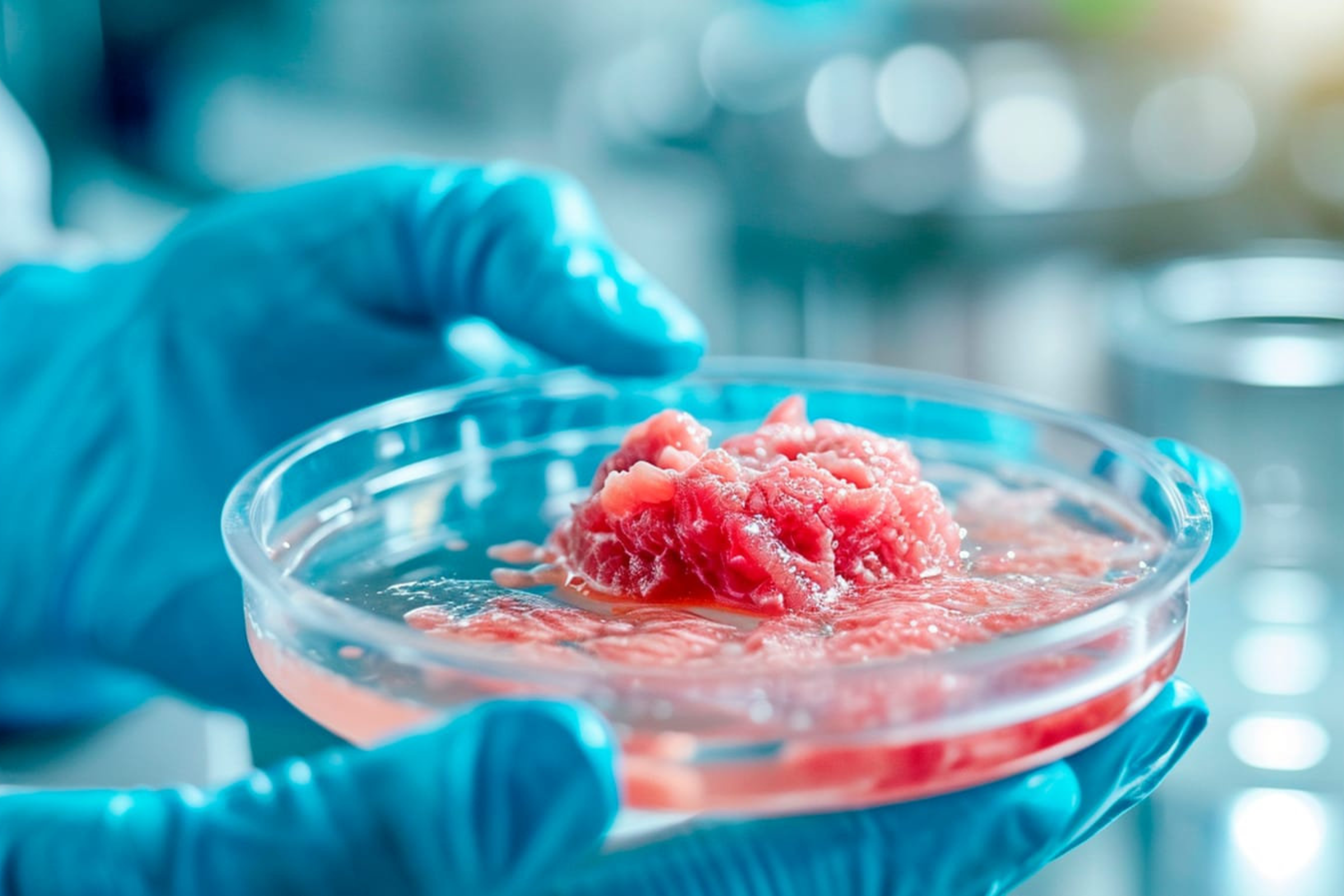
The official term used by regulators is cell-cultivated products. These are products made by taking cells from animals or plants and growing them in a controlled environment. For the current human-food guidance, the Food Standards Agency and Food Standards Scotland are focusing on products originating from animal cells.
That is not the same as plant-based meat. It is not traditional slaughtered meat. It is also not simply ordinary meat with a new label.
The public needs plain wording. If a product is grown from animal cells in a laboratory or production facility, the label should say so clearly. A consumer should not have to decode technical language, scan a QR code, or read a policy note written by someone in communications.
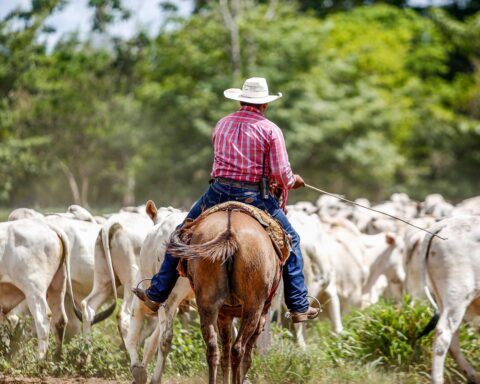
The question is especially important in Scotland because food here is not just a commodity. Beef, lamb, poultry, dairy, venison, seafood and crofting are tied to land, identity, rural employment, local supply chains, provenance and trust. Scotland’s food reputation has been built through farming, fishing, butchery, traceability and place.
Cell-cultivated products enter that landscape carrying a different kind of promise and a different kind of risk. The first issue is labelling.
Food Standards Scotland says authorised products must comply with applicable food law. But the public still needs clearer answers. If cell-cultivated products are authorised for human food, will the front of the pack have to say “cell-cultivated”? Will menus have to disclose it? Will school meals, hospital meals, care-home meals, prisons or public catering have to identify it? Will a processed ready meal containing cell-cultivated animal cells have to say so clearly on the front label, or only somewhere in the ingredients?
These are not small details. They are the difference between public consent and quiet introduction.
If a product is used in pet food, the same question applies. Pet owners should be told plainly if a dog treat or cat food contains cultivated animal cells. Veterinary practices, pet shops, online retailers and supermarkets should not be left to interpret vague wording after the fact.
People should be able to reject cell-cultivated products if they do not want them. That choice is meaningful only if the product is clearly labelled and if public institutions disclose what they are serving. In a shop, a consumer can refuse a product if the label is clear. In a school, hospital, care home or public contract, refusal becomes more complicated. Scotland should ask now whether public procurement rules will require disclosure and alternatives before any cell-cultivated human-food product is authorised.
Another issue is the cell line itself.
Some public concern has focused on “immortal cells” and whether cultivated meat is connected to HeLa cells, the human cell line taken without consent from Henrietta Lacks in the United States in 1951. Her case is real and ethically serious. HeLa cells became one of the most important immortal human cell lines in medical research, and the lack of consent remains one of the most widely discussed scandals in modern biomedical history.
Modern Scot has found no public evidence that the UK cultivated pet-food product uses HeLa cells or any human cell line.
But the public concern should not be dismissed as foolish. It exists because the word “immortalised” is being used in relation to cell cultivation, and most consumers have not been given a clear explanation of what that means in food production.
Meatly says its cultivated chicken comes from cells taken once from a single chicken egg. Reporting on the company has described the cells as spontaneously immortalised, meaning they can continue dividing under controlled production conditions. That is the company’s account. Modern Scot has not seen the full regulatory dossier, the full provenance record for the cell line, the complete immortalisation process, the full growth medium, or the independent long-term evidence behind the product.
That is the central transparency problem.
The question is not only whether a company says “these are chicken cells”. The question is whether consumers, regulators and independent scientists can see enough to know where the cells came from, how the cell line was established, whether genetic modification was used, what feeds the cells, what remains in the final product, and what evidence exists after long-term use.
Then there is the issue of safety.
Regulatory approval is not the same as a long history of human consumption. For human food in Great Britain, cell-cultivated products are still in the risk-analysis process. If applications are approved in future, regulators will have assessed the evidence submitted to them. But the Scottish public is entitled to ask what evidence exists beyond the manufacturer’s dossier and whether long-term effects have been studied in the real world.
For pet food, the question is also serious. Dogs and cats may be fed the same foods repeatedly for long periods. A limited launch of a treat is not the same as a long-term staple diet. If cultivated ingredients become common in pet food, owners should be told what proportion of the product is cultivated cells, what the other ingredients are, what feeding studies exist, and whether vets have been given clear information.
And what of the environmental claims?
Many companies in this sector say cell-cultivated meat could reduce animal slaughter, land use and climate impact. Those claims may prove true for some products under some conditions. They should not be treated as fact for Scotland without independent, full-life-cycle evidence.
The Scottish public should not be asked to accept sustainability claims paid for or shaped by the industry trying to reach the market. Proper comparison would need to include the full energy demand of production, the power source, bioreactors, sterile facilities, growth media, ingredients, transport, cold-chain requirements, waste, cleaning, inputs and scale-up losses. It would also need to compare those figures honestly against Scottish farming systems, not against the most intensive or least efficient systems elsewhere.
Scotland’s beef, lamb and poultry sectors support farms, crofts, processors, hauliers, auction marts, butchers, local employment and rural communities. Quality Meat Scotland has reported continued economic significance in red meat processing and exports, while NFU Scotland has warned more widely that Scottish farmers and crofters face pressure from cheap food, volatile markets and labelling systems that can be confusing or unfair.
Cell-cultivated products could add another pressure if they are marketed as equivalent to Scottish meat while being produced through a completely different system. They could also affect consumer trust if labelling is weak. Scottish farmers should not have to compete against laboratory products carrying meat-like language without clear qualification.
Of course, we come to enforcement.
Food Standards Scotland is the food safety authority for Scotland, but local authorities play an important role in food law enforcement. If cell-cultivated products are approved for human food in Great Britain, Scottish consumers should be able to find a public list of authorised products, approved uses, labelling conditions and enforcement responsibilities. If pet-food products using cultivated meat are introduced in Scottish shops, pet owners should not have to discover that from a marketing campaign after the product is already on the shelf.
The minimum Scottish standard should be simple.
No hidden introduction.
No vague labels.
No use in public meals without disclosure.
No pet-food rollout without clear front-of-pack wording.
No environmental claims treated as fact without independent evidence.
No dismissal of public concern as ignorance when companies and regulators have not made the full process publicly understandable.
The public does not need panic. It needs access to the truth.
At present, the truth is limited. Cell-cultivated meat is not authorised for human consumption in Scotland. A UK cultivated chicken pet-food approval exists. One named product, THE PACK Chick Bites with Meatly cultivated chicken, had a limited London release. There is no public evidence found by Modern Scot that it is currently on ordinary sale in Scotland. The company says the cultivated chicken comes from cells taken from a chicken egg. The public cannot easily inspect the full cell-line history or production dossier. Regulators say products must be authorised before sale. Labelling and consumer disclosure remain the next battleground.
Scotland should not wait until these products arrive in human food, pet food, public procurement or processed ingredients before asking what the label will say.
NOTE: Modern Scot has not relied on company-funded environmental claims as settled fact. Where industry, advocacy or company sources are used, they are treated as claims, background or technical context unless independently corroborated.
Sources and further reading
Food Standards Scotland, Cell-cultivated products. Used for Scotland’s regulatory position, including the requirement that cell-cultivated products must be authorised before being placed on the market in Great Britain.
Food Standards Scotland, Know the facts: Cell-cultivated products. Used for the current public position that cell-cultivated products have been approved for pet food, but no products have yet been authorised for human consumption in Great Britain or Northern Ireland.
Food Standards Agency, Cell-cultivated products. Used for UK guidance on authorisation, safety assessment and the general regulatory position.
Food Standards Agency and Food Standards Scotland, Cell-cultivated products: guidance on classification and HACCP principles. Used for the explanation that current guidance focuses on cell-cultivated products originating from animal cells for human consumption, and that Scotland’s food safety authority is Food Standards Scotland.
Food Standards Agency and Food Standards Scotland, first UK safety guidance on cell-cultivated products. Used for regulatory context on safety assessment, allergens, nutritional appropriateness and future authorisation requirements.
Meatly, Meatly launches world’s first cultivated pet food. Used for the company’s statement that THE PACK Chick Bites with Meatly cultivated chicken launched in a limited release at Pets at Home Brentford, London, from 7 February 2025.
Meatly, company approval and product information. Used only for Meatly’s own claims about its cultivated chicken and process, not as independent proof of wider safety or environmental benefit.
THE PACK, Chick Bites product information. Used to identify the finished pet-food brand associated with the cultivated chicken launch.
Pets at Home, retail information where available. Used to identify the retail route for the limited UK pet-food launch.
Food Manufacture, reporting on Meatly and THE PACK cultivated pet-food launch. Used to corroborate the product name, company collaboration and limited Pets at Home Brentford launch.
The Guardian, reporting on lab-grown meat dog treats in the UK. Used to confirm public reporting that the UK launch concerned pet food, not human food.
Wired, reporting on Meatly’s UK pet-food approval. Used for reporting that Meatly’s cultivated chicken cells were sourced from fertilised chicken egg material and described as spontaneously immortalised.
Reuters Fact Check, no evidence authorised cultivated meat contains human cells. Used for the distinction between public concern about human cell lines and the evidence available for cultivated meat products.
Associated Press Fact Check, lab-grown meat and claims about cancer cells. Used for context on public claims about immortalised cells and expert distinction between animal cell lines, human cells and cancer claims.
Reuters, reporting on Henrietta Lacks and HeLa cell legal cases. Used for background on the origin and ethical controversy around the HeLa cell line.
The Good Food Institute, cultivated meat science background. Used cautiously for technical background on cell culture media and cultivated meat systems because the organisation advocates for alternative proteins.
Centre for Process Innovation, cultivated meat production background. Used for technical context on production challenges, including growth media and the historic use of foetal bovine serum in cell culture.
Quality Meat Scotland, market intelligence and red meat sector reporting. Used for Scotland-specific background on the economic and export significance of Scottish red meat.
NFU Scotland, food labelling and food security statements. Used for Scottish farming context, producer concerns and labelling issues. Claims from NFU Scotland should be read as the farming union’s position.
Scottish Government and Food Standards Scotland food law material. Used for Scotland’s food safety, novel foods and enforcement context.