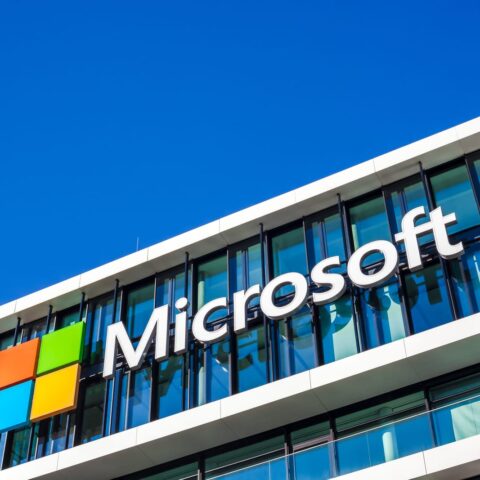
The primary purpose of enterprise software like Microsoft 365, Teams, and Power Automate is to streamline administration, break down data silos, and make large organisations more efficient and organised. Yet, the procurement of that very same “organisational” software in Scotland is fragmented, siloed, and structurally disorganized. The Scottish Government plans to merge public bodies, centralise purchasing and expand shared technology to save money. Yet its own disclosures reveal that it has lacked a complete picture of Microsoft spending across public services. New expenditure records and a proposed £300 million software procurement framework expose a significant weakness in the government’s financial oversight.
The Scottish Government is preparing to reorganise Scotland’s public services on a substantial scale, proposing to replace 14 territorial NHS boards with two strategic boards, consolidate administrative functions and expand shared technology. Ministers say the changes will reduce duplication and release money for frontline services. But official records reveal that the government has not maintained a comprehensive central account of one of the technologies already used throughout those institutions.
When Public Finance Minister Ivan McKee was asked in Parliament how much Scotland’s NHS, councils and wider public sector spent on Microsoft 365 licences, he confirmed that the Scottish Government did not hold centralised figures covering the whole public sector. Officials identified more than £49 million in Microsoft purchases through one national procurement framework during 2024–25, but acknowledged that spending through other purchasing routes was excluded.
A subsequent Freedom of Information response established that the government also did not hold detailed costs and value-for-money information requested about an NHS Microsoft 365 programme. Meanwhile, expenditure records released on 9 October 2026 reveal £12.72 million paid to Phoenix Software Limited during 2025–26, including a £5.68 million payment described only as computer software.
These figures concern different financial years and purchasing arrangements, so they cannot be combined into a national Microsoft spending total. Nevertheless, they expose the difficulty of establishing the full cost of technology across Scotland’s public institutions at precisely the time ministers are proposing to bring those institutions into closer administrative and financial alignment.
The Government’s Own Admission
The clearest evidence emerged in a parliamentary answer on 8 August 2025.
Responding to Kenneth Gibson MSP, Ivan McKee explained that the Scottish Government did not hold centralised Microsoft 365 licensing figures covering the entire NHS, all local authorities and the wider public sector.
Officials instead supplied figures from two purchasing arrangements for which they held records.
The Scottish Government’s own Microsoft Enterprise Agreement accounted for £6,514,529.39, predominantly supporting SCOTS Connect, the shared workplace technology network used by government departments and participating public bodies.
As of 2 April 2025, SCOTS Connect served 24,178 users across 55 organisations. Almost half were classified as non-core Scottish Government users. The licensing included Microsoft 365 E3, Power BI, Power Automate and Teams Phone, supporting communications, documents, collaboration and administrative functions.
A separate national Software Value Added Reseller Services framework recorded £49,047,184.45 in Microsoft expenditure during 2024–25. NHS organisations accounted for £36.79 million, local authorities £6.02 million and other public-sector customers £6.24 million.
The government confirmed that the framework figures excluded purchases through other procurement routes. The £49.05 million was therefore only the amount visible through that arrangement, not the total cost of Microsoft products purchased by Scotland’s public sector.
Individual NHS boards, councils and agencies may maintain detailed records of their own software contracts. The parliamentary answer does not establish that those organisations lack financial controls. It establishes that the Scottish Government could not provide a consolidated account of their expenditure.
That limitation is important for a government pursuing national procurement efficiencies. Comparing prices, identifying overlapping contracts and negotiating collective agreements requires reliable information about existing purchases, while assessing future savings requires an understanding of the costs those agreements are intended to replace.
Further Questions About NHS Technology Oversight
A Freedom of Information response published on 1 May 2026 exposed another gap in the information held by the Scottish Government.
The request concerned NHS Scotland’s Microsoft 365 programme and sought detailed expenditure on licences, migration and technical support, together with the performance indicators and value-for-money assessments used to monitor the programme.
The government confirmed that it did not hold the requested detailed cost breakdown or performance and value-for-money information.
Its response identified the Major Programmes Assurance Board as part of the oversight arrangements and disclosed that the national NHS Microsoft licensing agreement runs until 1 May 2030.
The documents do not establish that NHS National Services Scotland or individual health boards lack the requested information. Those bodies may maintain their own contract, expenditure and performance records.
Nevertheless, the disclosure is relevant to the proposed restructuring of NHS Scotland. Existing licensing agreements and technology commitments will continue to require management as responsibilities are consolidated, particularly where contracts extend beyond the intended transition period.
Reducing the number of administrative organisations may eliminate some duplicated functions, but it does not automatically reduce the number of employees requiring software or remove contractual obligations already in place.
What the Latest Spending Records Reveal
Modern Scot’s examination of the Scottish Government’s 2025–26 expenditure file identified 14 payments to Phoenix Software Limited totalling £12,720,782.31.
The largest payment, £6,284,281.43 on 3 April 2025, was identified as Microsoft aggregation software licences. That exact amount appears in the earlier parliamentary breakdown for SCOTS Connect.
Another payment of £217,226.88, made on 1 April 2025, matches the government’s disclosed expenditure on cloud, SQL and data-centre products. These payments can therefore be linked to established government technology arrangements.
The second-largest transaction is less clearly explained.
On 12 March 2026, the Directorate for Corporate Operations recorded £5,679,642.40 paid to Phoenix Software under the general description of computer software. The entry did not identify the products, licence quantities or corresponding contract.
A separate procurement notice confirms that Phoenix Software was awarded a Scottish Government Microsoft aggregation software licensing contract worth £16,313,855.53 excluding VAT on 25 February 2025. Seven tenders were received, with price accounting for 90% of the evaluation weighting.
The award establishes a formal competitive procurement process. However, the published documents do not identify whether the £5.68 million March payment was made under that agreement or another purchasing arrangement.
The contract value and annual payments are different financial measures and cannot simply be added together. Nor do the records demonstrate overcharging, unnecessary licensing or improper conduct by the supplier.
The reporting issue is the limited detail in the public expenditure record. A payment approaching £5.7 million is identifiable by date, recipient and directorate, but the entry does not establish precisely what was purchased.
Another Million-Pound Contract as Reform Approaches
Software purchasing commitments have continued while the government develops its restructuring plans.
On 25 September 2026, Education Scotland awarded Phoenix Software a further contract worth £1,013,943 excluding VAT for Microsoft Office 365 licences and storage. The award, published on 30 September, followed a competition involving two tenders.
The agreement includes an option to purchase additional cloud storage during its second and third years.
This is a separate contract from the February 2025 Scottish Government award and falls outside the earlier 2025–26 payment figures.
There is no evidence that Education Scotland’s purchase duplicates other contracts unnecessarily or represents poor value. Its significance lies in demonstrating that individual public institutions continue to make substantial software purchasing commitments while the government prepares to expand shared procurement.
Such arrangements may be entirely justified. The opportunity for future savings depends on whether central coordination can improve their terms, remove unnecessary duplication or reduce associated support and administration costs.
A Proposed £300 Million Software Framework
A procurement notice published on 11 June 2026 provides further evidence of the government’s intended approach.
Scottish Procurement announced preliminary plans for a replacement national Software Value Added Reseller Services framework, with an estimated value of £300 million excluding VAT.
That figure represents the estimated value of purchasing potentially available through the proposed framework. It is not money already spent, a confirmed expenditure commitment or a financial saving.
The arrangement would cover commercial software and associated services, including implementation, technical support, bulk purchasing, licence management and software asset audits.
These measures could improve financial control. Better records of existing software licences would help participating organisations identify overlapping purchases, monitor usage and compare purchasing arrangements.
However, participation would not be mandatory under the proposal. Eligible Scottish public-sector organisations could continue purchasing through other permitted routes.
That qualification matters because a central procurement framework does not automatically create a comprehensive national expenditure record. Unless transactions made outside the framework are also captured, the gaps identified in the government’s earlier parliamentary disclosures could persist.
The June notice was preliminary rather than a final contract award. Its eventual scope and operation would depend on the completed procurement arrangements.
What the Great Redesign Could Change
The Scottish Government’s 2026 Spending Review includes an ambition to deliver up to £300 million in cashable savings over two years through expanded national collaborative procurement.
That savings target covers procurement generally. It is separate from the proposed £300 million software framework and does not establish how much Microsoft licensing expenditure will change.
Consolidation offers potential advantages. Public bodies purchasing together may negotiate better prices, eliminate overlapping technology platforms and share specialist support. Centralised licence management could also help identify subscriptions that are no longer required.
The restructuring may nevertheless introduce additional expenditure.
Combining organisations can require new systems, data migration, technical integration and staff training. Existing contracts may continue during the transition, requiring institutions to maintain some services simultaneously.
The government’s own five-year organisational plan also commits to making Copilot Premium and Power Platform capabilities available across the Scottish Government during 2026, alongside wider use of artificial intelligence, automation and Oracle Cloud services.
These technologies may improve productivity, but their financial contribution depends on implementation costs, licensing charges and measurable operational benefits.
A larger organisation may be administratively simpler without having fewer software users. Similarly, a new shared contract may offer better unit prices without reducing the total bill if demand grows or additional products are introduced.
The government’s published reform documents do not provide a complete calculation of these competing effects on Microsoft expenditure. There is therefore no verified basis for predicting whether the restructuring will increase or reduce the overall cost.
The Test of Scotland’s Government Redesign
The Scottish Government’s Sustainable Digital Public Services Delivery Plan promises greater visibility and control of digital expenditure by 2028. However, that commitment does not guarantee comprehensive reporting across every NHS organisation, council and other public body. Unless purchases made through different procurement routes are brought into a common accounting system, the gaps already identified could remain.
The proposed restructuring offers an opportunity to change that. Consolidated purchasing, shared systems and improved licence management could reduce expenditure, but the financial results must include the cost of introducing new technology, transferring existing services and maintaining contractual commitments.
The Scottish Government has explained how it intends to reorganise Scotland’s public institutions. It has not yet published the comprehensive software-spending baseline needed to demonstrate what those changes will save.
Fewer public bodies and larger contracts are not, in themselves, evidence of financial efficiency. The test will be whether Scotland can account for the money spent before the redesign and demonstrate that the new arrangements cost less.
Sources
Scottish Parliament — Written Question S6W-39339: Microsoft 365 Licensing Expenditure Across the Scottish Public Sector, answered by Ivan McKee, 8 August 2025. https://www.parliament.scot/chamber-and-committees/questions-and-answers/question?ref=S6W-39339
Scottish Government — Government Spend Over £25,000: 2025 to 2026, 9 October 2026. https://www.gov.scot/publications/government-spend-over-gbp25000-2025-to-2026/
Scottish Government — Funding and Oversight of IT Systems Within NHS Scotland: FOI Release, 1 May 2026. https://www.gov.scot/publications/foi-202500499750/
Public Contracts Scotland — Award of SG – Microsoft Aggregation – Software Licenses, 25 February 2025. https://www.publiccontractsscotland.gov.uk/search/show/search_view.aspx?ID=FEB524589
Public Contracts Scotland — Microsoft O365 Licences and Storage: Education Scotland Contract Award, 30 September 2026. https://www.publiccontractsscotland.gov.uk/search/show/search_view.aspx?ID=SEP565640
Public Contracts Scotland — Software Value Added Re-seller Services Framework: Prior Information Notice, 11 June 2026. https://www.publiccontractsscotland.gov.uk/Search/show/Search_View.aspx?ID=JUN557766
Scottish Government — Programme for Government 2026 to 2031: First Minister’s Speech, 1 September 2026. https://www.gov.scot/publications/programme-for-government-2026-to-2031-first-ministers-speech/
Scottish Government — Scottish Spending Review 2026: Annex B, Portfolio Efficiency and Reform Plans, 13 January 2026. https://www.gov.scot/publications/scottish-spending-review-2026/pages/17/
Scottish Government — Digital Strategy for Scotland: Sustainable Digital Public Services Delivery Plan 2025–2028, 18 November 2025. https://www.gov.scot/publications/digital-strategy-scotland-sustainable-digital-public-services-delivery-plan-2025-2028/pages/2/
Scottish Government — Serving Scotland: Our Five-Year Plan, updated 22 September 2026. https://www.gov.scot/publications/serving-scotland-five-year-plan/pages/4/