
Jacobs has been appointed to an eight year framework supporting Murphy’s SSE portfolio. Behind the corporate language sits a larger Scottish story: the country’s renewable ambitions now depend on the less glamorous, more difficult work of building the electricity infrastructure to carry clean power where it is needed.
The announcement is easy to miss.
A global engineering company has been appointed to a framework. A contractor will use its services. The words are familiar: design, verification, assurance, geotechnical, civil, environmental, high voltage. It sounds, at first reading, like the sort of industry notice that passes quietly between procurement teams and people who own very serious boots.
But the subject is not small.
Jacobs, the Dallas based engineering and infrastructure consultancy, said on 23 April 2026 that it had been awarded a comprehensive eight year multidisciplinary framework by Murphy, supporting projects within Murphy’s Scottish and Southern Energy portfolio. The company said the framework covers transmission and distribution infrastructure projects connected to the United Kingdom’s shift towards a low carbon future.
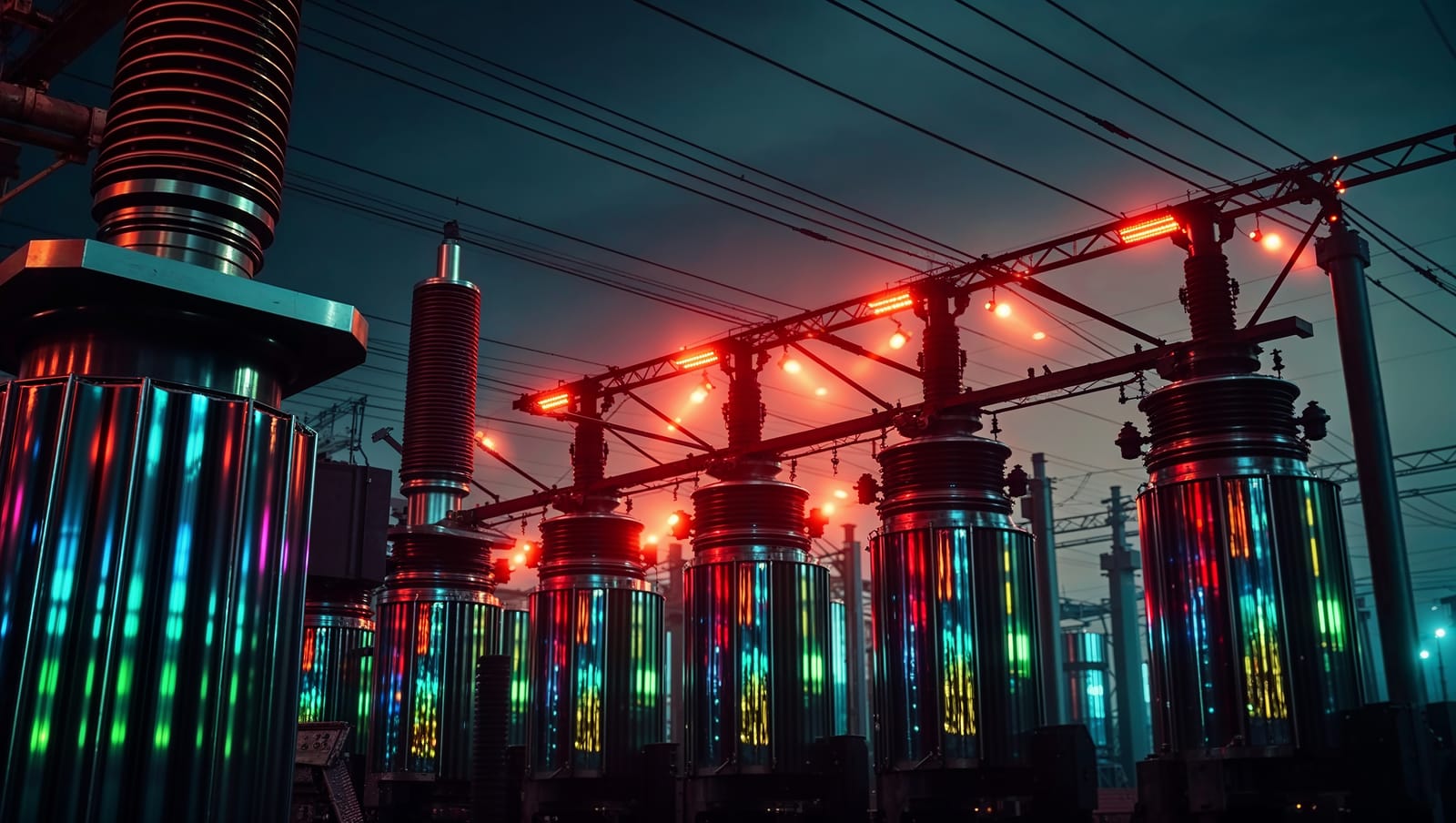
In plain English, Jacobs has been brought into the long chain of work needed to design and support parts of the electricity grid. That means the physical infrastructure behind the energy transition: substations, grid connections, engineering design, environmental work, ground investigations, civil engineering and the high voltage systems that allow electricity to travel safely and reliably.
This matters because Scotland’s renewable future is no longer only a question of building wind farms.
It is now a question of whether the electricity network can keep up.
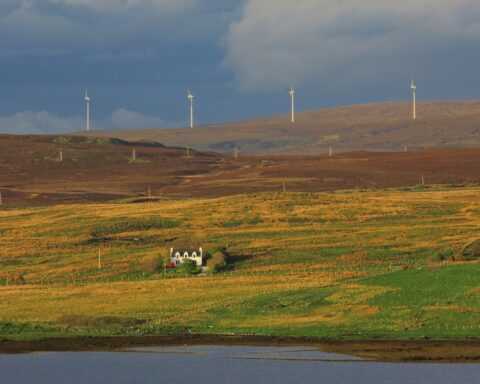
For years, the public discussion has focused on turbines, especially offshore wind. That is understandable. Turbines are visible. They photograph well. They give politicians something to point at while wearing a hard hat. The grid is less glamorous. It is made of substations, cables, towers, control systems, consents, ground conditions and long arguments about routes. Yet without it, renewable generation can become stranded capacity, impressive in theory but constrained in practice.
SSEN Transmission, which owns and operates the high voltage electricity transmission network in the north of Scotland, has said its Pathway to 2030 projects are part of a major upgrade of the electricity transmission network across Great Britain. It says the upgrades are needed to meet climate and energy security targets by connecting and transporting renewable electricity from where it is generated to where it is needed.
That sentence is the heart of the matter. Much of Scotland’s renewable potential lies far from the largest centres of demand. Wind power can be generated around the Highlands, islands and coastal waters, but it must be carried through a network strong enough to handle it. The old grid was not built for the scale and geography of the new energy system.
The Scottish Futures Trust describes the Scotland wide grid upgrade as a coordinated programme led by SSEN Transmission and SP Energy Networks to connect and move rapidly growing renewable generation, particularly ScotWind and other offshore wind, across Scotland and into demand centres in Great Britain.
That is why a technical framework involving Jacobs and Murphy deserves attention. It is one small part of a much larger national change. Scotland is not merely adding cleaner power to the old system. It is having to rebuild parts of the system itself.
The scale is considerable. Ofgem has been using its Accelerated Strategic Transmission Investment process to fast track major electricity transmission projects. In November 2025, the regulator approved early construction funding requests for eight Scottish Hydro Electric Transmission projects, part of a wider effort to connect 43 to 50 gigawatts of offshore wind by 2030. Ofgem said the funding helps transmission operators secure high demand materials such as HVDC cables and carry out early works including land purchases and surveys.
The National Wealth Fund has also backed grid upgrades in the north of Scotland, announcing in December 2025 an £800 million guarantee to support four SSEN Transmission projects. Those projects include Skye Reinforcement, Argyll and Kintyre 275kV Strategy, Orkney Connection and the Eastern Green Link 2 subsea high voltage direct current project. The Fund said the four projects were expected to create or support around 3,400 jobs.
This gives the Jacobs announcement its wider meaning. It is not an isolated commercial win. It sits inside a period when grid design, engineering capacity, procurement and delivery have become national constraints. The United Kingdom Government has said that network build must be accelerated and that interventions are intended to support delivery of 80 critical transmission projects required for Clean Power 2030.
For Scotland, the opportunity is large. Grid investment can support skilled employment, engineering work, environmental assessment, civil construction, surveying, manufacturing and local supply chains. It can help connect island and Highland renewable projects to the wider electricity system. It can reduce the risk that clean power is wasted because the network cannot move it. It can also strengthen energy security by reducing reliance on volatile fossil fuel markets.
But it also brings hard questions.
New transmission infrastructure is rarely invisible. It may involve overhead lines, new substations, access roads, compounds, land agreements, environmental assessments and public consultation. Communities will want to know where infrastructure will go, why it is needed, who benefits, how impacts will be reduced and whether local areas will see more than disruption. Ofgem itself makes clear that early construction funding does not grant planning permission, nor does it decide location, route or whether connections go above or below ground. Those remain matters for planning authorities and transmission owners.
That distinction matters. The energy transition may be necessary, but necessity does not remove the duty to explain. Scotland’s landscapes, communities and land uses are not blank spaces on an engineering diagram. If grid upgrades are to proceed at speed, the case for them must be made clearly, locally and honestly.
There is also a question of ownership and value. Engineering frameworks often involve large national or international companies. Jacobs is a major global business, with the release stating that it has approximately 47,000 employees and around 5,000 people across the United Kingdom. Murphy is a major infrastructure contractor. Their involvement may bring capacity and expertise, but Scotland should still ask how much work, training, procurement and long term industrial capability is retained within Scottish communities and firms.
That does not make the framework suspect. It makes it worth watching.
The best reading of the Jacobs appointment is that it is part of the machinery now forming around Scotland’s grid build out. It is not the whole story, and the release does not identify individual Scottish projects in detail. It does, however, point to the kind of technical and professional capacity that will be needed if Scotland is to connect the renewable energy it says it wants to produce.
For the public, the useful lesson is this. A wind farm does not become useful simply because it exists. It becomes useful when it is connected, balanced, transmitted and absorbed into a reliable electricity system. The energy transition is therefore not only happening offshore or on hilltops. It is happening in substations, in planning rooms, in survey work, in cable procurement, in grid studies, in community consultations and in the quiet engineering decisions that determine whether ambition becomes power.
That is why Scots should care about a framework that might otherwise look like trade news.
If Scotland’s renewable future is to mean lower carbon electricity, stronger energy security and durable economic benefit, the grid has to be built with competence and public trust. If it is done badly, the country will face delay, local resentment, constraint costs and infrastructure that arrives late or in the wrong form. If it is done well, Scotland’s renewable geography can become a practical national advantage rather than a promise trapped behind a connection queue.
The Jacobs and Murphy framework should therefore be treated neither as a triumph nor as a footnote. It is a signal. The next stage of Scotland’s energy transition will be technical, physical and often contested. It will require engineers as much as ministers, substations as much as slogans, and public explanation as much as private contracts.
The turbines may draw the eye, but the grid will decide whether the future works.