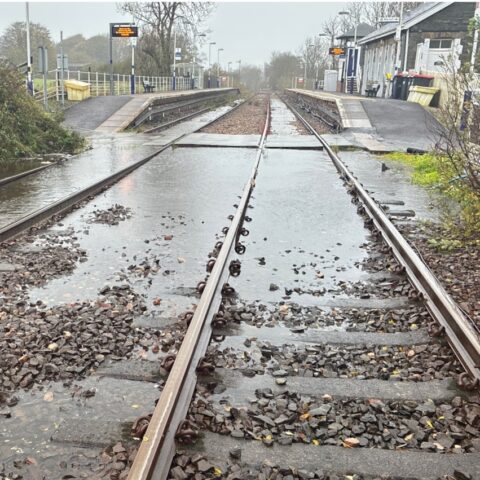
VodafoneThree has announced plans to investigate a new high-capacity telecommunications cable linking mainland Scotland, Shetland and Norway, proposing a route that could strengthen Britain’s digital infrastructure and potentially support billions of pounds in additional economic activity.
The announcement, made on 10 November 2026, follows repeated failures of undersea communications cables serving Shetland. Those incidents exposed not only the physical vulnerability of the islands’ connections but also significant differences in the protection offered by individual broadband providers.
A feasibility study, expected to begin in summer 2027, will examine a route running from mainland Scotland through Shetland and across the North Sea towards the Bergen region of western Norway.
The company says the project could provide additional capacity for businesses, public services, defence communications and data centres, while creating an alternative route for international internet traffic if existing cables are damaged.
But the experience of Shetland residents raises an important question: will another cable deliver more reliable connections, or will the benefits depend on how telecommunications companies choose to use it?
In October 2025, damage to the SHEFA-2 submarine cable near Orkney left customers of several broadband providers in Shetland without service for 26 days.
Some households remained connected throughout the disruption because their providers could use alternative routes. Others, including Vodafone, Sky and TalkTalk customers, experienced lengthy outages.
The disparity was subsequently examined by MPs on the House of Commons Scottish Affairs Committee.
In evidence given on 25 February 2026, Shetland resident Mhari McLeman described losing her home broadband for 12 days during an earlier outage in July and a further 26 days in October.
McLeman, a Vodafone customer at the time, explained that while some neighbours continued using their connections, others could not access ordinary digital services.
Her evidence described difficulties experienced by businesses, vulnerable residents and households dependent on internet connections for everyday activities. She also questioned why customers had not been told more clearly whether their broadband provider had arrangements to maintain service when a cable failed.
The incidents followed a more extensive communications failure in October 2022, when damage to two subsea cable connections caused widespread disruption across Shetland.
Police declared a major incident, and residents were advised to flag down emergency vehicles if they needed urgent assistance and could not make telephone calls.
The events demonstrated how damage to infrastructure far from a customer’s home can affect banking, business transactions, communications and access to emergency services.
They also revealed a fundamental weakness: the existence of an alternative physical cable does not necessarily mean that a customer’s broadband service can use it.
Further evidence submitted to the Scottish Affairs Committee in April 2026 illustrated precisely how that problem arose.
Utility Warehouse explained that its Shetland broadband customers received services through the wholesale network operated by PXC, formerly associated with TalkTalk.
During the 2025 failures, that network remained dependent on SHEFA-2. Although the alternative R100 submarine cable was available, it had not yet been connected to PXC’s local network.
Customers whose providers already had access to R100 could maintain their connections. Utility Warehouse customers could not.
In a letter dated 7 April, the company explained that the outstanding connection reflected technical integration work rather than an absence of commercial agreements.
The work was expected to be completed during 2026, allowing automatic traffic rerouting when the normal connection failed.
Utility Warehouse said the underlying connection arrangements were controlled by PXC and that the timetable depended on Openreach.
The evidence establishes an important distinction. Additional cables may increase the resilience of an island’s communications infrastructure, but individual providers must also have working connections and systems capable of redirecting traffic.
Whether the promised integration has since been completed was not established in the evidence examined for this article.
The issue had already been raised directly with VodafoneThree.
On 25 March 2026, George Robinson, the company’s head of government affairs, told the Scottish Affairs Committee that Vodafone had taken action following the 2025 failures.
Robinson acknowledged that Vodafone had been purchasing wholesale connectivity without fully appreciating the vulnerability of the underlying infrastructure.
Following the July incident, the company had moved to secure a second connection for its broadband customers in Orkney. Robinson also described additional resilience arrangements for Shetland.
According to his evidence, approximately 1,400 Vodafone customers were affected during the first 2025 outage and around 600 during the second. He reported disruptions lasting 11 and 26 days respectively.
The figures differ slightly from McLeman’s account of her own July outage, which she said lasted 12 days.
Representatives of TalkTalk and Sky also discussed weaknesses in their existing arrangements and work to improve access to alternative connections.
These developments matter when assessing the latest proposal. VodafoneThree has already described improvements intended to address vulnerabilities in its existing services, independently of any future cable to Norway.
The available parliamentary evidence does not establish how those changes would perform during another comparable submarine cable failure.
The new project would represent a potentially substantial expansion of the infrastructure connecting Scotland with northern Europe.
In June 2025, VodafoneThree announced a feasibility study into a separate high-speed cable between mainland Scotland and Shetland. The company now says that study has been completed.
Its latest proposal would extend the concept across the North Sea to Norway.
Potential landing locations and commercial partners in the Bergen region have yet to be selected. No final route, construction budget, financing agreement or operational date has been announced.
A successful feasibility study would therefore be an early step towards development, not a guarantee that construction will proceed.
The economic figures accompanying the announcement require similar caution.
VodafoneThree says the proposed cable could support up to £8.2 billion in additional UK economic output over ten years, based on analysis undertaken by consultancy WPI Strategy and commissioned by Vodafone Business.
However, the methodology accompanying the announcement gives a central estimate of £3.6 billion over the same period. The £8.2 billion figure represents the upper end of the modelling.
The calculation begins with a proposed cable capacity of up to 420 terabits per second, equivalent to approximately 4.7% of the UK’s estimated existing international cable capacity.
It then applies relationships identified in international research between the availability of bandwidth, broadband usage and economic output.
The underlying academic research examines the economic effects of submarine cable deployment across multiple countries. Its findings provide a basis for estimating potential benefits, but they are not a direct measurement of the impact of the proposed Scotland–Norway connection.
Under VodafoneThree’s central assumptions, the additional capacity would eventually support approximately £650 million in annual UK economic output once fully utilised.
The model assumes that utilisation increases gradually over seven years, with the estimated annual benefit rising from approximately £93 million in the first year to £650 million from the seventh year onwards.
The resulting ten-year central estimate of £3.6 billion applies a discount rate of 3.5%, following the approach described in HM Treasury’s Green Book.
The assessment begins when the proposed cable becomes operational, not when the feasibility study starts.
These figures represent modelled economic effects, not revenue guaranteed to the cable operator, committed investment or money allocated to Scotland.
They depend on assumptions about future internet use, demand for international connectivity and the relationship between additional capacity and economic activity.
Nor do they establish precisely how much employment, investment or economic output would occur in Shetland or northern Scotland.
VodafoneThree has also calculated that an additional cable could help protect up to £6.6 million in UK economic activity for each day of severe disruption affecting multiple existing routes.
That figure is not an estimate of what Britain loses whenever a cable breaks.
The company’s methodology assumes that half the proposed cable’s capacity could be available to carry traffic diverted from other connections. It then uses that capacity to estimate the potential value of economic activity protected during a serious disruption.
The calculation assumes that sufficient alternative capacity is otherwise unavailable. It is an illustrative upper limit, rather than a forecast of actual losses.
Ordinarily, traffic affected by a single damaged cable can be redirected through other international routes, limiting disruption to users.
The company specifically cautions that the £6.6 million resilience figure measures a different potential benefit from the projected economic growth and should not be added to it.
Beyond the economic modelling, the proposal reflects increasing concern about the security of infrastructure beneath the North Sea and North Atlantic.
Submarine telecommunications cables carry approximately 99% of the UK’s international data traffic. They support financial transactions, telecommunications, cloud computing, public services and other activities dependent on reliable international connections.
Most individual cable faults do not produce major disruption because traffic can be redirected across other networks. However, the concentration of important routes, vulnerable landing stations and the possibility of simultaneous damage remain matters of national security concern.
In September 2025, Parliament’s Joint Committee on the National Security Strategy warned that although Britain possessed extensive international cable connections, significant vulnerabilities remained around outlying islands, cable landing facilities and critical services.
Its report questioned whether national resilience could be judged simply by counting the number of cables available. It identified uncertainty about how much damage the wider network could sustain before existing rerouting arrangements became insufficient.
The committee also considered the possibility of deliberate attacks intended to cause serious disruption without necessarily producing a nationwide internet failure.
The UK Government published proposals for modernising legislation protecting critical undersea infrastructure on 22 October 2026, including measures addressing security responsibilities, criminal penalties and national security powers.
On the same day as VodafoneThree’s announcement, the Ministry of Defence separately announced a £90 million investment framework for new underwater drones, sensors and artificial intelligence systems intended to help the Royal Navy detect threats to cables, energy networks and other infrastructure.
The initiative, known as Atlantic Net, forms part of the Royal Navy’s wider Atlantic Bastion programme for monitoring and protecting the North Atlantic.
It is a separate defence initiative, not funding for VodafoneThree’s proposed telecommunications cable.
The digital corridor would also fit within closer cooperation between Britain and Norway.
The two countries signed a strategic partnership in December 2024 covering defence, security, energy and protection of critical offshore infrastructure.
Both have substantial interests in the North Sea, where telecommunications cables, electricity connections, offshore energy installations and other infrastructure cross international boundaries.
A new telecommunications route through Shetland could provide additional geographic diversity, reducing dependence on existing cable corridors and improving options for maintaining communications during disruption.
An established UK–Norway telecommunications cable, NO-UK, already links the Stavanger region with Newcastle. The VodafoneThree proposal would explore a separate northern connection through Scotland and Shetland, rather than replacing that existing route.
For northern Scotland, the commercial possibilities extend beyond ordinary broadband connections.
The company believes additional international capacity could improve the case for data-centre development, including facilities supporting artificial intelligence and high-performance computing.
Norway has attracted interest from data-centre operators because of its renewable electricity resources and relatively cool climate, which can reduce cooling requirements.
Comparable developments in Scotland would depend on suitable electricity supplies, available sites, planning approval, commercial demand and competitive operating costs.
A new cable alone would not secure those investments.
The proposed corridor could also support strategically important sites in Shetland, including the island’s developing space industry, by providing additional communications capacity and alternative international connections.
Nick Gliddon, VodafoneThree’s business director, said the study would help establish the economic and strategic case for the route and identify the partnerships necessary to deliver it.
The company regards Norway as an important partner in strengthening digital infrastructure across the North Atlantic and sees potential for further investment in data centres, technology and skilled employment.
Those ambitions sit alongside VodafoneThree’s wider £11 billion investment programme for its UK telecommunications network, although that programme should not be interpreted as an announced construction budget for the Norway cable.
There are practical challenges still to resolve.
Any submarine cable would require detailed seabed surveys, engineering assessments, environmental consideration, agreements on landing locations and arrangements for long-term operation and maintenance.
The route would need to account for other infrastructure and marine activities across the North Sea, including fishing, shipping and offshore energy development.
The feasibility study will also need to establish whether sufficient commercial demand exists to justify construction and support ongoing operation.
For Shetland, the most immediate question is how additional international infrastructure would translate into dependable services for residents and businesses.
The parliamentary evidence from the 2025 outages demonstrated that different providers serving the same islands could deliver markedly different levels of resilience.
Utility Warehouse’s April correspondence provides a particularly clear example. An alternative cable existed, but incomplete technical integration meant that customers connected through its wholesale network could not benefit from it.
VodafoneThree’s subsequent changes show that providers can address some weaknesses through improvements to their existing network arrangements, without waiting for an entirely new international cable.
A new route to Norway could substantially extend those options, strengthen the UK’s international communications network and provide an additional safeguard against more extensive disruption.
Its eventual value to island communities, however, will depend on the connections made available, the reliability of the supporting networks and the systems that allow customers’ traffic to move when something goes wrong.
For households that spent much of October 2025 without broadband, that distinction is more immediate than any projection of billions in future economic output.
The strongest test of the proposed corridor will be whether it delivers not only another international cable, but connections that continue working when the existing ones fail.
Sources
VodafoneThree to Explore New UK-Norway Digital Corridor to Strengthen Resilience, Enhance Critical Connectivity and Deliver up to £8.2bn in Additional UK Output Over 10 Years. VodafoneThree, 10 November 2026.
https://www.vodafonethree.com/explore-uk-norway-digital-corridor-subsea-cable/
Empowering Shetland: VodafoneThree Announces Feasibility Study for High-Speed Subsea Cable. VodafoneThree, 12 June 2025.
https://www.vodafonethree.com/feasibility-study-subsea-cable-shetlands/
Connectivity in Scotland: Digital Connectivity (Subsea Cable Resilience), Oral Evidence, HC 1461. House of Commons Scottish Affairs Committee, 25 February 2026.
https://committees.parliament.uk/oralevidence/17242/html/
Connectivity in Scotland: Digital Connectivity, Oral Evidence, HC 1461. House of Commons Scottish Affairs Committee, 25 March 2026.
https://committees.parliament.uk/oralevidence/17445/html/
Utility Warehouse Response to Scottish Affairs Select Committee. Utility Warehouse, 7 April 2026.
https://committees.parliament.uk/publications/52583/documents/292739/default/
Economic Impacts of Subsea Cable Deployment. Wolfgang Briglauer, Raúl Katz and Juan Jung, working paper, September 2025. Vienna University of Economics and Business.
https://www.wu.ac.at/fileadmin/wu/d/ri/regulation/WPs_und_GAs/Economic_Impacts_of_Subsea_Cable_Deployment_V7.pdf
Economic Impacts of Subsea Cable Deployment. Wolfgang Briglauer, Raúl Katz, Monika Köppl-Turyna and Juan Jung. Telecommunications Policy, November 2026.
https://doi.org/10.1016/j.telpol.2026.103337
Subsea Telecommunications Cables: Resilience and Crisis Preparedness. Joint Committee on the National Security Strategy, UK Parliament, 19 September 2025.
https://publications.parliament.uk/pa/jt5901/jtselect/jtnatsec/723/report.html
Critical Undersea Infrastructure Security and Resilience: Proposals for Modernising the UK’s Legislation. UK Government, 22 October 2026.
https://www.gov.uk/government/consultations/proposals-for-new-legislation-to-strengthen-the-security-and-resilience-of-critical-undersea-infrastructure-cui/critical-undersea-infrastructure-security-and-resilience-proposals-for-modernising-the-uks-legislation-white-paper
£90 Million Investment for New Drones and Sensors to Protect Undersea Cables and Hunt Russian Submarines. Ministry of Defence, 10 November 2026.
https://www.gov.uk/government/news/90-million-investment-for-new-drones-and-sensors-to-protect-undersea-cables-and-hunt-russian-submarines
Joint Declaration of the Norwegian-UK Strategic Partnership. UK Government, 16 December 2024.
https://www.gov.uk/government/publications/joint-declaration-of-the-norwegian-uk-strategic-partnership
International Advisory Body Approves Landmark Report to Strengthen Submarine Cable Resilience. International Telecommunication Union, 10 July 2026.
https://www.itu.int/en/mediacentre/Pages/PR-2026-07-10-Submarine-cable-resilience-report.aspx