
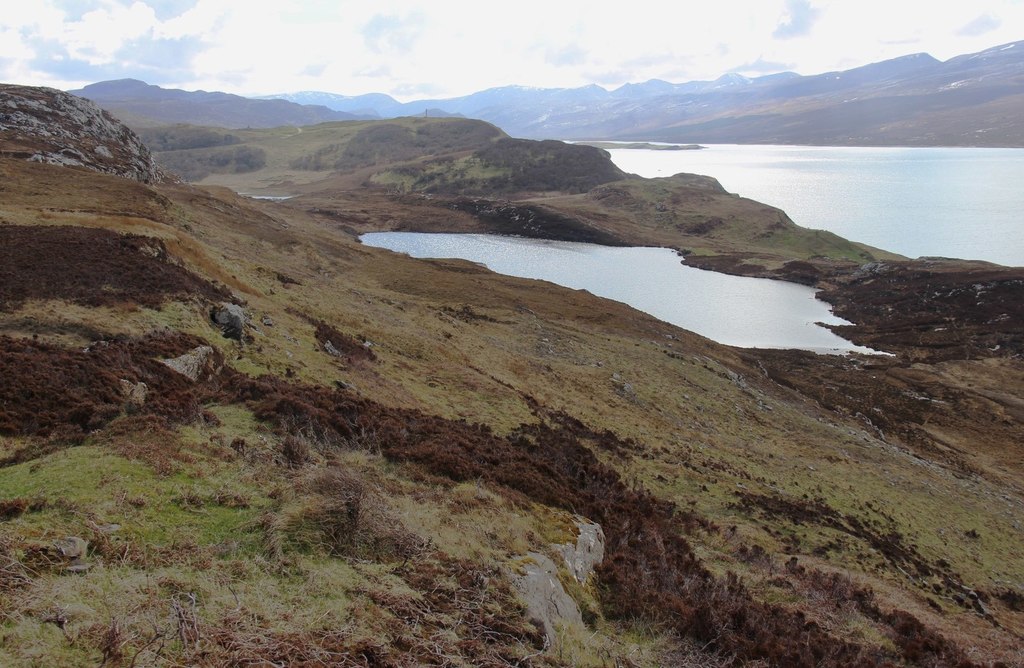
Glenmuckloch and Loch na Cathrach remain outside Ofgem’s proposed long-duration electricity storage portfolio after the regulator assessed both below a financial threshold that was not fixed before the assessment began.
Two major Scottish pumped-storage hydro projects have been left outside Ofgem’s proposed support scheme after the regulator concluded they presented a greater risk of relying on payments ultimately supported through consumers’ energy bills.
The consultation on Ofgem’s first Long Duration Electricity Storage, or LDES, awards closed on 14 August, with final decisions expected later this autumn.
Detailed assessment papers show Glenmuckloch Pumped Storage Hydro and Loch na Cathrach both passed Ofgem’s strategic deliverability assessment with Green ratings, but fell below its financial threshold.
Ofgem ranked Glenmuckloch 23rd in its economic assessment, with a score of 64.06. Loch na Cathrach ranked immediately behind it in 24th place with 63.73.
The regulator said both projects had a “higher potential reliance on floor support”.
Under the LDES cap-and-floor system, projects are guaranteed a minimum revenue level. If revenue falls below that floor, consumers make up the difference through charges on energy bills. If revenue exceeds the upper cap, the surplus is returned to consumers through reductions in network charges.
The financial assessment is therefore intended to test both project viability and the potential level of consumer support which could be required.
Financial assessment changed the position
Ofgem’s detailed tables reveal a distinction which is less apparent from the headline list of successful and unsuccessful schemes.
For both Glenmuckloch and Loch na Cathrach, the column headed “Submitted FA Score” records the projects as above the financial threshold.
Ofgem’s “Assessed FA Score” puts both below it.
The regulator also states that the financial threshold itself was not predetermined.
During its assessment, Ofgem identified projects scoring below 0.60 as having a comparatively higher downside risk. It said the threshold was established after examining the distribution of financial scores and was then applied consistently across projects.
Ofgem described it as a proxy for materially elevated risk of projects relying on the revenue floor rather than as an automatic pass-or-fail rule. Strategic benefits could still justify supporting a scheme with a weaker financial score.
The consultation which ended on Friday specifically invited representations on the methodology and evidence used by Ofgem. The regulator says it will consider whether responses identify errors, inconsistencies or other issues requiring correction or further analysis before final awards are made.
For Glenmuckloch and Loch na Cathrach, no such exception has provisionally been made.
Ofgem said Glenmuckloch’s lower economic performance and failure to meet the financial threshold did not provide sufficient grounds for its inclusion.
Its conclusion on Loch na Cathrach was substantially the same.
Both received a Green deliverability rating, and Ofgem recorded no material concerns in their strategic assessments. The Green classification relates to the regulator’s assessment of the projects’ ability to deliver; it is not an environmental rating.
Ofgem assessed Glenmuckloch at 182MW with 9.1 hours of storage and Loch na Cathrach at 500MW with eight hours, with both listed for possible operation from 2030.
North Scotland dominates provisional storage capacity
The two omissions sit alongside an unusually strong Scottish presence among the projects Ofgem does propose to support.
Ofgem’s provisional Window 1 portfolio contains 16 projects with 7,645MW of total capacity.
Modern Scot analysis of Ofgem’s project table finds that seven projects classified by the regulator as North Scotland account for 5,100MW — about 67% of the entire proposed British portfolio.
They are Loch Kemp Storage at 660MW, Coire Glas at 1,440MW, Earba at 1,800MW, Field Netherton and Field New Deer at 400MW each, and Field Rigifa and Field Fyrish at 200MW each.
The first three are pumped-storage hydro schemes. The other four are long-duration lithium-ion battery projects.
Loch Kemp ranked first in Ofgem’s economic assessment, Coire Glas second and Earba fourth. All three were above the regulator’s financial threshold and received Green deliverability ratings.
That gives the northern Scottish electricity system a central place in the first round of a scheme intended to store renewable electricity when generation is abundant and release it when the system needs it.
Long-duration storage is being developed partly to allow a power system with large amounts of variable wind generation to move electricity across time rather than relying solely on generation matching demand at the moment it is produced.
Ofgem says LDES can contribute to system reliability, lower system costs and the integration of renewable generation.
Awards are not yet final
The 7,645MW portfolio is deliberately close to the upper end of the capacity range Ofgem was advised to support.
The regulator says that provides room for some projects to fall away because of financing, construction or other difficulties without leaving Britain with too little storage capacity.
It also acknowledges that the optimum quantity and mix of storage cannot yet be determined precisely.
Final Window 1 awards are due in autumn 2026.
Successful projects will then face milestones covering matters including grid connections, finance, final investment decisions, construction, commissioning and commercial operation. Ofgem says it will be able to revoke cap-and-floor agreements where projects fail to make sufficient progress.
Until that final decision, Glenmuckloch and Loch na Cathrach remain outside the proposed portfolio rather than finally rejected.
The consultation has now closed with Ofgem facing a particularly clear Scottish question: whether its reassessment of the two hydro projects correctly identifies a greater risk to consumers, and whether that risk outweighs projects it otherwise regards as deliverable.
Sources
Ofgem — Long Duration Electricity Storage Window 1: Minded-to Decisions consultation
https://www.ofgem.gov.uk/consultation/long-duration-electricity-storage-window-1-minded-decisions
Ofgem — Window 1: Minded-to Decisions – Long Duration Electricity Storage, full assessment document
https://consult.ofgem.gov.uk/energy-generation/ldes-window-1-minded-to-decision/supporting_documents/window-1-minded-to-decisions-long-duration-electricity-storage-consultationpdf
Ofgem — Long Duration Electricity Storage consultation portal, consultation closed 14 August 2026
https://consult.ofgem.gov.uk/energy-generation/ldes-window-1-minded-to-decision/
Ofgem — Long Duration Electricity Storage: how the cap-and-floor model works
https://www.ofgem.gov.uk/energy-regulation/low-carbon/long-duration-electricity-storage
Ofgem — Window 1 questions and responses, published 31 July 2026
https://consult.ofgem.gov.uk/energy-generation/ldes-window-1-minded-to-decision/supporting_documents/appendix-responses-to-questions-from-respondents-260731pdf