
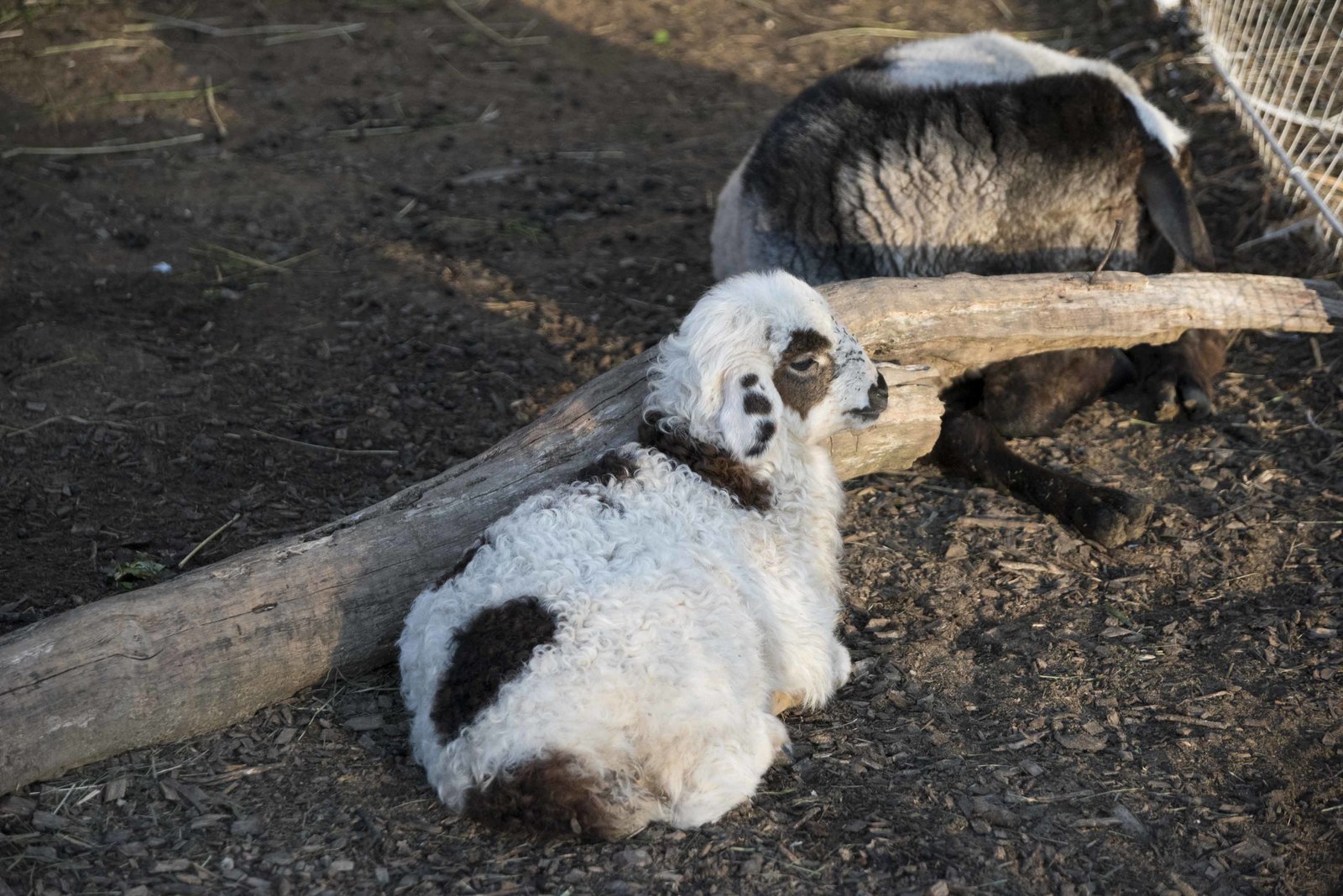
Five animals on four premises in Dumfries and Galloway have now been affected by BTV-3. As investigators establish whether Scotland is dealing with isolated infections or local transmission, European field research offers a more complicated picture of vaccination.
Scotland’s first confirmed encounter with bluetongue serotype 3 is no longer the story of a single infected sheep.
By the end of this weekend, BTV-3 had been confirmed on four premises in Dumfries and Galloway, involving five animals. The first Scottish detection was made in a sheep on 8 August. Further investigations by the Animal and Plant Health Agency subsequently found the virus on three nearby premises, with later official updates recording infections involving both sheep and cattle.
There is still no bluetongue disease control zone in Scotland. APHA is investigating whether the findings represent a small cluster of isolated cases or evidence that the virus is circulating more widely. That distinction now carries much of the weight of the Scottish response.
Beyond Scotland, the disease is moving quickly.
The official UK tally, updated on 16 August and covering confirmed cases to midnight on 15 August, stood at 447 premises: 430 in England, 13 in Wales and four in Scotland. Another 2,003 potential cases were under investigation after reports of suspicious clinical signs. England and Wales are already covered by country-wide restricted zones.
Five Scottish animals are therefore a small number within a much larger British outbreak. They are nevertheless occurring on the other side of a boundary Scotland has spent considerable effort trying to defend.
Movement controls introduced for the active midge season require susceptible animals coming into Scotland from restricted parts of the UK to meet specific conditions. Those controls are presently expected to remain in their current form until at least 9 September, when falling temperatures are expected gradually to reduce the risk of transmission by the biting midges that carry the virus.
Bluetongue is not spread between livestock in the manner of an ordinary contagious respiratory infection. Its principal vehicle is considerably smaller.
Certain species of Culicoides biting midge acquire the virus while feeding on an infected animal. An infected midge can then transmit it to another susceptible animal when it feeds again. Temperature, rainfall, wind, topography and the density of neighbouring livestock holdings can all affect how efficiently that process occurs. Midges capable of transmitting bluetongue are found across Great Britain.
The disease affects sheep, cattle, goats and other ruminants. It does not infect people and does not make meat or milk unsafe to eat. Its consequences lie instead in animal welfare, mortality, fertility, production and the restrictions required to prevent infected animals or vectors carrying the virus further.
Sheep generally show the most conspicuous disease. Signs can include fever, lameness, breathing difficulties, discharge from the eyes or nose, sores in the mouth, swelling of the head and tongue, abortion and death. Cattle may show considerably less obvious illness while still becoming infected; signs can include lethargy, fever, nasal lesions, reduced appetite, abortion and a fall in milk production.
Research carried out at the Pirbright Institute before the 2024 transmission season helps explain why apparently modest clinical signs cannot be taken as a complete measure of transmission risk. In an experimental study involving British sheep infected with the emerging BTV-3 strain, researchers recorded mild to moderate disease but were able to isolate infectious virus from sheep blood for as long as 28 days after infection. The animals showed varying combinations of fever, lameness, haemorrhagic diarrhoea and behavioural changes.
Cattle present a different problem. They can carry the virus while showing few visible signs, giving infected midges the opportunity to acquire it. Work from the Netherlands has also found prolonged PCR detection of BTV-3 RNA in cattle after infection, although a positive PCR result detects viral genetic material and should not automatically be interpreted as proof that an animal remains infectious throughout that entire period.
Three BTV-3 vaccines — Bluevac-3, BULTAVO 3 and Syvazul BTV 3 — now have marketing authorisations for use in Great Britain. Their authorised claims are not identical.
For cattle, Bluevac-3 and Syvazul are authorised to reduce viraemia. BULTAVO 3 is authorised to prevent viraemia and clinical signs. For sheep, the authorised claims also vary between reducing and preventing particular effects of the disease.
Scotland’s current movement rules make a practical distinction between those products.
Cattle coming from a bluetongue restricted zone into Scotland that have completed a course of Bultavo-3, with at least 21 days having elapsed after completion of the primary course and the required booster given where applicable, can be exempt from the otherwise required pre-movement test. Cattle vaccinated with Bluevac or Syvazul still require a PCR test within seven days of movement, as do unvaccinated cattle.
It becomes particularly interesting beside a peer-reviewed field study published last year examining how those same three vaccines performed during the Dutch BTV-3 epidemic.
Researchers led by Reinard Everts collected data from 1,114 Dutch dairy cattle herds following the extraordinary spread of BTV-3 in the Netherlands. Of those herds, 518 had completed a two-dose vaccination programme and another 29 had received a single dose. The researchers used PCR results from an early-warning system as an indicator of viraemia and the use of non-steroidal anti-inflammatory medicines as an indirect measure of clinical illness.
The results were not uniform.
Within the subset of herds included in the PCR analysis, 173 unvaccinated herds were tested and 165 were positive, about 95 per cent. Among Bluevac-vaccinated herds that were tested, 69 of 72 were positive. Among Syvazul herds, 27 of 30 were positive.
Among Bultavo-vaccinated herds, 33 of 90 tested positive, 37 per cent.
In the researchers’ statistical model, fully vaccinated Bultavo herds had substantially lower odds of testing positive than unvaccinated herds. The difference was statistically significant. Bluevac and Syvazul did not show a statistically significant reduction in the probability of a positive result against the unvaccinated reference group in that analysis.
This was an observational field study, not a randomised vaccine trial. Herds were not selected for testing at random, and the groups differed markedly in how frequently farmers submitted animals for testing. The authors themselves identified possible confounding arising from farmer behaviour, geographical exposure, timing of vaccination and other factors.
They explicitly warn that the findings are not proof that Bluevac or Syvazul provided no protection.
The second part of the research produced another notable difference.
Across 1,085 herds for which medicine data were analysed, use of anti-inflammatory drugs increased during the 2024 BTV-3 season compared with the same period in 2023. The increase was significantly smaller in Bultavo-vaccinated herds than in unvaccinated herds. Bluevac and Syvazul herds recorded larger increases, but again the authors caution against treating medicine use as a direct, uncontaminated measurement of vaccine performance. Farmers who vaccinated may have behaved differently, recognised disease differently or treated animals more readily.
Having considered those limitations, the researchers nevertheless concluded that there appeared to be substantial differences between the products under the conditions studied and that Bultavo performed better in preventing positive test outcomes and clinical disease requiring anti-inflammatory treatment. The authors reported receiving no financial support for the research and declared no commercial or financial conflict of interest.
There is a boundary which should not be crossed in applying those findings to Scotland.
The Dutch work examined dairy cattle exposed during the 2024 BTV3/NET2023 outbreak. It did not study Scottish cattle in 2026, it did not study the five animals currently reported in Dumfries and Galloway, and it cannot establish retrospectively whether any particular vaccination programme would have prevented the Scottish detections.
Nor has the Scottish Government said that its movement policy was based on this particular study.
What can properly be said is that the field evidence and Scotland’s existing movement rules point in a similar direction: BTV-3 vaccination cannot sensibly be discussed as though three differently authorised products necessarily provide identical epidemiological protection.
That becomes more relevant if Scotland’s infections extend beyond the four premises now known.
The Scottish Government presently describes vaccination as the best way of protecting animals from the worst effects of the disease and advises livestock keepers to discuss it with their private vet. Use of BTV-3 vaccine must also be officially recorded.
Vaccination, however, has two related purposes that are easily blurred. One is protecting an individual animal against severe disease. The other is reducing viraemia sufficiently to make it less likely that a midge feeding on that animal will acquire the virus and continue the transmission chain.
A vaccine can perform strongly against one outcome without necessarily eliminating the other.
That is why the question now facing Scotland is larger than whether the five known animals recover.
APHA must establish how the animals became infected, whether the four Dumfries and Galloway premises are epidemiologically connected and whether infected midges are already transmitting BTV-3 among Scottish livestock.
The calendar offers some assistance, but not immediately. The Scottish Government regards 1 June to 9 September as this year’s principal control period, when temperatures are generally sufficient for midge transmission. Midges themselves can remain active across a longer period, depending on conditions.
Sources
Scottish Government — Bluetongue: current situation and guidance
https://www.gov.scot/publications/bluetongue/
Scottish Government — Bluetongue movement restrictions for animals
https://www.gov.scot/publications/bluetongue/pages/bluetongue-movement-restrictions-for-animals/
Scottish Government — How bluetongue is spread
https://www.gov.scot/publications/bluetongue/pages/how-bluetongue-is-spread/
Scottish Government — Clinical signs of bluetongue
https://www.gov.scot/publications/bluetongue/pages/clinical-signs/
UK Government / Defra — Bluetongue: latest situation
https://www.gov.uk/guidance/bluetongue-latest-situation
UK Government / Veterinary Medicines Directorate — Bluetongue serotype 3 vaccination
https://www.gov.uk/guidance/bluetongue-serotype-3-btv-3-vaccination
Everts et al., Frontiers in Veterinary Science — Effect of bluetongue serotype 3 vaccines on probability of viremia and NSAID usage in Dutch dairy cattle herds
https://pmc.ncbi.nlm.nih.gov/articles/PMC12343239/
Frontiers in Veterinary Science — Publisher version of the Dutch BTV-3 vaccine study
https://www.frontiersin.org/journals/veterinary-science/articles/10.3389/fvets.2025.1619614/full
Newbrook et al., Veterinary Record — Experimental infection of British sheep with bluetongue virus serotype 3
https://pubmed.ncbi.nlm.nih.gov/39679689/