
Dumfries and Galloway is confronting two separate livestock disease problems at once, with a new case of classical BSE confirmed in cattle and Scotland’s first cluster of bluetongue virus serotype 3 concentrated around Newton Stewart.
The two diseases are unrelated in how they spread and how they are controlled, but their arrival in the same region within days of one another creates a difficult August for livestock businesses already making decisions about sales, shows, breeding stock and cross-border movements.
On 19 August, the Scottish Government confirmed classical bovine spongiform encephalopathy, or BSE, in a cow on a farm in Dumfries and Galloway. Precautionary movement restrictions have been placed on the animal’s offspring and its cohort at the affected premises while the source is investigated. The animal did not enter the human food chain, and Food Standards Scotland has said the isolated case presents no risk to human health.
The case matters because it is classical BSE rather than the atypical form detected in Dumfries and Galloway in December 2024. Scotland also recorded a classical case in Ayrshire in May 2024. In that earlier case, the Animal and Plant Health Agency investigated the source, while animals that had been in contact with the case were traced and isolated.
BSE remains one of the most heavily controlled livestock diseases in Britain. Scotland’s surveillance system includes routine testing of cattle over four years old which die on farms. Food-safety measures include controls on animal feed and the removal from the food chain of tissues regarded as specified risk material, including those most likely to contain BSE infectivity.
The investigation in Dumfries and Galloway now has to establish where the infection came from. Scottish Government guidance records that BSE cases have occurred in cattle born after the 1996 feed ban and says some have been attributed to old contaminated feed persisting in storage, while others may have involved contaminated imported feed. That history makes tracing the origin of a classical case an important part of the response rather than a formality.
At the same time, bluetongue has moved from being a disease Scotland was trying to keep out to one now confirmed on four Scottish holdings.
The Scottish Government’s latest figures, updated on 19 August, show four premises affected by BTV-3, all near Newton Stewart. Five animals have been confirmed infected: four sheep and one bovine. The affected holdings are dated 9, 12 and 14 August, with two premises recorded on 14 August. Scotland’s first BTV-3 detection of the 2026–27 outbreak season was confirmed on 8 August in a single sheep.
Bluetongue is a notifiable viral disease affecting sheep, cattle, goats, deer, camelids and other ruminants. It is transmitted mainly by biting midges. It does not infect people and does not affect food safety, but the consequences for livestock can be substantial. Scottish Government guidance says infected sheep can suffer high mortality, while cattle can experience fertility and productivity problems.
Its appearance in south-west Scotland has brought a rapid tightening of movement rules.
From Saturday, 22 August, the existing four-day concession for Scottish animals attending shows or sales in bluetongue Restricted Zones will be suspended. Animals travelling from Scotland into those areas and returning under the concession will have to complete the outward and return journey on the same day, during daylight hours.
England, Wales, Northern Ireland and the Isle of Man are currently treated as bluetongue Restricted Zones for the purposes of movements into Scotland. Animals coming north to live are already subject to licensing, testing and other conditions according to species, vaccination status and purpose of movement.
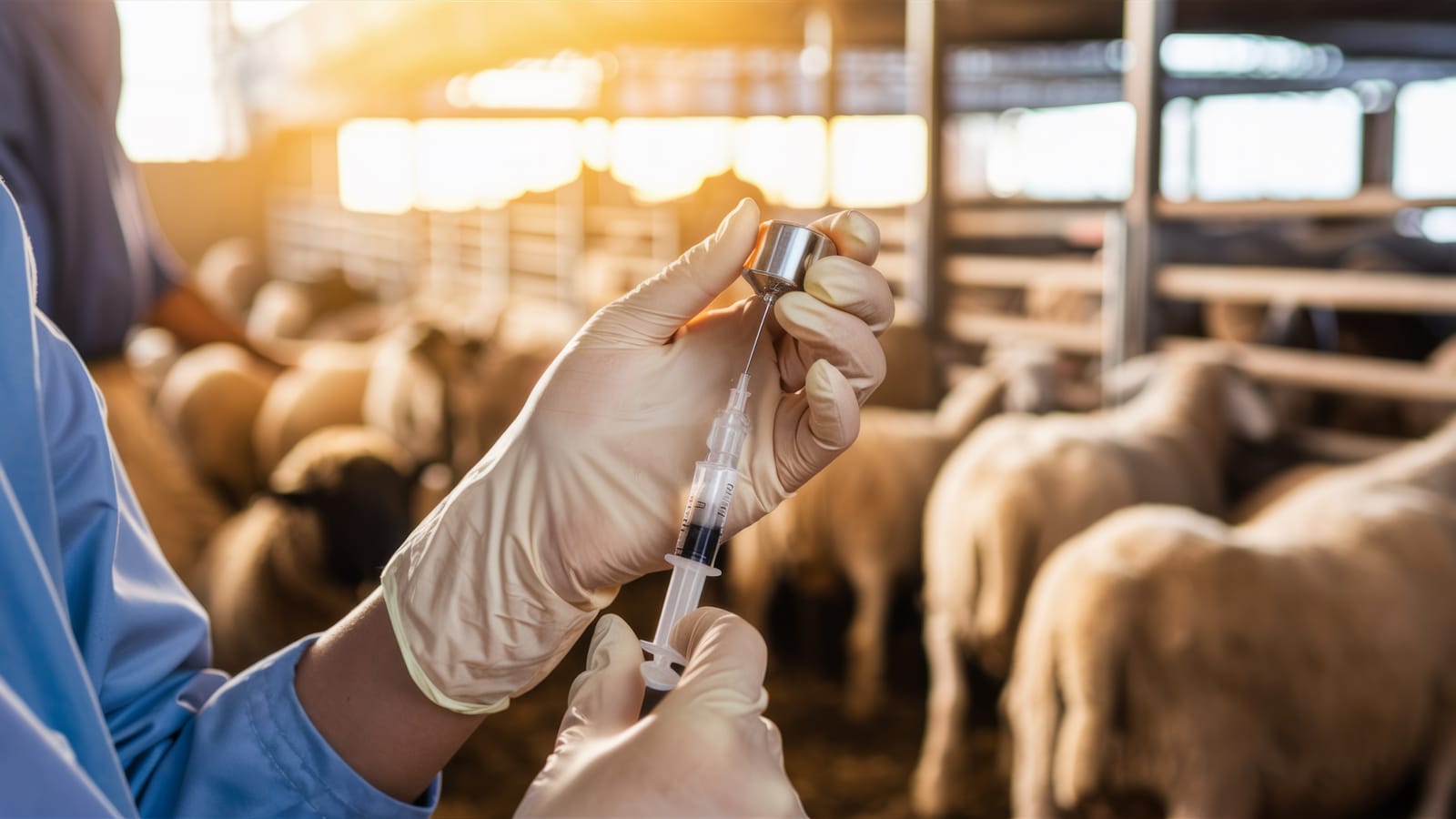
A second change is due on 10 September. From that date, all animals susceptible to bluetongue moving from a Restricted Zone into Scotland to live will have to be vaccinated against BTV-3, subject to limited exemptions.
The precise vaccine used matters. Any authorised BTV-3 vaccine will satisfy the vaccination requirement, but the Scottish Government states that only cattle vaccinated with Bultavo-3 are exempt from certain testing requirements. Cattle vaccinated with other products, and other categories of livestock, may still require pre-movement testing.
That creates a practical timetable for farmers and livestock traders which is considerably more complicated than the word “vaccinated” suggests.
Government guidance says bluetongue vaccines can take up to six weeks to provide full protection, and some require two injections three weeks apart. Anyone contemplating cross-border purchases or movements therefore has to consider the vaccine used, the date administered, the completion of the course and whether testing remains necessary before transport.
The Scottish Government had designated 1 June to 9 September as the active control period for 2026 because warmer conditions generally allow midges to transmit the virus more readily. Those dates were intended to give farmers a degree of certainty, but ministers have made clear that planned relaxations remain under review as the disease position changes.
That caveat now carries considerably more weight than it did when the rules were drawn up.
For Dumfries and Galloway, the immediate economic exposure is less about food safety than movement, livestock management and confidence. Neither the confirmed BSE animal nor bluetongue poses the public-health threat that the names may suggest. The pressure falls instead on farms required to work around surveillance, movement restrictions, testing, vaccination and the possibility that controls will change again if further infections are detected.
There is also an important difference in what authorities are trying to establish. With bluetongue, the immediate concern is limiting onward transmission during the season when its midge vector is active. With classical BSE, investigators are looking backwards, attempting to determine how a disease controlled through decades of feed regulation and surveillance appeared in another Scottish animal.
Scotland’s livestock controls are therefore being tested in two very different ways in the same corner of the country.
The next useful information will not be another reassurance that systems are operating. For BSE, it will be what the investigation establishes about the source. For bluetongue, it will be whether the four affected holdings near Newton Stewart remain a contained cluster or the beginning of a wider Scottish spread.
Sources
Scottish Government — BSE, 19 August 2026.
Scottish Government: BSE, 19 August 2026
Scottish Government — Bluetongue: Latest Situation, updated 19 August 2026.
Scottish Government: Bluetongue Latest Situation
Scottish Government — Bluetongue Movement Restrictions For Animals And Germinal Products, updated 19 August 2026.
Scottish Government: Bluetongue Movement Restrictions
Scottish Government — How To Control The Disease: Bluetongue, updated 19 August 2026.
Scottish Government: How To Control Bluetongue
Scottish Government — How Bluetongue Is Spread.
Scottish Government: How Bluetongue Is Spread
Scottish Government — BSE, 6 December 2024.
Scottish Government: December 2024 BSE Case
Scottish Government — BSE, 10 May 2024.
Scottish Government: May 2024 BSE Case
Scottish Government — Bovine Spongiform Encephalopathy: Testing And Feed Controls.
Scottish Government: BSE Testing
Food Standards Scotland — Transmissible Spongiform Encephalopathies.
Food Standards Scotland: BSE Controls