
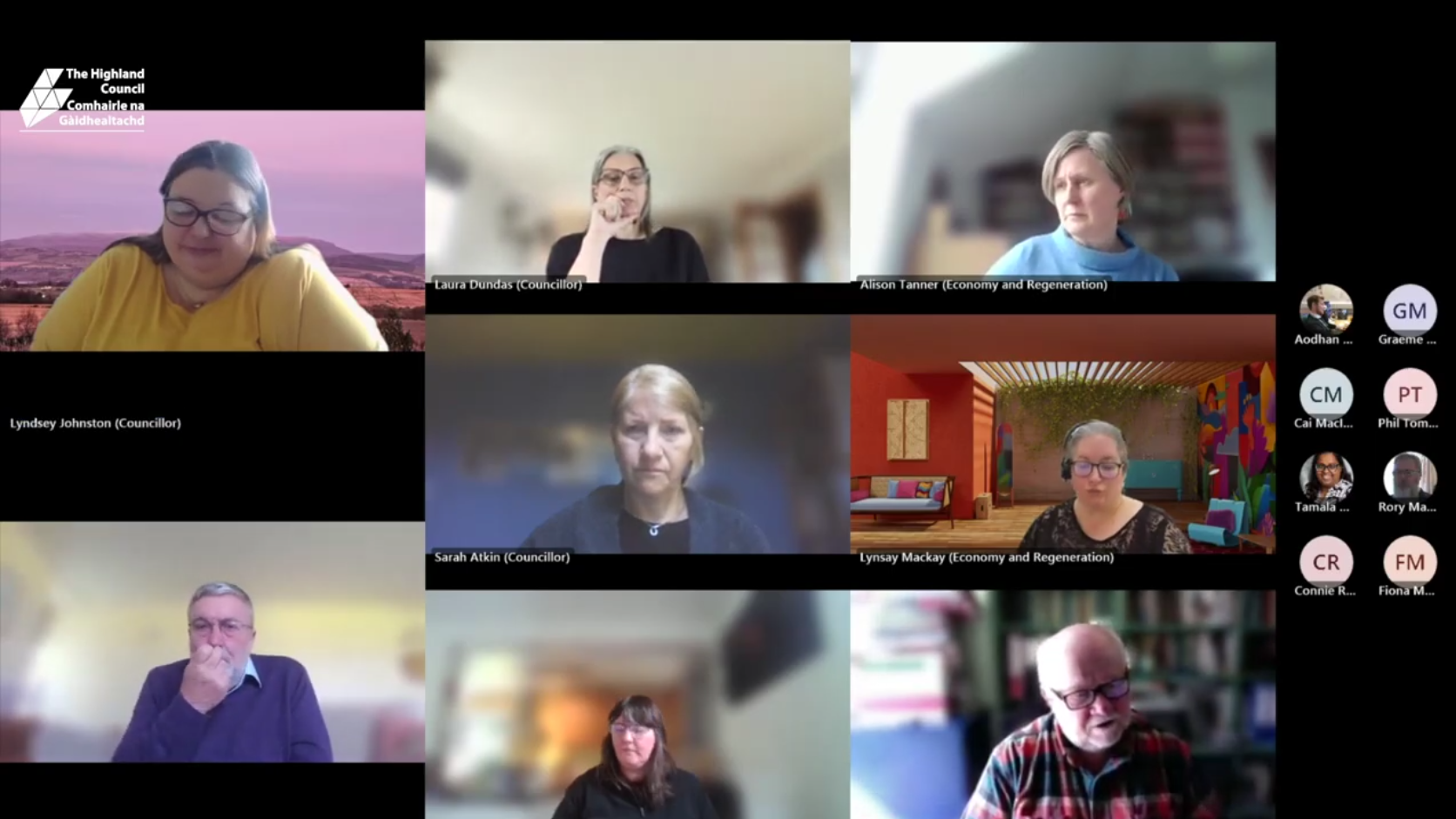
More than £200,000 has been approved for play park improvements and community regeneration projects in Black Isle and Easter Ross, alongside decisions on garage rents, solar development and burial ground capacity.
Highland councillors have approved new local investment for play parks and community projects across Black Isle and Easter Ross, including £93,390 for play areas in the Tain and Easter Ross ward and £114,264.21 for four community regeneration projects. The decisions were made at the Black Isle and Easter Ross Area Committee on 11 May 2026, where councillors also agreed an 8 per cent rise in garage rents, advanced a solar proposal at Blairliath Grazings in Tain, and noted continuing pressure on burial ground capacity in parts of the area.
The meeting matters because it brought together several practical decisions affecting daily life in local communities: where children play, how village facilities are supported, how council garage repairs are funded, how Common Good property may be used, and where burial space may be needed within the next decade.
The largest single allocation for public space was the £93,390 from Scottish Government Play Park Funding. The money will be used to refurbish three play parks at Grebe Crescent, Seaforth Court and Tain Links. The council says the work will include new accessible play equipment and safety surfacing.
Councillor Lyndsey Johnston, chair of the Black Isle and Easter Ross Area Committee, said the allocation would provide young people with safer, more inclusive and higher quality outdoor spaces. She also warned that delivery may take time because of the volume of play park work being carried out across the Highlands.
That caveat is important. The funding has been agreed, but the improvements will not necessarily be immediate. For families in the affected communities, the next issue will be when the equipment is installed and whether the upgraded sites meet the needs of children with different levels of mobility and access.
The committee also approved four awards from the Community Regeneration Fund for 2025 to 2026, with total funding of £114,264.21.
The largest award, £40,780, went to Invergordon Development Trust for a development officer. North Kessock Village Hall received £28,684.21 for resilience centre kitchen equipment. Seaboard Memorial Hall Ltd received £24,000 for an Easter Ross Peninsula Local Place Plan. Gro For You, also referred to as Farmer Jones, received £20,800 for motorhome facilities.
An application for refurbishment funding for the Royal British Legion in Invergordon was deferred for future consideration.
The approved awards show the committee using regeneration money across a range of local needs rather than concentrating it on a single large project. The Invergordon Development Trust award is about organisational capacity. The North Kessock Village Hall award is tied to local resilience. The Seaboard Memorial Hall award supports community planning for the Easter Ross Peninsula. The Gro For You award is linked to visitor facilities.
The garage rent decision was more direct. Councillors considered rent increases of 8 per cent, 9 per cent or 10 per cent for Black Isle and Easter Ross garage rents held on the Housing Revenue Account for 2026 to 2027. They chose the lowest option, agreeing an 8 per cent increase.
The council says any additional net rental income will be applied directly to increase the repairs budget for garages and garage sites in 2026 to 2027.
Under the agreed rise, council house tenants in wards 6, 7 and 9 will pay £12.83. Private tenants will pay £15.40 in wards 6 and 7, and £15.41 in ward 9.
The choice of the lowest increase suggests councillors were attempting to balance two pressures: the need to fund repairs and the risk of placing higher costs on tenants. The decision still raises rents, but avoids the sharper increases that were available to the committee.
Members also moved forward a solar PV proposal at Blairliath Grazings in Tain. Following a statutory consultation under the Community Empowerment (Scotland) Act 2015, the committee approved recommendations to proceed with the proposal. The project involves a change of use for two Common Good properties and will now go to the full Highland Council for final approval.
If approved, the council says the solar arrays are expected to generate a sustainable income source during the lifetime of the project and contribute to the authority’s net zero ambitions.
That decision is significant because it involves Common Good property. Such land and assets are held for local benefit, meaning changes of use require careful public process. The committee has not given final approval to the solar project, but it has allowed the proposal to move to the next stage.
The meeting also included an update on burial ground capacity. Members noted progress in addressing challenges around finding suitable land to extend burial space at facilities projected to have less than 10 years of remaining capacity. The sites named were Alness, Portmahomack, Tarbat, Rosskeen and Tore. Burial ground capacity is a core local authority responsibility. If suitable land is not identified early enough, councils can face difficult pressure in communities where space is already limited.