First gas is expected within weeks from the North Sea development. Its Scottish connections run through offshore jobs, engineering suppliers and St Fergus, while the government’s assessment accepts significant climate effects and expects no material reduction in household bills.
Jackdaw has received development and production consent, clearing the way for gas from a field 250 kilometres east of Aberdeen to reach the British network. The North Sea Transition Authority granted consent on 21 October after a fresh environmental assessment of a project whose earlier approvals were overturned in Scotland’s courts.
Adura, the operator, said it expected to begin supplying gas within weeks. The UK government said production could start as early as the end of October. Those remain forecasts: the regulator’s announcement permits production once the remaining development work is completed.
The field is approaching its first commercial production. It has never been an operating gasfield that subsequently closed. Construction continued while consent was reconsidered, and the new decision allows the project to move from that extended development period towards extraction.
Energy Secretary Miatta Fahnbulleh made the environmental decision on 14 October. The developer was notified on 19 October, and the decision was published alongside the regulator’s consent on 21 October. Both stages have therefore been completed; the environmental decision and the production consent are separate acts.
Adura is based in Aberdeen and is owned equally by Shell and Equinor. It began operating in December 2025 after the companies combined substantial parts of their UK offshore businesses. Jackdaw and the Shearwater hub through which its gas will pass sit within that portfolio.
A route through St Fergus
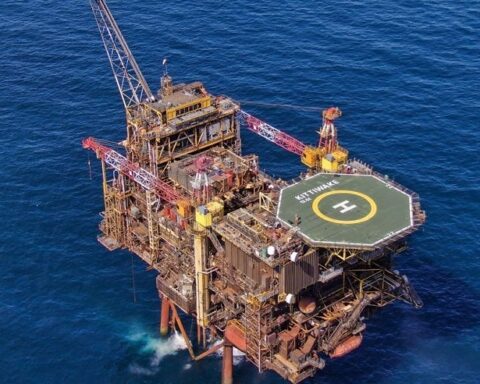
Jackdaw has four wells connected to a platform designed to operate without a permanent offshore crew. A 31-kilometre pipeline links it to Shearwater, where the gas and associated liquids are processed. The platform’s steel support structure was installed in August 2023, the pipeline in July 2024 and the topsides in October 2025. Drilling was completed early in 2026.
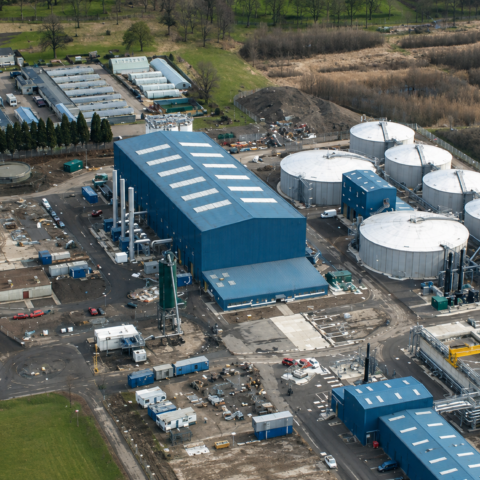
Gas will travel through the Fulmar Gas Line to St Fergus in Aberdeenshire, then enter the national transmission network. Condensate, the liquid hydrocarbons separated offshore, follows the Forties Pipeline System towards Kinneil. These connections give the development an economic relationship with existing Scottish infrastructure well beyond the small platform at the field itself.
The developer’s case is that additional gas will help sustain Shearwater and the infrastructure carrying its output ashore as older fields decline. Its November 2025 submission described gas being sold with the wider portfolio through Britain’s wholesale market. The physical route through Scotland does not establish a separate Scottish allocation or a discounted supply for households near the terminal.
Adura says Jackdaw could supply around 6% of projected UK North Sea gas production at its peak. That percentage measures the domestically produced part of the gas supply. It does not include the imported gas on which Britain also relies. The company’s comparison with heating 1.4 million homes uses average household consumption across a year.
At the forecast 2027/28 peak, officials calculated a cold winter day comparison of about 350,000 homes, with Jackdaw providing less than 1% of gas available from all sources. Their security test considers exceptional winter demand combined with the loss of the largest single piece of gas infrastructure. They gave the extra supply margin substantial positive weight. Average annual consumption and peak winter demand are different measures.
That supply argument does not establish a reduction in household prices. In advice published in February 2022 and cited in the new assessment, the Climate Change Committee said additional UK extraction would have, at most, a marginal effect on prices paid by consumers. Gas is traded internationally, so a field’s location and its contribution to physical supply do not by themselves determine the price charged by a household’s supplier.
Researchers responding to the approval also disagreed about the security benefit. Professor Jim Watson of University College London judged the contribution very small. Professor Dan Gladwin of the University of Sheffield supported the decision because the project was nearly complete and would help sustain existing infrastructure. Both said it would not materially lower household bills, in statements published by the Science Media Centre.
The jobs attached to the field
The operating employment forecast separates 27 new direct full-time-equivalent roles from 273 existing Shearwater jobs that the developer says would otherwise be lost. The second group accounts for most of the approximately 300 direct jobs associated with production. They represent continued employment at an existing hub, conditional on the company’s assessment of how long it would operate without Jackdaw.
The developer also models employment supported through suppliers and workers’ spending. Those wider estimates describe indirect and induced activity; they do not establish a separate headcount of new Scottish employees.
Construction employed a larger workforce. The November 2025 submission recorded 1,117 direct project and contractor jobs during the period beginning in 2023, followed by a smaller workforce expected before production. A June 2026 correction reduced that later total from 822 to 802 and confirmed that it continued earlier employment. Adding the two period totals would double-count continuing jobs.
The June submission identified 136 suppliers, including 92 in north-east Scotland and two elsewhere in Scotland. The Scottish share of spending cannot be inferred from those addresses. The company also cautioned that a supplier’s location does not necessarily identify where its employees live.
Some major fabrication was contracted overseas. Aker Solutions’ August 2022 award announcement placed construction of the platform at its Verdal yard in Norway, with more than 300 people expected to work on it at the peak. The contract covered engineering, procurement, construction and installation. Scottish offshore activity and a Scottish supply chain therefore coexist with substantial work undertaken elsewhere.
Unite welcomed the consent as time to secure replacement employment for North Sea workers. General secretary Sharon Graham said the union supported net zero but wanted a funded plan for comparable jobs, including in wind turbine manufacturing and green aviation fuel. Her statement presented the approval as additional time for that transition, rather than an answer to the industry’s long-term employment decline.
Uplift, which opposed the project, argued that a largely remotely operated field would not reverse the contraction of the North Sea workforce. The dispute concerns both the value of preserving existing work and whether new developments provide a durable employment strategy. Neither the operating forecast nor the construction figures establish hundreds of newly created permanent Scottish posts.
Investment, revenues and Scotland’s claim
Adura describes Jackdaw as a £2.1 billion investment. Its June submission’s cost model includes capital expenditure, operating costs and eventual abandonment, with figures expressed in 2025 prices. Much of the physical infrastructure was already installed before the renewed consent. The lifetime investment figure spans a different period and set of activities from spending that follows this decision.
The government’s announcement also uses the developer’s estimate of approximately £2.9 billion in additional UK gross value added during operation. Gross value added measures economic output after intermediate inputs are deducted. It is not a forecast of the tax payment, company profit or money allocated to Scotland. The model depends on production, prices, costs and wider economic assumptions.
The public June submission redacts major suppliers’ identities and contract values. It also provides no high-and-low price or cost sensitivity alongside its economic estimates. Those limits prevent the published supplier count from being converted into a verified Scottish spending total.
The minister gave potential tax receipts negligible weight because a sufficiently confident forecast could not be established. Investment and employment already incurred received the same weight.
A separate political decision accompanied the consent. Chancellor John Healey announced an Energy Wealth Fund, starting with a £2 billion injection, to invest oil and gas revenues in renewable and low-carbon energy. The government says it will sit within the National Wealth Fund and invest across the UK. The announced sum is a fund commitment, not an estimate of Jackdaw’s tax contribution.
First Minister John Swinney welcomed the intention to establish a fund but asked how it would operate, when it would start and how the initial amount had been chosen. In a letter to Prime Minister Andy Burnham on 21 October, he argued that it should prioritise offshore renewable opportunities and be ring-fenced for the north-east of Scotland. That is a request from the Scottish government; the UK announcement does not make that allocation.
Swinney also restated his demand for energy powers to be devolved. Offshore oil and gas licensing, these consent decisions and the associated fiscal regime remain reserved to Westminster. The Scottish government can press the case for how benefits are distributed, but it was not the authority granting Jackdaw production consent.
The emissions behind the approval
The new assessment includes the use of Jackdaw’s products after extraction, the issue missing from the earlier approval. Gas, condensate and natural gas liquids are assumed to be burned. The developer assessed both a central production case and a higher case, using the latter for the precautionary environmental assessment. The government’s announcement describes a producing life of up to 11 years.
The frequently cited 35.8 million tonnes of carbon-dioxide equivalent is the higher case for downstream life-cycle emissions, including processing and transport as well as combustion. Burning the products alone accounts for approximately 30.5 million tonnes in that case. Adding the separately assessed construction and operational emissions brings the project total to approximately 36.6 million tonnes.
| Estimated emissions over the project life | Central production case | Higher production case |
|---|---|---|
| Combustion of gas and associated liquids | 20.2 million tonnes CO2e | 30.5 million tonnes CO2e |
| Downstream life cycle, including that combustion | 23.6 million tonnes CO2e | 35.8 million tonnes CO2e |
| Total including construction and operational emissions | 24.2 million tonnes CO2e | 36.6 million tonnes CO2e |
The rows are overlapping totals and must not be added together. The combined totals are calculated from the published components and rounded. They cover the project life, not a single year. The higher, or P10, case means a 10% probability of equalling or exceeding the assessed production volume. These gross estimates do not subtract assumed reductions in production elsewhere.
Fahnbulleh rejected the developer’s conclusion that the climate effects were insignificant, giving those effects and damage to international climate leadership moderate adverse weight. The government’s announcement maintains that the project will not prevent the UK meeting its legally binding emissions limits and net-zero commitment, while gas demand continues during the transition.
Lower production emissions than some imported supplies form part of the government’s case. That comparison concerns the emissions involved in getting fuel to customers. Burning gas still releases carbon dioxide. The Climate Change Committee’s 2022 advice identified competing effects: domestic production might replace more emissions-intensive imports, but additional supply could also support a larger global market. It could not establish the net global result.
Consequently, the gross project estimate should not be presented as a proven net increase compared with refusing Jackdaw, nor should replacing imports be presented as proof of a global emissions saving. The minister said she would approve even if the expected improvement in emissions intensity did not materialise.
There is also a geographic limit to the figures. The National Atmospheric Emissions Inventory includes offshore production emissions in the UK total but leaves them unallocated between Scotland, England, Wales and Northern Ireland. Fuel combustion is accounted for where it occurs. The global life-cycle total is not a total that can simply be entered into Scotland’s territorial emissions account.
Opponents continue to challenge the wider policy choice. Uplift argues that further fields are incompatible with safe climate limits. Bob Ward, policy and communications director at the London School of Economics’ Grantham Research Institute, said approval would send a damaging signal to other producers shortly before the COP31 climate summit. Those objections remain despite the completion of the domestic consent process.
A development more than twenty years in the making
Jackdaw was discovered in 2005 and appraised between 2007 and 2012. Its long development history began well before the recent legal challenge. The original environmental statement describes the difficulty of finding a workable development concept with an acceptable balance of cost and risk for an ultra-high-pressure, high-temperature reservoir.
The project came into Shell’s portfolio through its acquisition of BG, completed in February 2016. By the time the environmental statement was submitted in May 2021, the proposed solution was four wells and a relatively small platform tied into Shearwater. The timetable then anticipated first production in the second half of 2024. That was an expectation at the time, not an achieved milestone.
The first environmental refusal came on 28 September 2021. The UK offshore environmental regulator objected to the proposed production and processing emissions, particularly carbon dioxide removed from the reservoir gas at Shearwater. An amine treatment unit separates out some of that naturally occurring carbon dioxide to meet the export system’s gas specification. The regulator considered that the development needed redesign.
Shell revised the proposal. Changes optimised Shearwater’s gas treatment so more carbon dioxide could be exported within the gas stream to St Fergus, and adjusted the sequencing of other production through the hub. The revised assessment reduced forecast combined Jackdaw and Shearwater vented carbon dioxide from about 800,000 to 456,000 tonnes, a reduction of approximately 43%. Those were figures for that particular production-emissions problem, not for the full climate impact of using the fuels.
Environmental agreement followed on 27 May 2022 and development consent on 1 June. Shell took its final investment decision in July. Greenpeace’s legal proceedings were already under way that month and were paused while the courts considered a separate case that would change the treatment of downstream emissions.
Why the earlier consent was overturned
On 20 June 2024, the UK Supreme Court delivered its judgment in the Finch case, concerning the Horse Hill oil development in Surrey. It held that the inevitable emissions from burning the extracted oil had to be assessed as effects of the project. The judgment concerned the information required for environmental assessment; it did not impose an automatic prohibition on every project with damaging effects.
That ruling changed the position in the Scottish proceedings over Jackdaw and Rosebank. By the time Lord Ericht decided the cases in January 2025, all parties accepted that the approvals were unlawful because downstream combustion emissions had been omitted. The argument was over the remedy and whether existing investment justified leaving the decisions in place.
Lord Ericht set aside the approvals. His opinion is dated 29 January 2025 and was publicly released on 30 January. The order suspended the effect of that remedy while fresh decisions were taken, allowing construction to continue at the developers’ commercial risk. Extraction was prohibited until new consent.
Shell said on 30 January that it had spent more than £800 million since the 2022 approval and welcomed the ability to continue work. That statement records the company’s position at the time. The court did not require the government to approve the project because of that expenditure.
The subsequent process brought the missing downstream assessment into the public record. Further information was consulted on in November and December 2025, followed by another request in March 2026 and a consultation running from 8 July to 10 August. Construction progressed alongside that reassessment. The October 2026 consent followed the new assessment rather than restoring production from a previously operating field.
The two setbacks therefore concerned different omissions or problems: the original design’s production emissions in 2021, and the failure to assess the fuels’ eventual combustion in the approvals overturned in 2025. The first led to engineering changes; the second required a fresh environmental decision.
The conditions carried into production
The notification to Adura retains four production-emissions conditions. They require management of the gas-treatment unit to minimise reasonably avoidable offshore carbon dioxide venting, a dedicated vent to limit flare emissions, an appropriately maintained emissions meter, and sequencing wells from other fields feeding Shearwater to minimise cumulative venting during Jackdaw’s life.
A proposed requirement to store a growing share of the carbon released when the fuels are burned was not imposed. Other permit requirements continue to apply. The new consent does not decide the separate Rosebank application, which Adura says follows Jackdaw in the regulatory process.
The next operational milestone is first gas. As of 21 October, Adura’s published timetable is within weeks, while the regulator’s consent allows production after completion of the remaining development work.
Sources
Publication of Decisions of the Secretary of State and the Oil and Gas Authority: Jackdaw Field Development
Department for Energy Security and Net Zero / OPRED, 21 October 2026
https://assets.publishing.service.gov.uk/media/6ad77ba413c9ff4fd08ed62d/Jackdaw_REG_16_SoS_and_NSTA_s__Agree__Decision_Notice.pdf
NSTA grants consent for Jackdaw
North Sea Transition Authority, 21 October 2026
https://www.nstauthority.co.uk/news-publications/nsta-grants-consent-for-jackdaw/
Jackdaw Field Development: Regulation 14 Decision
Department for Energy Security and Net Zero / OPRED, 14 October 2026; published 21 October 2026
https://assets.publishing.service.gov.uk/media/6ad77f4e13c9ff4fd08ed632/20261014_Jackdaw_decision_doc.pdf
Notice under Regulation 14(5): Notification of the Decision to Agree to the Grant of Consent — Jackdaw Field Development
Department for Energy Security and Net Zero / OPRED, 19 October 2026; published 21 October 2026
https://assets.publishing.service.gov.uk/media/6ad87631e19609e5aea10873/Jackdaw_Reg_14_5__Decision__Redacted.pdf
Jackdaw gas field gets green light
Department for Energy Security and Net Zero, HM Treasury and North Sea Transition Authority, 21 October 2026
https://www.gov.uk/government/news/jackdaw-gas-field-gets-green-light
Adura to boost UK gas supply with Jackdaw approval
Adura, 21 October 2026
https://adura.com/adura-to-boost-uk-gas-supply-with-jackdaw-approval/
Shell and Equinor complete formation of Adura, which will be the UK’s largest independent North Sea producer
Adura, 1 December 2025
https://adura.com/launch/
Jackdaw
Adura, accessed 21 October 2026
https://adura.com/projects/jackdaw/
Jackdaw Field Development: Environmental Statement, D/4260/2021
BG International Limited / Shell, February 2022
https://assets.publishing.service.gov.uk/media/62349c81d3bf7f6abaa053c5/Jackdaw_Environmental_Statement_D_4260_2021_February_2022.pdf
Jackdaw Field Development: Relevant Information to the Project
UK North Sea Limited / Shell, November 2025
https://assets.publishing.service.gov.uk/media/69203f995c394e481336ab61/Further_Information_Part_3_-_Relevant_Information_to_the_Project.pdf
Jackdaw Field Development: Responses to Regulation 12(1) Notice (27 March 2026)
Adura Operations Limited, 19 June 2026; published July 2026
https://assets.publishing.service.gov.uk/media/6a4e0dac895317eadc354515/2026.07.07_-_D_4260_2021_-_Adura_Jackdaw_Further_Information_Reg_12_1_Response_redacted_June_26.pdf
Letter: Climate Compatibility of New Oil and Gas Fields
Climate Change Committee, 24 February 2022
https://www.theccc.org.uk/wp-content/uploads/2022/02/Letter-to-Kwasi-Kwarteng-Climate-Compatibility-of-New-Oil-and-Gas-Fields.pdf
Expert reaction to government approval of Jackdaw gas field
Science Media Centre, 21 October 2026
https://www.sciencemediacentre.org/expert-reaction-to-government-approval-of-jackdaw-gas-field/
Aker Solutions ASA: Aker Solutions Awarded EPCI Contract for the Jackdaw Platform from Shell
Aker Solutions, 2 August 2022
https://www.akersolutions.com/news/news-archive/2022/aker-solutions-asa-aker-solutions-awarded-epci-contract-for-the-jackdaw-platform-from-shell/
Unite Welcomes Jackdaw Decision
Unite the union, 21 October 2026
https://www.unitetheunion.org/news-events/news/2026/october/unite-welcomes-jackdaw-decision
Jackdaw approved. Rosebank?
Uplift, 21 October 2026
https://www.upliftuk.org/post/jackdaw-approved-rosebank
North sea oil and gas revenues: First Minister letter
Scottish Government, 21 October 2026
https://www.gov.scot/publications/north-sea-oil-and-gas-revenues-first-minister-letter/
Jackdaw Scope 3 Emissions Assessment
UK North Sea Limited / Shell, November 2025
https://assets.publishing.service.gov.uk/media/69203f99cf3db184075cfd90/Further_Information_Part_1_-_Scope_3_Emissions_Assessment.pdf
Devolved Government Greenhouse Gas Emissions
National Atmospheric Emissions Inventory, updated 9 June 2026
https://naei.energysecurity.gov.uk/greenhouse-gases/devolved-government-greenhouse-gas-emissions
Grantham Institute respond to government approval of Jackdaw
Grantham Research Institute, London School of Economics and Political Science, 21 October 2026
https://www.lse.ac.uk/granthaminstitute/news/grantham-institute-respond-to-government-approval-of-jackdaw/
Jackdaw Field Development: Environmental Statement, D/4260/2021
BG International Limited / Shell, submitted 6 May 2021
https://assets.publishing.service.gov.uk/media/6093f19fe90e0726efe4824a/Jackdaw_Project_Environmental_Statement_D.4260.2021.pdf
BG Group Annual Report and Accounts 2015
BG Group, 2016
https://www.shell.com/investors/information-for-shareholders/bg-documents/_jcr_content/root/main/section/link_list_copy/links/item1.stream/1663748571300/7fda6f06a204426235d99edd3a17ce87df3f5815/bg-group-2015-annual-report.pdf
Secretary of State Decision, Regulation 14(4): Jackdaw Field Development
Department for Business, Energy and Industrial Strategy / OPRED, 28 September 2021
https://assets.publishing.service.gov.uk/media/670cf19c3b919067bb4830b5/jackdaw-reg-14-4-refusal-decision.pdf
Secretary of State Decision to Agree to the Grant of Consent: Jackdaw Field Development
Department for Business, Energy and Industrial Strategy / OPRED, 27 May 2022
https://assets.publishing.service.gov.uk/media/670fd77f30536cb9274832f5/jackdaw-reg-14-es-conclusion-decision-to-grant-consent-decision-200522.pdf
R (Finch on behalf of the Weald Action Group) v Surrey County Council and others, [2024] UKSC 20
UK Supreme Court, 20 June 2024
https://supremecourt.uk/cases/judgments/uksc-2022-0064
Petitions by Greenpeace Limited and Uplift for Judicial Review, [2025] CSOH 10
Court of Session, 29 January 2025; publicly released 30 January 2025
https://www.scotcourts.gov.uk/media/v0zkbsxy/2025csoh10-petitions-by-greenpeace-limited-and-uplift-for-judicial-review.pdf
Court allows work on Jackdaw to continue
Shell UK, 30 January 2025
https://www.shell.co.uk/about-us/news-and-publications/media-releases/2025-media-releases/court-allows-work-on-jackdaw-to-continue.html
Jackdaw Field Development
Department for Energy Security and Net Zero / OPRED, updated 21 October 2026
https://www.gov.uk/government/publications/jackdaw-field-development