
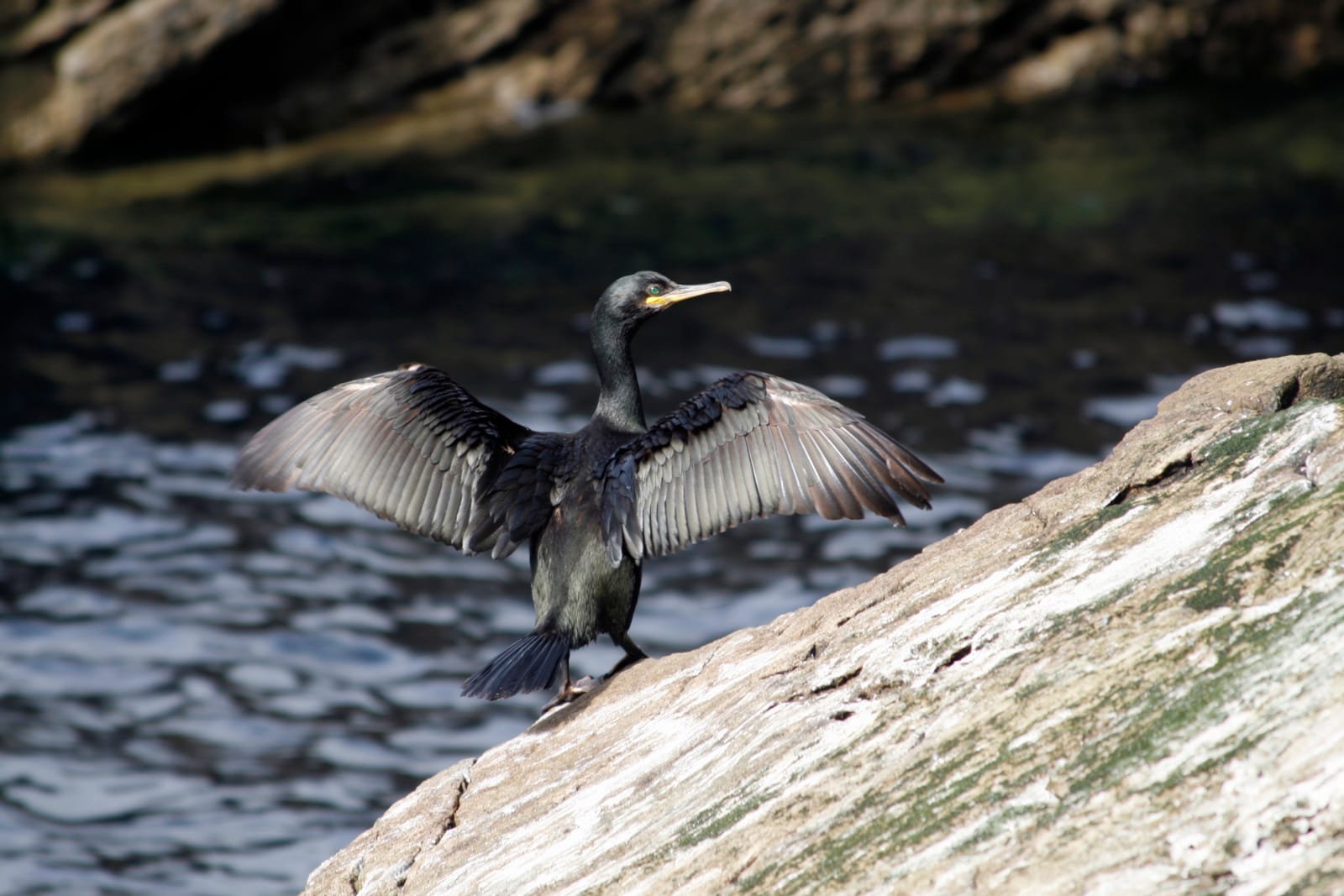
Scotland’s first annual seabird review records progress but warns about sustained funding. Earlier records identify uneven island surveillance, while a months-long operation on Rousay shows the work involved.
The Scottish Government report, published on 21 October 2026, records 20 remote cameras deployed across eight priority islands. Fourteen islands have been identified for predator-removal work, with feasibility studies completed or under way on eight.
Its conclusion identifies a continuing obstacle: “funding continues to be a barrier to resourcing on-the-ground implementation of actions over multiple years.”
The practical demands appear in the Scottish Island Biosecurity Programme Plan, dated March 2026. It describes some islands receiving only annual checks for invasive predators and a small number of remote or rarely visited islands receiving none. Those findings describe conditions recorded in March; the new cameras are among the measures intended to improve coverage.
A single stoat on Rousay
On Rousay, the work needed to remove one animal has occupied professionals and volunteers for months. Tourists reported a possible stoat sighting in April. The Orkney Native Wildlife Project deployed additional traps and cameras and brought in detection dogs; a camera confirmed the animal’s presence in early May.
It was caught on 9 October in a humane lethal trap, according to RSPB Scotland’s account published a week later. Trapper Alice Head-Rapson set the trap box. The search involved an island of approximately 4,500 hectares, with vegetation and terrain that made a small, mobile animal difficult to locate.
Stoats are native to mainland Britain but not to Orkney, where they threaten ground-nesting birds, including Arctic terns, and the Orkney vole. Further monitoring is needed to establish that the captured animal was the only one.
The project is a partnership between RSPB Scotland, NatureScot and Orkney Islands Council. Scotland’s Nature Restoration Fund specifically supported the Rousay response. Its success depended on sustained fieldwork and help from the island community.
The cost of reaching an island
Predator removal has an established place in Scottish conservation, but its benefits depend on the species and nesting habitat involved. A NatureScot-commissioned research review published in 2024 identified strong potential benefits for storm-petrels, shearwaters and other vulnerable seabirds. Birds nesting in burrows or accessible ground-level sites face different risks from those occupying inaccessible cliff ledges.
The same review records the limits of a completed eradication. Rats removed from Handa returned about a decade later. It recommends assessing reinvasion risk when choosing projects and maintaining protection afterwards. An island can require continuing surveillance long after the original removal operation has finished.
The March programme plan identifies trained staff and affordable boats as constraints. Securing resources for responses lasting eight to 12 weeks can delay intervention and increase the chance that predators establish themselves. It lists equipment hubs in Edinburgh, Stornoway, Kirkwall and Sumburgh Head, and calls for an additional west-coast hub serving the Inner Hebrides, specialist response capacity and a rapid funding mechanism.
The March plan records no boat budget within the Biosecurity for Scotland project for 2026–27, while the National Trust for Scotland and RSPB allocate boat costs within site-management budgets. The proposed support mechanism would help islands without those management budgets and make money available promptly when an incursion requires a response.
Work on that practical infrastructure is already being funded. A September report from the Scottish Marine Environmental Enhancement Fund (SMEEF) describes equipment for response hubs, training for dog handlers and surveillance work. Its recommended practice is to begin responding to a suspected invasion immediately, preferably within 48 hours. Completing an operation can take much longer, as Rousay demonstrates.
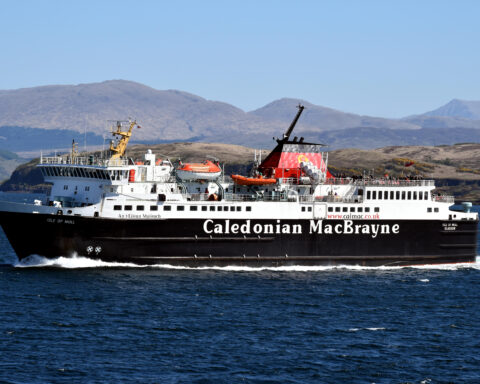
Prevention also extends to the journeys that supply and visit islands. Biosecurity for Scotland runs a free, voluntary certification scheme for commercial boat operators, offering training in checks and precautions within everyday operations. The programme brings together conservation organisations, island communities and businesses; keeping predators out depends partly on what happens before a vessel reaches a colony.
The population record
NatureScot’s August 2026 seabird indicator records the scale of the decline. Of the 14 species with long-term abundance series, 13 showed declines between 1986 and 2024. Eight of those declines were statistically significant. Arctic skua abundance fell by an estimated 93%, and little tern abundance by 75%.
The indicator covers monitored colonies rather than providing a complete current count of every seabird in Scotland. Scotland has 24 regularly breeding seabird species; the indicator includes 19 across its overlapping abundance and breeding-success measures. Its data end in 2024, before the conservation plan’s launch in August 2025.
Predators are one part of that wider recovery task. The 2024 research review also identifies climate change and pressure on forage-fish stocks as major threats. Protecting nesting sites can improve conditions on land while birds continue to encounter risks at sea. The benefits of a removal project therefore depend on the colony, the species and the other pressures affecting their survival and breeding.
The review records monitoring at 23 priority seabird sites in summer 2026, some surveyed only partially because of weather and sea conditions. Continued monitoring will test conservation outcomes.
Funding beyond the next grant
NatureScot records a £1.6 million Seabird Resilience Fund established through voluntary contributions from offshore renewable-energy developers. It is part of SMEEF, which is overseen by NatureScot, Crown Estate Scotland and the Scottish Government’s Marine Directorate. This is one identified funding stream within a wider programme involving public bodies, charities and local partners.
Some funded work extends over several years. SMEEF’s September report describes a Summer Isles project preparing the first population estimate for European storm-petrels across the island group. It is using call-back surveys while testing acoustic, infrared and thermal methods. Completion is expected in March 2028. Separately, a funded NatureScot officer is developing a ten-year predator-removal programme; the report says such removal projects can cost hundreds of thousands of pounds.
The annual review says its Delivery Manager and Seabird Restoration and Resilience posts were initially secured for one year. It gives no expiry date for those posts.
Biosecurity for Scotland’s earlier Nature Restoration Fund support ended in March 2026. A SMEEF grant funded a further 12 months. At its 10 June meeting, the conservation plan’s delivery partnership recorded that longer-term arrangements and funding beyond that extension remained unresolved, with options being developed; those minutes were published on 2 October. Biosecurity for Scotland’s website currently lists support through the end of March 2027.
Sources
Scottish Seabird Conservation Action Plan: first annual progress report
Scottish Government, 21 October 2026
https://www.gov.scot/publications/scottish-seabird-conservation-action-plan-first-annual-progress-report/
Scottish Island Biosecurity Programme Plan
NatureScot, March 2026
https://www.nature.scot/doc/scottish-island-biosecurity-programme-plan
Rousay wildlife now safer as threat removed
RSPB, 16 October 2026
https://www.rspb.org.uk/whats-happening/news/rousay-wildlife-safer-as-stoat-removed
Potential actions to support recovery of seabird populations in Scotland: Research Report 1370
NatureScot, 2024
https://www.nature.scot/doc/naturescot-research-report-1370-potential-actions-support-recovery-seabird-populations-scotland
Seabirds: SMEEF impact report
Scottish Marine Environmental Enhancement Fund, September 2026
https://smeef.scot/wp-content/uploads/2026/09/SMEEF-Seabirds-Theme-Impact-Report-280926.pdf
Biosecurity for Scotland
Biosecurity for Scotland, accessed 21 October 2026
https://biosecurityforlife.org.uk/biosecurity-for-scotland
Scottish biodiversity indicator: abundance and productivity of breeding seabirds in Scotland, 1986–2024
NatureScot, August 2026
https://www.nature.scot/doc/scottish-biodiversity-indicator-abundance-and-productivity-breeding-seabirds-scotland-1986-2024
Scottish Marine Environmental Enhancement Fund
NatureScot, updated 11 August 2026
https://www.nature.scot/SMEEF
Scottish Seabird Conservation Action Plan Delivery Partnership: June 2026 minutes
Scottish Government, meeting 10 June 2026; published 2 October 2026
https://www.gov.scot/publications/scottish-seabird-conservation-action-plan-delivery-partnership-minutes-june-2026/