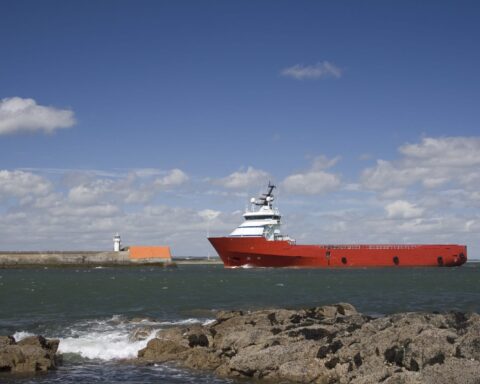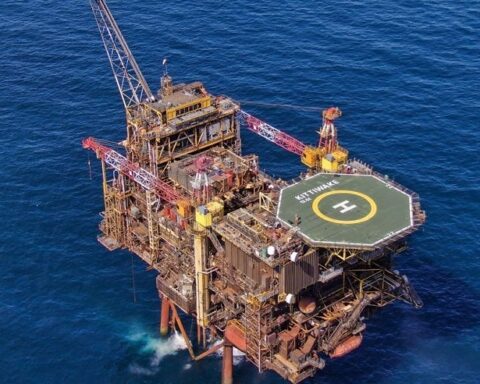

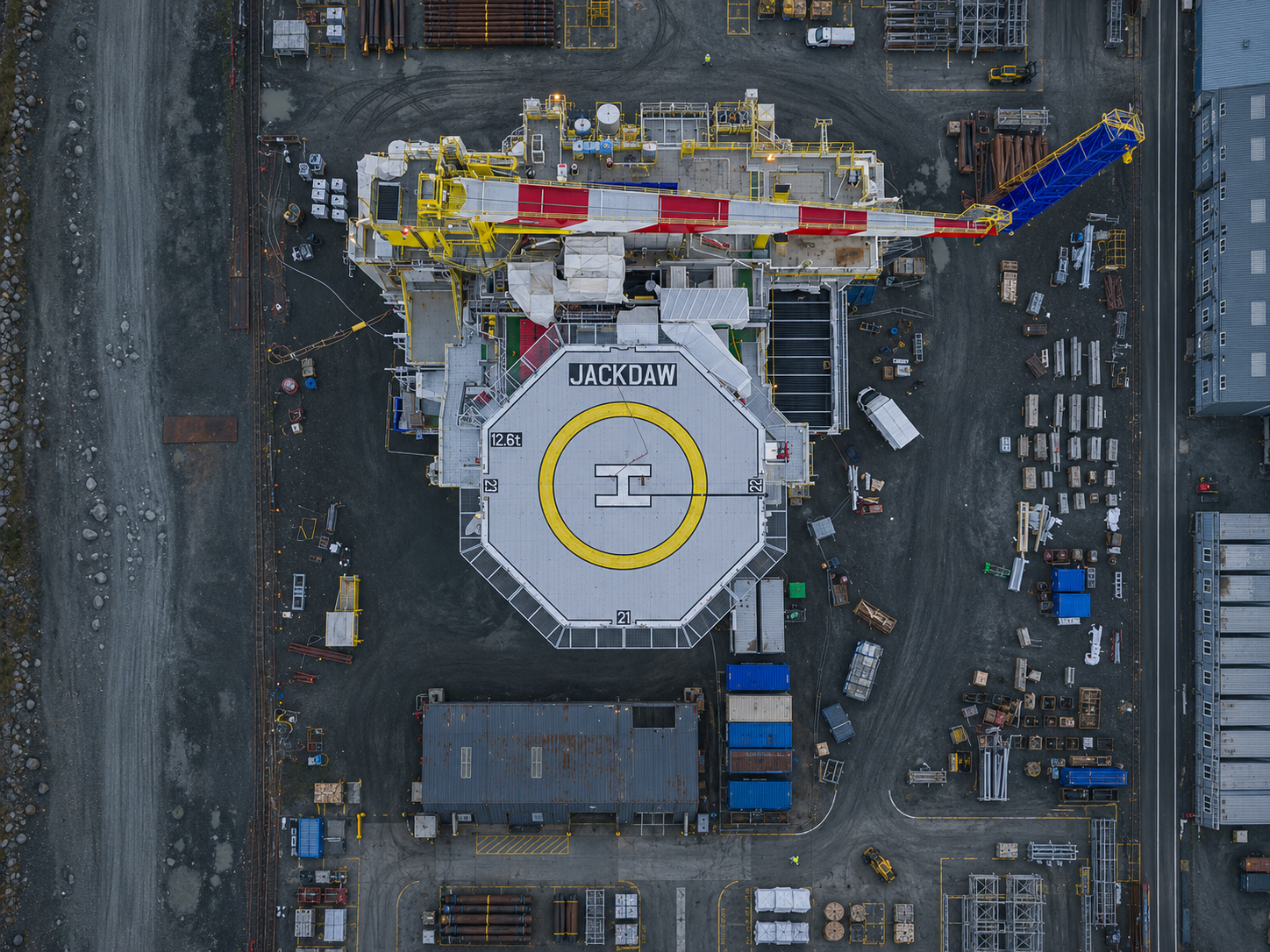
Natural gas from the Jackdaw field, approximately 250 kilometres east of Aberdeen, has begun flowing into Britain’s energy network, supplying a system that serves homes and businesses across Scotland, England and Wales.
Production began on 16 November, less than four weeks after the UK Government approved the development on 21 October following legal proceedings concerning its environmental impact.
The gas travels from Jackdaw through the existing Shearwater production hub before reaching the St Fergus gas terminal near Peterhead in Aberdeenshire. From there, it enters Britain’s national gas transmission network.
At peak production, expected within the coming months, Jackdaw could produce enough gas to meet the annual heating requirements of approximately 1.4 million UK homes. This figure represents the equivalent amount of energy produced, rather than a dedicated supply to individual households.
The field is expected to account for approximately 6% of projected UK North Sea gas production at its peak.
Scotland’s Gas Enters the British Energy Market
Jackdaw’s offshore production facilities are located in the Scottish North Sea, while its gas is brought ashore and processed through infrastructure in Aberdeenshire.
The gas is not reserved for Scottish consumers.
Once processed and introduced into the transmission network, it becomes part of the British gas supply system, serving domestic heating, electricity generation, manufacturing and other industrial requirements.
Gas extracted from the North Sea east of Aberdeen can therefore be consumed in England, Scotland or Wales, depending on transmission arrangements and market demand.
There is no published allocation establishing what proportion of Jackdaw’s production will be consumed specifically in England.
The gas is traded commercially within a market operating across Great Britain. The infrastructure used to produce and process it is concentrated in north-east Scotland, while its distribution extends throughout the British network.
A £2.1 Billion Development With an 11-Year Production Life
Jackdaw represents approximately £2.1 billion of investment and is operated by Adura, the Aberdeen-headquartered offshore energy company formed in December 2025 by combining the UK offshore oil and gas operations of Shell and Norway’s Equinor.
The field consists of four production wells connected to a platform designed to operate without permanent staffing. A 31-kilometre pipeline connects the installation to the established Shearwater production facilities.
The platform’s supporting structure was installed in August 2023, its pipeline was laid in July 2024, and the topside facilities were installed in October 2025. Drilling was completed in early 2026.
The development is expected to operate for up to 11 years, although actual production will depend on reservoir performance and operating conditions.
Government estimates indicate that the project could contribute approximately £2.9 billion to the UK economy over its lifetime.
According to the developer’s estimates published by the UK Government, Jackdaw will create 27 new direct jobs and safeguard another 273 positions.
The development will also provide work for contractors and suppliers involved in offshore production, maintenance, engineering, transport and other services.
Why Jackdaw Needed a Second Government Approval
The project originally received development consent in June 2022 under the Conservative government.
Environmental organisations subsequently challenged the approval, arguing that the assessment had failed to account adequately for greenhouse gas emissions arising when the extracted gas was eventually burned.
In June 2024, the UK Supreme Court ruled in the Finch case that environmental assessments for fossil fuel developments must consider emissions associated with the eventual combustion of the extracted fuels.
In January 2025, Scotland’s Court of Session ruled that the original consents for Jackdaw and the Rosebank development west of Shetland were unlawful.
The court allowed development work to continue at the companies’ commercial risk while fresh decisions were sought. This permitted Jackdaw’s construction programme to advance before a new production decision had been made.
Following a revised environmental assessment and public consultation, the UK Government granted fresh consent in October 2026. The North Sea Transition Authority subsequently authorised production.
The government concluded that Jackdaw would not prevent the UK from meeting its legally binding carbon budgets and its commitment to achieving net-zero emissions by 2050.
Environmental organisations have continued to oppose further fossil fuel development.
Greenpeace has argued that new production extends dependence on gas without guaranteeing lower energy bills. The organisation has also challenged the environmental and employment arguments used to support new offshore developments.
What Jackdaw Means for Gas Supplies and Household Bills
Jackdaw will increase Britain’s domestically produced gas supply, although the effect on household energy bills will depend on wholesale market conditions.
Gas is traded commercially, with prices influenced by supply and demand in Britain and international energy markets.
Additional domestic production can reduce the quantity of imported gas required, including liquefied natural gas transported by sea.
Domestic production also reduces some reliance on international shipping routes and overseas supply infrastructure.
However, the price paid by British consumers is not determined solely by the location where the gas is extracted.
The UK Government’s figures show that, averaged across 2021 to 2025, approximately 42% of Britain’s gas supply came from the UK Continental Shelf, 37% from Norway, 20% from liquefied natural gas and 1% through interconnectors.
Jackdaw will contribute to the domestic element of that supply. Britain will continue to import gas while domestic production and consumption remain at their current levels.
Where the Economic Returns Go
Jackdaw’s extraction facilities, gas-processing infrastructure and associated offshore operations are concentrated in north-east Scotland.
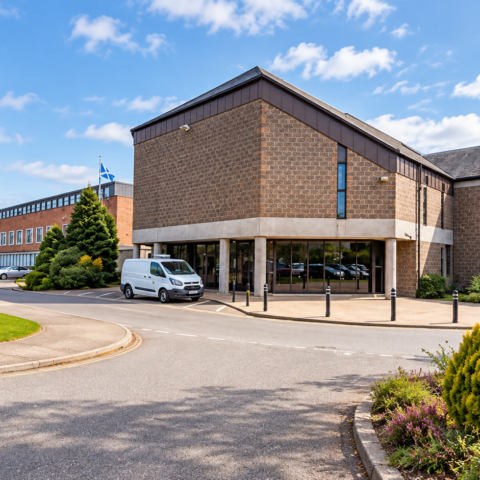
Adura is headquartered in Aberdeen, while St Fergus provides a connection between offshore gas production and the British transmission network.
Taxation of North Sea oil and gas production operates through the UK fiscal system. Revenues are collected by the UK Treasury rather than automatically assigned to Scotland according to the offshore location of the producing field.
The UK Government announced a new Energy Wealth Fund alongside Jackdaw’s approval in October. The fund is intended to use North Sea tax revenues to support investment in renewable and low-carbon energy projects across the UK, beginning with an initial £2 billion commitment.
The geographical allocation of that investment will depend on subsequent government funding decisions and the projects selected.
Jackdaw’s owners also expect future tax contributions from production. The amounts collected will depend on gas prices, production volumes, operating costs and the tax arrangements applying during the field’s lifetime.
Rosebank Remains Awaiting Approval
Jackdaw is the first new development to begin production since Adura was established in December 2025.
Another development awaiting a government decision is Rosebank, west of Shetland, with an estimated investment of £8.7 billion.
Rosebank has faced a similar legal challenge concerning the environmental assessment of emissions arising from the eventual use of its oil and gas.
As of 18 November, the project remains awaiting a new UK Government approval decision.
The outcome will determine whether the development can proceed under the revised environmental assessment requirements.
Meanwhile, Jackdaw has begun commercial gas production, with its output entering Britain’s transmission network through St Fergus.
The gas will contribute to supplies used across Britain, including England, while the field’s offshore operations, processing infrastructure and associated employment remain concentrated in north-east Scotland.
Production is expected to continue for up to 11 years, subject to reservoir performance and operating conditions.
Sources
Jackdaw Begins Producing Gas to Power British Homes and Businesses
Adura, 16 November 2026
https://adura.com/jackdaw-begins-producing-gas-to-power-british-homes-and-businesses/
Jackdaw Gas Field Gets Green Light
UK Government, 21 October 2026
https://www.gov.uk/government/news/jackdaw-gas-field-gets-green-light
Jackdaw Field Development
UK Government, updated October 2026
https://www.gov.uk/government/publications/jackdaw-field-development
Jackdaw — Project Information and Environmental Assessment
Adura, 2026
https://adura.com/projects/jackdaw/
Shell Welcomes UK Government Decision on Jackdaw
Shell UK, 21 October 2026
https://www.shell.co.uk/about-us/news-and-publications/media-releases/2026-media-releases/shell-welcomes-jackdaw-uk-government-decision.html
Jackdaw and Rosebank: How Did We Get Here?
Greenpeace UK, 18 September 2026
https://www.greenpeace.org.uk/news/jackdaw-and-rosebank-how-we-got-here/
Jackdaw Gasfield — House of Commons Debate
UK Parliament, 21 October 2026
https://hansard.parliament.uk/Commons/2026-10-21/debates/1EF2F994-9AAB-488E-8927-9E72B4C4EDA7/JackdawGasfield