
Highland Council says competitive tendering for 52 homes at Rosskeen would duplicate work and threaten funding deadlines. Its planning reports and procurement notice, however, give conflicting accounts of who owned the land.
KEY HIGHLIGHTS:
- No Competition: Public tax money was handed directly to one company, meaning nobody else had a fair shot at the work.
- The Confusion: In 2025, the council officially claimed that they already bought the land. But now in 2026, they claim Capstone owns the land, and they are using that ownership as the exact excuse to skip the competition. Both cannot be true.
- Two Different Companies: The company that asked for permission to build is technically a different legal business than the company that got the £13.85 million contract, even though they share the exact same address.
- Chopping Down Trees: Local neighbours and woodland charities tried to stop this project because it will destroy local trees and nature spaces.
- Information: The council got into trouble twice with the official information watchdog for failing to give honest answers when people asked for documents about this site.
Highland Council has published notice of a £13,846,869.91 housing contract with Capstone Construction Scotland Ltd without an open call for competition.
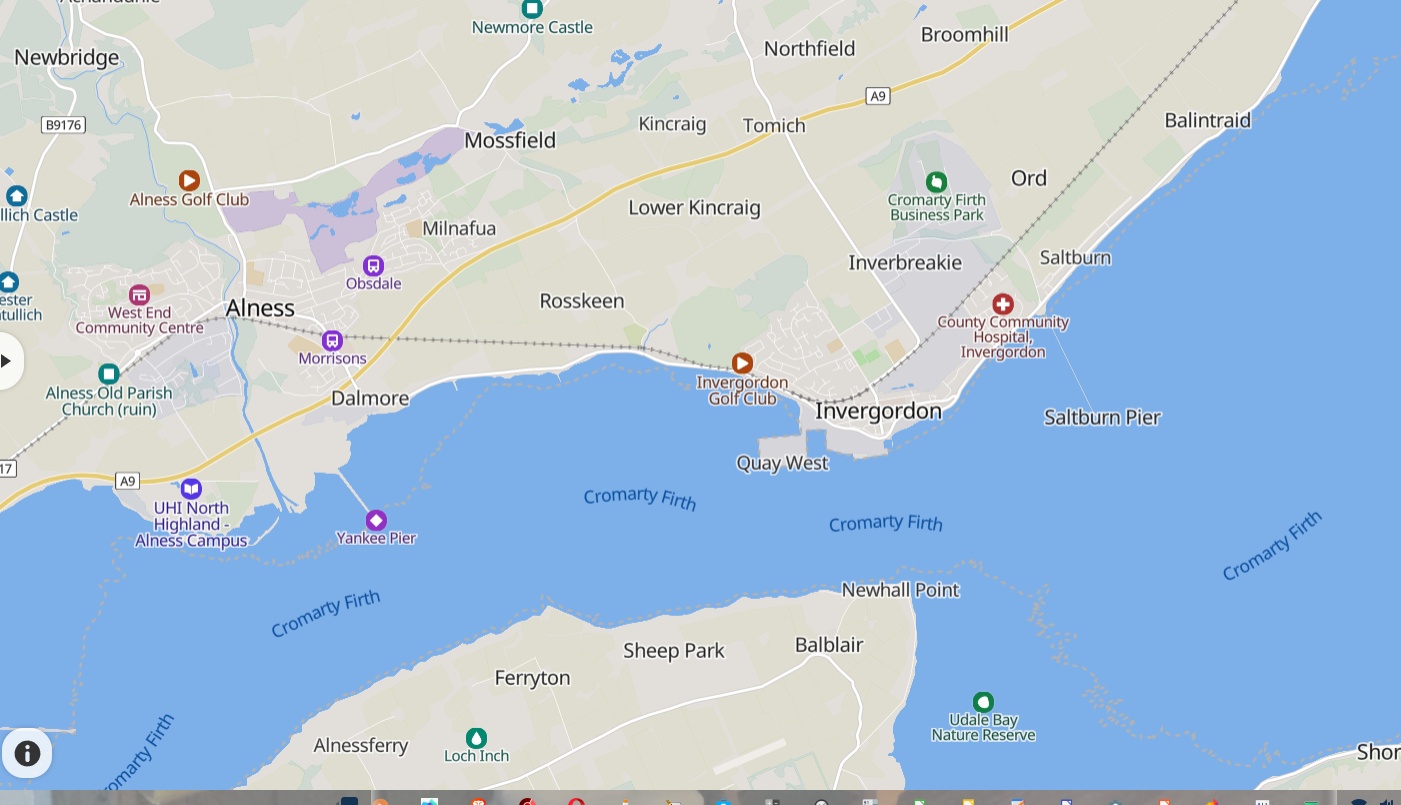
The development at Rosskeen, near Invergordon, is intended to provide 52 homes with associated infrastructure. The contract covers 22 units described as being for rent, 12 LIFT units and 18 for mid-market rent. Its stated value excludes VAT.
The procurement notice gives 22 July 2026 as the date the contract was concluded and identifies Capstone Construction Scotland as the contractor. Elsewhere in the same document, however, Highland Council says it “intends” to award the design-and-build contract directly. The notice, published on 28 July, does not explain the difference between those descriptions.
The council says Capstone Construction is the current owner of the site and has been involved in the early development of the proposals.
According to the notice, the land is not available to the market separately from the existing development scheme. The design, infrastructure and layout are described as closely integrated with the landowner’s proposals and delivery model.
Highland Council says separating the construction work and placing it out to tender would duplicate design and technical work, require parts of the development to be procured again, cause delays incompatible with funding requirements and risk making the scheme unviable.
It concluded that there was limited scope for effective competition and that the contract could, in practice, be delivered within the required terms only by the supplier controlling the site and the associated development arrangements.
Highland Council’s own published records provide a different account of the land ownership at an earlier stage.
A planning report presented to councillors in January 2025 stated that the site had “since been purchased by the council”. It linked the reported purchase to a decision to increase the affordable element of the development to 49 homes, with a further 17 intended for private let.
The same report said Highland Council was committed to beginning development in April 2025.
Eighteen months later, the procurement notice described Capstone Construction as the current owner and said the site remained under the control of a single private landowner.
The documents do not explain whether Highland Council completed the reported purchase and later disposed of the land, whether the January 2025 report referred to a conditional or incomplete acquisition, or whether one of the official descriptions is wrong.
That distinction is consequential. Capstone’s ownership is now being used as the principal reason why the £13.85 million construction contract could not be offered through an open competition.
Two separate Capstone companies also appear in the records.
The planning application was made by Capstone Connect Ltd, company number SC712701. The construction contract is recorded in the name of Capstone Construction Scotland Ltd, company number SC224032.
They are separate legal entities, although both are registered at the same address in Henderson Road, Inverness. The planning papers identify Capstone Connect as the applicant, while the procurement notice attributes current ownership and the construction contract to Capstone Construction Scotland.
The development itself has been contested since before planning permission was granted.
Capstone Connect applied in November 2023 for permission to construct 66 homes, comprising flats and houses with roads, drainage, services, recreation areas and retained woodland.
Highland Council’s North Planning Applications Committee agreed in April 2024 to grant permission, subject to the completion of a legal agreement. Before that agreement was concluded and a final decision issued, the council adopted a replacement Inner Moray Firth Local Development Plan in June 2024.
Under the new plan, most of the site was no longer allocated for housing and lay outside the Invergordon settlement development boundary. Planning officers acknowledged that the proposal did not comply fully with the replacement local plan or with parts of National Planning Framework 4.
They concluded that the departure was outweighed by demand for housing, the council’s housing programme and anticipated employment growth associated with the Inverness and Cromarty Firth Green Freeport.
The court judgment records that 135 representations had been received through the public participation process by the time of the April 2024 planning report. That figure represents all recorded representations and should not be read as 135 individual objections.
The organised opposition included neighbouring resident Richard Cross, the Woodland Trust and Save Our Green Space, a local campaign chaired by Cross.
Their objections focused on the proposed removal of trees, possible deterioration of ancient woodland, effects on veteran trees and an alleged conflict with Policy 6 of National Planning Framework 4, which governs woodland, ancient woodland and veteran trees.
Cross submitted objections on several occasions between January 2024 and January 2025. The Woodland Trust submitted objections in December 2023 and February 2025, while Save Our Green Space lodged its own objection on 10 March 2025, shortly before the committee reconsidered the application.
At the March 2025 meeting, Councillor Tamala Collier moved to refuse planning permission.
Her motion argued that the biodiversity baseline survey had been carried out in temperatures of minus 2 degrees and during ice cover, making the results unreliable. It also alleged that the development had failed adequately to assess effects on irreplaceable habitats, ancient woodland soils and biodiversity.
Those were the grounds advanced in Councillor Collier’s motion, not independent findings subsequently upheld by a court. Her motion received no seconder.
Conditional planning permission was issued on 19 March 2025.
Cross then asked the Court of Session to overturn the decision. He argued that the approval was unreasonable or irrational, that relevant considerations had not been properly taken into account and that councillors had not received sufficient information to make an informed decision.
Lord Menzies rejected the judicial-review petition in February 2026.
The judge found that a substantial body of material about trees, forestry and ancient woodland had been placed before the committee. He concluded that the planning officer had been entitled to reach her assessment and that her advice was neither perverse nor seriously misleading.
The ruling did not find that no trees would be removed. Lord Menzies accepted that some individual trees and groups of trees would have to be felled. He was not persuaded, however, that this amounted to the legal loss of ancient woodland, meaning land that has maintained continuous woodland habitat since at least 1750. He also said there was no suggestion that ancient or veteran trees themselves would be lost.
The judgment settled the challenge to the legality of the planning permission. It did not examine the subsequent procurement method, the construction price or the ownership account contained in the 2026 contract notice.
Separate findings were made about Highland Council’s handling of requests for information concerning the development.
In March 2025, the Scottish Information Commissioner found that the council had failed to answer an information request and a later request for review within the statutory timescales. Highland Council acknowledged that the material had not initially been collated correctly and that parts of the request had not been addressed.
A second decision, issued in December 2025, found that the council should have handled the requested planning records under the Environmental Information Regulations rather than solely through freedom-of-information legislation.
The Commissioner also found that Highland Council had not provided enough evidence to support its assertion that it held no further relevant information. It was ordered to carry out fresh and proportionate searches and issue a new decision based on the results.
Those decisions concerned access to information and the adequacy of the council’s searches. They did not overturn the planning permission. They do show that attempts to examine the development’s records encountered failures that were formally upheld by the information regulator.
The procurement notice does not provide a breakdown separating the cost of the houses from land, design, roads, drainage and other infrastructure. It includes no independent valuation and no construction-cost comparison showing how the negotiated price was tested without competing tenders.
The total is equivalent to approximately £266,286 for each of the 52 contracted homes before VAT. That is not the construction cost of an individual house because the contract includes associated infrastructure and development work. A public cost breakdown would show what is included in the figure.
There is also an unexplained difference between the planning permission and the contract.
Planning permission covers 66 homes. The January 2025 report described 49 affordable homes and 17 for private let. The July 2026 procurement notice covers 52 homes under a different tenure arrangement.
It does not say what will happen to the remaining 14 consented homes, whether they will be delivered through a separate phase or whether the development has been reduced.
The award provides a practical example of the land-control issue examined in Modern Scot’s earlier investigation into more than 230 proposed Highland development sites. That analysis found that ownership and option agreements can shape the choices available long before a construction contract reaches the public record.
Highland Council’s need to deliver housing quickly may justify an accelerated timetable. The authority estimates that 24,000 homes could be required across the Highlands within ten years, roughly twice the previous rate of construction.
It does not remove the requirement to demonstrate how a negotiated price of almost £13.85 million represents value for money.
The council cites programme and funding requirements as reasons why a competitive exercise would cause unacceptable delay. The procurement notice does not identify the funding deadline, the amount at risk or the source of all the money involved.
Nor does it reconcile its assertion that Capstone Construction owns the land with the planning report stating that Highland Council had purchased it.
The land title, acquisition records, negotiated cost breakdown and arrangements for the other 14 homes are needed before the public can determine how the council reached a position in which one contractor was considered the only possible supplier.
Sources
Public Contracts Scotland — 52 No New Housing Units, Rosskeen, Ross-shire
https://www.publiccontractsscotland.gov.uk/search/show/search_view.aspx?ID=JUL561025
Highland Council — Supplementary Planning Report: 23/05466/FUL, Capstone Connect
https://www.highland.gov.uk/download/meetings/id/84435/6.%25202305466FUL%253A%2520Capstone%2520Connect
Highland Council — North Planning Applications Committee Minutes, March 2025
https://www.highland.gov.uk/download/meetings/id/85069/item_21_minutes
Court of Session — Richard Cross Against The Highland Council, [2026] CSOH 10
https://www.scotcourts.gov.uk/media/3b2e4tun/2026csoh10-petition-of-richard-cross-against-the-highland-council-for-jr.pdf
Scottish Information Commissioner — Decision 068/2025: Development At House Of Rosskeen
https://www.foi.scot/decision-0682025
Scottish Information Commissioner — Decision 317/2025: Information Relating To House Of Rosskeen
https://www.foi.scot/decision-3172025
Companies House — Capstone Connect Ltd
https://find-and-update.company-information.service.gov.uk/company/SC712701
Companies House — Capstone Construction Scotland Ltd
https://find-and-update.company-information.service.gov.uk/company/SC224032
Highland Council — Addressing The Highland Housing Challenge
https://www.highland.gov.uk/news/article/16128/addressing_the_housing_challenge
Modern Scot — The Highlands Are Being Redrawn Before The Public Can Object
https://modern.scot/the-highlands-are-being-redrawn-before-the-public-can-object/