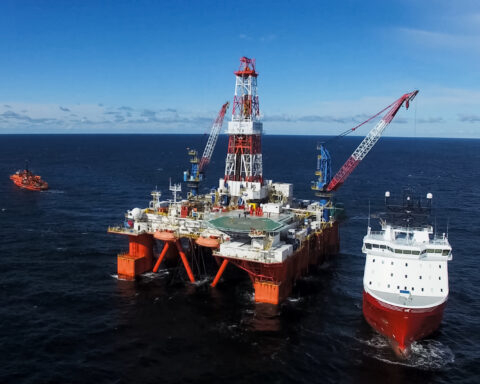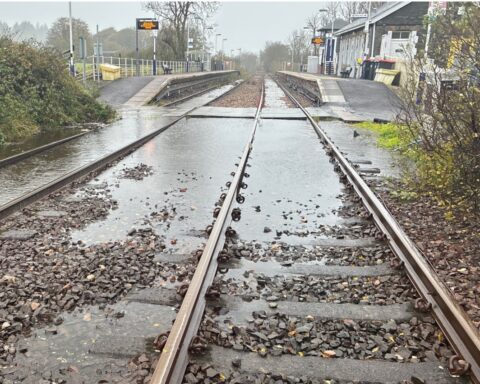


Scotland risks losing specialist North Sea engineering capacity as offshore energy companies look increasingly towards international markets. A new industry report raises questions about whether the country’s oil and gas expertise can survive long enough to support its renewable energy ambitions.
Scotland’s offshore energy industry faces a growing risk of losing skilled workers, specialist contractors and future investment to overseas markets, just as the country needs that expertise to develop offshore wind, carbon capture and other energy infrastructure.
A new report from Offshore Energies UK (OEUK), published on 9 November, found that only 35% of 60 offshore energy businesses surveyed were confident about their prospects in the UK over the next 12 months. Eight in ten expected a greater share of future investment and growth to come from overseas.
The findings are particularly significant for Aberdeen, the North East and Scotland’s wider offshore supply chain. Companies that spent decades developing the engineering, manufacturing and marine services required for North Sea oil and gas production are now being asked to help deliver a different energy economy. Yet the contracts needed to finance that transition remain uncertain.
OEUK estimates that the UK has a potential offshore energy investment pipeline worth £123 billion between 2026 and 2035. That figure, however, represents projects under consideration rather than investment already committed. Some developments could be postponed, reduced or cancelled.
For Scottish businesses, the difference between an announced project and a signed contract can determine whether they retain skilled employees, purchase new equipment or seek work abroad.
The warning comes as the UK Government moves to end new oil and gas exploration licensing, Scotland’s offshore wind programme encounters investment and delivery difficulties, and ageing North Sea infrastructure creates a growing market for decommissioning.
OEUK argues that continued domestic oil and gas investment is essential to sustaining the industry’s workforce and supply chain. That position deserves scrutiny alongside independent evidence showing both the opportunities emerging in renewable energy and the financial, regulatory and environmental limits facing further petroleum development.
The question for Scotland is not simply which energy technology should receive support. It is whether the country can retain enough industrial capability to deliver the transition before existing sources of work decline.
What the Industry Survey Actually Shows
OEUK represents offshore energy businesses, including oil and gas producers, engineering companies, manufacturers and organisations working in renewable energy.
Its Supply Chain Report 2026 surveyed 60 businesses across engineering, manufacturing, marine operations, logistics and professional services.
Nine in ten respondents obtained more than 20% of their revenue from oil and gas. This illustrates the industry’s continuing dependence on petroleum-related work, but does not mean that oil and gas accounts for 90% of the surveyed companies’ combined turnover.
The findings also need to be interpreted within the survey’s limits. Sixty responses can provide useful evidence of business sentiment, but they cannot, without further information on sampling and representativeness, establish the outlook of every company in Britain’s offshore energy supply chain.
Nor does an expectation of overseas growth necessarily mean that businesses intend to leave the UK. International contracts can support employment and engineering operations in Aberdeen and elsewhere in Scotland, particularly when design, manufacturing and technical services remain based domestically.
The risk arises when firms move not only their sales activity but also their equipment, employees and investment to locations where projects have firmer commitments and more predictable returns.
Katy Heidenreich, OEUK’s supply chain and people director, argues that oil and gas revenue remains important for maintaining specialist businesses while renewable energy markets expand.
The organisation wants clearer project schedules, earlier engagement with suppliers, more sustainable contracting arrangements and greater certainty over taxation and regulation.
These are not exclusively oil and gas concerns. Similar difficulties have been identified within Scotland’s developing offshore wind industry.
Scotland’s Offshore Wind Programme Faces Its Own Investment Problems
An Audit Scotland report published on 1 October provides independent evidence that translating Scotland’s offshore wind ambitions into industrial investment has proved difficult.
The Scottish Government established its Offshore Wind Investment Programme in 2023, with an ambition to invest £500 million of public funding in the port facilities, manufacturing capacity and infrastructure required for offshore wind development.
By the time of Audit Scotland’s review, £141 million had been committed across 17 projects.
The programme had secured £413 million in associated private investment, broadly consistent with its ambition of attracting three pounds of private funding for every pound of public expenditure.
However, the auditors identified several weaknesses.
Progress had been slower than anticipated. Investor confidence and regulatory difficulties were affecting delivery, while deficiencies in governance, project monitoring and risk management had complicated the programme.
Much of the private investment was associated with a single subsea power cable manufacturing development in the Highlands.
Audit Scotland also found that most public support had been provided through grants rather than loans or equity investments, reducing opportunities for the public sector to recover its expenditure.
These findings are important because they establish that uncertainty is not confined to petroleum production.
Businesses serving offshore wind also face difficulties deciding when to recruit, expand manufacturing facilities or invest in specialised equipment.
A separate UK Government-commissioned supply-chain study, published in April, identified particular constraints involving offshore wind turbines, floating foundations, high-voltage cables, converter stations, installation vessels and port capacity.
The problem is therefore broader than the level of support available to any one energy technology.
Britain has substantial offshore energy ambitions, but the industrial infrastructure needed to deliver them cannot necessarily be financed or constructed at the speed required.
Renewable Energy Is Already Supporting Scottish Employment
The difficulties should not obscure the economic activity already generated by renewable energy.
Research by the University of Strathclyde’s Fraser of Allander Institute, commissioned by Scottish Renewables and published in October, estimated that Scotland’s renewable energy industry supported approximately 49,200 full-time equivalent jobs in 2024.
The study attributed £14.9 billion in economic output and £5.1 billion in gross value added to the industry.
Offshore wind accounted for an estimated 18,800 full-time equivalent jobs, followed by approximately 17,825 in onshore wind.
These are modelled estimates of employment supported across the wider economy, not simply counts of people directly employed at wind farms. They should not be compared without adjustment with direct-employment statistics for oil and gas extraction.
Nevertheless, they demonstrate that renewable energy is already an established part of Scotland’s industrial economy.
There are tangible examples of investment.
The Sumitomo Electric subsea cable manufacturing development at Nigg represents a £350 million industrial project, while offshore wind operations at ports including Montrose are supporting specialist marine services and maintenance employment.
Further development could create opportunities for engineers, welders, vessel operators, fabricators, technicians and professional services businesses whose experience originated in oil and gas.
However, the existence of transferable skills does not mean that every oil and gas worker can immediately move into an equivalent renewable energy position.
Different qualifications, geographic requirements, salary structures and project timescales can restrict mobility. Some workers may need retraining, while others may encounter gaps between leaving one industry and finding employment in another.
A successful transition therefore requires more than simply announcing the projected number of future renewable energy jobs.
The Debate Over Continued North Sea Production
OEUK’s recommendations come at a politically significant moment.
On 4 November, the UK Government introduced its Energy Independence Bill, including provisions intended to end the granting of new licences to explore new oil and gas fields.
The proposed legislation does not mean that all North Sea production would immediately cease.
Existing licensed developments can continue to operate, subject to applicable approvals, and the government proposes Transitional Energy Certificates to permit certain additional production associated with existing fields and infrastructure.
The government’s position is that North Sea production will continue for decades but should decline as Britain reduces its dependence on fossil fuels.
OEUK argues that continued investment in viable domestic oil and gas developments is needed to retain workers, support specialist contractors and provide the revenue required to develop new energy industries.
The fiscal environment is an important part of that argument.
The current marginal tax rate on North Sea oil and gas profits is 78%, including the Energy Profits Levy. The Treasury has legislated for a successor mechanism, the Oil and Gas Revenue Levy, which would apply to revenue above specified thresholds during periods of unusually high prices.
The replacement Oil and Gas Revenue Levy, confirmed in the October 2026 Budget, is designed to apply a 35% charge only to oil and gas sales revenue exceeding specified price thresholds. The initial thresholds are $90 per barrel for oil and 90p per therm for gas, with the levy calculated on the revenue above those levels rather than the full value of production. The thresholds are set at 2026–27 levels and will be adjusted annually in line with inflation.
The new levy is scheduled to replace the Energy Profits Levy on 1 April 2030, or earlier if the Energy Security Investment Mechanism is triggered. Unlike the existing 38% Energy Profits Levy, which is charged on taxable profits, the replacement will target exceptional sales revenue during periods of unusually high prices. The ordinary 30% Ring Fence Corporation Tax and 10% Supplementary Charge will continue to apply. The legislation is being introduced through the Finance Bill 2026–27.
OEUK has argued that bringing forward the change would support additional investment. The government maintains that the replacement provides a longer-term framework while ensuring that exceptional oil and gas revenues remain subject to additional taxation.
Both positions involve economic trade-offs. Lower taxes can improve the commercial viability of developments and encourage investment, but may also reduce public receipts from projects that would have proceeded without additional incentives.
Conversely, retaining higher taxation may protect public revenue while discouraging projects whose expected returns are already marginal.
Neither argument can be settled from company confidence figures alone. Assessing the public benefit requires estimates of additional production, employment, tax receipts and investment that would genuinely result from a policy change.
Energy Security Does Not Automatically Mean Lower Bills
Supporters of domestic production also point to Britain’s continuing dependence on imported oil and gas.
That dependence is real.
A House of Commons Library briefing published on 9 November records that North Sea production has fallen by more than 70% since its peak. Britain has been a net importer of gas since 2004 and, apart from 2020, a net importer of oil since 2005.
The country will continue to require both fuels during its transition to lower-carbon energy.
Domestic gas production can reduce the volume of imports required, and North Sea gas can have lower production and transportation emissions than some imported liquefied natural gas.
But additional British production does not automatically translate into cheaper household energy.
Oil and gas are traded in international markets. UK consumers remain exposed to wider supply conditions and price movements, and domestic producers generally sell at market-related prices rather than at a special discount for British households.
Domestic production can contribute to supply diversity, industrial employment and government revenue without necessarily delivering a substantial reduction in consumers’ bills.
The Climate Change Committee argues that reducing dependence on fossil fuels through electrification, renewable electricity and energy efficiency is an important means of limiting exposure to international energy price shocks.
Its 2026 assessment also identifies risks in reducing emissions from existing offshore oil and gas production, including the need for further progress on flaring, venting and electrification.
The distinction between emissions from producing fossil fuels and those released when they are ultimately burned also matters. Lower-emission production does not eliminate the climate impact of consuming the fuel.
The central policy challenge is consequently not whether Britain will need some oil and gas in the coming decades, but how future supply, investment and consumption can be managed consistently with its climate obligations.
A Further Market Exists in Decommissioning
One important part of the North Sea’s future receives less public attention than new drilling or offshore wind development.
Removing ageing platforms, plugging wells and dismantling subsea infrastructure will require substantial engineering and marine capacity for decades.
The North Sea Transition Authority reported that companies spent a record £2.6 billion on UK Continental Shelf decommissioning during 2025.
It estimates that completing the remaining programme will cost approximately £43.4 billion.
The regulator also reported that UK-based organisations secured 71% of the value of decommissioning contracts awarded during 2025.
Unlike some proposed future energy developments, much of this work arises from obligations attached to existing infrastructure.
It provides a continuing market for companies with specialist offshore capabilities, although the timing, profitability and distribution of contracts still matter.
Decommissioning cannot replace every job associated with petroleum production. Neither can it support the same activities indefinitely.
But it represents an established source of demand that should be considered alongside offshore wind, carbon capture and continued oil and gas operations when assessing Scotland’s industrial prospects.
The ability of Scottish suppliers to compete for such work will depend on their equipment, workforce, commercial terms and access to future procurement opportunities.
The Decisions Facing Scotland
The central concern identified by OEUK is that offshore energy businesses cannot maintain expensive specialist capabilities indefinitely on the strength of announced projects alone.
That concern is supported by the experience of Scotland’s renewable energy industry, where developers and suppliers have also encountered delays, uncertain schedules and difficulty securing investment.
At the same time, the evidence does not establish that approving more oil and gas production is the only means of retaining those capabilities.
Offshore wind construction and maintenance, decommissioning, power transmission, marine engineering and selected carbon capture developments provide different opportunities, each with its own commercial and technical limitations.
For Scotland, the responsibilities are divided between governments.
Westminster controls offshore petroleum licensing and the principal North Sea tax arrangements. The Scottish Government has important responsibilities for economic development, skills, planning and investment in ports and manufacturing.
Energy developers and their contractors also have substantial responsibilities. Earlier procurement decisions, realistic project schedules, fair payment practices and longer-term contractual arrangements can materially affect whether suppliers are willing to invest.
The evidence suggests that the most useful measure of progress will not be the value of projects announced or the number of jobs forecast.
It will be the value of contracts actually awarded, industrial facilities built, workers employed and companies able to remain competitive from Scottish bases.
For Aberdeen and the wider North East, where offshore engineering has supported communities for generations, the transition is not an abstract debate about future energy systems.
It is a question of whether existing businesses can survive the interval between declining oil and gas activity and the arrival of sufficient work from other industries.
OEUK’s report provides a warning about that interval. The broader evidence shows that the problem is genuine, but its solution will require more than a choice between continued petroleum production and renewable energy.
Scotland’s industrial future will depend on whether both governments and the energy industry can turn prospective investment into dependable, economically viable work before specialist capacity is lost.
Sources
Global Demand for UK Energy Expertise Raises Stakes for Homegrown Energy Ambitions. Offshore Energies UK. 9 November 2026.
https://oeuk.org.uk/global-demand-for-uk-energy-expertise-raises-stakes-for-homegrown-energy-ambitions/
Supply Chain Report 2026. Offshore Energies UK. November 2026.
https://oeuk.org.uk/product/supply-chain-report-2026/
North Sea Oil and Gas. House of Commons Library. 9 November 2026.
https://commonslibrary.parliament.uk/research-briefings/cbp-12212/
Renewables Investment Plan Faces Delivery Risks. Audit Scotland. 1 October 2026.
https://audit.scot/news/renewables-investment-plan-faces-delivery-risks
Nearly 50,000 Jobs Supported by Scotland’s Renewable Energy Industry, New Report Finds. Scottish Renewables / Fraser of Allander Institute. 28 October 2026.
https://www.scottishrenewables.com/news/2359-nearly-50000-jobs-supported-by-scotland-s-renewable-energy-industry-new-report-finds
UK Renewables Deployment Supply Chain Readiness Study: 2026 Update. Department for Energy Security and Net Zero / Baringa Partners. 30 April 2026.
https://www.gov.uk/government/publications/uk-renewables-deployment-supply-chain-readiness-study-2026-update
Ending New Oil and Gas Licences and Introducing Transitional Energy Certificates. Department for Energy Security and Net Zero. 4 November 2026.
https://www.gov.uk/government/publications/energy-independence-bill-factsheets/ending-new-oil-and-gas-licences-and-introducing-transitional-energy-certificates
Energy Independence Bill. UK Parliament. Introduced 4 November 2026.
https://bills.parliament.uk/bills/4319
Oil and Gas Revenue Levy. HM Revenue & Customs. Updated 28 October 2026.
https://www.gov.uk/government/publications/oil-and-gas-taxation-oil-and-gas-revenue-levy/oil-and-gas-revenue-levy-ogrl
Progress in Reducing Emissions: 2026 Report to Parliament. Climate Change Committee. 24 June 2026.
https://www.theccc.org.uk/publication/progress-in-reducing-emissions-2026-report-to-parliament/
UKCS Decommissioning Cost and Performance Update 2026. North Sea Transition Authority. 13 August 2026.
https://www.nstauthority.co.uk/news-publications/ukcs-decommissioning-cost-and-performance-update-2026/
Scotland’s Renewable Energy Industry: Supply Chain Impact Statement 2025/26. Scottish Renewables. 21 May 2026.
https://www.scottishrenewables.com/publications/2273-scotlands-renewable-energy-industry-supply-chain-impact-statement-202526
Scotland’s Programme for Government 2026–2031: Tackling the Climate Emergency. Scottish Government. September 2026.
https://www.gov.scot/publications/programme-government-2026-2031/pages/4/