
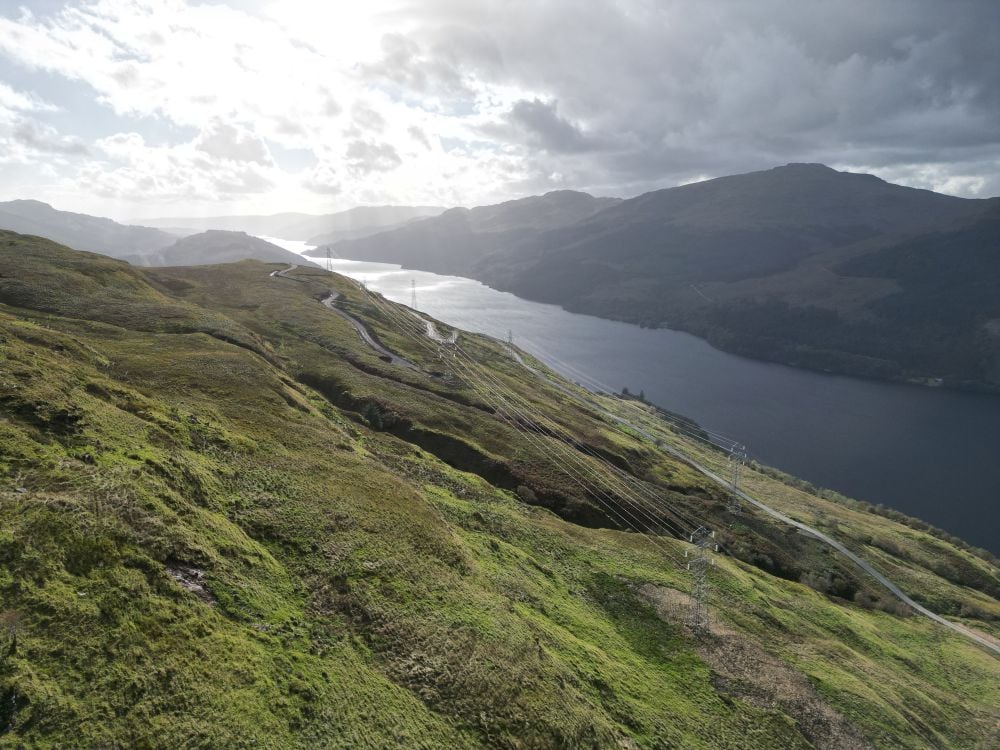
Two electricity transmission lines originally built in the 1950s have returned to service following a major engineering programme through the mountains and lochside landscapes of Argyll, extending the working life of infrastructure that has served Scotland for more than 70 years.
SSEN Transmission announced on 12 November that its refurbished Sloy–Windyhill East and West overhead lines had been successfully energised.
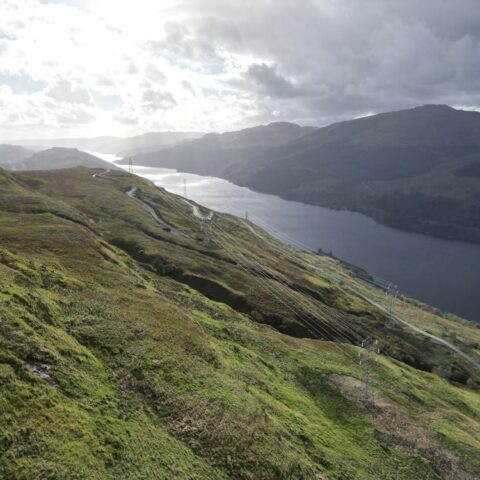
The parallel 132-kilovolt routes extend for approximately 15 kilometres between the Sloy switching station near Loch Lomond and Windyhill substation near Glenmallan on Loch Long.
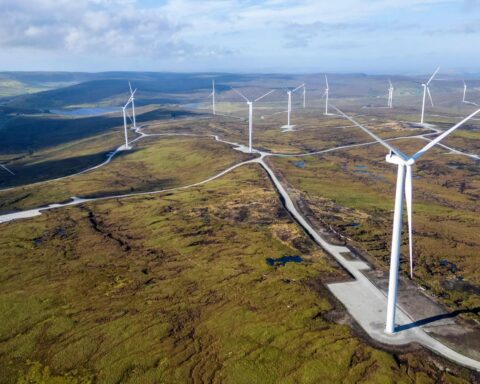
Rather than dismantling the entire network and constructing new towers throughout the route, engineers retained and refurbished the majority of the existing 103 transmission towers. Only six required complete replacement.
The project involved installing around 30 kilometres of new electrical conductors, strengthening foundations and restoring steelwork damaged by decades of exposure to the west Highland climate.
It also required more than 19 kilometres of access tracks to enable construction teams and heavy equipment to reach towers across steep and difficult terrain.
SSEN says the investment has supported Scottish contractors, including businesses in Argyll and Ayrshire, enabling recruitment, apprenticeships and purchases of additional machinery.
The company has not, however, disclosed a complete project cost or a verified total for the additional jobs created.
Engineering That Began in the Early Years of Scottish Hydroelectricity
The Sloy–Windyhill transmission network belongs to a period when Scotland was undertaking one of the most substantial programmes of rural electrification in its history.
The North of Scotland Hydro-Electric Board was established in 1943, during the Second World War, with a mandate to develop Scotland’s hydroelectric resources and extend electricity supplies across the Highlands.
One of its earliest major undertakings was Sloy hydroelectric power station on the western shore of Loch Lomond.
Construction began in 1945. The station was formally opened on 18 October 1950 by Queen Elizabeth, later known as the Queen Mother.
The scheme captured water from Loch Sloy high above the loch, carrying it through a tunnel beneath Ben Vorlich before sending it down four high-pressure pipelines to the generating station at Inveruglas.
The power station remains in operation today, with an installed generating capacity of 152.5 megawatts.
According to SSE Renewables, Sloy generates approximately 130,000 megawatt-hours of electricity annually in an average year, equivalent to the annual consumption of around 48,000 homes.
The overhead lines connecting the Sloy area towards Windyhill were constructed in 1951, during this period of rapid expansion.
SSEN’s historical project records show that the lines were reconductored in 1971, while the overhead earth wire was last replaced in 1995.
The latest refurbishment represents another major intervention in infrastructure that has remained useful through several generations of technological change.
Why Engineers Kept the Original Towers
By the time the refurbishment was planned, the lines were showing significant signs of deterioration.
SSEN identified corrosion in the steel structures, associated partly with the loss of protective paintwork, while the electrical conductors were approaching the end of their design life.
The condition of the structures was sufficiently serious to require extensive strengthening rather than routine maintenance.
However, inspections established that most of the towers could be retained.
The engineering programme therefore concentrated on renewing components whose condition or remaining lifespan presented the greatest concern.
Existing tower foundations were strengthened to carry new conductors. Damaged steelwork was repaired or replaced, and towers were cleaned and repainted to restore protection against corrosion.
Only six of the 103 towers required complete replacement.
Retaining 97 towers avoided the need to reconstruct the entire route and preserved much of the network’s existing physical footprint.
It also reduced the need to manufacture and transport complete replacement structures, although SSEN has not published a quantified comparison of material use, carbon emissions or costs against the alternative of building entirely new lines.
The project provides an example of how ageing infrastructure can sometimes be substantially renewed without total replacement.
That option is especially relevant in Scotland, where many electricity routes cross landscapes that are difficult to access and environmentally sensitive.
Nineteen Kilometres of Access Tracks for Fifteen Kilometres of Power Lines
One of the project’s most unusual features was the scale of the temporary construction access required.
Although the overhead lines extend approximately 15 kilometres, more than 19 kilometres of access tracks were constructed to reach work sites.
Sections of the route cross steep slopes above Loch Long and the surrounding glens, where conventional road access is limited.
Construction teams needed to transport steelwork, concrete, electrical equipment and specialist machinery to sites originally built long before modern construction vehicles and safety requirements became standard.
Some access routes had to cross steep gradients, requiring careful engineering to provide stable working surfaces.
The project was also exposed to substantial rainfall and challenging weather conditions.
These difficulties contributed to changes in the construction timetable.
In April 2026, SSEN reported that unforeseen access problems and greater-than-expected deterioration in the existing infrastructure had led it to apply to Loch Lomond & The Trossachs National Park Authority for an extension of its construction arrangements.
At that stage, the company anticipated works continuing until September 2027.
A subsequent project update in June referred to completion during winter 2026/27.
The successful energisation announced in November confirms that the renewed lines are operating, but does not establish that all remaining construction, environmental reinstatement and site restoration activities have been completed.
SSEN’s November statement itself refers to further final phases of the project.
The distinction is important for communities affected by construction traffic, temporary access infrastructure and continuing work near the route.
Scottish Contractors Gain Work and Expand Their Businesses
The refurbishment was delivered with specialist contractor Omexom, supported by Scottish civil engineering businesses McNaughtons & Sons and Mascot Civils.
Lochgilphead-based McNaughtons & Sons recruited apprentices and invested in additional plant after securing work associated with the development.
Mascot Civils, based in Kilmarnock, also expanded its workforce and purchased new vehicles and machinery.
The company’s managing director, Scott McCreadie, described the work as one of the largest contracts Mascot Civils had secured.
These developments illustrate an economic effect of electricity infrastructure investment that is not necessarily visible in headline project announcements.
Major contracts can provide smaller companies with sufficient work to recruit employees, train apprentices, acquire equipment and build specialist capabilities.
Those investments may allow firms to compete for subsequent infrastructure contracts elsewhere in Scotland.
However, the long-term benefit depends on the continuity of work after a particular construction project has finished.
The energy transmission industry is expanding rapidly, but companies must still secure individual contracts and manage the financial risks associated with specialist equipment, personnel and changing construction programmes.
SSEN has not published the amounts paid to McNaughtons & Sons or Mascot Civils under the Sloy–Windyhill programme.
It has also not specified the total number of new apprenticeships or permanent jobs attributable to the refurbishment.
Consequently, the published evidence confirms that local businesses obtained substantial work and expanded parts of their operations, but does not permit a precise calculation of the project’s total contribution to employment or local economic output.
Working Inside a National Park
The location of the project also created environmental obligations.
The transmission route runs through the wider Loch Lomond and Trossachs landscape, where construction activity must take account of protected habitats, wildlife, scenery and public access.
SSEN worked with Loch Lomond & The Trossachs National Park Authority during the refurbishment.
The company says measures were introduced to minimise environmental impacts while construction was under way.
Nevertheless, the extent of the access infrastructure illustrates the physical requirements of refurbishing electricity lines in mountainous country.
Even when existing towers are retained, construction can still require substantial groundworks, vehicle movements, vegetation management and temporary disruption.
The eventual environmental outcome therefore depends not only on the condition of the renewed electricity lines but also on the restoration and management of land used during construction.
The November announcement does not provide a complete accounting of the final condition of the access tracks or the extent of land reinstatement already achieved.
Restoring 218 Hectares at Inversnaid
Alongside the engineering works, the project is supporting a programme to restore and enhance upland habitats at RSPB Scotland’s Inversnaid Nature Reserve.
SSEN says the initiative will involve 218 hectares of habitat.
The reserve lies on the eastern side of Loch Lomond and supports important woodland, upland and wildlife habitats.
The restoration partnership forms part of the wider environmental work associated with the electricity project.
However, the 218-hectare figure describes the area covered by the planned restoration programme. It should not be interpreted as confirmation that all of that work has already been completed or that every habitat has reached its intended ecological condition.
The effectiveness of such programmes depends on the work delivered, subsequent habitat management and monitoring over time.
The company has also supported community initiatives around Arrochar and Loch Long, including litter collections, improvements to paths, environmental education and work with the GRAB Trust on the persistent problem of marine litter at Arrochar beach.
These activities are separate from the technical necessity of renewing the transmission system, but form part of the company’s community commitments during construction.
Sloy’s Hydroelectric Future Is Changing Too
The renewal of the overhead lines comes during another period of investment planning for Sloy itself.
In July 2026, SSE Renewables secured Scottish Government consent for future redevelopment options at the existing hydroelectric power station.
The consent provides the option of converting the station into a pumped-storage hydroelectric facility capable of storing up to 16 gigawatt-hours of energy.
It also permits the option of increasing installed generating capacity to 160 megawatts through future improvements.
Pumped storage operates differently from conventional hydroelectric generation.
When electricity is abundant, power can be used to move water to a higher reservoir. That stored water can subsequently be released through turbines when electricity demand increases or other generating sources are producing less power.
The technology is therefore capable of storing energy for later use, providing flexibility across an electricity system increasingly dependent on variable renewable generation.
However, the July consent does not mean that the pumped-storage conversion has been built or that a final investment decision has been taken.
The Sloy–Windyhill refurbishment and the potential pumped-storage redevelopment are also separate projects, with different technical objectives and investment decisions.
The geographical relationship nevertheless demonstrates how Scotland’s older hydroelectric infrastructure is being considered alongside modern requirements for electricity transmission and storage.
What the Refurbishment Means for Scotland’s Grid
While major new subsea electricity connections attract national attention, much of the electricity system continues to depend on equipment installed decades ago.
The reliability of existing infrastructure is as important as the construction of new routes.
Overhead transmission lines must remain capable of carrying electricity safely through difficult weather, while their towers, foundations and conductors undergo continual inspection and maintenance.
The Sloy–Windyhill project demonstrates that renewal can involve substantial engineering work even when the route itself remains largely unchanged.
It also shows how infrastructure investment can reach local businesses through specialist contracts rather than only through large national construction programmes.
The successful energisation restores the renewed lines to operational service, but the overall project still presents questions worth following: the final cost, completion of site reinstatement, the long-term condition of the access tracks and the measurable results of the environmental programme.
For a network originally constructed in 1951, the November announcement represents a significant extension of its working life.
How effectively that investment supports future electricity reliability, local employment and the surrounding landscape will be determined over the years ahead.
Sources
SSEN Transmission. Powering On: Sloy to Windyhill Overhead Lines Renewed Following Major Refurbishment. 12 November 2026. https://www.ssen-transmission.co.uk/news/news–views/2026/11/powering-on-sloy-to-windyhill-overhead-lines-renewed-following-major-refurbishment/
SSEN Transmission. Sloy to Windyhill Overhead Line Refurbishment Project: Project Details and Construction Updates. Updated 2026. https://www.ssen-transmission.co.uk/projects/project-map/sloy-to-windyhill-ohl-refurbishment-project/
SSE Renewables. Sloy Power Station Marks 75 Years of Renewable Energy Generation. 17 October 2025. https://www.sserenewables.com/news-and-views/2025/10/sloy-power-station-marks-75-years-of-renewable-energy-generation/
SSE Renewables. Sloy/Awe Hydro Power Scheme: Redevelopment and Pumped Storage Proposals. Updated 2026. https://www.sserenewables.com/hydro/sloyawe/
SSE Heritage. Our Story: The North of Scotland Hydro-Electric Board. https://www.sseheritage.com/our-story/
Ofgem. RIIO-3 Final Determinations for the Electricity Transmission, Gas Distribution and Gas Transmission Sectors. 4 December 2025. https://www.ofgem.gov.uk/decision/riio-3-final-determinations-electricity-transmission-gas-distribution-and-gas-transmission-sectors