Scotland’s first sentencing for illegal fox hunting under the 2023 law coincides with a judicial review of NatureScot’s licensing system, after official figures revealed that inspectors attended just one licensed hunt during the latest reporting year.
A former Scottish fox hunt master has been banned from keeping hunting dogs for ten years after a court found that she deliberately pursued a fox with a pack of approximately 17 hounds during an operation authorised by Scotland’s wildlife agency.
Claire Bellamy, 51, a former master of the Lauderdale Hunt in the Scottish Borders, was sentenced at Paisley Sheriff Court on 9 November 2026. She became the first person sentenced for carrying out an illegal fox hunt under the Hunting with Dogs (Scotland) Act 2023, which was introduced to prevent the pursuit and killing of wild mammals by packs of dogs.
Bellamy was ordered to complete 300 hours of unpaid work within 12 months under a Community Payback Order, imposed as a direct alternative to imprisonment. She was also disqualified from owning or keeping dogs for ten years, with exceptions for her pet terrier and the Border Collies she uses in her work as a shepherdess.
The sentence followed her conviction on 5 October for deliberately hunting a fox during an outing at Kirkton Wood, between Houston in Renfrewshire and Kilmacolm in Inverclyde, on 4 January 2025.
The hunt had permission from NatureScot to use more than two dogs for fox control, subject to strict conditions. However, footage recorded by hunt monitors showed the hounds pursuing a fox across open ground beyond the boundaries authorised by the licence.
The dogs were also found not to have been kept under sufficient control.
In a significant finding recorded in the sheriff’s published sentencing statement, Bellamy was not even named as a permitted assistant on the licence granted for the operation.
Sheriff Sukhwinder Gill rejected her explanation that she had been attempting to regain control of the dogs. The court found that her conduct amounted to deliberate hunting rather than an accidental chase.
The sheriff described the evidence as overwhelming and the video recording as particularly harrowing. Bellamy’s actions, the court concluded, were “cruel, inhumane and selfish”.
The conviction has wider implications because, on the same day as the sentencing, two wildlife organisations announced that they had lodged a judicial review challenging NatureScot’s administration of the licensing system that permits larger packs of dogs to be used.
The League Against Cruel Sports and Wild Justice argue that some licences are being granted without sufficient evidence of exceptional circumstances or adequate consideration of alternative methods of fox control.
Their legal challenge, lodged at the Court of Session in Edinburgh, concerns NatureScot’s licensing decisions. It is separate from Bellamy’s criminal prosecution and its allegations have not been determined by the court.
The Hunt That Led to the Conviction
The incident took place in countryside near Kirkton Farm, where participants gathered before moving towards Kirkton Wood.
The area lies between the Renfrewshire village of Houston and Kilmacolm, a rural part of Inverclyde characterised by farmland, woodland and livestock holdings.
The Lauderdale Hunt, historically associated with the Scottish Borders, was operating away from its traditional territory. A licence issued by NatureScot permitted fox-control activity within specified areas, but it did not authorise an unrestricted pursuit.
Members of Glasgow Hunt Saboteurs were monitoring the activity and recorded the movement of the hounds.
Their footage showed dogs following a fox’s scent and pursuing the animal into an open field outside the authorised boundaries. The recording subsequently became central evidence in the criminal trial.
Bellamy denied deliberately hunting the fox. Her defence was that the hounds had run into an area where they were not supposed to be and that she was trying to call them back.
The court rejected that account.
Sheriff Gill identified the recording made by witness Andrew Davies as particularly important in establishing what had happened. The sheriff also commended evidence given by Davies and fellow witness Elizabeth McLaughlin.
The court’s findings were not confined to whether the dogs had crossed a boundary. The conviction was under Section 1(1) of the 2023 Act, which makes it an offence to hunt a wild mammal using a dog unless a statutory exception applies.
The sheriff also addressed arguments about the identity of the licence holder, describing that issue as a distraction from the central question of Bellamy’s conduct.
Although the court recorded that Bellamy was not a named permitted assistant, the finding of deliberate hunting was the basis of her criminal conviction.
The publicly released court statements do not establish whether the fox was eventually caught or killed. The confirmed offence was the deliberate pursuit.
A Maximum Unpaid-Work Order Instead of Prison
The offence carried a potential maximum sentence of 12 months’ imprisonment or a £40,000 fine, or both, on summary conviction.
Sheriff Gill considered imprisonment but imposed a community-based sentence, taking account of Bellamy’s circumstances, her lack of previous convictions, the background reports prepared for sentencing and the legal presumption against short custodial sentences.
Bellamy had conducted approximately 1,500 hunts during her career, according to the court. The sheriff was told that she had resigned from the Lauderdale Hunt and no longer had hunting hounds.
The court also considered her employment as a shepherdess and the assessment that she was at low risk of reoffending.
Nevertheless, the sheriff criticised her response to the conviction. The background report indicated that Bellamy accepted little responsibility for her actions, believed she had done nothing wrong and considered herself to be receiving exemplary punishment.
The 300 hours of unpaid work represented the maximum available under the level of Community Payback Order imposed.
Bellamy must complete the work within 12 months. The sheriff warned that failure to comply could bring her back before the court and potentially result in imprisonment.
The ten-year dog disqualification was imposed under Section 22 of the Hunting with Dogs (Scotland) Act 2023, which gives courts powers to restrict offenders from owning, keeping or undertaking specified activities involving dogs.
The exceptions for Bellamy’s terrier and working collies allow her to maintain those animals but do not permit a return to keeping hunting hounds.
Bellamy’s experience makes the case particularly significant. A December 2024 profile published by the Countryside Alliance, which represents hunting and rural interests, recorded almost three decades of involvement in hunting, including ten years as a professional member of hunt staff and 18 years as a sole master of two packs.
She joined the Lauderdale Hunt in 2016, having previously worked with hunts in England. At the time of the profile, she was preparing to retire at the end of the 2024–25 hunting season.
The offence took place the following January.
Why Scotland Still Licences Hunting With Packs of Dogs
Scotland first introduced major restrictions on hunting wild mammals with dogs through the Protection of Wild Mammals (Scotland) Act 2002, which came into force in August of that year.
The legislation restricted traditional fox hunting but allowed certain forms of wildlife control involving dogs.
Concerns about enforcement, ambiguities in the law and the continued use of packs prompted a review led by Lord Bonomy, whose report was published in November 2016.
The Scottish Parliament subsequently passed the Hunting with Dogs (Scotland) Act 2023, which received Royal Assent in March 2023 and came into force on 3 October that year.
The newer legislation replaced the 2002 Act, introducing a general limit of two dogs when wild mammals are being searched for, stalked or flushed from cover for permitted purposes.
It also prohibited trail hunting, in which dogs are directed to follow a deliberately laid animal-based scent, subject to a limited exception for lawful training.
However, the Act retained a licensing system allowing NatureScot to authorise the use of more than two dogs in specified circumstances.
Those circumstances include preventing serious damage to livestock, woodland or crops, preventing the spread of disease, protecting human health and qualifying environmental conservation purposes.
Before granting permission, NatureScot must be satisfied that the application meets the relevant statutory requirements, including whether another effective solution is available.
The licences are intended to enable dogs to locate or flush foxes from cover, where the animals may then be shot, rather than to permit dogs to pursue and kill them.
NatureScot’s licensing procedures require controls over the areas in which dogs operate, the number of dogs used and their handling.
The agency also requires at least 25 per cent of dogs involved in licensed activity to wear GPS tracking devices. The resulting location information can be examined by authorities to assess compliance, including whether animals have remained within authorised boundaries.
These conditions are intended to create an enforceable distinction between permitted wildlife management and the traditional pursuit of foxes by hunting packs.
Bellamy’s conviction demonstrates the legal consequences when that distinction is breached.
NatureScot Inspected Just One Licensed Hunt in 2025–26
The court case has coincided with scrutiny of the extent to which Scotland’s licensing system is monitored.
NatureScot’s annual licensing review, published in October 2026, disclosed that the agency had issued 52 licences from 58 applications during the 2025–26 licensing year.
Of those, 43 licences were actually used.
Yet NatureScot attended activity under just one licence for an on-site compliance inspection, equivalent to approximately two per cent of the licences used.
The figures represent a substantial reduction in direct monitoring compared with the previous year.
During 2024–25, NatureScot issued 77 licences, of which 64 were used, and attended activities under 12 licences. In 2023–24, its inspectors attended activities under four licences.
The agency’s own data therefore shows a fall from 12 attended licences in the second year to just one in the third.
NatureScot acknowledged the reduction in its October review.
It explained that it had intended to conduct site visits covering approximately 20 per cent of issued licences, but planned inspections were affected by cancelled activities, adverse weather and staff absences.
The agency also conducts checks of licence returns and can request GPS tracking data. The low figure for on-site inspections therefore does not mean that all other licensed activities were entirely unmonitored.
Nevertheless, the distinction between checking paperwork after an event and having inspectors present while dogs are being used is central to the concerns now raised by campaigners.
In Bellamy’s case, independent footage provided the evidence that led to a conviction.
The regulator’s latest review also acknowledges that previous licence holders and dog handlers have been charged with offences under the 2023 legislation. It says people facing relevant criminal proceedings will not be accepted in named roles on new licences while their cases remain unresolved.
Wildlife Groups Challenge NatureScot in Court
The League Against Cruel Sports and Wild Justice have now asked Scotland’s Court of Session to examine whether NatureScot is applying the licensing provisions lawfully.
The challenge was announced on 9 November, the day Bellamy was sentenced.
The organisations contend that the threshold for granting licences has become too permissive.
They argue that NatureScot has approved applications without adequately establishing that foxes present a sufficiently serious threat to livestock or that alternative control measures would be ineffective.
They also dispute the regulator’s willingness to allow foxhounds, a breed historically developed for following and pursuing foxes, to be used in licensed operations.
Their lawyers, Leigh Day, say the judicial review challenges the assessment process rather than the existence of lawful wildlife management itself.
The campaigners point to statements made during the passage of the legislation that licences allowing larger packs would be available only in exceptional circumstances.
They contrast that stated intention with the number of applications subsequently approved.
Robbie Marsland, director of the League Against Cruel Sports Scotland, said the organisations had raised concerns about the licensing arrangements with NatureScot for two years before taking legal action.
Wild Justice co-director Dr Ruth Tingay has argued that licences permitting activities otherwise prohibited by law require strong evidential justification and effective monitoring.
NatureScot’s October review sets out a different assessment of its procedures.
The agency says the reduction in refusals since the scheme began reflects improvements in application quality, clearer guidance and more consistent assessments by licensing staff.
It also states that each application is considered individually, that applicants must explain why alternative measures would not be effective and that there is no provision in the Act allowing the regulator to prohibit particular breeds of dog simply because they have traditionally been used for hunting.
NatureScot has defended its use of GPS collars and says it intends to adopt a more targeted approach to on-site compliance monitoring during 2026–27.
The judicial review will require the competing arguments about the regulator’s statutory duties and decision-making process to be considered through a separate legal procedure.
The filing of the petition does not itself establish that NatureScot has acted unlawfully, nor does it automatically invalidate licences already granted.
The First Conviction and the Wider Question of Enforcement
Bellamy’s case establishes that hunters can face significant sanctions under the 2023 legislation even when an organised fox-control operation has obtained permission from NatureScot.
A licence cannot provide legal protection for deliberate hunting outside the authorised activity.
The Crown Office and Procurator Fiscal Service said that the conditions attached to such licences are intended to restrict hunting to permitted purposes and prevent unnecessary suffering.
Iain Batho, who leads on wildlife crime for Scotland’s prosecution service, said that specialist prosecutors would continue taking action where sufficient evidence exists and prosecution is in the public interest.
The investigation also illustrates the role of members of the public and independent monitors in documenting suspected wildlife offences.
The footage recorded at Kirkton Wood was decisive in establishing what happened, despite Bellamy’s insistence that she was attempting to control the dogs.
More than 21 months elapsed between the incident in January 2025 and her sentencing in November 2026.
By the time the case concluded, the regulator responsible for licensing hunts was facing a separate court challenge over the standards applied to its decisions.
The two legal proceedings raise distinct questions. Bellamy’s prosecution determined whether an individual had committed a criminal offence. The judicial review concerns whether the public body granting hunting licences is administering the statutory scheme lawfully.
The former has resulted in a conviction, a substantial community sentence and a ten-year restriction on keeping dogs. The latter remains unresolved.
Together, they place Scotland’s hunting legislation, and the practical enforcement of its restrictions, under renewed legal scrutiny.
Sources
PF v Claire Bellamy — Official Sentencing Statement. Judiciary of Scotland, published 10 November 2026; sentencing 9 November 2026.
https://www.judiciary.scot/home/sentences-judgments/sentences-and-opinions/2026/11/10/pf-v-claire-bellamy
Hunt Master Banned From Keeping Dogs After Being Convicted of Illegal Fox Hunting. Crown Office and Procurator Fiscal Service, 9 November 2026.
https://www.copfs.gov.uk/about-copfs/news/hunt-master-banned-from-keeping-dogs-after-being-convicted-of-illegal-fox-hunting/
Licensing Report: Hunting With Dogs Licensing Review 2026. NatureScot, October 2026.
https://www.nature.scot/doc/licensing-report-hunting-dogs-licensing-review-2026
Campaigners Launch Legal Challenge Against NatureScot Over Hunting Licences. Wild Justice, November 2026.
https://wildjustice.org.uk/legal-challenge-against-naturescot-over-hunting-licences/
Legal Challenge Launched Over Fox Flushing Licences in Scotland. Leigh Day, 9 November 2026.
https://www.leighday.co.uk/news/press-releases/2026-news/legal-challenge-launched-over-fox-flushing-licences-in-scotland/
Hunting With Dogs (Scotland) Act 2023. UK Legislation, Royal Assent 7 March 2023; relevant provisions commenced 3 October 2023.
https://www.legislation.gov.uk/asp/2023/1/contents
Hunting With Dogs and Licensing. NatureScot, guidance published September 2023 and subsequently updated.
https://www.nature.scot/professional-advice/protected-areas-and-species/licensing/species-licensing-z-guide/hunting-dogs-and-licensing
Report of the Review of the Protection of Wild Mammals (Scotland) Act 2002. Scottish Government, 21 November 2016.
https://www.gov.scot/publications/report-review-protection-wild-mammals-scotland-act-2002/
Wildlife Crime in Scotland 2024 — Hunting With Dogs. Scottish Government, 27 February 2026.
https://www.gov.scot/publications/wildlife-crime-in-scotland-2024/pages/hunting-with-dogs/
A Legacy of Leadership: Claire Bellamy MFH Retires. Countryside Alliance, 17 December 2024.
https://www.countryside-alliance.org/features/a-legacy-of-leadership-claire-bellamy-mfh-retires
October Round Up — First Conviction Under Hunting With Dogs (Scotland) Act 2023. Hunt Saboteurs Association, 3 November 2026.
https://www.huntsabs.org.uk/october-round-up/
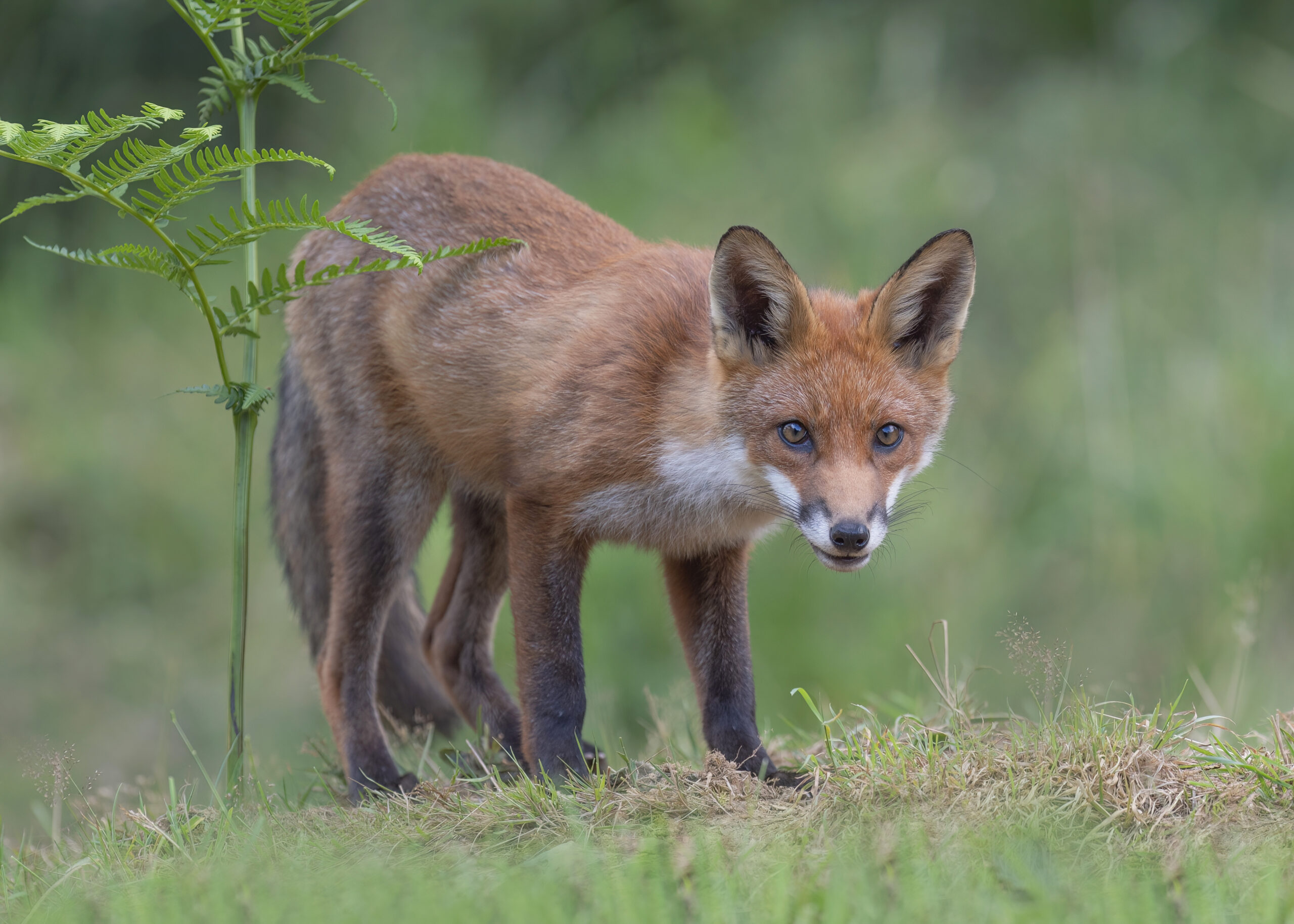
Fox — Vulpes Vulpes, Dumfries and Galloway. Caroline Legg, Wikimedia Commons, photograph dated 26 July 2022, CC BY 2.0.
https://commons.wikimedia.org/wiki/File:Fox_-_Vulpes_vulpes_(52250264377).jpg