
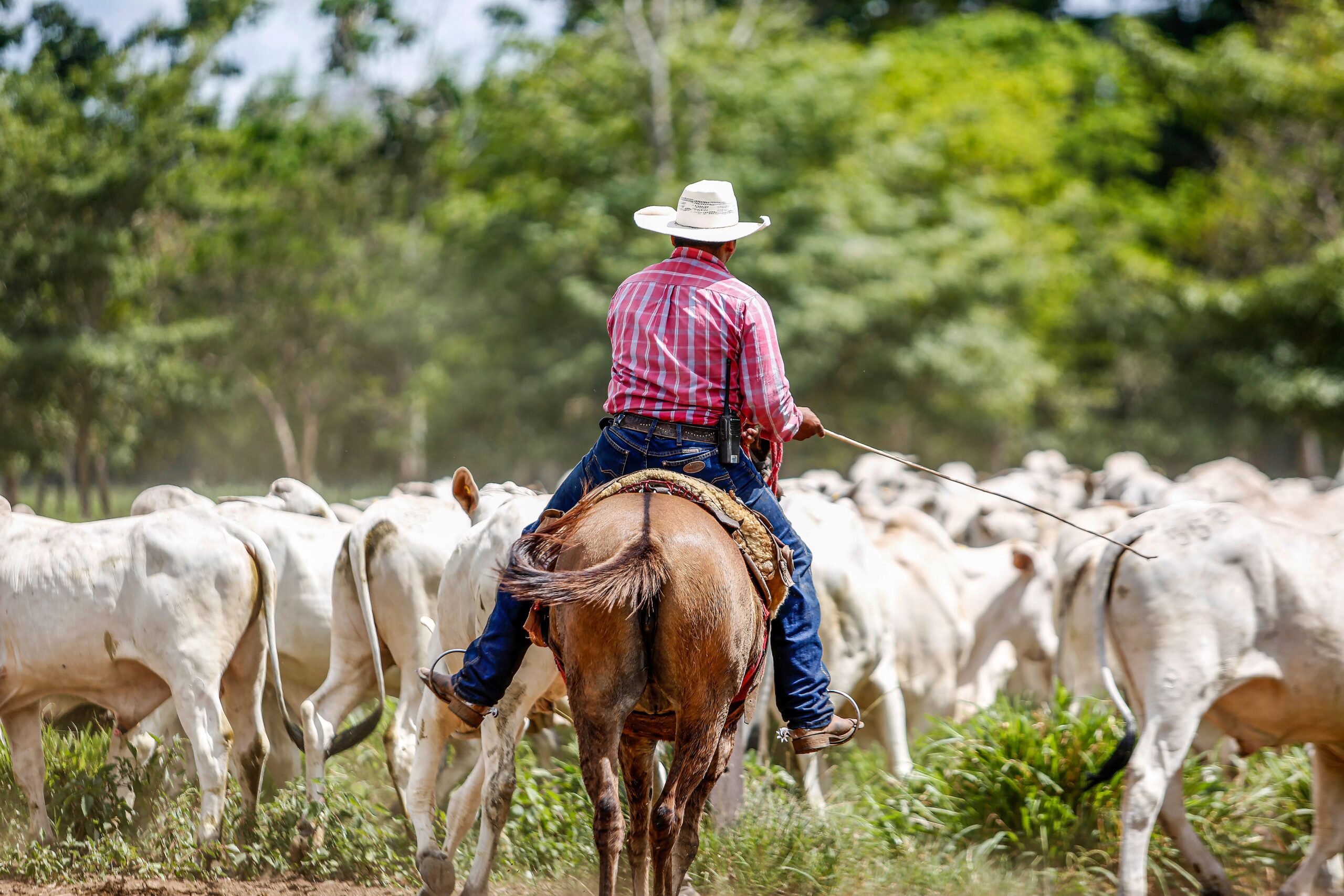
Scottish farming and meat organisations are pressing the UK Government to tighten controls on Brazilian beef and poultry before new European Union antimicrobial rules take effect on 3 September. Great Britain, unlike the EU and Northern Ireland, currently intends to keep Brazilian imports moving while it carries out its own assessment.
Scotland’s principal red-meat organisations have asked UK ministers to prevent Britain becoming an alternative destination for Brazilian animal products that could lose access to the European Union next month.
The Scottish Red Meat Resilience Group has written to Environment Secretary Dame Angela Eagle and Business Secretary Jonathan Reynolds asking the UK Government to mirror the EU approach unless Brazil can provide verified and auditable guarantees that meat entering Britain has been produced to equivalent antimicrobial standards.
The group brings together Quality Meat Scotland, NFU Scotland, the Scottish Association of Meat Wholesalers, the Institute of Auctioneers and Appraisers in Scotland, NSA Scotland, the Scottish Beef Association, Scottish Craft Butchers, the Scottish Association of Young Farmers Clubs, the Scottish Crofting Federation and the Pig Industry Leadership Group.
The immediate concern is not an outbreak of animal disease or evidence that Brazilian meat currently on British shelves is unsafe. It is a regulatory divergence opening on 3 September 2026, when new EU conditions on antimicrobial use in imported animal products take effect.
Under the EU rules, animals or products imported from third countries must not have been produced using antimicrobial medicines to promote growth or increase yield, or using certain antimicrobials reserved for treating serious infections in humans. Exporting countries must be able to provide evidence, traceability and official guarantees that those requirements have been met.
Brazil is currently authorised for several categories, but the European Commission said in its June implementing regulation that it had not received information guaranteeing that Brazil had put the necessary measures in place to comply by the September deadline. The Commission therefore ordered Brazil’s approvals for bovine, equine, poultry, aquaculture, honey and casings to be removed from the relevant list from 3 September.
The EU decision is not a finding that all Brazilian beef or poultry contains antibiotic residues. It concerns Brazil’s ability to prove, across the production chain, that EU-bound animals have been raised under the required antimicrobial restrictions.
Brazil is attempting to resolve that problem. Its Agriculture Ministry changed export controls in July so establishments supplying the EU must maintain auditable evidence, trace animals and materials and demonstrate that individual batches meet European requirements. Brazil is seeking to prevent the suspension taking effect.
Great Britain is taking a different route
The position in Great Britain is already clearer than the Scottish industry’s letter might suggest.
Information circulated by Defra and the Animal and Plant Health Agency and subsequently published by the British Retail Consortium says Great Britain will not introduce new Brazilian import restrictions on 3 September as a consequence of the EU decision. Instead, Britain is carrying out its own technical assessment of Brazil’s antimicrobial assurance arrangements.
The assessment is expected to take about six months. Existing import arrangements are to remain in force during that period, meaning qualifying Brazilian products can continue entering Great Britain provided they satisfy existing British import requirements. Northern Ireland is in a different position because the relevant EU veterinary medicine rules apply there.
That creates the possibility of an unusual internal UK position from September: Brazilian products affected by the EU decision could remain eligible for entry into Great Britain while being unable to enter Northern Ireland under the corresponding rules.
The British position is notable because the production practice at the centre of the dispute is already prohibited domestically. The UK has banned the use of antibiotics as growth promoters since 2006, and government guidance says antibiotics in feed may be used to treat sick animals under veterinary prescription rather than to accelerate growth.
The argument being made by Scotland’s meat sector is therefore about equivalence: whether overseas producers supplying the British market should have to demonstrate the same sort of production restrictions imposed on farmers operating here.
The diversion risk is measurable
There is also evidence behind the industry’s concern that Britain could become an alternative destination if Brazilian access to the much larger EU market is interrupted.
Agriculture and Horticulture Development Board analysis based on HMRC and Eurostat data shows the EU imported 83,273 tonnes of fresh and frozen Brazilian beef in 2025, compared with 11,866 tonnes imported by the UK. A year earlier the figures were 58,899 tonnes for the EU and 4,997 tonnes for the UK. British imports in that category therefore more than doubled between 2024 and 2025.
By the end of April this year, the UK had already imported another 4,521 tonnes, while EU imports had reached 35,424 tonnes.
Those figures also help put the diversion risk in proportion. Redirecting just one-tenth of the Brazilian fresh and frozen beef that entered the EU last year would amount to roughly 8,300 tonnes — around 70 per cent of the UK’s entire Brazilian fresh and frozen beef imports in 2025.
AHDB does not predict that all, or even most, EU-bound meat would come to Britain. Brazil has markets in China, the Middle East, South-East Asia and the United States. But it concludes that even a relatively small diversion could materially increase competition in the much smaller British import market.
There are commercial reasons Britain could attract some of it. AHDB found that UK and EU tariffs on commonly traded Brazilian beef outside preferential quotas are broadly comparable, and established British importer relationships already exist. China, normally by far the largest destination for Brazilian beef, also has safeguard arrangements that can limit how much additional product it absorbs.
Poultry adds another dimension. British Agriculture Bureau analysis says the UK imported about 88,700 tonnes of poultry meat from Brazil in 2025, out of roughly 700,000 tonnes of total poultry imports. Brazil also supplies the EU with around 211,000 tonnes of chicken a year, leaving another substantial trade flow potentially looking for alternative destinations if the restriction takes effect for any length of time.
There is one apparent discrepancy in figures circulating around the issue. NFU Scotland cites 23,000 tonnes of Brazilian beef entering the UK in 2024, equivalent to 8 per cent of beef imports, while AHDB’s HMRC series records 4,997 tonnes that year. The AHDB figure covers specifically fresh and frozen beef; the wider NFU figure uses a broader definition of Brazilian beef imports. The figures should therefore not be treated as measuring precisely the same products.
Scotland has fewer beef cows than a decade ago
The warning comes at a sensitive point for Scotland’s cattle industry.
The Scottish Agricultural Census recorded 373,000 breeding beef cows in 2025, down from 436,800 in 2015, a decline of 15 per cent in a decade. The herd was also 7.4 per cent below its five-year average.
At the same time, high cattle prices have pushed the economic value of Scottish red meat sharply upwards. Quality Meat Scotland estimates beef, lamb and pork farming, processing and associated supply chains generated more than £4.2 billion of output and £1.3 billion of gross value added in 2025, supporting around 40,000 jobs. Prime cattle prices averaged about £6.60 per kilogram deadweight, 30.3 per cent higher than the previous year.
That combination of fewer cattle and higher prices helps explain why producers are particularly alert to a sudden increase in lower-priced imported supply.
NFU Scotland is also concerned about where imported meat ultimately appears. It argues that country-of-origin visibility is considerably weaker in wholesale and out-of-home food than in supermarket retail, making it harder for consumers to distinguish between domestic and imported meat. The organisation is seeking wider country-of-origin labelling alongside restrictions based on equivalent production standards.
UK monitoring already singles out Brazilian products
There is another piece of official evidence worth noting.
The UK Government’s 2026/27 National Monitoring Plan for imported food, which applies to England, Wales and Northern Ireland, specifically identifies Brazilian corned beef for targeted monitoring of certain veterinary medicine residues. Brazilian salted and marinated chicken is also named among poultry products for high-priority testing for veterinary medicine residues and microbiological hazards.
That does not mean those products have failed UK safety tests. A monitoring priority is not evidence of contamination. It does, however, show that Brazilian meat already features explicitly in the government’s risk-based surveillance programme.
Nor do European inspections present a simple picture of deficient Brazilian controls. A separate European Commission audit conducted in Brazil in 2024 found that its residue-control plans and handling of non-compliant results were largely consistent with EU principles, and said the laboratory network’s results could generally be relied upon. But the same audit identified shortcomings, including ineffective arrangements for guaranteeing that cattle supplying beef to the EU had never received oestradiol 17β, a separate hormonal issue from the antimicrobial rules now driving the September decision.
That audit is not the basis of next month’s antimicrobial restriction, but it demonstrates why the dispute is more accurately described as one over assurance, traceability and equivalence than as evidence that Brazilian meat as a whole is unsafe.
Brazil still has time to satisfy the European Commission and regain or preserve access. If it does not, however, Great Britain is currently set to remain open to Brazilian products while the EU and Northern Ireland apply the new conditions.
For Scotland’s beef sector, the unresolved question is therefore no longer simply what the EU will do on 3 September. It is what happens to the meat that would otherwise have gone there, and whether a British farmer required to meet one set of antimicrobial standards will find himself competing with imports for which the UK Government has not yet completed the equivalent assessment.
Sources
NFU Scotland — NFUS seeks ban on Brazilian beef imports over standards concerns
https://www.nfus.org.uk/news/blog/nfus-seeks-ban-on-brazilian-beef-imports-over-standards-concerns
European Commission — Commission Implementing Regulation (EU) 2026/1189
https://eur-lex.europa.eu/legal-content/EN/TXT/PDF/?uri=CELEX%3A32026R1189
Agriculture and Horticulture Development Board — EU restrictions on Brazilian beef exports: what could it mean for the UK market?
https://ahdb.org.uk/news/eu-restrictions-on-brazilian-beef-exports-what-could-it-mean-for-the-uk-market
British Retail Consortium — Brazilian Imports Restrictions: EU Requirements and GB Update
https://brc.org.uk/news-and-events/news/food/2026/ungated/brazillian-imports-restrictions-eu-uk-update/
British Agriculture Bureau — EU to ban imports of Brazilian beef and chicken in September
https://www.britishagriculturebureau.co.uk/updates-and-information/eu-to-ban-imports-of-brazilian-beef-and-chicken-in-september/
UK Government — UK National Monitoring Plan sampling priorities for imported foods 2026/27
https://www.gov.uk/government/publications/uk-national-monitoring-plan-sampling-priorities-for-imported-foods/uk-national-monitoring-plan-nmp-sampling-priorities-for-imported-foods-20262027
UK Government — Confronting antimicrobial resistance 2024 to 2029
https://www.gov.uk/government/publications/uk-5-year-action-plan-for-antimicrobial-resistance-2024-to-2029/confronting-antimicrobial-resistance-2024-to-2029
Food Standards Agency — Food Fact Check: Feed additives and our health
https://food.blog.gov.uk/2026/05/28/food-fact-check-feed-additives-and-our-health/
Scottish Government — Results from the Scottish Agricultural Census: June 2025
https://www.gov.scot/publications/results-from-the-scottish-agricultural-census-june-2025/pages/decline-in-number-of-beef-cows-as-dairy-cows-increase/
Quality Meat Scotland — Scottish red meat sector passes £4bn as demand stays resilient
https://qmscotland.co.uk/news/scottish-red-meat-sector-passes-4bn-as-demand-stays-resilient
European Commission — Final audit report of Brazil, controls on residues of pharmacologically active substances, pesticides and contaminants
https://ec.europa.eu/food/audits-analysis/audit-report/download/16750
Reuters — Brazil moves to meet EU antimicrobial rules, seeks to avoid export ban
https://www.reuters.com/business/healthcare-pharmaceuticals/brazil-moves-meet-eu-antimicrobial-rules-seeks-avoid-export-ban-2026-07-03/