
Stirling’s first Culture Night brought more than 40 free events into the city centre and surrounding communities, offering an early test of whether culture can strengthen the area’s evening economy beyond its established visitor attractions.
On 1 May, Stirling’s first Culture Night drew residents and visitors into the city centre, public spaces, cultural venues and nearby villages as the council and local partners tested a new format for bringing arts, heritage and evening activity together.
The event included more than 40 free performances and activities across the Stirling area, ranging from live music and theatre to comedy, aerial dance, storytelling, workshops and food and drink events.
The significance of the event lies less in the number of performances than in what Stirling was attempting to do with them. Culture Night was designed to move people through the city after normal daytime patterns had faded, linking artists, venues, hospitality businesses, visitor attractions and rural communities in a single evening programme.
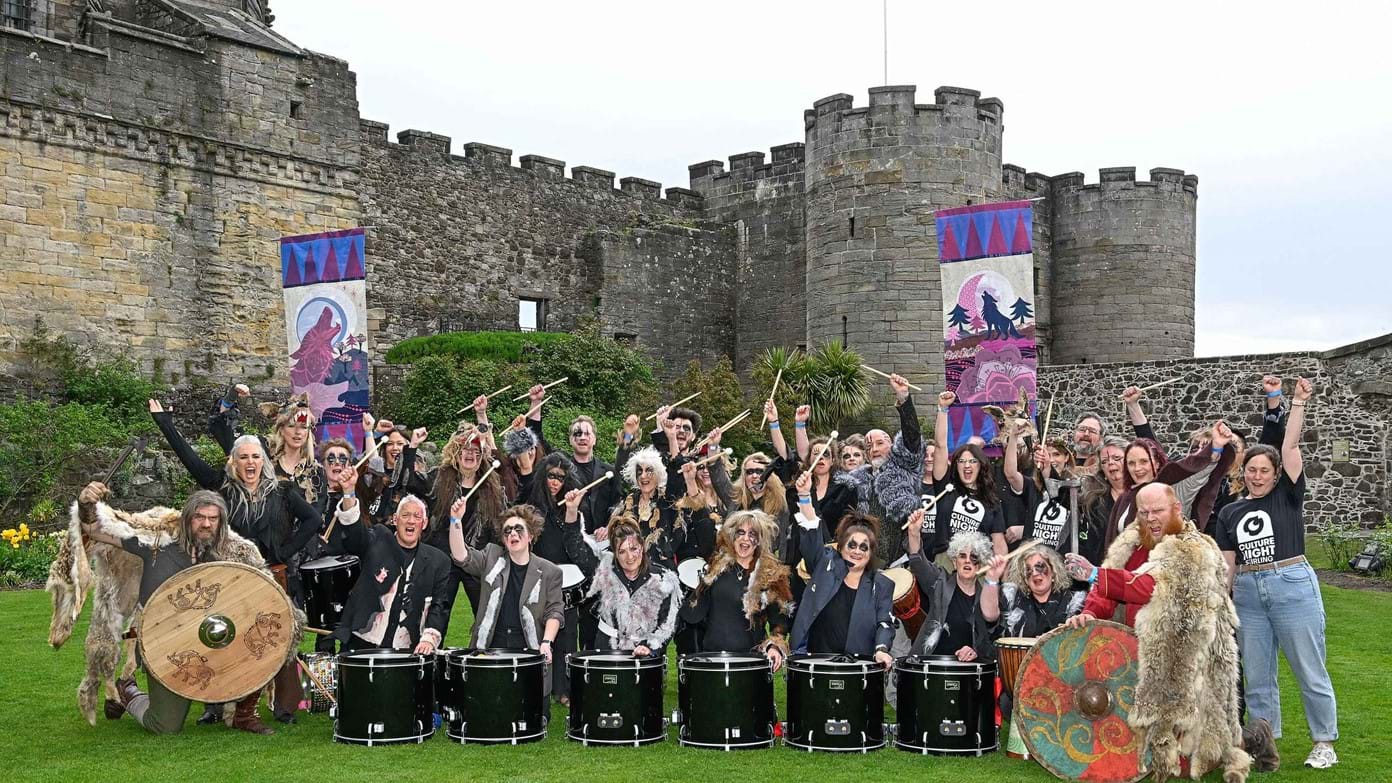
The first edition used the theme Carnival of the Wolf, drawing on Stirling’s legend of wolves warning the town of an attempted Viking attack. The story gave the evening a local frame without turning the event into a conventional heritage pageant. At Stirling Castle, dramatic storytelling and music from Clan Ranald and the Tolbooth Drummers marked the formal start of the night shortly before 6pm.
From there, the programme spread across the city. The Tolbooth and Albert Halls hosted live events, while the National Wallace Monument, Old Town Jail, Smith Museum and Art Gallery, pubs, hotels and other locations took part. Baker Street Gardens was used for aerial dance and storytelling, while the Thistles Shopping Centre remained open late and hosted activities including a silent disco.
The programme also reached beyond the city centre. Killin, Callander and Balquhidder were included, with the Beltane and Wolf Fire Festival in Balquhidder using smoke, dance and traditional storytelling. That wider geography matters in Stirling, where the council area includes both the city and rural communities whose cultural life is often harder to place inside a single civic event.
The evening also brought higher profile contemporary music into the programme. Fatherson, Katie Gregson McLeod and Stirling born DJ and producer Sam Gellaitry were among the named performers, giving the event a stronger music strand alongside its heritage and family oriented activities.
The council and its partners have described the first Culture Night as a success. That claim is plausible from the account given by organisers and businesses, but it should be tested by clearer evidence in future years. The announcement does not provide an overall attendance figure, a breakdown of visitors and local residents, or an estimate of economic impact.
Those omissions are not unusual for a first cultural event, but they matter. If Culture Night is to become part of Stirling’s calendar, the council will need to show not only that venues felt busy, but that the programme brought measurable benefit to local cultural organisations, businesses and communities.
There is early evidence from business testimony. Gary Atkinson, director at the Golden Lion, said the city was noticeably busier than usual and that the event increased footfall and dwell time. He said the venue hosted poetry, puppetry, visual art, painting, Big Noise and live music, and that evening trade improved compared with previous weeks.
A stronger future evaluation would show how many people attended, how long they stayed, which areas benefited, whether rural events drew new audiences, and how much activity reached independent businesses rather than only major venues.
The public value of the event is easier to identify. Free cultural programming can lower the barrier to participation, especially when household costs make paid entertainment harder to justify. Although some events carried a small booking fee, the main structure of Culture Night was built around free access. That is important if the event is to be seen as a civic programme rather than simply a visitor product.
Kevin Harrison, director of Artlink Central and manager of Scene Stirling, said the event showed the creativity of Stirling’s cultural community and brought activity to both the city and rural areas. He said the wolf theme had been interpreted through ideas of environment, folklore, resilience and strength.
A Stirling Council spokesperson said the event gave the area a platform to showcase creative talent while working with those who support the year round night time economy. The council said residents and visitors attended, including people from the Netherlands, Australia and the United States.
That international visitor detail is interesting, but the more important question is local. Stirling already has major heritage attractions. The harder task is to build an evening cultural life that benefits residents, supports working artists and gives businesses a reason to stay active after ordinary shopping hours.
On that measure, the first Culture Night appears to have made a useful start. It did not rely only on one stage, one venue or one headline act. It placed activity across the city and surrounding communities, which is the correct approach for an area where cultural life is spread across different types of place.
The date and theme for the 2027 event are expected to be announced in the coming weeks.