
Two newly published annual reports reveal how private charitable funds are helping Scottish libraries, archives and museums buy historic documents before they disappear into private collections, and repair fragile records that may otherwise become impossible to use.
A medieval Highland charter, letters signed by Mary of Guise, photographs of Perthshire farming and part of the literary archive of Kathleen Jamie have entered Scottish public collections with the help of charities that remain largely unknown outside the library and archive world.
Two annual reports published by the Friends of the Nations’ Libraries and the National Manuscripts Conservation Trust describe hundreds of grants made during 2025 to acquire and preserve books, manuscripts, maps, letters, photographs and official records.
The organisations are separate charities, but their work fits together.
The Friends of the Nations’ Libraries helps public institutions buy important historical material. The National Manuscripts Conservation Trust helps them repair and preserve material that is already in their care.
In simple terms, one helps prevent history from being sold away. The other helps stop it from physically falling apart.
The Friends of the Nations’ Libraries, known as FNL, was founded in 1931. Its purpose is to give financial support to publicly accessible libraries, archives, museums and record offices when important material becomes available for sale.
Historic documents are often sold through commercial auction houses. A local museum may recognise that a collection belongs in its area, but lack the money to compete against private collectors or overseas buyers.
FNL provides grants intended to close that gap. Its stated purpose includes saving important historical material for public collections and preventing manuscripts and rare books from leaving the country or disappearing from public access.
The charity awarded a record 79 grants during 2025. The grants were worth £386,712 and benefited more than 100 libraries and archives. Nine additional grants were offered, but the institutions concerned were outbid at auction before they could complete their purchases.
Some of the clearest Scottish benefits were seen in the Highlands.
Nairn Museum received £11,545, covering the full cost of four groups of manuscripts from Kilravock Castle. The documents date from the 14th to the 17th centuries and relate to Clan Rose, the government of the Highlands, land rights, estate management and political authority.
The collection includes five letters signed by Mary of Guise, who governed Scotland as regent for her daughter, Mary, Queen of Scots, between 1554 and 1560. The letters were written to Hugh Rose, the 10th Baron of Kilravock, during a period of political tension and rebellion.
There is also a 1343 document describing customary rights connected with the Chapel of Kilravock, including grazing, livestock and shared resources. Another charter was issued by Euphemia, Countess of Ross, and provides evidence of the role played by noblewomen in medieval Highland government.
Nairn Museum said the acquisition meant manuscripts long connected with Kilravock could remain accessible in the region to which they belong.
Highland Archives separately received support to acquire legal and financial documents relating to the Hay family of Lochloy and Park, dating from 1503 to 1753. It also acquired an orderly book kept by the 2nd Battalion Caithness Volunteers between 1804 and 1808, recording part of the military and social history of Caithness during the Napoleonic period.
Other Scottish grants helped Aberdeen University acquire a rare French edition of Thucydides published in 1534, while Montrose Museum bought a 1632 Book of Common Prayer said to have belonged to Charles II and left at Cortachy Castle as the king fled a search party.
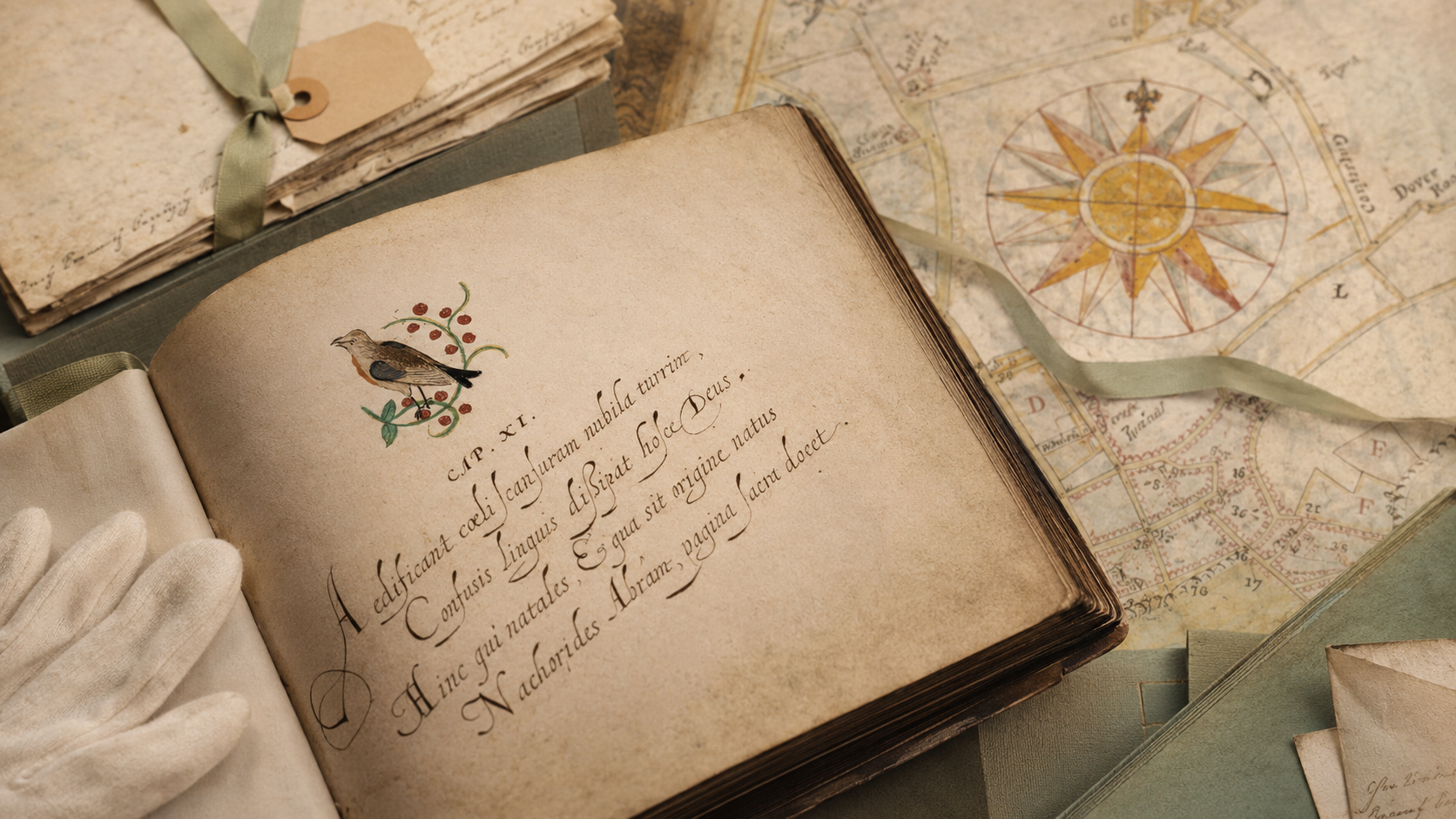
The National Library of Scotland received £20,000 towards an illuminated manuscript made by Esther Inglis, an early modern Scottish calligrapher and artist. A further £10,000 supported the acquisition of literary papers created by Kathleen Jamie between 1992 and 2025, bringing the library’s Jamie collection up to the end of her period as Scotland’s Makar.
Perth Archives received £263 to buy two albums of photographs showing farming and rural life in Perthshire during the early 20th century. Glasgow Life’s acquisition of the Alasdair Gray archive was also recorded, supported by a £20,000 grant awarded in the previous financial year.
The second charity, the National Manuscripts Conservation Trust, or NMCT, begins its work after documents have entered a collection.
Paper, parchment, ink, photographs and bindings do not remain stable indefinitely. Documents can be damaged by damp, mould, insects, rusting staples, adhesive tape, unsuitable frames, poor storage or previous repairs carried out with materials now known to be harmful.
A manuscript may still exist but be too fragile to open. A map may tear whenever it is unfolded. Ink can corrode the paper beneath it. Bindings can break apart and loose pages can become detached or lost.
NMCT gives grants towards specialist conservation work. Conservators may clean and stabilise paper, repair tears, remove damaging tape and glue, rehouse documents in archival materials, treat mould or ink damage and prepare records for safe handling or digitisation.
The charity supports local authority archives, university collections, museums and specialist repositories. Applicants must show that the material has historical or educational value, that it will be stored properly and that reasonable public access will be provided. Directly government-funded national institutions are not normally eligible.
During 2025, NMCT considered 24 applications and approved 22 conservation grants worth £174,067, up from £142,545 during the previous year.
Its projects ranged from medieval religious manuscripts and architectural drawings to industrial records and evidence from the 1913 Senghenydd mining disaster. The trust also funded conservation internships intended to maintain the specialist skills needed to care for old documents.
In Scotland, NMCT has been working with the Scottish Council on Archives to increase awareness of available grants and provide expert advice on Scottish applications.
Both charities appear financially stable. NMCT reported income of £228,355, compared with £175,980 the year before, and net assets of approximately £2.84 million. FNL reported no material uncertainty about its ability to continue operating and ended the year with around £895,000 in cash.
The results are good news for Scotland because historically important material has remained in public hands and, in several cases, close to the communities from which it came.
They also expose a weakness in the way the national record is protected.
Some record offices have no acquisition budget at all. When local manuscripts appear at auction, the outcome may depend on whether a small institution notices the sale, prepares an application quickly enough and receives charitable support before another bidder takes the material away.
The nine failed FNL purchases show that charitable intervention does not always succeed. Once material enters a private collection, public access may be limited for decades or lost altogether.
Sources
Friends of the Nations’ Libraries
https://www.fnl.org.uk/
National Manuscripts Conservation Trust
https://www.nmct.co.uk/
Scottish Council on Archives
https://www.scottisharchives.org.uk/