
Shetland Islands Council has approved a development charter intended to secure greater local benefit from major investment, including renewable energy projects. It sets expectations on ownership, environmental protection, housing, community benefit and local supply chains, but it does not alter planning law or compel developers to comply.
Shetland Islands Council has adopted a new charter setting out what it expects from companies proposing major developments across the islands.
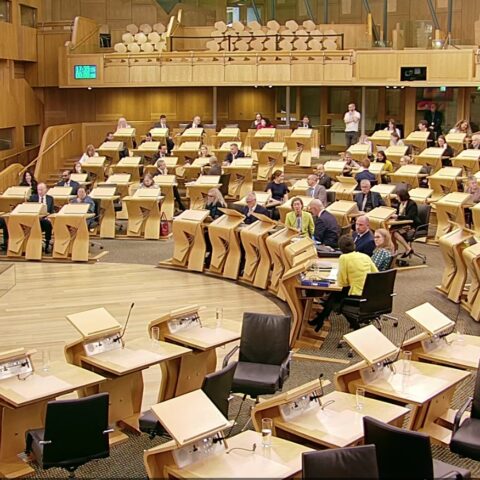
The Shetland Development Charter was approved by councillors on 1 July 2026. It is intended to guide discussions with investors involved in renewable energy, infrastructure and other large projects before proposals reach the later stages of planning and consent.
Its central argument is that Shetland should receive a proportionate and lasting benefit from developments that use its land, surrounding seas, infrastructure and workforce.
The charter calls for local communities to be heard, environmental impacts to be considered across projects rather than separately, unnecessary duplication of infrastructure to be avoided and investment to leave a legacy for residents and local businesses.
Its nine priorities cover a just transition, ownership, environmental protection, the local economy, a fair share for Shetland, community benefit, local supply-chain participation, housing and changes to fiscal and regulatory arrangements.
Organisations that sign up will be expected to produce a delivery plan explaining how they intend to meet the charter’s principles.
Dennis Leask, chair of the council’s Development Committee, said early engagement should allow developers and communities to identify opportunities and problems before projects become fixed.
He said the purpose was to ensure that people in Shetland received “a fair share from developments”, while stressing that the charter would not replace existing planning or consenting procedures.
What The Charter Can And Cannot Do
The charter is not a new planning law, licence condition or legally enforceable community-benefit scheme.
The council’s formal decision expressly stated that nothing in the document could restrict or prejudice its statutory duties or discretion, including its role as a planning authority. The same protection was applied to the new Shetland Energy Programme Sounding Board.
The charter’s opening footnote, quoted by Shetland News, says commitments attributed to the council are “purely aspirational in nature” unless the law requires otherwise. Developers are also free to decide whether to sign up.
The charter gives Shetland a common negotiating position and allows the council and its partners to state publicly what responsible development should deliver. It does not provide sanctions against a developer that refuses to participate or fails to fulfil its delivery plan.
Council chief executive Maggie Sandison later described the approach as the council “using influence rather than powers”.
She said the authority could ask developers to minimise harm, mitigate consequences and provide community benefits, but could not prejudge individual planning applications or impose requirements beyond its statutory authority.
Charter Replaces Further Work On Energy Strategy
Councillors also agreed that further work on the draft Shetland Energy Strategy should cease. The charter and the Shetland Energy Programme will instead become the principal mechanisms for progressing this work.
The council approved the establishment of a Shetland Energy Programme Sounding Board and delegated authority to amend the charter where later legislative changes make that necessary.
The charter therefore does more than sit alongside existing strategy. It consolidates several strands of Shetland’s energy and development policy into a single framework based on negotiation, partnership and voluntary delivery plans.
It will be led through EmPowering Shetland, whose members include Shetland Islands Council, Highlands and Islands Enterprise, UHI Shetland, Lerwick Port Authority, the Shetland Net Zero Energy Forum and the Norn Engineering Alliance.
That membership brings together local government, education, ports and industry. It has also prompted concern that the body does not include direct representation from affected communities or environmental organisations.
Local reporting said councillors themselves questioned the absence of environmental voices and raised the pressure that incoming construction workforces could place on housing and already fragile transport services.
Shetland’s Existing Demand For A Fair Share
The charter builds on positions the council has developed over several years.
Its Shetland Energy Development Principles, approved in 2022, state that communities hosting major energy development should receive direct benefits from the use of local land and sea.
Those principles argue that offshore wind projects in Shetland’s sea area should provide community benefit worth £5,000 for every installed megawatt, index-linked, or approximately 2.5 per cent of generation value. The council has proposed a comparable 2.5 per cent approach for oil and gas developments in surrounding waters.
It has also called for benefits to continue throughout the productive life of developments and for local households and businesses to receive practical help with energy affordability.
The 2024 Fair Share for Shetland report expanded the argument to include local, community or shared ownership, compensation, indirect economic benefits, environmental stewardship and changes to national tax and regulatory systems.
There is already one example of the council translating those principles into a commercial agreement.
Its lease with Statkraft for a proposed green hydrogen and ammonia development at Scatsta includes annual rent of £1.13 million and a fixed community-benefit payment based on £5,000 for each megawatt of installed capacity. The council estimated that payment at about £2 million a year at the time the agreement was announced.
The new charter is intended to make such expectations more consistent across future developments rather than negotiating every principle from the beginning.
Community Doubts Over Enforcement
Reaction among some residents and community representatives has been sceptical.
Frank Hay of Sustainable Shetland said the charter lacked effective community and environmental representation. Andrew Archer, involved in plans for a convention of community councils, argued that voluntary participation was its central weakness.
Critics have questioned how delivery plans will be measured, who will decide whether developers have met their promises and what will happen when commitments are not fulfilled.
Those concerns arise amid opposition to the number, scale and cumulative effects of energy projects being proposed across the islands.
In early July, members of the Association of Shetland Community Councils supported plans for a public meeting seeking a pause on further energy developments until a coherent strategy was in place. The proposal was presented as concern about coordination and community influence rather than opposition to every renewable-energy project.
The charter seeks to answer part of that criticism by requiring joined-up thinking between projects. It says investors should consider the whole energy system, avoid unnecessary duplication and demonstrate that consultation has meaningfully influenced project design.
Its effectiveness will depend on matters the document itself cannot guarantee: whether developers sign, whether delivery plans contain measurable commitments, whether progress is published and whether Shetland’s institutions are prepared to challenge companies that fall short.
The council has now stated what it expects from development. The next test is whether those expectations result in affordable energy, local ownership, protected landscapes, housing, employment and durable community wealth—or remain principles accepted warmly at the beginning of a project and quietly misplaced before construction begins.
Sources
Shetland Islands Council — Shetland Islands Council approves The Shetland Development Charter
https://www.shetland.gov.uk/news/article/3962/shetland-islands-council-approves-the-shetland-development-charter
Shetland Islands Council — Council decision note, 1 July 2026
https://www.shetland.gov.uk/downloads/file/13633/1-july-2026-sic-decision-note
Shetland Development Charter
https://c.shetland.org/assets/files/66558/development_charter.pdf
Shetland.org — Introducing the Shetland Development Charter
https://www.shetland.org/blog/introducing-shetland-development-charter
Shetland Islands Council — Shetland Energy Development Principles
https://www.shetland.gov.uk/climate-change-3/shetland-energy-development-principles
Shetland Islands Council — A Fair Share for Shetland
https://www.shetland.gov.uk/climate-change/fair-share-shetland
Shetland Islands Council — Fair Share task force report announcement
https://www.shetland.gov.uk/news/article/2733/a-fair-share-for-shetland-%E2%80%93-independent-task-force-reports-on-ways-to-achieve-greater-value-and-benefit-from-energy-renewables
Shetland Islands Council — Green hydrogen lease and community benefit at Scatsta
https://www.shetland.gov.uk/news/article/3821/lease-and-community-benefit-payment-agreed-for-new-green-hydrogen-scheme-at-scatsta
Shetland News — Some left seriously unimpressed by Shetland development charter
https://www.shetnews.co.uk/2026/07/09/left-seriously-unimpressed-shetland-development/
Shetland News — Council chief clarifies purpose of development charter
https://www.shetnews.co.uk/2026/07/14/know-limits-powers-council-chief/
Shetland News — Community councillors back public meeting on energy projects
https://www.shetnews.co.uk/2026/07/03/just-money-community-councillors-back/
Shetland News — Analysis of the charter’s non-binding commitments
https://www.shetnews.co.uk/2026/07/09/shetland-development-charter-document-promises/