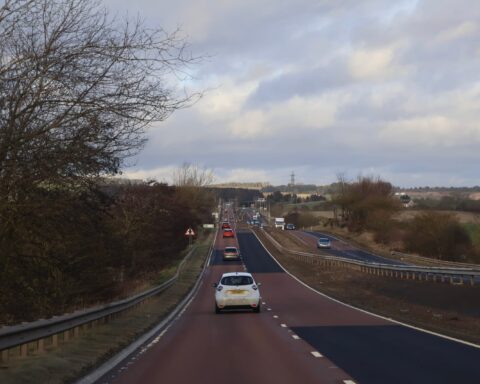


Scotland’s latest transport statistics have revealed a substantial divide in public transport satisfaction between rural communities and major cities, with fewer than half of rural residents satisfied with services compared with almost three-quarters of people in large urban areas.
Figures published by Transport Scotland on Wednesday, 4 November, show that just 42 per cent of people living in remote rural areas were very or fairly satisfied with public transport in 2025. The figure was 45 per cent in accessible rural areas, compared with 74 per cent in large urban areas.
The findings come from Transport and Travel in Scotland 2025, an official statistical publication using information gathered through the Scottish Household Survey.
Across Scotland as a whole, 64 per cent of respondents expressed satisfaction with public transport. That figure has remained unchanged since 2023 but remains below the 68 per cent recorded in 2019, before the coronavirus pandemic.
The national average therefore conceals a much larger geographical difference. Residents of remote rural communities reported satisfaction levels 32 percentage points below those living in Scotland’s largest urban areas.
The figures do not establish that every rural transport service is deteriorating, nor do they identify a single cause of dissatisfaction. They do, however, raise questions about whether Scotland’s public transport network is meeting the needs of communities beyond its principal cities.
Rural Residents Use Buses Far Less Frequently
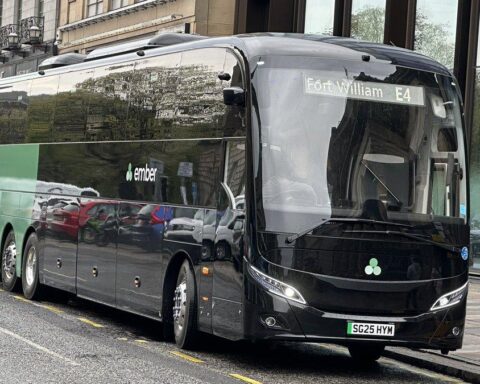
The survey found an equally significant difference in actual bus use.
In large urban areas, 61 per cent of adults had travelled by bus at least once during the previous month. In remote rural areas, the proportion was only 19 per cent.
That difference matters for residents who cannot drive, do not own a vehicle or depend on public transport for employment, medical appointments, education and access to essential services.
Rural travel also presents difficulties that cannot necessarily be resolved by increasing the frequency of an existing service. Longer distances between settlements, limited passenger numbers, irregular working hours and the difficulty of connecting journeys all influence whether public transport provides a practical alternative to private vehicles.
The survey does not separately quantify the contribution of each of those factors to dissatisfaction. Nevertheless, the difference between urban and rural experiences suggests that national measures of satisfaction should be considered alongside local service availability and accessibility.
Bus and Rail Use Are Recovering
Despite the differences in satisfaction, more Scottish residents reported using public transport during 2025.
The proportion who had travelled by bus during the previous month increased from 39 per cent in 2024 to 43 per cent in 2025, returning to the level recorded before the pandemic.
Rail use also increased, with 33 per cent reporting a train journey during the preceding month, compared with 31 per cent in 2024.
However, frequent train use has not returned to its pre-pandemic pattern. The survey found that travelling by rail every day or almost every day remained less common, while use two or three times a week was higher.
There were also considerable differences between age groups. Some 45 per cent of people aged 16 to 19 had used the train in the previous month, compared with only 11 per cent of those aged 80 or older.
These figures measure the proportion of respondents using a particular mode of transport, not the total number of passenger journeys made on the network.
Fewer Children Are Walking to School
The publication also identifies changes in how Scotland’s children travel to school.
In 2025, 47 per cent of children walked to school, down from 53 per cent in 2023. Over the same period, the proportion travelling by car increased from 24 to 29 per cent, while use of ordinary service buses rose from 4 to 8 per cent.
The figures show a change in travel behaviour, but do not determine whether it has been caused by school distances, family circumstances, traffic safety, public transport availability or other considerations.
The decline in walking is nevertheless relevant to local authority transport planning, road safety and efforts to encourage active travel.
Affordability Has Improved for Some, but Not All
Transport Scotland reported that 70 per cent of adults found their transport costs very or fairly easy to afford during 2025, compared with 64 per cent when the question was first included in 2022.
Young adults experienced more difficulty. Among those aged 20 to 29, only 59 per cent found their transport costs easy to afford.
For people using public transport at least once a week, the average reported expenditure was £10.20 per week, although half reported spending nothing. That group includes people entitled to free travel.
The survey also demonstrates the continuing importance of private vehicles. Driving a car or van accounted for 50 per cent of all recorded journeys in 2025, while walking accounted for 28 per cent.
Scotland’s public transport challenge is therefore not simply one of attracting additional passengers. The latest figures suggest that policymakers must also confront the geographical inequalities behind the national averages.
For remote communities, the central question remains whether public transport is sufficiently available, reliable and connected to provide a realistic means of reaching the services on which daily life depends.
Sources
Transport and Travel in Scotland 2025: Satisfaction With Public Transport Remains Steady, Transport Scotland, 4 November 2026.
https://www.transport.gov.scot/news/satisfaction-with-public-transport-remains-steady/
Transport and Travel in Scotland 2025: Key Findings, Transport Scotland, 4 November 2026.
https://www.transport.gov.scot/publication/transport-and-travel-in-scotland-2025/key-findings/
Transport and Travel in Scotland 2025: Public Transport, Transport Scotland, 4 November 2026.
https://www.transport.gov.scot/publication/transport-and-travel-in-scotland-2025/public-transport/