
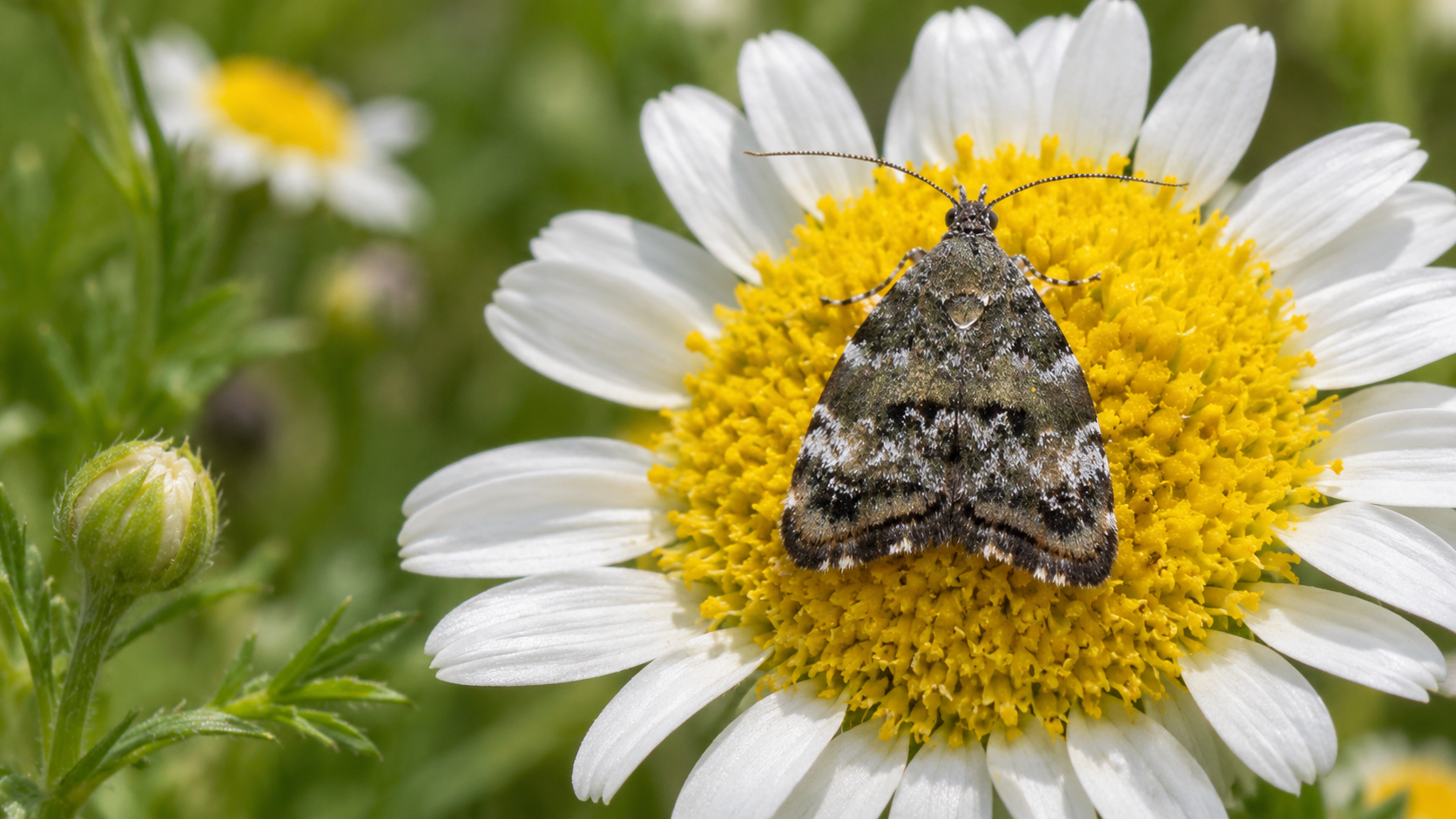
One of Britain’s rarest moths has recorded its most successful year since systematic monitoring began, with new surveys revealing that its known distribution across Glen Affric has doubled in just two years.
Forestry and Land Scotland announced the findings on Wednesday, 4 November, following conservation work carried out in partnership with Butterfly Conservation.
The Affric Twitcher, scientifically known as Choreutis diana, is an exceptionally scarce moth whose British population is concentrated in the native birch woodlands of Glen Affric in the Scottish Highlands.
New monitoring results recorded 111 larval shelters along established survey routes during 2026, the highest total since the current monitoring programme began in 2021.
A separate targeted survey around Loch Beinn a’ Mheadhoin discovered evidence of the moth in eight additional one-kilometre grid squares, increasing its recorded distribution by 40 per cent in a single season.
The latest discoveries mean that the species has now been recorded in 28 separate one-kilometre squares, on both the northern and southern sides of the loch.
A Species Once Thought to Occupy Only a Few Trees
The Affric Twitcher has a remarkable history in Britain.
The moth was first discovered in Glen Affric in 1919, but sightings remained sporadic for much of the following century. Its small size, restricted habitat and relatively inconspicuous appearance made it difficult to locate.
For years, conservationists believed the British population might be confined to a very small number of trees.
An important development came when researchers established that the moth’s larvae could be located by examining birch leaves for distinctive feeding shelters.
The caterpillar lives within a silken structure formed on the upper surface of a birch leaf, causing the leaf to curl into a shape that can resemble a small canoe.
These shelters provide researchers with a method of locating the species even when adult moths are not visible.
Butterfly Conservation subsequently developed monitoring and volunteer survey work in Glen Affric, establishing a more reliable picture of the species’ distribution.
That research has also shown why detailed surveys matter. A species can appear extraordinarily restricted because its habitat has not been thoroughly examined, rather than because every apparently suitable location is unoccupied.
Record Numbers of Adult Moths
The 2026 findings extend beyond evidence from larvae.
Local moth recorder Mike Taylor counted 43 adult Affric Twitchers during a two-day visit to Glen Affric, the largest number of adults recorded during a single visit.
All three established monitoring locations recorded strong results during the year.
The species is a small, day-flying moth, with adults generally appearing in July and August. Its mottled wings provide camouflage among vegetation, while the larvae are closely associated with birch foliage.
The latest survey results indicate favourable conditions at the monitored locations, although the recorded increase in distribution must be interpreted carefully.
Finding a moth in additional survey squares does not necessarily mean it has recently colonised every one of those areas. Some populations may have been present but previously undetected.
The distinction is important when evaluating conservation success. Better surveys can expand the known distribution of a species even without an equivalent increase in its underlying population.
Nevertheless, the combination of strong counts at established monitoring locations and additional records elsewhere is encouraging evidence for the species’ present condition in Glen Affric.
Why Woodland Management Matters
The Affric Twitcher depends on suitable native birch woodland.
Forestry and Land Scotland says deer management and the removal of invasive non-native plants are helping natural birch regeneration, improving habitat conditions for the moth and other woodland species.
Excessive browsing pressure can prevent young trees from becoming established, reducing the development of woodland habitats over time. Maintaining suitable conditions therefore involves more than protecting individual trees where moths have already been recorded.
It also requires sustained management of the surrounding woodland and continued monitoring to identify how the species responds to environmental change.
Forestry and Land Scotland environment forester Shona Amos said the findings demonstrated the importance of long-term monitoring and careful land management.
Patrick Cook of Butterfly Conservation explained that the latest surveys were improving understanding of where the moth occurs and the conditions it requires.
The partnership intends to use the results when planning future forestry operations, ensuring that important habitat features are considered before work takes place.
What the Discovery Means for Scottish Conservation
The Affric Twitcher’s recovery in recorded numbers and distribution illustrates a wider issue in wildlife conservation: some of Scotland’s least familiar species remain poorly understood.
Conservation planning often concentrates public attention on mammals, birds and conspicuous insects, while small moths and other invertebrates can depend on equally specialised habitats.
In Glen Affric, the continued survival of one of Britain’s rarest insects is closely connected to the management of native woodland.
The 2026 results do not establish that the species is secure indefinitely. Its restricted British range means that habitat deterioration, environmental change or failures in woodland regeneration could remain significant concerns.
They do, however, provide researchers with a more substantial evidence base than was available only a few years ago.
A moth once believed to survive in an exceptionally small area has now been recorded across a much wider part of Glen Affric, offering a clearer picture of the importance of the glen’s native birch woodland and the conservation work needed to sustain it.
Sources
Rare Glen Affric Moth Records Best Year Since Monitoring Began, Forestry and Land Scotland, 4 November 2026.
Scottish Priority Species, Butterfly Conservation, accessed 4 November 2026.
https://butterfly-conservation.org/in-your-area/scottish-office/scottish-priority-species
Choreutis diana — Affric Twitcher, UKmoths, accessed 4 November 2026.