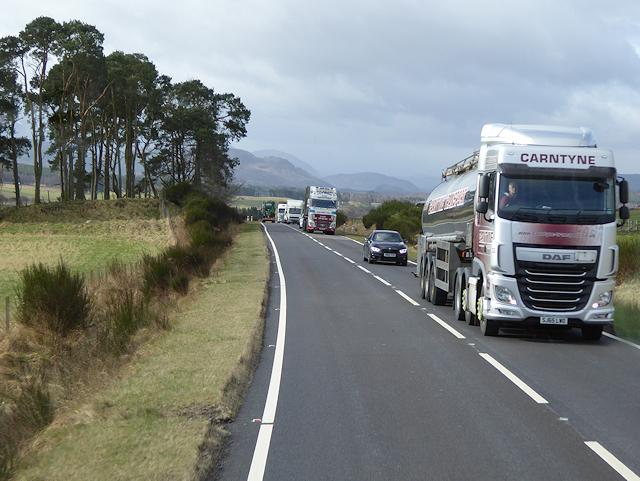
Scotland’s national speed limits for heavy goods vehicles weighing more than 7.5 tonnes could increase by 10mph from 1 April 2027 under regulations being considered by the Scottish Parliament.
The Regulations would raise the maximum permitted speed on single carriageways from 40mph to 50mph and on dual carriageways from 50mph to 60mph.
The proposals were examined by the Scottish Parliament’s Transport Committee on 18 November as part of the parliamentary approval process.
If approved, the changes would apply nationally, replacing existing Scottish limits that have remained lower than those in England and Wales for more than a decade.
The motorway speed limit for the affected heavy goods vehicles would remain at 60mph.
Scotland Has Retained Different Limits Since 2015
England and Wales increased the national speed limits for heavy goods vehicles over 7.5 tonnes in April 2015.
Scotland did not adopt those changes, leaving drivers subject to different limits when crossing the border.
Under the current Scottish rules, affected HGVs are restricted to 40mph on single carriageways and 50mph on dual carriageways, even when the national speed limit for cars is higher.
The proposed legislation would bring Scotland’s national HGV limits into line with England and Wales.
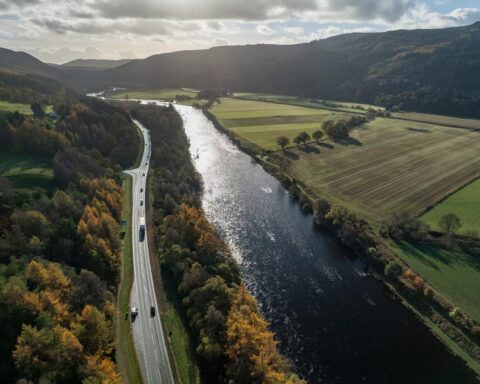
It would also remove earlier regulations applying to certain stretches of the A9 between Perth and Inverness.
Those sections have operated with a 50mph HGV limit since 2014 as part of a trial accompanied by average-speed cameras.
If the national change takes effect, a separate legal provision for those sections of the A9 will no longer be required.
Consultation Attracted More Than 19,500 Responses
The proposals follow Transport Scotland’s National Speed Management Review.
A public consultation conducted between November 2024 and March 2025 considered both increasing HGV speed limits and reducing the national speed limit for cars and motorcycles on single carriageways from 60mph to 50mph.
More than 19,500 responses were received.
Transport Scotland reported that a majority of respondents and organisations supported retaining the existing 60mph limit for cars on single carriageways.
Almost half of respondents and a majority of responding organisations supported raising the HGV limit on single carriageways to 50mph.
Opinions on the proposed 60mph HGV limit for dual carriageways were more evenly divided.
In December 2025, ministers announced that the reduction in the national limit for cars would not proceed.
They retained the proposal to increase HGV limits, citing consultation findings and evidence from previous changes in England, Wales and the A9 trial.
What Previous Speed Limit Changes Showed
Transport Scotland’s review examined the effects of the 2015 increases in England and Wales.
The subsequent evaluation found that the average speed of heavy goods vehicles on single carriageways increased by 1.6mph, from 44.1mph to 45.7mph.
On dual carriageways, the average increase was 0.5mph, from 52mph to 52.5mph.
The evaluation found no evidence of a change in collisions involving HGVs across the roads studied.
It also recorded improved compliance with the revised speed limits.
No statistically significant change in air quality or perceptible change in road noise was identified in the evaluation.
These findings relate to the roads and monitoring periods included in the England and Wales assessment. They do not establish what will happen on every Scottish road following a change in the law.
Transport Scotland has also examined the A9 trial between Perth and Inverness.
That programme combined a higher HGV speed limit with average-speed cameras. The evaluation reported improvements in traffic flow and compliance alongside reductions in deaths and serious injuries.
Because the measures operated together, the effects cannot be attributed to the higher HGV limit alone.
Effects on Rural Roads and Freight Transport
Scotland’s freight network includes long sections of single-carriageway roads, particularly in the Highlands, north-east, south-west and parts of the Borders.
Heavy goods vehicles use these routes to transport food, livestock, timber, fuel, manufactured goods and other freight.
The Scottish Government expects the proposed changes to reduce the difference between the speeds permitted for lorries and other traffic.
Ministers also anticipate improvements in journey-time reliability and fewer instances of driver frustration associated with slower-moving vehicles.
However, a 10mph increase in the legal limit does not necessarily produce a 10mph increase in actual travelling speeds.
Road geometry, traffic, gradients, weather, vehicle technology and existing speed restrictions will continue to affect how fast HGVs can travel.
A vehicle may also be subject to a lower limit imposed by road signs or other legal restrictions.
National speed limits are maximum permitted speeds rather than required travelling speeds.
Parliamentary Approval Is Still Required
The regulations were laid before the Scottish Parliament on 30 September 2026 under the Road Traffic Regulation Act 1984.
The Delegated Powers and Law Reform Committee considered the instrument on 6 October and made no recommendations concerning its technical provisions.
The Transport Committee is responsible for considering its policy implications before making a recommendation to Parliament.
The regulations require approval by the Scottish Parliament before they can become law.
The proposed commencement date is 1 April 2027.
If approved, the government intends to run a public information campaign before the new limits take effect.
Transport Scotland does not anticipate additional road signage or substantial enforcement costs, as the changes concern national limits already established in legislation.
Police Scotland and the existing safety-camera programme would remain responsible for enforcement.
The parliamentary process will determine whether Scotland introduces the revised HGV limits in April, bringing its national lorry speed rules into line with those applying south of the border.
Sources
HGV Speed Limit (Variation) (Scotland) Regulations 2026 — Note by the Clerk and Policy Note
Scottish Parliament Transport Committee, 18 November 2026
https://www.parliament.scot/~/media/committ/13789/Paper-4–Note-by-the-Clerk
The HGV Speed Limit (Variation) (Scotland) Regulations 2026 — Draft Legislation
UK Legislation, September 2026
https://www.legislation.gov.uk/sdsi/2026/9780111067048
National Speed Management Review — Frequently Asked Questions
Transport Scotland, 2026
https://www.transport.gov.scot/consultation/national-speed-management-review-consultation/frequently-asked-questions/
National Speed Management Review — Further Reflections
Transport Scotland, 2024
https://www.transport.gov.scot/publication/national-speed-management-review-2024/further-reflections/
Transport Committee Meeting Agenda
Scottish Parliament, 18 November 2026
https://www.parliament.scot/chamber-and-committees/committees/current-and-previous-committees/session-7/transport-committee/meetings/2026/transport-committee-18-november-2026/agenda