A Scottish biotechnology company has secured a further $2.7 million (£2 million) from the Gates Foundation to help researchers develop treatments for diseases affecting some of the world’s poorest populations. The award builds on almost two decades of scientific research at the University of Dundee into one of pharmaceutical medicine’s most persistent problems: why promising medicines can behave very differently in humans than they do in laboratory animals.
PhaSER Biomedical, founded in Dundee in 2022, announced the renewed funding on 10 November. The company has developed a genetically modified laboratory mouse known as 8HUM, designed to process certain drugs in ways that more closely resemble human metabolism.
The technology is being made available to researchers working on treatments for tuberculosis, malaria, schistosomiasis and Chagas disease, among other conditions.
The Gates Foundation’s own grant register records a commitment of $2,700,799, dated October 2026, with a duration of 27 months. The University of Dundee describes the award as a two-year renewal.
The new funding follows an earlier award of approximately $2.3 million, announced in 2024, taking the company’s two successive Gates Foundation awards to approximately $5 million.
The development is significant not because because the company is attempting to improve the scientific decisions made long before medicines reach human clinical trials.
Why Medicines That Work in Mice Can Fail in Humans
Developing a new medicine requires researchers to establish whether a substance can treat a disease, how it behaves inside the body, how long it remains active and whether it causes harmful effects.
Animal research has historically played an important role in this process, but a persistent difficulty is that different species process chemicals in different ways.
A drug may disappear rapidly from a mouse’s bloodstream while remaining active for much longer in a human. Another may produce different breakdown products, some of which are biologically active or potentially harmful.
These differences can lead researchers to reject promising compounds or advance candidates whose behaviour in humans proves less favourable than laboratory studies suggested.
One important group of enzymes responsible for processing medicines is known as cytochrome P450.
These enzymes, found principally in the liver and other tissues, help transform drugs into substances that can be eliminated from the body.
Humans and mice both possess cytochrome P450 enzymes, but their individual enzymes and metabolic pathways do not always behave alike.
The problem becomes particularly important when researchers must administer a drug over several days or combine it with other medicines.
Understanding the rate at which a drug is broken down is essential to determining whether it can maintain an effective concentration without causing unacceptable toxicity.
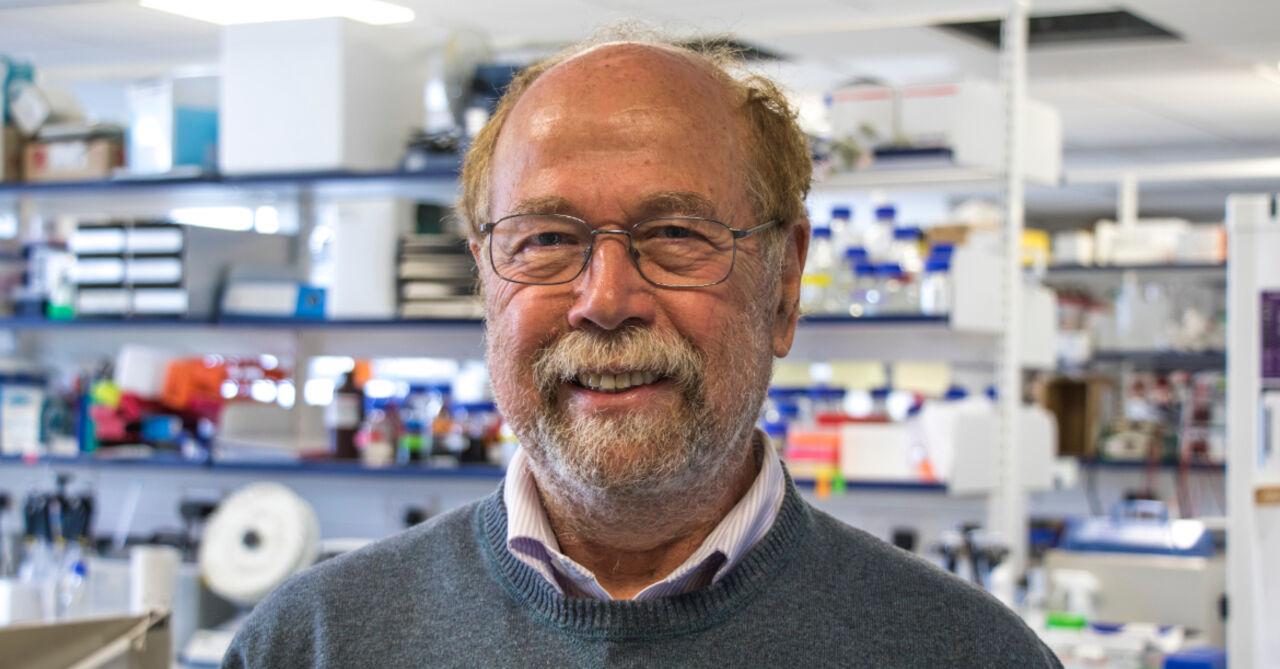
This is the scientific problem that Professor Roland Wolf and his colleagues set out to address.
What Dundee’s 8HUM Mouse Actually Does
The 8HUM model is a genetically engineered mouse in which several major pathways involved in drug metabolism have been altered to resemble those of humans more closely.
Researchers removed groups of mouse genes involved in producing particular drug-metabolising enzymes and introduced eight human genes associated with those pathways and their regulation.
Among the human enzymes represented are CYP1A2, CYP2C9, CYP2D6 and CYP3A4, all important in the metabolism of medicines.
The animal remains a mouse. It is not a human organism, and its biological systems have not all been replaced by human equivalents.
The purpose of the genetic modifications is narrower and more practical: to produce experimental results that better represent how drugs are processed by the human body.
This could help researchers select compounds for further investigation, calculate appropriate experimental doses and identify potentially harmful interactions earlier in development.
The research behind the model involved the University of Dundee, CXR Biosciences, Taconic Biosciences and support from Scottish Enterprise.
Professor Wolf, who has spent decades studying drug metabolism, founded PhaSER Biomedical in October 2022 to make the technology available to pharmaceutical researchers and other organisations.
The business operates in a specialised part of the life sciences industry, supplying research models and scientific expertise rather than manufacturing medicines for direct sale to patients.
The Scientific Evidence Behind the Technology
The 8HUM model has been examined in published scientific research, providing evidence beyond the company’s latest funding announcement.
A study published in February 2024 in the Proceedings of the National Academy of Sciences examined whether the modified mice could improve the translation of laboratory findings into predictions relevant to human medicine.
Researchers from the University of Dundee and GlaxoSmithKline compared drug metabolism, the formation of breakdown products and potential interactions between medicines.
They found that results from the modified mice were considerably closer to human clinical observations than results obtained using conventional laboratory mice for the compounds examined.
The research also showed that the animals could be used in experimental studies involving organisms responsible for tuberculosis, visceral leishmaniasis and Chagas disease.
This matters because researchers investigating treatments for infectious diseases must often test not only whether a compound acts against a microorganism, but also whether the host animal processes the compound in a way that allows meaningful conclusions about possible human treatment.
A further study published in 2025 involved scientists from Novo Nordisk and the University of Dundee.
It examined potential interactions between a peptide drug candidate and other medicines, comparing the findings from 8HUM mice with observations from a human clinical study.
The results supported the model’s potential usefulness in investigating certain drug interactions. In that experiment, the modified mice produced findings consistent with the clinical observations where conventional laboratory approaches had been less successful.
These publications provide evidence that the technology can improve predictions in particular experimental settings.
They do not establish that it will accurately predict every drug’s behaviour, eliminate the need for clinical trials or guarantee that a candidate selected using the model will become an approved medicine.
Further independent validation across different types of drugs and research programmes remains important.
Why the Gates Foundation Is Investing Again
The Gates Foundation’s renewed award supports PhaSER’s participation in the Global Health Discovery Collaboratory, which brings together researchers investigating diseases that disproportionately affect people in lower-income countries.
Through the programme, eligible foundation-supported researchers can access PhaSER’s humanised mouse models and specialist assistance with drug metabolism, pharmacokinetics, laboratory analysis and experimental design.
Pharmacokinetics is the study of how a medicine enters, moves through and leaves the body.
These questions are especially important in research programmes where financial resources are limited and pursuing unsuitable drug candidates can consume years of work.
During the first funding period, PhaSER’s platform was used in programmes involving tuberculosis, malaria, schistosomiasis and Chagas disease.
The company reports that the work helped researchers assess candidate compounds and supported progress in several programmes.
However, it has not published a consolidated account establishing how many medicines were advanced specifically because of 8HUM, how many candidates were rejected following its use, or how much development time and expenditure were saved.
Those figures would provide a stronger basis for measuring the programme’s eventual economic and medical impact.
The foundation’s renewed support demonstrates a willingness to continue financing access to the technology. It should not be confused with regulatory approval of a new treatment or independent proof of commercial success.
The Global Health Problem Behind the Research
One of the clearest examples of the need for continued drug development is tuberculosis.
According to the World Health Organization’s latest figures, published on 12 November 2026, approximately 10.6 million people developed tuberculosis worldwide during 2025.
An estimated 1.13 million people died from the disease, making it the world’s leading cause of death from a single infectious agent.
Although tuberculosis can be cured, treatment can be complicated, particularly when the bacteria are resistant to commonly used medicines.
The WHO estimates that only about two in five people with drug-resistant tuberculosis accessed treatment during 2025.
Research into more effective drug combinations and new treatments therefore remains an important public health priority.
Malaria presents another substantial challenge. The WHO estimated 282 million malaria cases and approximately 610,000 deaths worldwide in 2024, with the overwhelming majority occurring in Africa.
Children under five account for a particularly high proportion of malaria deaths in the African region.
Chagas disease, caused by the parasite Trypanosoma cruzi, affects an estimated six to seven million people worldwide, principally in Latin America.
The infection can lead to serious heart and digestive complications, often years after the initial infection.
Schistosomiasis is another parasitic disease affecting populations in areas where people are exposed to contaminated freshwater.
Existing treatments have improved outcomes for many of these conditions, but problems involving drug resistance, toxicity, treatment duration and access continue to justify additional research.
PhaSER’s contribution is not to treat those patients directly. Its technology is intended to improve the laboratory work on which future treatments depend.
A Second Project Examines Dangerous Combinations of Medicines
The Gates Foundation research is only one part of PhaSER’s development.
The company is also working with the UK’s Medicines and Healthcare products Regulatory Agency (MHRA) and the University of Dundee on a separate programme investigating potentially harmful interactions between medicines.
Many patients, particularly older people and those managing several long-term conditions, take multiple prescription drugs.
This practice, known as polypharmacy, is often medically necessary, but certain combinations can change how medicines are processed or increase the likelihood of adverse reactions.
For example, one medicine may interfere with an enzyme responsible for breaking down another. This can increase the concentration of the second medicine in the bloodstream or alter its therapeutic effect.
Some interactions are well understood. Others are difficult to predict before medicines are prescribed together to large numbers of patients.
In October 2025, the MHRA announced a project using artificial intelligence and NHS data to identify patterns that could indicate harmful interactions, initially concentrating on cardiovascular medicines.
The programme, called DAIRR — Determination of AI and Computational Approaches to Reduce the Risk of Drug Interactions — received £859,650 through the UK Government’s Regulatory Innovation Office AI Capability Fund.
That sum is funding for the wider research project and should not be interpreted as an additional grant paid entirely to PhaSER.
The research involves analysing anonymised NHS information and comparing the patterns identified with experimental findings and computational models.
The aim is to determine whether potentially dangerous combinations can be identified more accurately before patients are exposed to avoidable risks.
The MHRA has described the project as a possible route towards more reliable evidence for medicine development, regulatory assessment and future prescribing decisions.
However, the proposed system remains a research undertaking. It has not been established as a clinically validated tool routinely used by doctors to select prescriptions.
HERALD: Combining Laboratory Evidence With Artificial Intelligence
PhaSER is developing a computational platform called HERALD, short for Human Exposure and Response Analyser in Linked Drugs.
The company describes HERALD as an AI-assisted system intended to analyse the potential for interactions between medicines.
Its approach combines information from humanised laboratory models with clinical evidence, mathematical modelling and machine-learning techniques.
The objective is to improve predictions about how a drug behaves in patients, particularly when several medicines are taken together.
The work also offers a possible commercial application beyond the infectious-disease research supported by the Gates Foundation.
Pharmaceutical companies must evaluate possible drug interactions when developing medicines and preparing regulatory applications.
A method capable of producing more reliable results earlier could be useful to drug developers and regulators, provided its accuracy and limitations are demonstrated through appropriate studies.
The commercial value would depend on whether the technology offers measurable improvements over existing laboratory and computational methods.
It would also require confidence in the quality of the underlying data, the reproducibility of its predictions and the safeguards governing the use of health information.
Neither the University of Dundee’s November announcement nor the MHRA’s original project description establishes that HERALD has completed clinical validation or received approval for routine medical use.
A Scottish Business Built From Long-Term University Research
PhaSER illustrates how a specialist commercial business can emerge from research that has taken many years to develop.
The company was founded in 2022, but the scientific work underpinning 8HUM began much earlier.
The research involved collaboration between university scientists and commercial biotechnology organisations, supported in part by Scotland’s enterprise-development system.
By establishing PhaSER, Professor Wolf and his colleagues created a route for making the experimental technology available to research organisations beyond Dundee.
That includes scientists working on infectious diseases in countries where the commercial market for new medicines may be too limited to support development without philanthropic or public funding.
There is also an economic opportunity for Scotland.
Specialist life sciences businesses can generate revenue through research services, technology licensing, partnerships and the supply of intellectual property or experimental models.
They may also create skilled employment and opportunities for local scientific suppliers.
However, the value of grant awards should not be confused with the amount of money retained in the Scottish economy.
Research programmes can involve international collaborators, specialist equipment and expenditure outside Scotland.
PhaSER has not released figures establishing the Scottish share of expenditure under the renewed Gates Foundation award or the number of new jobs it will directly support.
The company says it is recruiting specialists in computational modelling and artificial intelligence and is speaking to potential investors about further expansion.
It has also appointed Richard Bickerton, a co-founder of the Scottish AI drug-discovery company Exscientia, as a non-executive director.
These developments indicate plans for growth, although no completed new investment round or resulting employment total has been announced.
The Role of Animal Research and Its Regulation
The company’s technology also raises questions about the continued use of animals in biomedical research.
Although genetically modified laboratory mice can provide information that is difficult to obtain through other methods, such experiments remain subject to legal and ethical controls.
In Scotland, research involving protected animals is regulated under the Animals (Scientific Procedures) Act 1986.
Applicable procedures require Home Office authorisation, and researchers must follow the principles known as the 3Rs: replacement, reduction and refinement.
These require scientists to use suitable non-animal methods wherever possible, minimise the number of animals needed and reduce suffering associated with experimental procedures.
Humanised animal models are intended to improve the usefulness of some experiments, but they do not replace the need to consider non-animal methods, including laboratory cell systems, computer models and other approaches.
Nor does improving an animal model automatically demonstrate that fewer animals will be used overall.
That would require evidence from actual research programmes showing how experimental designs and animal numbers change.
The scientific question is whether a more predictive experimental system can reduce costly errors in drug development while meeting the legal requirements governing animal welfare.
What Must Be Demonstrated Next?
The renewal of the Gates Foundation award confirms that PhaSER will continue participating in international research programmes, but several measures will determine the longer-term success of the technology.
One is whether additional studies confirm that 8HUM improves predictions across a sufficiently wide range of medicines.
Another is whether researchers using the model can demonstrate that unsuitable candidates are identified earlier or promising compounds are advanced more efficiently.
The development of HERALD will require separate evidence establishing whether artificial intelligence improves predictions about drug interactions in clinically meaningful ways.
For the business, the commercial challenge will be to turn its specialist research capabilities into sustainable revenue while retaining the scientific expertise on which its services depend.
For patients, the relevant measure will be whether the improved experimental information eventually contributes to safer medicines or more effective treatments.
Those results cannot yet be assumed from the award itself.
What has been established is that a company originating from Scottish university research has secured continued international support for a technology with published experimental evidence behind it.
The new funding gives PhaSER further scope to test that technology across diseases where better medicines are urgently needed, while its separate work with the MHRA examines whether the same scientific foundations can improve the safety of medicines used in everyday healthcare.
Sources
University of Dundee. PhaSER Biomedical Receives $2.7m Award to Further Accelerate the Development of New Treatments for Infectious Diseases. 10 November 2026. https://www.dundee.ac.uk/press-release/phaser-biomedical-receives-27m-award-further-accelerate-development-new-treatments
Gates Foundation. PhaSER Biomedical Ltd. — Committed Grant INV-100104. October 2026. https://www.gatesfoundation.org/about/committed-grants/2026/10/inv-100104
PhaSER Biomedical. About PhaSER Biomedical and the 8HUM Research Model. https://phaserbio.com/about
PhaSER Biomedical. PhaSER Biomedical Receives £1.8m Grant From Gates Foundation. Earlier funding announcement. https://phaserbio.com/news/blog-post-title-one-mj2lc-7mjp5-n9c83
MacLeod, A. Kenneth, et al. Acceleration of Infectious Disease Drug Discovery and Development Using a Humanized Model of Drug Metabolism. Proceedings of the National Academy of Sciences. February 2024. https://pmc.ncbi.nlm.nih.gov/articles/PMC10873626/
Drug Metabolism and Disposition. Application of a Mouse Model Humanized for Cytochrome P450-Mediated Drug Metabolism to Predict Drug-Drug Interactions Between a Peptide and Small Molecule Drugs. 2025. https://pubmed.ncbi.nlm.nih.gov/40972496/
Medicines and Healthcare Products Regulatory Agency. Side Effects From Drug Interactions to Be Predicted by AI Before Reaching Patients. 22 October 2025. https://www.gov.uk/government/news/side-effects-from-drug-interactions-to-be-predicted-by-ai-before-reaching-patients
University of Dundee. Startup Company Receives Government AI Backing. 29 October 2025. https://www.dundee.ac.uk/press-release/startup-company-receives-government-ai-backing
World Health Organization. Global Tuberculosis Report 2026. 12 November 2026. https://www.who.int/publications/i/item/9789240126480
World Health Organization. Malaria — Fact Sheet. 4 December 2025. https://www.who.int/news-room/fact-sheets/detail/malaria
World Health Organization. Chagas Disease (American Trypanosomiasis). https://www.who.int/health-topics/Chagas-disease
UK Home Office. Research and Testing Using Animals: Licences and Compliance. Updated 13 July 2026. https://www.gov.uk/guidance/research-and-testing-using-animals