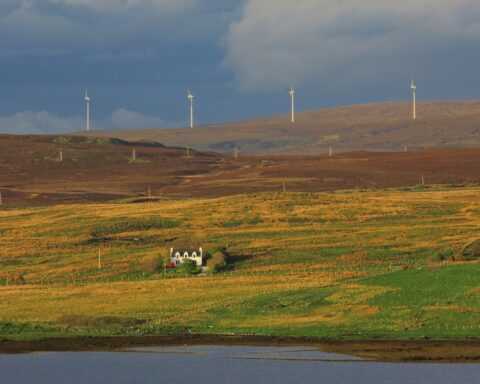

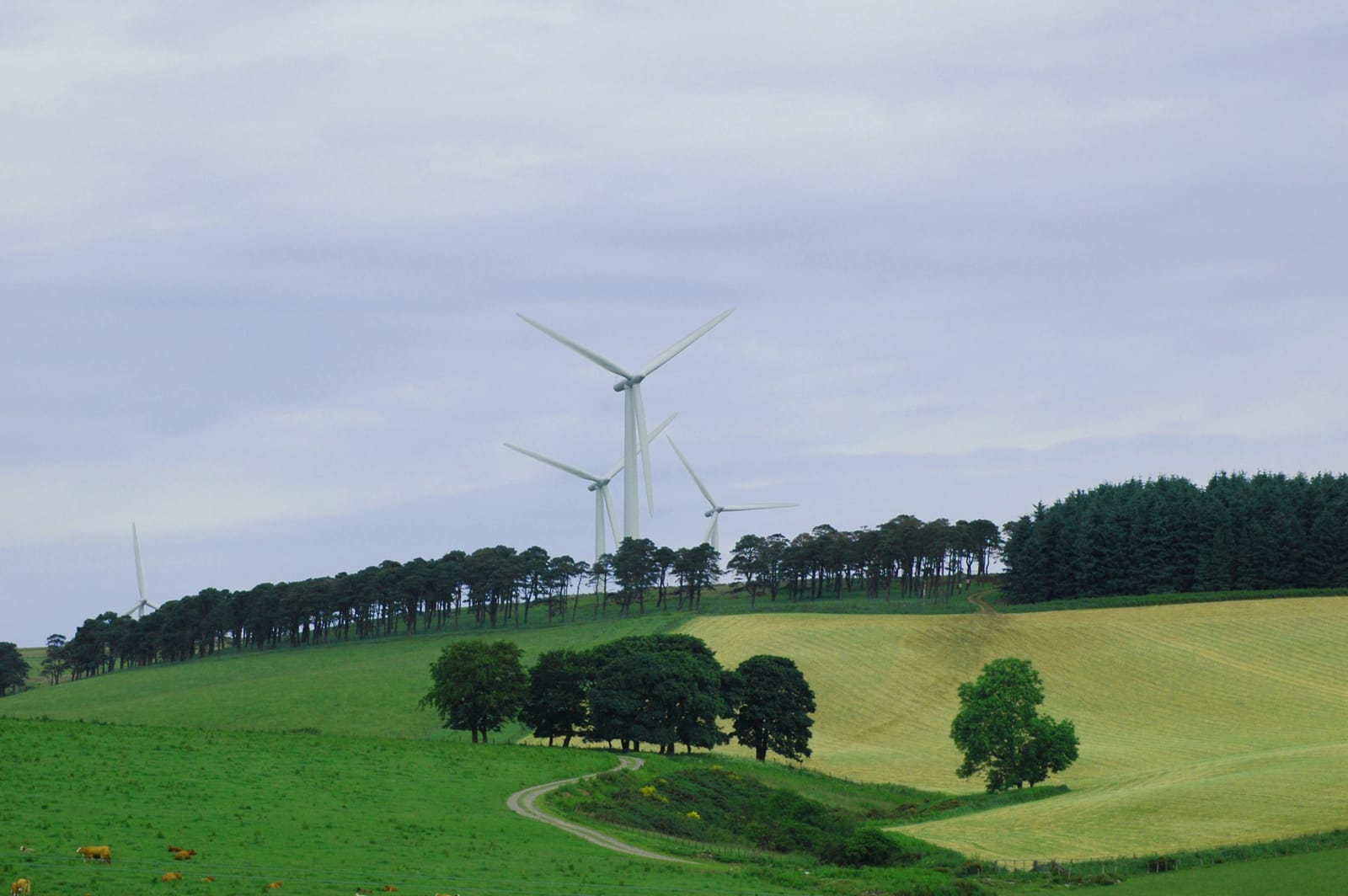
Scotland’s electricity story is often told as a story of abundance. Wind in the North Sea. Hydro in the glens. Islands surrounded by tidal and marine resource. A country capable of producing far more clean electricity than it can use at any one time.
But abundance has not brought a reward.
The warnings were made for years. Under Britain’s transmission charging system, Scottish renewable generators can face high charges because they are far from the largest centres of electricity demand in England. Some generators farther south can receive credits under the same system. At the same time, Scotland is being asked to host a major new build out of pylons, subsea cables, converter stations, substations and other transmission infrastructure. Data centres and AI growth zones are now being steered towards Scotland partly because of its renewable energy and grid position.
Scotland is becoming the place where Britain wants the power generated, the wires built, the data centres hosted and the landscape altered, but Scottish generators remain penalised for being in Scotland.
What is the issue in plain English?
The issue is that Scotland has much of the renewable energy resource Britain needs, but the charging system used for the high voltage electricity network can make Scottish generators pay more because their power is produced far from the largest demand centres in England.
The charge at the centre of the dispute is called Transmission Network Use of System, or TNUoS. It is used to recover the cost of installing, maintaining and operating the transmission network across Great Britain and offshore. It is paid by generators and suppliers. Supplier costs feed into customer bills. Generator charges feed into project economics, investment decisions and support prices.
A wind farm in northern Scotland can be charged heavily to use the transmission system. A generator closer to England may face a lower charge or, in some cases, receive a credit. The system treats location as a cost signal. Scotland’s complaint is that renewable energy cannot simply move to where the spreadsheet would prefer it to be.
Wind, hydro, offshore wind and island energy are where the resource is. The North Sea cannot be moved to the Home Counties.
How did Scotland end up inside this system?
The present story begins with older decisions about how electricity should be organised.
After the Second World War, Britain’s electricity system moved into public ownership. Scotland had its own electricity history, including the North of Scotland Hydro-Electric Board and the South of Scotland Electricity Board. These were not merely suppliers. They were part of a more integrated Scottish electricity structure, involving generation, networks and supply.
Privatisation changed that world. The Electricity Act 1989 restructured the industry. England and Wales moved into one model, with the National Grid Company separated from generation. Scotland’s two vertically integrated boards were privatised in a different form. The decisive GB-wide turn came in 2005, when the British Electricity Trading and Transmission Arrangements, known as BETTA, brought Scotland fully into a single Great Britain electricity trading and transmission framework.
The official case was that a single market would increase competition and improve access. Ofgem material at the time said suppliers in Scotland were expected to see transmission costs fall by around £25 million a year.
That was the bargain as it was sold: wider market, more competition, lower costs.
But the same settlement tied Scotland more firmly into a GB-wide transmission charging system built around cost reflective and locational principles. In 2005, UK ministers defended cost reflective charging on the basis that users should pay according to the cost they imposed on the network.
This is the heart of the present dispute.
Was the system designed for renewables?
Not in the way Scotland now needs it to work.
The locational charging system grew out of an older electricity world. Large thermal power stations could, in principle, be sited with demand and network costs in mind. If a power station could be built closer to demand, the network might need less reinforcement.
Renewable geography is different. Offshore wind, island wind, hydro and marine energy are tied to place. The resource cannot be relocated to reduce a transmission tariff.
SSEN Transmission told Westminster in 2021 that the charging methodology was established nearly 30 years earlier and was not designed for the electricity system now being built. It said the original approach was rooted in transporting power from thermal plants to demand, while low carbon generation such as wind and wave had less flexibility over location.
That is the contradiction. A charging model built for moveable generation is now being applied to immovable Scottish resources.
Who warned this was coming?
The warnings were repeated for years.
In 2012, during Ofgem’s Project TransmiT review, Scottish Renewables argued for a more socialised or postalised approach to transmission charging. It said such an approach would be more transparent and equitable for a system increasingly dependent on renewable generation using the network.
The Scottish Government also warned Ofgem that Project TransmiT needed to deliver an enduring charging regime that worked for generators across all of Scotland.
The Scottish Council for Development and Industry told Ofgem that high transmission charges in Scotland had been a significant concern for many years and were a disincentive to projects, especially renewable energy projects.
Island communities warned too. Western Isles Council said the proposed charging regime would disadvantage Scotland’s islands and block renewable development. Orkney Islands Council also opposed Ofgem’s preferred distance related charging approach.
The warning was technical, economic and geographic.
The message was consistent: if Britain wants renewable power from Scotland, especially from northern and island areas, it cannot keep treating distance from southern demand as the main problem.
Who heard the warnings?
Ofgem heard them. UK ministers heard them. National Grid and later the National Energy System Operator operated within the system. Westminster committees heard them. The industry code process dealt with them. The warnings went through formal consultations, evidence submissions, parliamentary reports and regulator correspondence.
Scotland was heard, but not heeded.
Ofgem’s Project TransmiT decision in 2014 accepted that defects had been identified in the transmission charging methodology. But the response was reform within the same broad framework, not the full removal of the locational penalty Scottish bodies had challenged.
In 2021, the House of Commons Scottish Affairs Committee concluded that volatility in transmission charges was a barrier to renewable energy development because it damaged investment confidence and project cost certainty. It said Ofgem should consider the financial burden of transmission charges in Scotland and the long term effect on renewable energy projects.
Scottish Renewables warned Ofgem in 2021 that north of Scotland TNUoS charges had risen from £11 per kilowatt in 2016 to £26.35 per kilowatt in 2021, while equivalent generators in southern Great Britain received negative charges, or credits.
By 2024, Ofgem itself acknowledged that projected TNUoS charges in northern Great Britain were creating uncertainty, could affect investment decisions and consumer costs, and could produce significantly higher northern charges and larger southern credits.
Who ignored the warnings?
The fairest answer is that no single institution alone created the problem, and no single minister alone can be blamed for every part of it.
But responsibility sits in identifiable places.
Ofgem regulated the charging framework, heard the warnings through Project TransmiT and later reviews, acknowledged defects and uncertainty, but did not remove the central locational penalty.
UK Governments defended cost reflective GB-wide charging after BETTA, then in 2025 chose to retain a single national GB wholesale electricity market rather than move to zonal pricing. That decision left network charging reform to carry much of the burden of dealing with geography.
National Grid, and now NESO, administered and forecast the charging system within the rules. It did not set all policy, but it operated the machinery that produced the charges and forecasts.
The industry code process produced consultations, modifications and partial reform routes, but not the structural change Scottish renewables bodies, councils and committees had sought.
Westminster committees identified the problem, but recognition did not become a settlement protecting Scotland before the new grid build out accelerated.
Why can projects in the south be paid while Scottish projects pay?
Because the charging system uses location.
In some southern areas, generation can be treated as helpful because it is closer to demand and may reduce the need to move power long distances through constrained parts of the network. That can produce negative charges, or credits.
A UK Government paper on locational pricing described how charges can vary by area and can be negative where generation is close to London and other demand centres.
SSEN Transmission gave Westminster a clear example. It said a wind farm in the north of Scotland paid £5.50 per unit of energy, while an equivalent wind farm in Wales would be paid £2.80 per unit. It also said generators in Scotland would pay an average of £6.42 per megawatt hour, compared with £0.49 per megawatt hour for generators in England and Wales.
Scottish Renewables’ 2026 report gave another comparison. It said a 500 MW offshore wind farm in northern Scotland could pay around £14 million a year in TNUoS charges, while an equivalent project in the south of England could receive a payment of around £5 million. By the end of the decade, it said the northern Scottish project could be paying around £29 million a year, while the southern English project could still receive around £5 million.
That is why the charge has become a constitutional and public interest question, not merely an energy industry complaint.
How large is the problem now?
Scottish Renewables said in 2026 that existing Scottish generators had faced £2.9 billion of unforeseen and unavoidable TNUoS charge increases since 2015. It warned that without reform, the charges would continue to undermine the competitiveness of Scotland’s clean energy industry and had already prevented Scottish projects from securing investment through the UK Government’s Contracts for Difference scheme.
The same report said TNUoS charges in Scotland were expected to more than double in some areas between 2025 and 2030.
Recent media reporting has described forecast Scottish generation charges approaching £1 billion in 2030/31, while projects in England and Wales receive net payments. That figure should be treated carefully until the underlying NESO FOI material is published or obtained directly. But it is consistent with the broader direction shown in Scottish Renewables, SSEN and Ofgem material: a growing north south divide in transmission charging.
What new grids are being built?
Scotland is central to the new grid build out.
The Holistic Network Design is the National Energy System Operator’s integrated plan for connecting 23 GW of offshore wind to Great Britain. Scottish offshore wind material says more than 11 GW of that is in Scotland and that the 2030 design was expected to cost £32 billion.
Ofgem’s Accelerated Strategic Transmission Investment framework applies to an initial 26 electricity transmission projects identified through the Holistic Network Design and related network analysis. It was created to accelerate major transmission projects needed for the 2030 electricity system.
SSEN Transmission says it is investing around £29 billion to upgrade network infrastructure across the north of Scotland by 2030. Its Pathway to 2030 programme is part of a national effort to upgrade power lines across Great Britain to connect and transport renewable electricity, especially from offshore wind farms.
Eastern Green Link projects show the direction clearly. Ofgem described Eastern Green Link 1 as a planned 2 GW subsea cable between East Lothian and County Durham, intended to transport North Sea wind power. SSEN describes Eastern Green Link 3 as a subsea cable transporting clean energy from the north of Scotland to England.
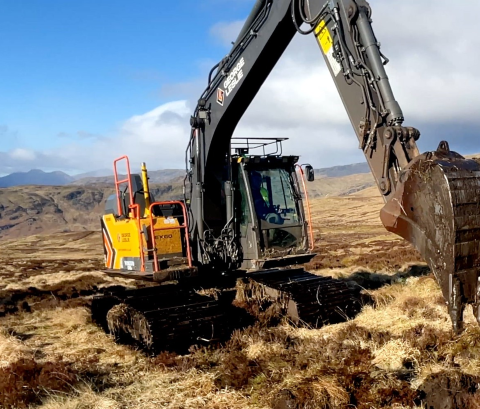
It means overhead lines, underground cables, subsea cables, substations, converter stations, construction traffic, land access, visual impact and local disruption.
Who pays for the new grid?
The transmission system is paid for through the GB charging system. TNUoS recovers the cost of installing, maintaining and operating the transmission network. Suppliers and generators pay charges, and supplier charges feed into customer bills.
That means Scottish households and businesses are part of the customer base paying for the network, along with customers across England and Wales.
It would be wrong to say Scotland alone pays for the new grid. It does not.
But Scotland :
- Hosts much of the visible infrastructure
- Its households and businesses pay into the GB network cost system
- Its generators face some of the highest locational charges because they are in Scotland
That is the contradiction.
Will the new grids solve the problem?
Not automatically.
New transmission links may reduce congestion and allow more Scottish renewable electricity to move to demand centres. Ofgem has argued that accelerated grid projects can reduce constraint costs, including payments made when wind generators are asked to stop generating because the network cannot carry the power.
But new lines do not, by themselves, remove the locational charging method. If TNUoS remains structured in a way that penalises generation far from southern demand, Scotland could still host the infrastructure and still face high generator charges.
The new grid could help move Scottish electricity. It does not automatically ensure Scotland receives a fairer price, lower local bills or a less punitive charging regime.
Will Scottish households get cheaper electricity because Scotland produces more power?
Not automatically.
In 2025, the UK Government decided to retain a single national GB wholesale electricity market rather than introduce zonal pricing. Ofgem then said network charging signals would need to be reformed in light of that decision.
That means Scottish consumers do not automatically receive a local wholesale electricity discount simply because Scotland produces abundant renewable power.
A zonal system might have created lower prices in areas with abundant generation and constrained export capacity. The UK Government chose not to take that route.
The burden now falls more heavily on network charging reform, industrial policy and any targeted mechanisms for large users.
What do data centres have to do with this?
Data centres are entering the story because they are large electricity users, and governments are now treating them as part of energy system planning.
The UK Government’s AI Growth Zones policy says data centres in AI Growth Zones can reduce constraint costs when they locate in areas such as Scotland and the north of England, where they can use electricity that might otherwise be constrained. From April 2027, subject to legislation, data centres in AI Growth Zones are expected to see electricity cost reductions of up to £24 per megawatt hour in Scotland, £16 in Cumbria and £14 in the North East.
Lanarkshire has been named as Scotland’s AI Growth Zone. The UK Government says the zone is backed by £5 million of public investment, is expected to attract billions of pounds of private investment and support more than 3,400 jobs. A written ministerial statement said the Lanarkshire site would be delivered by DataVita in partnership with CoreWeave, support more than 3,400 jobs over the coming years, crowd in £8.2 billion of private investment, and include £540 million over 15 years for local community support.
The Scottish Government’s AI strategy also describes the Lanarkshire AI Growth Zone as a step change in AI-enabled economic transformation, backed by over £8 billion of private investment and designed with DataVita and CoreWeave.
There are potential economic benefits here. Jobs, investment, digital infrastructure and supply chain activity cannot be dismissed out of hand.
But Scotland’s test is whether the costs, power demand, water demand, grid consequences and local impacts are openly accounted for.
Will Scotland host data centres and also pay for the grid they need?
There is not yet enough evidence to say Scottish households are directly paying for individual data centre grid connections in a simple, project-by-project way. Developers can face connection costs, private infrastructure costs and planning obligations.
But there is enough evidence to raise a serious public question.
The UK Government is explicitly proposing electricity price support for data centres in Scottish AI Growth Zones, justified by the claim that locating large demand in Scotland can reduce grid constraint costs.
At the same time, Scotland is already part of the GB customer base paying for the wider transmission system through network charges. Scottish communities are being asked to host major transmission infrastructure. Scottish renewable generators continue to face high locational charges.
So the risk is not a simple bill labelled “data centre charge” arriving at a Scottish household.
The risk is more structural.
Scotland may host the wind farms, the pylons, the substations, the converter stations and the data centres. Scottish consumers may continue paying into the GB network cost system. Scottish generators may continue paying more because their power is produced far from southern demand. Large data centre operators may then receive targeted electricity cost support for locating in Scotland.
That is the settlement the public must examine before it hardens into infrastructure.
How much power could data centres use?
Data centre power demand is no longer a marginal issue.
The UK Government’s own material says AI data centres are major electricity users and that data centre policy can be used to reduce constraint volumes and costs when centres locate in constrained areas such as Scotland and the north of England.
A House of Commons Library briefing on data centres says data centres currently consume around 2.5 percent of UK electricity and that the sector’s electricity consumption is expected to rise four-fold by 2030. It also notes that Scottish planning policy is supportive of data centres that use renewable energy produced in Scotland.
The Guardian has reported that more than a dozen data centres in Scotland were in the planning process and that, collectively, they stood to use roughly 6.2 GW of power, around one and a half times Scotland’s winter peak power use. That figure should be treated as a media estimate requiring continuing verification against planning documents, connection applications and developer statements.
The direction is clear enough. Data centres are industrial electricity loads.
Could data centres actually help Scotland?
They could, under strict conditions.
If large data centres are located near constrained renewable generation, they may absorb power that would otherwise be curtailed. If they pay the full cost of their connections, publish energy and water use, provide real long term jobs, support local supply chains and do not displace household or industrial needs, they could form part of a planned energy and digital economy.
But that is not guaranteed by calling them green, strategic or AI-enabled.
Scotland risks becoming a convenient location for other people’s digital infrastructure.
What should Scotland demand now?
Scotland should demand that TNUoS reform is completed before the new grid settlement is effectively locked in.
It should demand that Ofgem, NESO and UK ministers publish clear comparisons showing how Scottish generators are charged against generators in England and Wales, including forecasts to 2030 and beyond.
It should demand that any electricity price support for AI Growth Zone data centres is explained in public, including who funds it, how constraint savings are calculated, who receives the benefit and what protections exist for ordinary consumers.
It should demand that major data centres publish expected power demand, water demand, backup generation plans, permanent job numbers and community benefit agreements before planning decisions are made.
It should demand that new grid infrastructure comes with a visible Scottish public benefit, not merely a national system benefit described from London.
And it should demand honesty about the bargain.
What should Scotland watch next?
Watch Ofgem’s network charging reform. Watch NESO’s TNUoS forecasts and annual tariffs. Watch the UK Government’s Reformed National Pricing delivery plan. Watch the April 2027 date for AI Growth Zone electricity price support. Watch the 2030 review point. Watch ASTI approvals and SSEN’s Pathway to 2030 projects. Watch Lanarkshire AI Growth Zone planning and any future Scottish data centre applications.
Above all, watch whether the warnings are acted on this time.
The old warnings were not hidden. Scottish Renewables warned. The Scottish Government warned. Island councils warned. SCDI warned. SSEN Transmission warned. Westminster’s Scottish Affairs Committee warned. Ofgem later acknowledged uncertainty and imbalance.
Yet the locational penalty survived long enough to meet the largest Scottish grid build out in modern energy history.
SOURCES:
NESO explains that TNUoS charges recover the cost of installing and maintaining the transmission system in England, Wales, Scotland and offshore, and that generators and suppliers are charged through the system.
https://www.neso.energy/industry-information/charging/tnuos-charges
A history paper from the Institution of Engineers in Scotland describes the privatisation structure, including the distinction between England and Wales and Scotland’s two vertically integrated electricity boards.
https://engineers.scot/office/resources/papers/private-elec-26th-june-final.pdf
Elexon describes BETTA as the extension of the New Electricity Trading Arrangements to Scotland, creating a single GB wholesale electricity market. Ofgem’s 2005 BETTA Q and A said supplier transmission costs in Scotland were proposed to fall by about £25 million a year.
https://www.elexon.co.uk/bsc/glossary/british-electricity-trading-and-transmission-arrangements/
https://www.ofgem.gov.uk/sites/default/files/docs/2005/02/9595-bettaqa_update_jan05.pdf
A 2005 Westminster debate set out the official defence of cost reflective charging, arguing that it promoted efficient use of the transmission network and lower cost outcomes for consumers.
SSEN Transmission’s evidence to the House of Commons Scottish Affairs Committee said the charging methodology was created for an older system and gave examples of higher Scottish charges compared with Wales and England.
https://committees.parliament.uk/writtenevidence/37233/html/
Scottish Renewables’ 2012 Project TransmiT response argued for a more socialised or postalised approach to transmission charging.
https://www.ofgem.gov.uk/sites/default/files/docs/2012/03/scottish-renewables-transmit-con-resp.pdf
The Scottish Government’s Project TransmiT response said the review needed to deliver an enduring charging regime meeting the needs of generators across Scotland.
https://www.ofgem.gov.uk/sites/default/files/docs/2012/03/scottish-government-transmit-con-resp.pdf
SCDI told Ofgem in 2012 that high transmission charging in Scotland had long been a significant concern and a disincentive to renewable projects.
Orkney Islands Council and Western Isles Council both raised concerns about the effect of Ofgem’s distance related charging approach on islands and remote renewable generation.
Ofgem’s Project TransmiT decision accepted that defects had been identified in the charging methodology, but proceeded through reform of the methodology rather than abandonment of locational charging.
The House of Commons Scottish Affairs Committee’s 2021 report said transmission charge volatility was a barrier to renewable energy development and called for Ofgem to consider the burden in Scotland and long term effects on renewable projects.
https://publications.parliament.uk/pa/cm5802/cmselect/cmscotaf/51/5104.htm
Scottish Renewables’ 2021 response to Ofgem said north of Scotland TNUoS charges had risen from £11/kW in 2016 to £26.35/kW in 2021, while comparable southern generators received negative charges.
Ofgem’s 2024 open letter acknowledged uncertainty around long term TNUoS charges, concerns about projected northern charges, and the potential for higher northern charges and larger southern credits.
The UK Government’s 2025 REMA update retained a single GB wide wholesale electricity market and said it would work with Ofgem on TNUoS and connection charging reform. Ofgem’s 2025 open letter then framed network charging reform in light of that decision.
A UK Government locational pricing paper explains how locational charges can vary by zone and can be negative where generation is close to demand centres.
https://assets.publishing.service.gov.uk/media/54eb5da5ed915d0cf7000010/Locational_pricing.pdf
Scottish Renewables’ 2026 report, Transmission Charging in Scotland: Jeopardising Britain’s Energy Transition, gives examples of a northern Scottish offshore wind project paying tens of millions in annual TNUoS charges while an equivalent southern English project receives payments.
Scottish Renewables said in 2026 that existing Scottish generators had faced £2.9 billion of unforeseen and unavoidable TNUoS charge increases since 2015.
NESO describes the Holistic Network Design as an integrated approach for connecting 23 GW of offshore wind to Great Britain. Scottish offshore wind material says more than 11 GW of that is in Scotland and cites an estimated £32 billion cost for the 2030 design.
https://www.neso.energy/publications/beyond-2030/holistic-network-design-offshore-wind
https://www.offshorewindscotland.org.uk/media/13209/holistic-network-design-for-2030-in-scotland.pdf
Ofgem’s ASTI guidance says the accelerated framework applies to an initial 26 electricity transmission projects identified through the Holistic Network Design and related analysis.
SSEN Transmission says its Pathway to 2030 programme involves around £29 billion of investment to upgrade network infrastructure across the north of Scotland.
https://www.ssen-transmission.co.uk/projects/2030-projects/
Ofgem describes Eastern Green Link 1 as a planned 2 GW HVDC subsea cable between East Lothian and County Durham. SSEN describes Eastern Green Link 3 as a subsea cable transporting clean energy from the north of Scotland to England.
https://www.ssen-transmission.co.uk/projects/project-map/eastern-green-link-3/
Ofgem says ASTI projects are intended to accelerate strategically important transmission projects and reduce costs caused when wind generation cannot be used because there is not enough grid capacity.
The UK Government’s Delivering AI Growth Zones policy paper says data centres in AI Growth Zones will receive electricity cost reductions from April 2027, subject to legislation, of up to £24/MWh in Scotland, £16/MWh in Cumbria and £14/MWh in the North East.
https://www.gov.uk/government/publications/delivering-ai-growth-zones/delivering-ai-growth-zones
The UK Government announced Lanarkshire as an AI Growth Zone, with £5 million of public investment, more than 3,400 jobs and billions in private investment. A written ministerial statement said the site would be delivered by DataVita with CoreWeave, crowd in £8.2 billion and include £540 million over 15 years for local community support.
https://questions-statements.parliament.uk/written-statements/detail/2026-01-29/hcws1289
Scotland’s AI Strategy 2026 to 2031 describes the Lanarkshire AI Growth Zone as backed by more than £8 billion of private investment and designed with DataVita and CoreWeave.
https://www.gov.scot/publications/scotlands-ai-strategy-2026-2031/pages/3/
The UK Government’s Reformed National Pricing delivery plan says AI data centres are major electricity users and that data centre policy can reduce constraint volumes and costs when centres locate in constrained areas such as Scotland and the north of England.
A House of Commons Library briefing says data centres currently consume around 2.5 percent of UK electricity, that the sector’s electricity consumption is expected to rise four-fold by 2030, and that Scottish planning policy supports data centres using renewable energy produced in Scotland.
https://commonslibrary.parliament.uk/research-briefings/cbp-10315/
https://researchbriefings.files.parliament.uk/documents/CBP-10315/CBP-10315.pdf
The Guardian reported in May 2026 that more than a dozen data centres in Scotland were in the planning process and that collectively they could use roughly 6.2 GW of power. This is useful as a media estimate but should be checked against planning and grid documents before being treated as a primary dataset.
Scotland is being asked to help power Britain’s future. It should not be charged as though its geography is a fault.