
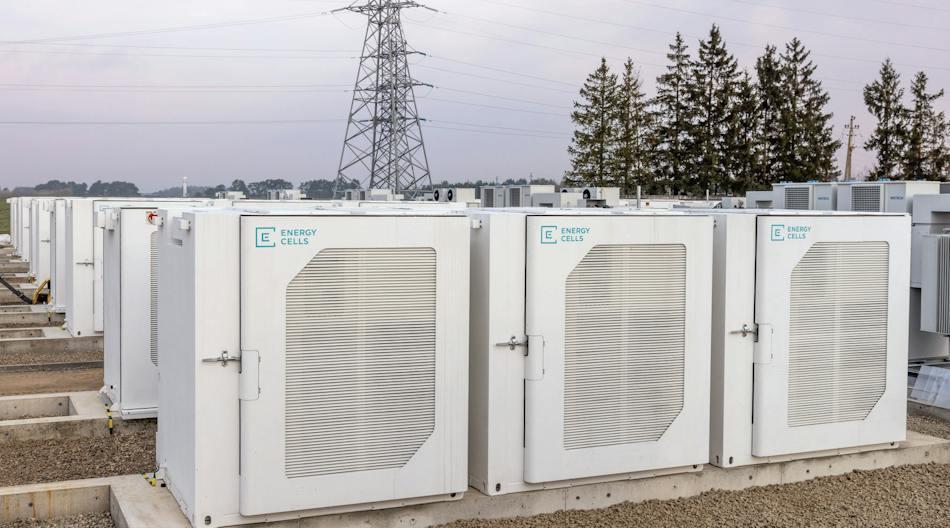
Norwegian state-owned energy company Statkraft has brought a new battery installation into commercial operation in Renfrewshire, introducing technology designed to help maintain the stability of Britain’s electricity network as conventional fossil-fuel generators are increasingly replaced by wind, solar and other renewable sources.
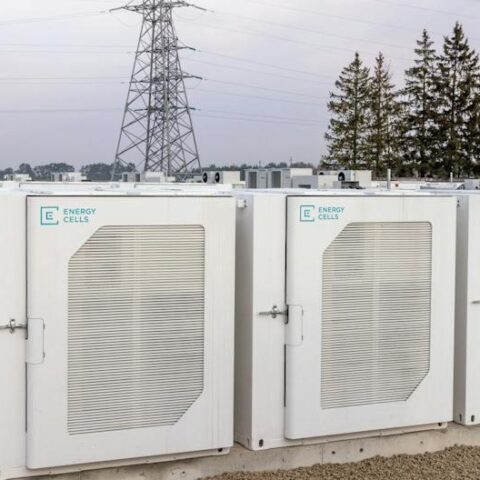
The 50-megawatt installation at Neilston Greener Grid Park was formally opened on 12 November. It is Statkraft’s first operational grid-forming battery project and one of the first installations of its kind to enter commercial service in the United Kingdom.
The development occupies land beside the existing Neilston electricity substation, near Gleniffer Road outside Paisley.
Although the newly commissioned installation has a capacity of 50MW, planning consent has been granted for a much larger battery development with an overall operating capacity of up to 750MW.
The initial 50MW is included within that maximum. The additional capacity has not yet entered operation, and Statkraft has not announced a complete construction timetable or final investment cost for the expansion.
The opening comes as electricity companies invest in technologies capable of replacing some of the stability functions historically provided by coal, gas and hydroelectric power stations.
Why the Grid Needs More Than Electricity
Keeping an electricity network operating safely requires more than producing enough power to meet demand.
The system must also maintain a stable frequency and voltage while responding almost immediately to faults, changes in electricity consumption and the loss of individual generators or transmission lines.
Britain’s electricity network operates at a nominal frequency of 50 hertz.
Traditional large power stations use rotating generators that spin in synchronisation with the electricity system. The substantial physical mass of these machines contains stored kinetic energy, providing an immediate stabilising response when electricity generation and demand suddenly change.
This property is known as inertia.
As increasing quantities of electricity are supplied by wind turbines, solar installations and electronically connected equipment, the characteristics of the network change.
Many renewable generators connect through electronic converters rather than the large directly connected rotating machines associated with traditional power stations.
That reduces the amount of conventional physical inertia available during some operating conditions.
The National Energy System Operator must therefore obtain alternative services to maintain system stability.
Grid-forming battery technology is one possible solution.
What Makes the Neilston Battery Different?
Conventional grid-following battery installations generally monitor an existing electricity waveform and synchronise their operation with it.
Grid-forming technology uses advanced power electronics and control systems capable of establishing and supporting a stable voltage waveform.
Such equipment can respond rapidly to disturbances and provide services that help the network operate when fewer conventional rotating generators are running.
These services can include rapid frequency response, voltage support, system strength and electronically delivered responses that emulate aspects of conventional generator inertia.
The capabilities depend on the equipment design, its operating conditions and the specific services contracted by the electricity system operator.
Grid-forming technology does not create electricity from nothing. Batteries must still be charged, and delivering electrical energy over time consumes their stored reserves.
The significance of Neilston is therefore not simply the installation of another battery, but the use of batteries and power electronics to perform additional technical functions needed by the network.
Statkraft says the project will assist the operation of a system with greater proportions of renewable electricity.
A Scottish Project Within a National Grid Stability Programme
Neilston forms part of the wider programme through which Britain’s electricity system operator has procured alternative stability services.
Under the Stability Pathfinder programme, commercial providers were invited to offer technologies capable of supplying services previously associated with conventional generating stations.
Scotland has particular requirements because it hosts large quantities of renewable electricity generation and is connected to the rest of Britain through transmission routes that can become congested.
Technologies selected under the programme include grid-forming batteries and synchronous compensators.
A synchronous compensator is a rotating electrical machine that supports the network without operating as a conventional power station generating electricity from fuel.
Grid-forming batteries use a different technical approach, employing electronic converters and stored energy.
The National Energy System Operator’s earlier procurement results identified Statkraft’s Neilston development among the projects selected to provide stability services.
This means that the investment has an operational purpose within the wider electricity network rather than being constructed solely to buy and sell electricity according to changing market prices.
Approval for a Much Larger 750MW Development
The project at Neilston has developed through several planning stages.
The original 50MW installation received approval in 2022.
Statkraft subsequently sought permission for a substantially larger battery storage development covering land beside the existing substation.
The Scottish Government’s Energy Consents Unit now lists the proposal for a facility of up to 750MW as consented.
The approved application describes up to 88 battery storage container blocks and associated infrastructure, including access roads, equipment buildings, lighting, security installations and drainage arrangements.
Importantly, the 750MW figure is a maximum permitted operating capacity under the consent, not the quantity of battery power currently connected to the network.
Future construction would require further commercial decisions, procurement and detailed implementation arrangements.
The published consent also does not mean that 750 megawatt-hours of energy could be stored. Megawatts measure power, while megawatt-hours measure the amount of energy a battery can supply or absorb over time.
A complete assessment of future storage performance would require information about the battery’s usable energy capacity and discharge duration, neither of which can be established from the 750MW power rating alone.
How Much Money Is Being Invested?
Statkraft states that it has invested more than £2 billion in renewable energy infrastructure across the United Kingdom since entering the British market in 2006.
That figure covers the company’s wider activities, including electricity generation, energy storage and grid-related infrastructure. It is not the construction cost of the Neilston installation.
Statkraft has not disclosed a full project-specific capital expenditure figure in its November announcement.
Consequently, the public information available does not establish how much the first 50MW phase cost, or how much further expenditure would be required to develop the entire approved site.
The company has projects elsewhere in Britain and Ireland, including another grid-forming battery scheme under construction at Coylton in East Ayrshire.
It is also developing synchronous compensator installations at Swansea in Wales and Necton in Norfolk.
These investments form part of an expanding commercial market for electricity system services.
For the companies supplying them, the business opportunity lies in being paid for services that the electricity network increasingly requires, including stability and flexibility, rather than relying entirely on revenue from electricity generation.
Will Batteries Make Household Electricity Cheaper?
Statkraft argues that technologies such as Neilston can help reduce dependence on fossil-fuel generation and improve the stability of electricity costs.
There is a credible technical basis for the argument. If batteries provide stability services that would otherwise require more expensive operating arrangements, the electricity system may be able to perform the same functions at lower cost.
Battery storage can also move electricity between periods of supply and demand, making greater use of renewable generation when operating conditions permit.
However, there is no published calculation showing how much Neilston’s opening will reduce the annual electricity bill of an individual Scottish household.
The network and its customers must also pay for the infrastructure and services being supplied.
Whether a particular investment produces a net saving depends on its construction and operating costs, the price of competing stability services and the value delivered over its lifetime.
Britain’s electricity bills are affected by several additional factors, including wholesale energy prices, transmission charges, distribution costs, supplier expenses and government policy charges.
The commissioning of a 50MW installation cannot, on its own, determine those wider prices.
What Does Renfrewshire Receive?
Statkraft says it established a voluntary community benefit programme for its battery and grid-stability developments, making funding available during construction rather than waiting until facilities become operational.
The company reports that more than £50,000 has already been distributed to community groups near Neilston Greener Grid Park.
Its project information also describes an annual community benefit commitment of £20,000.
These are contributions to local organisations and projects. They should not be interpreted as reductions in the electricity bills of households living near the site.
The development also involves land, construction activity and permanent electricity infrastructure within Renfrewshire.
As additional phases are considered, the local consequences will include construction traffic, land use, landscape effects, security arrangements and the safety provisions required for large battery installations.
Lithium-ion battery facilities require appropriate arrangements for fire prevention, fault management and emergency response.
The presence of those general risks does not establish that Neilston has an identified safety defect. It does mean that the approved development’s technical design and emergency arrangements are relevant matters for planning authorities, operators and surrounding communities.
Future expansion should also be assessed against its actual investment, employment and local procurement commitments rather than the headline generating or storage capacity alone.
The Changing Economics of Electricity Infrastructure
Statkraft’s November announcement illustrates a larger change in the electricity industry.
For much of the twentieth century, power stations supplied both electrical energy and many of the physical services necessary to keep the network stable.
As electricity generation changes, some of those services are becoming separate commercial products supplied by specialist facilities.
This creates opportunities for engineering firms, equipment manufacturers, battery developers, electricity market participants and investors.
It also introduces new questions about how the services are procured, how much consumers pay, and whether the system operator obtains reliable performance at an appropriate cost.
At Neilston, one phase of that transition is now operating.
The larger approved development could substantially increase the site’s role in the electricity network, but its future scale, cost and timetable remain dependent on decisions that have not yet been announced.
The immediate importance of the November opening is therefore technical as well as economic: an electronically controlled battery installation is beginning to provide services once associated principally with large rotating power station machinery.
Sources
Statkraft UK. Statkraft’s First Grid-Forming Battery Scheme Now Operational. 12 November 2026. https://www.statkraft.co.uk/newsroom/2026/neilston-scheme-now-operational/
Statkraft. Statkraft First Grid-Forming Battery Is Operational. 13 November 2026. https://www.statkraft.com/newsroom/news-and-stories/2026/statkraft-first-grid-forming-battery-is-operational/
Scottish Government, Energy Consents Unit. Neilston Greener Grid Park Section 36: Application ECU00004988. https://www.energyconsents.scot/ApplicationDetails.aspx?T=3&cr=ECU00004988
Statkraft. Neilston Greener Grid Park: Project Information and Approved Capacity. https://projects.statkraft.co.uk/Neilston/
National Energy System Operator. Stability Pathfinder Phase 2: Results. https://www.neso.energy/document/267006/download
Statkraft. Greener Grid Parks: British Grid Stability and Energy Storage Projects. https://www.statkraft.co.uk/what-we-do/greenergridparks/