A Scottish company developing technology that could change how drivers see information through their windscreens has been acquired by one of Germany’s largest optical technology groups, placing a relatively little-known business in Livingston within an international effort to industrialise holographic displays.
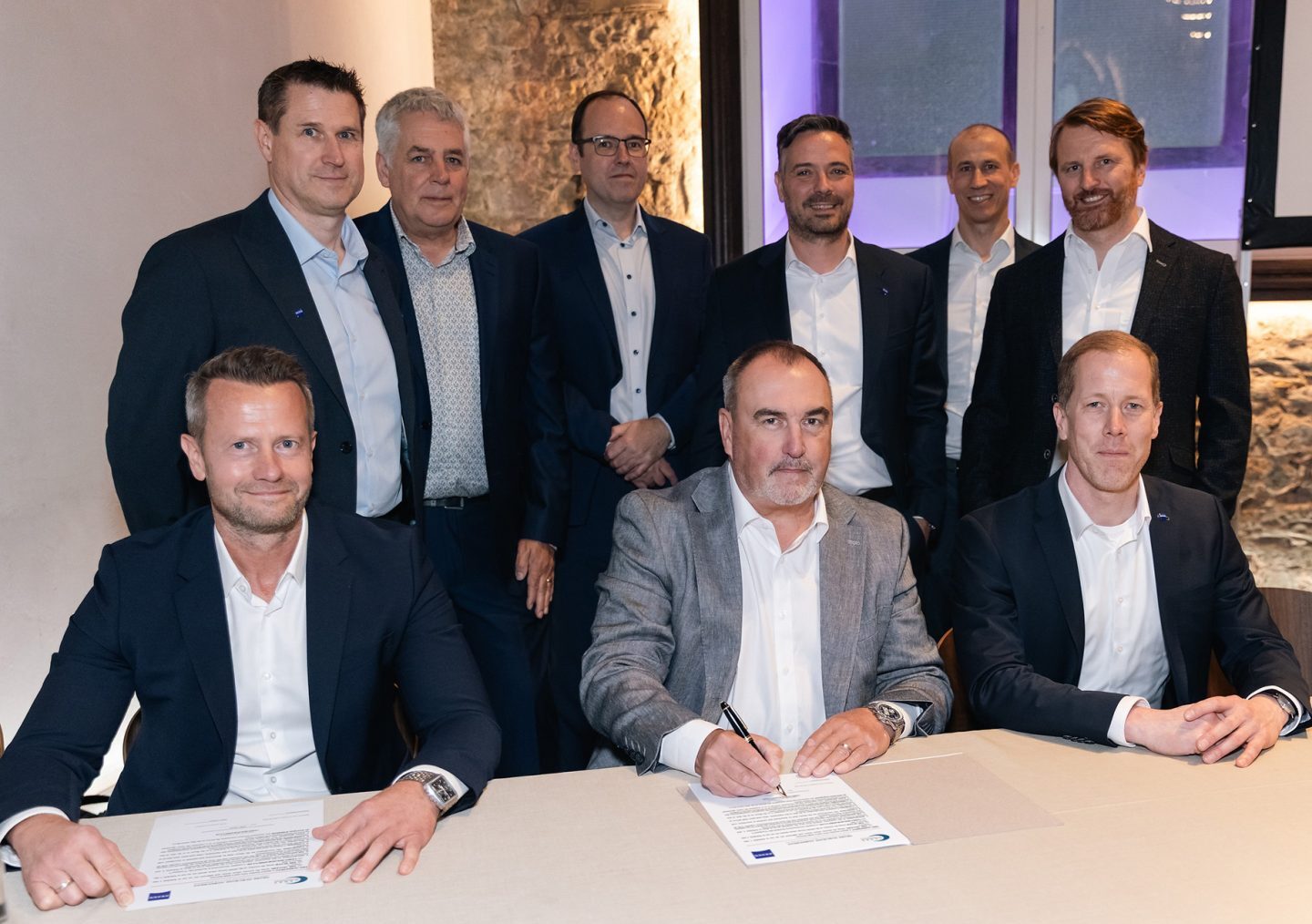
On 8 October 2026, ZEISS announced its acquisition of Ceres Holographics, a specialist in advanced holographic optical elements. The financial terms were not disclosed, but the transaction brings Scottish-developed manufacturing technology into a group operating across approximately 50 countries, with more than 47,400 employees and established markets in optics, medical technology, industrial systems and consumer products.
The acquisition is significant not simply because another Scottish technology company has attracted an overseas buyer. Ceres has developed methods for producing large-format holographic components intended for high-volume manufacturing, particularly for vehicle windscreens. Its technology addresses one of the practical obstacles preventing advanced transparent displays from moving into wider commercial production.
ZEISS intends to combine that expertise with its own ProSight holography platform, expanding its ability to supply automotive manufacturers and other industrial customers.
The development raises a wider economic question for Scotland. Advanced technology can originate in relatively small Scottish companies, but the financial resources, production capacity and international customer networks required to bring that technology into global markets are frequently controlled by much larger businesses.
From Livingston to the Automotive Industry
Founded in 2009, Ceres Holographics specialises in holographic optical elements, sometimes described as HOEs. These are engineered structures that manipulate light to create optical effects without requiring the bulky arrangement of conventional lenses, mirrors and projection equipment.
The company’s principal commercial interest has been automotive windscreen displays.
Existing head-up display systems generally project information into a relatively limited area of a driver’s field of vision. More advanced holographic systems could allow information to appear across larger sections of the windscreen, placing navigation directions, warnings or other visual information in positions more closely aligned with the road ahead.
This is technically challenging. Vehicle windscreens are large, curved, exposed to changing lighting conditions and required to meet demanding safety standards. Display systems must remain legible while maintaining the driver’s ability to see the road clearly.
Ceres has concentrated on manufacturing thin-film holographic components suitable for applications on a scale that could eventually support mainstream vehicle production.
The distinction between inventing a working display and manufacturing thousands or millions of reliable units is important. A technology that performs successfully in a laboratory or demonstration vehicle is not necessarily ready for mass production.
ZEISS believes Ceres has developed capabilities that can help address that commercialisation problem.
Why ZEISS Wanted the Scottish Business
ZEISS is headquartered in Oberkochen, Germany, and traces its origins to the optical workshop established in Jena in 1846.
The group already possesses substantial expertise in optical engineering and precision manufacturing. Its Microoptics division develops holographic systems for automotive, aerospace, consumer and other industrial applications.
Ceres adds specialised technology in hologram design, mastering and replication — processes involved in creating and reproducing the optical structures required for commercial products.
The combination is intended to accelerate the industrial application of holographic windscreens while allowing ZEISS to approach markets beyond vehicle manufacturing.
Potential uses identified by the companies include public transport, retail environments, near-eye displays and aerospace applications.
For manufacturers, the appeal lies in incorporating digital information into transparent surfaces without necessarily relying on traditional screens occupying additional physical space.
There is, however, a difference between potential applications and established sales. ZEISS has identified markets it intends to pursue, but its acquisition announcement does not establish that every proposed product is commercially available or already being manufactured at scale.
Who Now Owns the Technology?
The ownership structure is an important part of this acquisition.
ZEISS is not an ordinary publicly traded multinational whose shares are dispersed across stock-market investors. Its holding company, Carl Zeiss AG, is wholly owned by the Carl Zeiss Foundation, a German foundation whose objectives include supporting science and research.
The acquisition therefore places Ceres within a large, foundation-owned industrial group with an established commitment to research and development.
ZEISS reports that it invests approximately 14% of its revenue in research and development, an unusually substantial commitment for an industrial business.
The potential advantage for Ceres is access to financing, engineering expertise, manufacturing resources and customers that would be difficult for a smaller independent company to assemble.
The economic trade-off is that strategic control of the acquired Scottish company now sits within the wider German group.
Scotland may continue to benefit from the company’s technical expertise, jobs and commercial activity, but ownership of the company and control over its future development are no longer independent Scottish corporate decisions.
That distinction matters when assessing the value of Scotland’s technology sector. Successful research, company growth and a profitable sale are all economic achievements, but they do not necessarily produce the same long-term consequences as retaining an independent multinational headquarters in Scotland.
What Happens to the Livingston Operation?
Neither ZEISS nor Ceres disclosed the acquisition price.
The announcement also did not provide a quantified commitment to new employment in Livingston, a future capital investment programme for the Scottish facilities, or a timetable for expanded local manufacturing.
Those omissions should not be interpreted as evidence that jobs are threatened. They do mean that the direct local economic consequences of the acquisition cannot yet be calculated.
The companies have emphasised combining their technical teams and accelerating industrialisation. Ceres chief executive Andy Travers described the transaction as an opportunity to build on existing commercial progress with greater resources and international reach.
For West Lothian, the next significant developments will be whether the business expands its Scottish engineering workforce, attracts new research programmes or establishes additional manufacturing capabilities.
Its continued presence as a centre of specialist optical knowledge would be economically valuable even if large-volume production ultimately occurs elsewhere.
A Revealing Test for Scotland’s Technology Economy
The Ceres transaction illustrates a particular strength of Scotland’s technology sector: specialist research and engineering companies can develop products that interest some of the world’s largest industrial groups.
It also illustrates the difficulty of measuring the long-term economic value of such success.
The sale price has not been published. The future scale of Scottish operations has not been specified. No publicly quantified new employment commitment accompanied the announcement.
What is established is that technology developed by a Livingston company has become sufficiently important to ZEISS’s commercial plans for the German group to acquire the business.
The question now is whether that global industrial backing translates into a larger, more productive Scottish operation — or whether the principal economic return from the innovation is eventually realised elsewhere.