Iranian officials have threatened to target undersea internet cables in the Gulf if the country’s infrastructure comes under attack, extending their warnings to the communications networks serving neighbouring states.
A video attributed to Iran’s Revolutionary Guards depicts a hypothetical collapse of banking and communications networks.
Brigadier General Yadollah Javani, political deputy to the commander of Iran’s Islamic Revolutionary Guard Corps, made the warning in an interview with Al-Alam television reported on 21 October. Iranian state broadcaster Press TV said cables passing through the Strait of Hormuz could become targets if Iranian infrastructure was attacked.
The warning followed an interview with Mohsen Rezaei, secretary of Iran’s Supreme National Security Council, reported by Press TV on 11 October. Rezaei said US-linked cables, data centres and artificial-intelligence facilities in the region could be attacked if fighting resumed. He also said those assets had not yet been included among Iran’s targets.
The statements describe potential retaliation, rather than announcing that the threatened cable attacks have taken place. Industry assessments indicate that the principal communications risk would be regional. In a statement published on 20 May, the International Cable Protection Committee said less than 1% of global international bandwidth passed through the Strait of Hormuz, citing research by TeleGeography.
The consequences would depend on the connections available to individual countries and network operators. TeleGeography’s analysis identifies overland links serving Bahrain, Kuwait and Qatar, while Saudi Arabia receives most of its international bandwidth through cables on its Red Sea coast. Those alternatives provide resilience, but terrestrial networks may lack sufficient capacity to absorb all traffic diverted from damaged submarine cables.
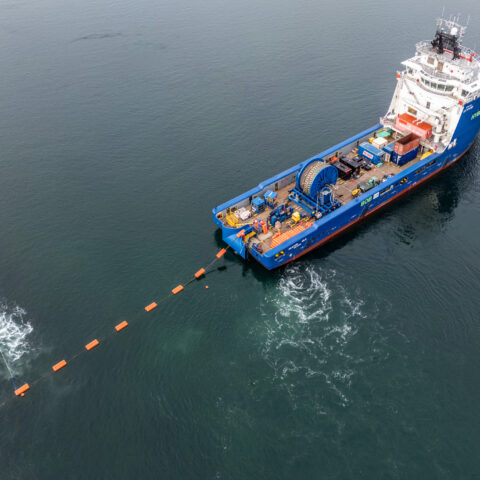
Damage during a conflict could also take longer to repair. Specialist vessels require permission to enter the affected waters and must be able to work safely. TeleGeography identified delays in restoring damaged connections as a major concern, with hostilities and restrictions on access capable of prolonging disruption.
Regional operators are developing additional routes. On 7 October, OFN, Ooredoo Group’s international connectivity arm, announced an agreement with Iraqi provider iQ Networks for fibre connections across Iraq towards Türkiye and Europe. The arrangement forms part of a planned route combining the Fibre in Gulf submarine cable project with an overland connection through Iraq.
Ooredoo said the infrastructure would provide another geographical route for international data traffic and serve telecommunications companies, cloud providers and data centres. Implementation remains subject to regulatory, governmental and other required approvals.
Sources
Undersea Internet cables could be targeted in retaliation for attacks on Iran: IRGC deputy chief — Press TV, 21 October 2026.
Exclusive: Iran security chief says powers greater than US tried to conquer Iran but ended in ‘dustbin of history’ — Press TV, 11 October 2026.
Regional Importance of the Strait of Hormuz — International Cable Protection Committee, 20 May 2026.
Navigating Hostile Waters: Submarine Cable Infrastructure and the Strait of Hormuz — TeleGeography, 13 March 2026.
OFN Signs Dark Fibre Agreement with iQ Networks to Advance Iraq Transit Corridor FIG Landing Partnership with ITPC — Ooredoo, 7 October 2026.