
Once a month, the ladies come to my house for our magazine exchange. It is one of the quieter arrangements we have managed to establish over the years, mostly because everybody is reading and nobody feels obliged to entertain anyone.
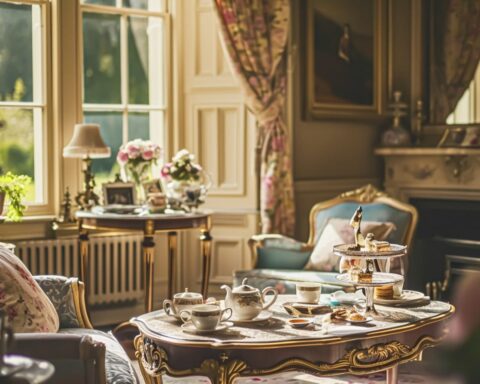
We each subscribe to something different, and when we have finished with our magazines, we swap them. There are usually eight of us around the dining-room table, with our spectacles, our cups of tea and enough reading material to equip a small waiting room.
The more unusual magazines are generally the most interesting.
Jean takes one about old tractors, although she has never owned a tractor and has no intention of acquiring one. She simply likes the engineering. Elspeth subscribes to a country magazine full of beautiful houses and dogs that appear never to have encountered mud. Margaret gets a gardening publication which has persuaded her that there is no such thing as a plant that cannot be rescued by moving it somewhere else.
Agnes once subscribed to a magazine about antiques, but cancelled it after discovering that several things in her kitchen were now considered collectible. She said she was not prepared to call something an antique when she had used it to make breakfast that morning.
Magazine exchange day is usually peaceful. There is the turning of pages, the occasional adjustment of spectacles and the sound of somebody quietly discovering that a rose bush needed pruning in a month that has already passed.
Every so often, one of us reads something aloud.
That is generally when the trouble starts.
Recently, Rhona has complicated the arrangement by subscribing to newsletters on the internet.
At first, we thought this was sensible. She could receive all sorts of interesting information without buying another magazine. Unfortunately, Rhona does not believe reading material is properly finished until it has been printed.
She prints every newsletter, including the photographs, advertisements, page numbers and instructions for unsubscribing. She then punches holes in everything and files it in a large folder.
She calls it her magazine.
It is not a magazine. It is an administrative burden.
Last month, the folder contained 147 pages, including six pages explaining how to manage cookies. Jean asked to read those with considerable interest because she thought they were recipes.
This month, I was the unfortunate recipient.
Rhona placed the folder beside my teacup with the satisfied expression of a woman who has finally found somebody else to carry her shopping.
I opened it.
There were articles about household finances, health, gardening, consumer habits and something called seasonal lifestyle trends, which I have come to understand means people are spending money on things they never previously knew they needed.
Halfway through, I found a report from Nationwide Building Society about Halloween spending.
I read the first few paragraphs.
Then I read them again.
Apparently, according to a survey of more than 2,000 adults, 11 per cent of people were planning to buy Halloween presents.
I put down my tea.
“Ladies,” I said, “when did Halloween start requiring presents?”
Seven pairs of spectacles rose above seven magazines.
“Presents for who?” asked Agnes.
“People.”
“What people?”
“I don’t know, Agnes. It doesn’t specify.”
“Well, that’s no use. You can’t go about buying presents for people without knowing which people.”
Effie took the folder and examined the figures. Apparently, people buying Halloween gifts expected to spend an average of £31. There were also people buying several pumpkins, special drinks, decorations and costumes.
“Thirty-one pounds,” said Effie. “For Halloween?”
“On presents,” I explained.
“What would you even give somebody?” asked Elspeth.
Margaret suggested chocolates.
“That’s not a present,” said Agnes. “That’s what you give children when they come guising.”
“Apparently candles are popular,” said Rhona, who had read the newsletter before printing it, which seemed rather extravagant.
Agnes looked horrified.
“Imagine going to somebody’s house and handing them a candle because it’s Halloween. They’d think you’d come to tell them the electricity was going off.”
We considered this.
Jean wondered whether Halloween presents required wrapping paper. Morag asked if Halloween cards were now expected, and Elspeth wanted to know whether one was supposed to write thank-you letters.
“I am not writing a thank-you letter for a plastic spider,” said Agnes.
There was general agreement on that point.
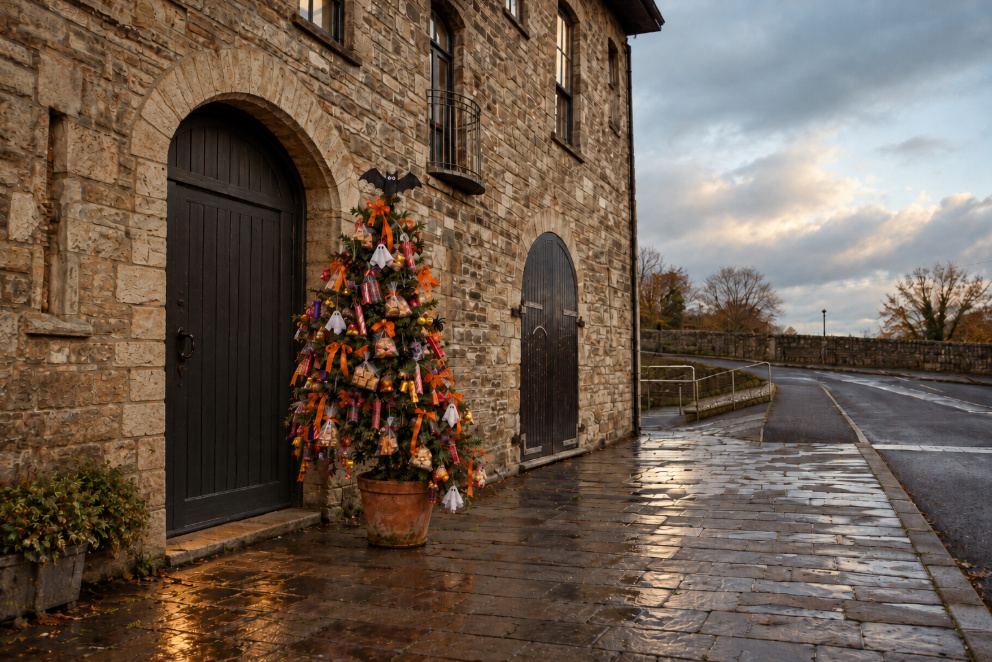
Then Margaret mentioned that people were putting up Halloween trees.
I thought I had misheard.
“Trees?”
“Like Christmas trees,” she explained, “but decorated for Halloween.”
“With what?”
“Pumpkins. Ghosts. Spiders. Little witches.”
For a moment, nobody spoke.
Then Effie looked up.
“Do they take the Halloween decorations off and reuse the tree for Christmas?”
Margaret said the Halloween trees were often black or orange.
“So now we need two trees?” asked Jean.
“Apparently.”
“And where are you supposed to put the Halloween one when it’s finished?”
“In the loft, presumably.”
I remember when Halloween was a relatively straightforward affair. Children went guising, performed a song or recited a verse and received something for their efforts. There were turnip lanterns, occasionally a rather alarming homemade costume, and a general understanding that the festivities would be finished before the adults wanted to go to bed.
Nobody exchanged gifts. Nobody decorated an entire tree. If you received a candle at Halloween, it was probably because somebody wanted you to hold it while they scraped the inside of a turnip.
I was beginning to wonder whether we would soon be expected to invite relatives for Halloween dinner.
It was at this point that Elspeth, who is responsible for many of our charitable activities, suggested that perhaps we were being unnecessarily negative.
“We could make a Halloween tree ourselves,” she said. “It might be nice for somebody.”
I explained that the purpose of our afternoon had been to exchange magazines, not establish a seasonal decorating business.
But Margaret remembered that she had an old artificial Christmas tree in her garage. It was missing part of its stand, but she thought it would be perfectly suitable if we put it in a large flowerpot.
“We could decorate it with sweets,” she said.
“Then give it to the charity shop,” added Elspeth.
I considered suggesting that we ask the charity shop whether it wanted a Halloween tree.
Unfortunately, by then Morag was already looking for string, Jean had volunteered to collect the tree, and Margaret was preparing a list of things we would need.
Once eight Scottish women have decided to make something, asking whether anybody wants it becomes a rather late consideration.
We moved into the kitchen.
The tree arrived half an hour later in the back of Jean’s car. It was a tired-looking green affair with one side considerably fuller than the other, giving it the appearance of having spent several years leaning into a prevailing wind.
Margaret brought a flowerpot, Rhona supplied orange ribbon, Morag found a packet of plastic spiders, and Elspeth produced several bags of miniature chocolate bars.
Agnes supervised.
She is particularly good at supervising because she can identify a mistake before anybody has made it.
We tied sweets to the branches with bits of ribbon and hung little ghosts among the needles. Morag wanted to put a little pumpkin on the top, but the tree began to lean alarmingly, so we settled for a cardboard bat.
By three o’clock, it looked magnificent. Not beautiful, exactly. But magnificent in the way a village scarecrow competition can be magnificent when everybody has used materials from the shed.
There was candy tied to every available branch, plastic spiders dangling among the needles and enough orange ribbon to be seen from the next parish.
We stood back to admire our work.
“Somebody will be delighted with that,” said Elspeth.
Agnes was less certain.
“Somebody will certainly have questions.”
We decided to deliver it to the charity shop before anybody had time to reconsider.
Agnes asked whether anyone had telephoned the shop to make sure it was open.
Nobody had.
This did not seem to trouble the others, who were already discussing the best way to transport the tree without losing the chocolates.
Getting it into my car was more difficult than decorating it. The pot kept tipping, the branches caught on the door and one of the chocolate bars disappeared under the passenger seat, where Morag said it would probably remain until Christmas.
Eventually, we had the tree wedged upright between the seats, with Agnes holding the flowerpot and Elspeth supporting the top. Jean squeezed into the back beside Elspeth, while the others remained at my house to clear away the magazines and finish the cake.
We drove into town feeling rather pleased with ourselves.
Unfortunately, the charity shop was closed.
There was a notice on the door saying they would open at 4, which would have been useful information to obtain before we loaded an artificial tree into a motorcar.
Agnes read the notice. Then she looked at us.
She did not say anything.
Somehow, this was worse.
Elspeth suggested leaving the tree beside the entrance, where the volunteers would find it.
Agnes said it was getting windy.
It was indeed getting windy, but we had spent the best part of a day constructing the thing, and nobody wanted to take it home again.
We placed it by the back donation door, straightened the branches, and admired it.
Margaret was not there to adjust the cardboard bat, so Elspeth did it on her behalf.
She said it looked lovely.
Agnes said it looked unsecured.
We got back into the car.
I had scarcely turned the key when a gust of wind came roaring down the street.
There was a tremendous scraping noise.
I looked up.
Our Halloween tree had left the charity shop. All that was left was the flower pot.
The tree came hurtling across the road, branches flapping, orange ribbons streaming behind it. The cardboard bat disappeared first, followed by several plastic spiders.
Then the entire tree lifted into the air.
It flew straight past the windscreen.
Candy struck the bonnet, bounced towards the wipers and rolled away as the tree sailed over the far side of the street.
We watched it pass above a parked van, make a rather graceful turn over the rooftops and continue eastwards, shedding sweets as it went.
At the speed it was travelling, there was every possibility it would reach the North Sea.
Nobody spoke.
Finally, Agnes opened her door, collected candy from the bonnet and climbed back into the car.
“Well,” she said, putting them in her handbag, “there’s no sense wasting those.”
We drove home in silence.
Rhona was waiting at the dining-room table, sorting her magazines.
“Did the charity shop like the tree?” she asked.
“We don’t know,” I said. “It took off before we could ask.”
“What do you mean, took off?”
“Last we saw, it was heading for Norway.”
Just then, our telephones pinged.
It was the village WhatsApp group.
HAS ANYBODY LOST A CHRISTMAS TREE? ONE HAS JUST LANDED ON THE ROOF OF THE POLICE STATION.
A second message appeared.
POLICE ARE ASKING IF ANYBODY SAW WHERE IT CAME FROM.
We all looked at one another.
Then Agnes reached into her handbag, unwrapped one of the rescued chocolate bars and took a bite.
“Well,” she said, “I wouldn’t say anything. If they charge us with fly-tipping, we’ll have a difficult time denying the flying.”