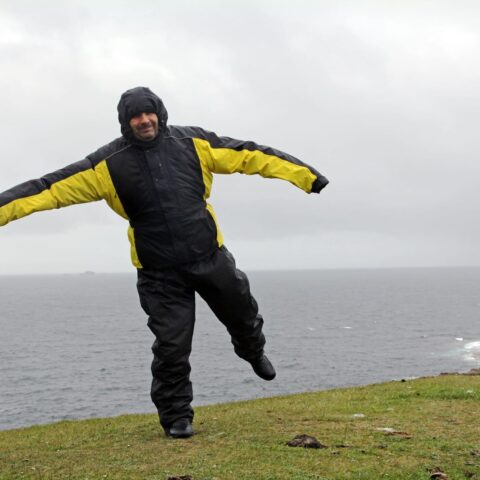

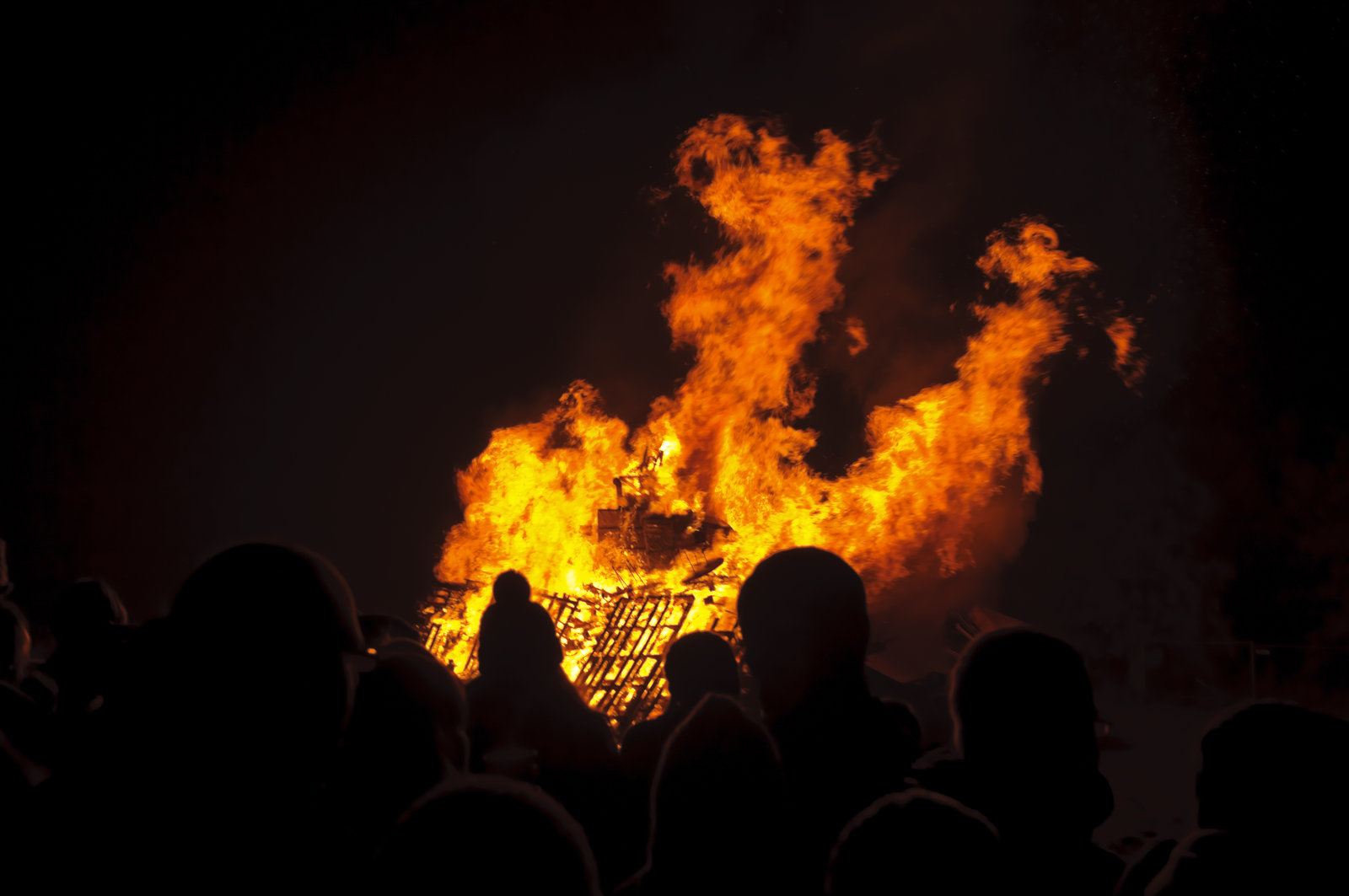
Every fifth of November, otherwise sensible Scottish people leave their warm houses, dress as though they are about to be rescued from a North Sea oil platform, and stand in a wet field to watch somebody set fire to a considerable amount of money.
We call this entertainment.
I have nothing against Bonfire Night. I enjoy fireworks. I enjoy a bonfire. I even enjoy standing outside in the cold, provided there is a good reason and somebody has brought something warm to drink. What I have never understood is why we chose November for an occasion that requires people to stand about looking upwards. In Scotland, looking upwards in November is usually how you discover that the rain has changed direction.
I know there is a historical explanation. Guy Fawkes tried to blow up Parliament on the fifth of November in 1605, and for more than four centuries we have marked his failure by demonstrating that the general public can still get through an astonishing quantity of gunpowder without his assistance.
I should have preferred the whole business to take place in June. There would be daylight, reasonable temperatures and considerably less danger of losing a child inside a waterproof coat. But apparently history is quite particular about dates.
Several years ago, I suggested to Mr Gunn that we attend the village display.
He looked at me over his newspaper.
“Outside?”
“Yes.”
“In November?”
“Yes.”
“At night?”
I explained that fireworks are considerably less impressive in daylight.
He considered this and returned to his newspaper, which is what he does when he has reached the end of his willingness to cooperate but has not yet found a sufficiently respectable reason to refuse.
Our village had been preparing for the event for several weeks. There were notices in shop windows, messages online and a considerable discussion about the weather. The organising committee had arranged a bonfire, refreshments, parking and a fireworks display, which seemed a substantial undertaking for a community where arranging a meeting between six people generally requires somebody to consult the tide tables.
The weather forecast was not encouraging.
This was a forecast for the Highlands in November, so I had not expected palm trees and a light Mediterranean breeze. But the experts were predicting rain, wind and the possibility of something called wintry showers, which is a charming expression used by meteorologists when they do not wish to alarm people by admitting that water may be arriving sideways in several different forms.
Effie was unconcerned. She said the weather would improve.
Elspeth had checked three forecasts and found three entirely different predictions. One said rain until eight. Another said rain beginning at eight. The third showed a little cloud with a sun peeping from behind it, which we agreed must have been intended for somewhere else.
Agnes asked whether the organisers had considered the livestock. She was quite right to raise it. There are sheep, horses and dogs throughout the area, and not all of them appreciate having their evening interrupted by what sounds like a small military engagement.
Jean said the safest arrangement was a properly organised display at an advertised time, so owners could make arrangements for their animals. This was sensible, and we all agreed with her.
Then Margaret asked whether there would be enough light to photograph the fireworks.
We looked at her.
“Margaret,” I said, “they are fireworks.”
“I know that. But there’s a difference between photographing a firework and photographing the smoke after a firework.”
Margaret is an excellent photographer and understands things about cameras that I have no intention of learning. She began explaining shutter speeds while the rest of us discussed whether gloves could be worn over other gloves without losing the use of one’s fingers.
Rhona announced that she would be wearing thermal underwear. Effie said she had some which were very comfortable but made getting into a pair of jeans a job requiring privacy and determination.
I own a pair myself. They are perfectly respectable garments, although they do introduce a difficult moment when one has to decide whether leaving the house is worth the effort of getting dressed.
By the time we had finished discussing clothing, the event had assumed the proportions of an Arctic expedition.
Mr Gunn appeared in the doorway and asked whether we were going to the village or attempting the Northwest Passage.
I told him we were taking precautions.
He said he had been going outside in Scottish winters all his life and had never needed that much preparation.
This is true. Mr Gunn has a jacket he has worn since approximately out third year of marriage. It is capable of surviving winds that remove slates from roofs, although I have noticed that he is less enthusiastic about the cold when he is required to sit still in it.
We arrived at the field just after six.
Several volunteers wearing fluorescent jackets were directing cars into a parking area which had recently been grass and was now making a determined effort to become a loch.
I have enormous respect for people who volunteer at community events. Anybody prepared to stand in a Highland field in November, holding a torch and directing motorists who have suddenly forgotten how to park, deserves a medal and a pension.
One volunteer directed Mr Gunn towards an apparently vacant space.
Mr Gunn looked at the ground.
“I’ll get stuck there.”
The volunteer assured him it would be fine.
Mr Gunn looked at the ground again.
I could see that a disagreement was developing between two men who each considered themselves experts on mud. The volunteer had been standing in it for an hour. Mr Gunn had been driving through it since childhood. Neither was prepared to surrender the advantage.
Eventually we parked somewhere else.
The field was already filling with people who looked as though they had been assembled from the contents of an outdoor clothing shop. There were waterproof trousers, woolly hats, wellington boots, head torches and enormous padded coats. A small child was wearing so many layers that she could no longer bend sufficiently to retrieve the glove she had dropped.
I understood her predicament. I had put on so many clothes that I could scarcely tell whether I was carrying my handbag.
We found the others near the refreshments.
Jean had brought a flask. Effie was buying something hot to eat. Elspeth was examining the arrangement of the bonfire, and Agnes was counting how many dogs she could see, presumably to determine whether their owners had been given adequate warning.
I bought a hot chocolate.
It was very hot, which pleased me enormously, because the weather had reached that stage where a woman will pay almost anything to hold a paper cup containing liquid at a temperature suitable for industrial cleaning.
The bonfire was lit shortly afterwards.
There is something wonderful about a proper bonfire. Even the most sophisticated adult becomes interested in a large pile of wood once flames appear. Men who have spent the past twenty years expressing no interest in the domestic fireplace suddenly begin offering professional opinions about airflow, timber and combustion.
Mr Gunn was no exception.
He watched the flames carefully and remarked that they should have put the larger logs underneath.
I asked whether he intended to go over and explain this.
He said there was no point now.
The wind changed direction.
Within moments, half the village was standing in a cloud of smoke. People moved to one side. The smoke followed them. They moved again. The smoke adjusted accordingly.
I have never understood how smoke manages this. A bonfire can be surrounded by several hundred people, and yet its smoke will locate whichever person has recently washed her hair and remain with her until the evening is over.
Eventually we found a place with a clear view of the sky.
The fireworks began.
The first one went up with a tremendous whistle and exploded into red and gold stars.
Everybody cheered.
The second one was green. The third was blue. Then several went up together, producing a magnificent burst of light that illuminated the surrounding hills for an instant.
It was beautiful.
Then the smoke drifted across the display.
For a little while we could hear fireworks, but could see little more than occasional coloured flashes behind a grey curtain.
Margaret remained determined.
She had positioned herself where she believed the smoke would clear. She had studied the wind direction and adjusted her camera accordingly. Unfortunately, the wind had apparently not received her instructions.
Every time she found a clear patch of sky, the smoke moved into it.
At one point she lowered the camera and said she had taken forty-seven photographs, of which thirty-nine appeared to be of a cloud.
I told her she could enter them in an exhibition about the Scottish climate.
Then came the grand finale.
There were enormous bangs, streaks of gold and silver, bright green explosions and several spectacular bursts that lit up the entire field. Everyone cheered and applauded, including Mr Gunn, who had spent most of the evening maintaining that fireworks were a waste of money.
I looked at him.
“Enjoying yourself?”
He nodded. “Very good.”
“Worth coming out for?”
He considered this.
“Depends whether the car starts.”
That is the difficulty with Highland men. They can stand beneath the most magnificent display of colour and light, surrounded by happy families and the smell of woodsmoke, and still be mentally calculating the possibility of a flat battery.
The display ended, and everybody began making their way back to the parking area.
It was then that we discovered the field had changed considerably since our arrival.
The rain had continued quietly throughout the evening, and the combined efforts of several hundred boots and a substantial number of motor vehicles had produced a surface resembling something between a ploughed field and an unsuccessful attempt at land reclamation.
Cars were moving slowly. Wheels were spinning. People were standing about offering advice.
One gentleman was explaining to a driver that he should use second gear. Another insisted first gear was better. A third thought somebody should fetch a tractor.
This is a familiar Highland situation. Give a group of men a vehicle that cannot move and within minutes you will have enough contradictory technical advice to qualify as a government consultation.
Mr Gunn approached our car with an expression I recognised immediately.
It was the expression of a man who had spent the entire evening predicting something unfortunate and was now preparing to enjoy being right.
He got into the driver’s seat.
I fastened my seat belt.
The wheels turned.
The car did not.
Mr Gunn tried again.
The car moved approximately three inches and stopped.
There was a long silence.
I considered suggesting that he should have parked where the volunteer told him, but even after all these years I have retained a useful instinct for survival.
A man with a Land Rover eventually came to our assistance. He was perfectly cheerful about the whole business and appeared to regard pulling vehicles out of mud as a reasonable way to spend an evening.
Within a few minutes we were moving again.
Mr Gunn thanked him warmly.
I thanked him even more warmly.
On the way home we passed the field, now almost empty, with the last of the bonfire glowing in the darkness. The village looked peaceful again. A few lights shone from the houses, and the rain continued falling in the quiet, determined way it does when Scotland has decided that enough excitement has occurred for one night.
Mr Gunn said the fireworks had been rather good.
I agreed.
He said we should go again next year.
I looked at him.
“Really?”
“Aye. But we’ll park on the road.”
I have been thinking about this year’s display ever since. I shall wear the thermal underwear again, and I intend to bring a larger flask. Agnes has already checked the arrangements for local animals. Margaret is hoping for a clearer night, and Effie has announced that she will not be purchasing another pair of waterproof trousers until somebody can explain why the present ones make a noise like a crisp packet every time she walks.
As for Mr Gunn, he has decided we should arrive early and choose a sensible parking space.
He is also taking a tow rope.
And this, I think, explains why Bonfire Night survives in the Highlands.
The fireworks may be spectacular, the bonfire may be magnificent, and the whole village may spend a cheerful evening together in defiance of the weather.
But a Highland man does not consider an evening a complete success until something has gone wrong and he has fixed it.
Last year we applauded the fireworks for ten minutes, but we applauded the man with the Land Rover even longer.