
On 14 December 1756, an Edinburgh theatre audience witnessed the first performance of a Scottish tragedy that would provoke one of the most extraordinary religious and cultural disputes of the eighteenth century. The playwright was an ordained minister of the Church of Scotland. His friends included some of the country’s leading philosophers and intellectuals, and his work was greeted with an enthusiasm that quickly spread beyond the theatre.
Within six months, the Reverend John Home had resigned from his parish. Another minister had been suspended for attending the performance, others had faced proceedings before church courts, and pamphlets condemning and defending the play were circulating across Scotland.
At the centre of the controversy was Douglas, a tragedy inspired by an old Scottish ballad. Its success was celebrated by supporters of the Scottish Enlightenment, who saw it as evidence that their country could produce serious dramatic literature worthy of comparison with the finest work on the London stage.
The dispute became a defining episode in the development of Scottish professional theatre. It brought into direct confrontation competing ideas about literature, religion, personal conduct and the authority of the established church.
It also produced one of the most enduring anecdotes in Scottish theatrical history: the story of an enthusiastic spectator demanding to know, “Whaur’s your Wullie Shakespeare noo?”
The Minister Who Escaped from Doune Castle
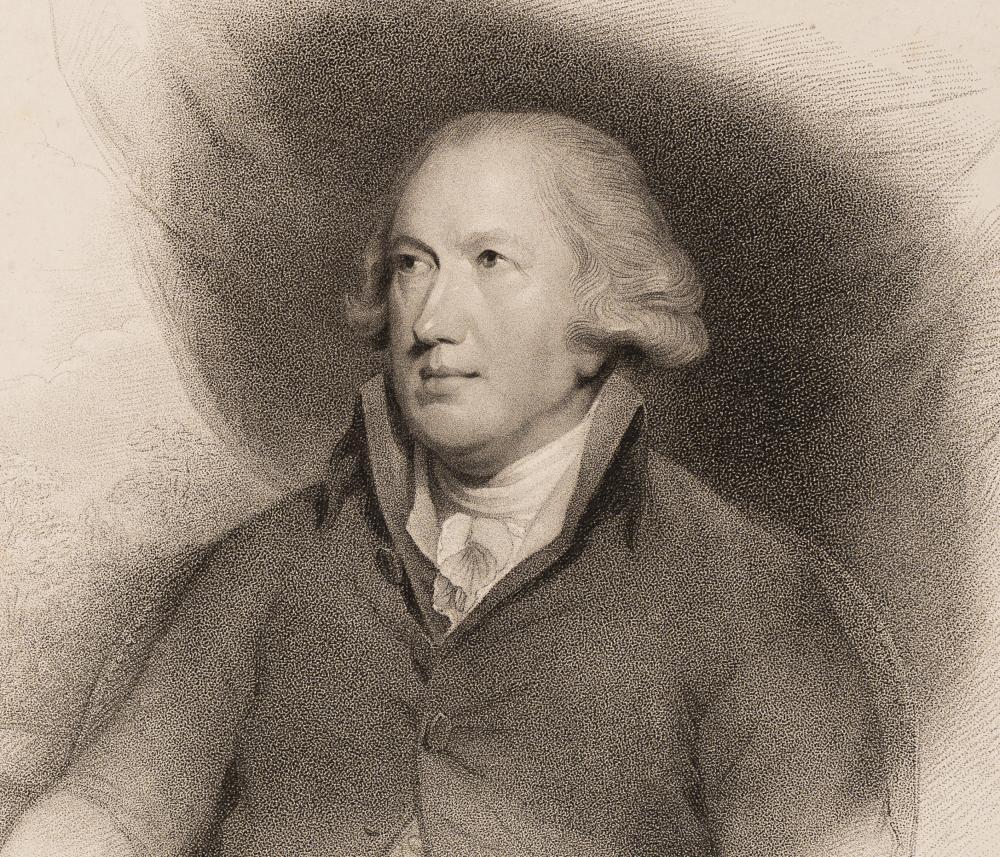
John Home was born in 1722, the son of a Leith town clerk. Educated at Leith Grammar School and the University of Edinburgh, he graduated in 1742 and prepared for the ministry of the Church of Scotland.
His university friends included several men who would become prominent figures in eighteenth-century Scottish intellectual life: William Robertson, later Principal of Edinburgh University; the minister Alexander Carlyle; and the philosopher Adam Ferguson.
Home’s early life was not confined to theology and literature. During the Jacobite rising of 1745, he joined the university volunteers formed to defend Edinburgh against the army of Charles Edward Stuart.
After the city surrendered, Home offered his services to Sir John Cope’s government forces and served as a scout before the Battle of Prestonpans. He subsequently joined another volunteer force and was captured following the Battle of Falkirk Muir in January 1746.
He was imprisoned at Doune Castle but escaped with other prisoners using ropes fashioned from blankets, an episode that would not have been out of place in one of the historical dramas he later wrote.
Following the defeat of the Jacobites at Culloden, Home entered the ministry at Athelstaneford in East Lothian. His parish responsibilities provided a relatively settled occupation, but he continued pursuing an ambition that was unusual, and controversial, for a Presbyterian minister: writing tragedies for the public theatre.
London Rejected Him, but Edinburgh Would Not
Home’s first tragedy, Agis, drew upon classical history. He took the work to London, hoping to interest David Garrick, one of the most celebrated actors and theatrical managers of the period.
Garrick declined to produce it.
Home returned to Scotland and began developing another tragedy, this time drawing upon Scottish traditional literature rather than a classical subject.
The inspiration came from the ballad Gil Morrice, a story involving concealed relationships, mistaken identity and tragedy. Home transformed its material into Douglas, setting his drama in an imagined heroic Scottish past.
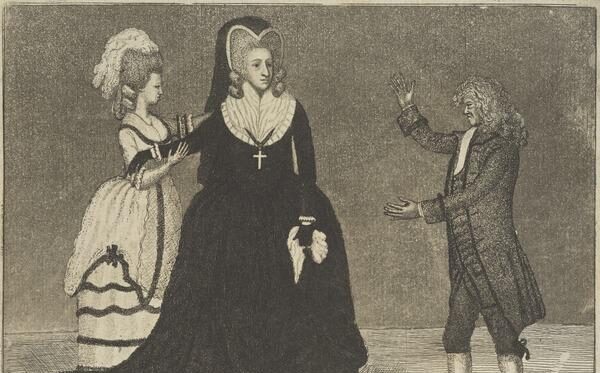
At its centre was Lady Randolph, a woman haunted by the disappearance of her infant son. The child, lost after being entrusted to another woman’s care, survives and grows up without knowing his true parentage. His eventual appearance under the name Norval sets in motion a series of discoveries and fatal misunderstandings.
The story offered audiences romance, family tragedy, ancient Scottish identity and the emotional intensity admired in serious eighteenth-century drama.
Home again approached Garrick in 1755, but the influential London theatre manager rejected the new play as unsuitable for performance.
His friends in Edinburgh disagreed.
David Hume, William Robertson, Hugh Blair and other figures associated with the Scottish Enlightenment supported the work. Several participated in discussions and rehearsals, while Archibald Campbell, the third Duke of Argyll, helped secure its production.
For these supporters, the question was larger than whether one tragedy would succeed. They believed that Scottish writers could produce serious dramatic literature worthy of comparison with the established English theatrical repertoire.
14 December 1756: An Edinburgh Theatre Makes History
On 14 December 1756, Douglas received its first public performance at the Canongate Theatre in Edinburgh.
The playhouse stood in the Canongate, close to the centre of a city increasingly associated with philosophical debate, publishing and intellectual exchange.
The theatre itself had opened in 1747 and was part of the developing professional theatrical culture that existed alongside Edinburgh’s universities, learned societies and private literary gatherings.
For the first production of Douglas, the principal cast included West Digges as Douglas, Mrs Sarah Ward as Lady Randolph and Mr Hayman as Norval.
The performance became a sensation.
Alexander Carlyle, who witnessed the enthusiasm surrounding the production, later described audiences drawn from Edinburgh’s intellectual and legal establishment, including people who were not ordinarily regular theatre-goers.
He recalled that the city’s enthusiasm rested partly on the discovery that a Scotsman had written a tragedy which audiences believed could stand comparison with the best work being performed elsewhere.
It was from this excitement that one of the most enduring stories in Scottish theatrical history emerged.
An audience member was said to have shouted, “Whaur’s your Wullie Shakespeare noo?”
Versions of the remark differ, and the identity of the speaker has not been securely established. The National Library of Scotland and University of Edinburgh’s exhibition catalogue records the saying as a famous theatrical tradition rather than a documented verbatim statement from a named spectator.
Nevertheless, the anecdote conveys something genuine about the public response. For Home’s supporters, the triumph of Douglas appeared to demonstrate that Scotland could produce dramatic writing worthy of the London stage.
The Church Was Far Less Impressed
The enthusiasm was not universally shared.
Within the Church of Scotland, considerable opposition existed to professional theatre, which some ministers regarded as a source of immorality, irreligion and disorder.
These objections went beyond the particular content of Douglas. Critics questioned whether Christians should support public playhouses at all, especially where performances were associated with conduct they considered incompatible with religious obligations.
Home’s position made the controversy especially difficult. He was not merely a writer who happened to be a Presbyterian. He was an ordained minister responsible for a congregation.
For his opponents, a minister writing for the public stage represented a serious breach of the conduct expected of the clergy.
The disagreement also reflected divisions already developing within the established church. The more liberal-minded Moderates, among whom several of Home’s supporters could be counted, regarded literature, education and polite culture as compatible with religious life.
The Evangelical or Popular Party placed greater emphasis on strict religious observance and objected to practices they regarded as harmful to Christian morality.
The production brought those differing attitudes into direct confrontation.
The Presbytery of Edinburgh issued an admonition against theatrical attendance, while ministers in Glasgow also publicly condemned the controversy surrounding the play.
The opposition generated pamphlets, sermons and ecclesiastical proceedings that continued well beyond the initial performances.
A Minister Was Suspended for Going to the Theatre
Among those caught up in the controversy was the Reverend Thomas Whyte of Liberton, who admitted that he had attended a performance of Douglas.
Whyte was suspended from his ministerial duties for six weeks.
Historical accounts record that he had attempted to avoid giving offence by concealing himself as much as possible while attending the performance.
His experience demonstrated that the consequences extended beyond Home himself. Simply being present in the audience could expose a minister to disciplinary action.
Alexander Carlyle, minister of Inveresk and one of Home’s closest friends, also faced proceedings after attending the theatre and defending the play.
Carlyle responded with a satirical pamphlet bearing the extraordinary title An Argument to Prove That the Tragedy of Douglas Ought to Be Publicly Burnt by the Hands of the Hangman.
The title appeared to call for the destruction of the play, but the work was an ironic defence of Home and an attack upon the reasoning of his opponents.
Not everyone immediately recognised the satire.
The proceedings against Carlyle developed into a dispute over the authority of church courts to impose formal discipline for theatrical attendance.
He argued that his conduct, if objectionable, was a matter for private admonition rather than a formal prosecution. The dispute eventually reached the General Assembly of the Church of Scotland, where the more severe disciplinary course was not upheld.
The controversy survives in historical records held by the National Library of Scotland, including extracts from the proceedings before the Presbytery of Dalkeith.
The Scottish Minister Who Condemned Theatre and Later Helped Found America
One of the most remarkable figures to emerge from the dispute was the Reverend John Witherspoon.
In 1757, Witherspoon published A Serious Enquiry into the Nature and Effects of the Stage, arguing that supporting public theatre was inconsistent with Christian duty.
The work was prompted by the extraordinary popularity of Douglas and the debate it had created.
Witherspoon would later become internationally famous for reasons entirely unrelated to Scottish theatre.
In 1768, he travelled to America to become president of the College of New Jersey, now Princeton University. During the American Revolution, he entered the Continental Congress and became one of the signatories of the Declaration of Independence in 1776.
The minister who had helped lead opposition to public theatre in Scotland thus became an important figure in the political and educational history of the United States.
His involvement illustrates how widely the Scottish Enlightenment’s religious and intellectual disputes extended. The men arguing about a play in Edinburgh in 1757 belonged to networks whose later influence reached far beyond Scotland.
Home Gives Up His Ministry
John Home faced the possibility of proceedings before the Presbytery of Haddington.
By the spring of 1757, however, his success as a playwright had also opened opportunities outside the church.
On 14 March, Douglas was performed at Covent Garden in London, where its cast included the actor Spranger Barry and the celebrated actress Peg Woffington.
The reception confirmed that the Edinburgh success had not been merely a local expression of patriotic enthusiasm.
Home’s literary reputation was growing, while his position within the Scottish ministry had become increasingly difficult.
On 7 June 1757, he resigned his charge at Athelstaneford, avoiding further disciplinary proceedings and bringing his pastoral career to an end.
He subsequently moved to London, where he obtained employment connected with John Stuart, Earl of Bute, and became tutor to the Prince of Wales, the future George III.
His theatrical career continued. Other tragedies followed, including Agis, The Siege of Aquileia, The Fatal Discovery and Alonzo.
Following George III’s accession, Home also received an annual pension of £300.
Yet the extraordinary success of Douglas was never fully repeated. Some of his later works received favourable attention, while others were less successful.
He eventually turned from drama towards historical writing, publishing his account of the Jacobite rising, The History of the Rebellion in the Year 1745, in 1802.
Home died in Edinburgh in 1808.
The Play That Helped Change Scottish Theatre
The religious dispute did not end professional theatre in Scotland.
Edinburgh audiences continued attending performances, and the success of Douglas contributed to growing confidence in the city’s theatrical culture.
In 1768, a new Theatre Royal opened in the developing New Town, in a precinct called Shakespeare Square. It represented an important advance from the smaller Canongate playhouse where Home’s tragedy had first caused such excitement.
The play itself remained in the theatrical repertoire for many years. Its characters attracted some of the leading actors of subsequent generations, while the opening words of Young Norval’s famous speech became particularly well known to audiences familiar with eighteenth-century drama.
The wider cultural significance of the controversy was not that every Scottish minister suddenly accepted the theatre, or that Home permanently displaced Shakespeare in public esteem.
It was that the theatre had become an arena in which competing ideas about literature, morality, national identity and the authority of religious institutions could be openly contested.
By the middle of the eighteenth century, Edinburgh was developing the intellectual culture associated with the Scottish Enlightenment. The arguments over Douglas showed that the boundaries of acceptable public entertainment were changing alongside philosophy, literature and education.
The Documents That Preserve the Dispute
Much of the story can be reconstructed from surviving documents rather than relying entirely on later theatrical tradition.
Among the objects preserved by the National Library of Scotland is an original playbill advertising the second Edinburgh performance of Douglas on 15 December 1756. The library also holds an edition of the play published the following year and a printed admonition issued by the Presbytery of Edinburgh.
The playbill is particularly valuable because it records the production as an event advertised to the Edinburgh public. The church admonition preserves the institutional response to the controversy, while the surviving pamphlets and proceedings document how the dispute developed.
Alexander Carlyle’s autobiography provides another important account, although its recollections were written from the perspective of a participant who strongly supported Home and opposed the disciplinary proceedings.
Taken together, these sources reveal a conflict that extended well beyond the reception of a single theatrical performance.
The success of Douglas challenged assumptions about who could write for the theatre, whether an ordained minister could participate in professional dramatic culture, and how far the Church of Scotland could regulate the private activities of its clergy.
The audiences who filled the Canongate Theatre in December 1756 could hardly have known that their evening’s entertainment would become a landmark in Scottish cultural history. The performance gave Home a literary career, brought ministers before church courts and produced an anecdote about Shakespeare that survived for generations.
Its most enduring significance, however, lies in the extraordinary controversy it exposed: a Scottish minister wrote a tragedy that his countrymen celebrated, and in doing so helped force a public confrontation over the place of theatre in Scottish intellectual and religious life.
Sources
John Home (1722–1808) — University of Edinburgh, Our History, undated.
Beyond Macbeth: Shakespeare Collections in Scotland — National Library of Scotland and University of Edinburgh, 2012.
Scottish Thought and Letters in the Eighteenth Century: Literature — University of Glasgow Library, Special Collections, undated.
Proceedings Before the Church Courts Against Alexander Carlyle for Attending the Tragedy of Douglas, MS.23930 — National Library of Scotland, manuscript relating to proceedings of 1757.
Autobiography of the Reverend Dr Alexander Carlyle of Inveresk, Chapter VIII — Alexander Carlyle, memoir published posthumously in 1860.
John Witherspoon Holdings, Including A Serious Enquiry into the Nature and Effects of the Stage (1757) — Princeton University Library, Special Collections.