Mrs Bruce’s Dundee Sunshine Cake belongs firmly in the third category.
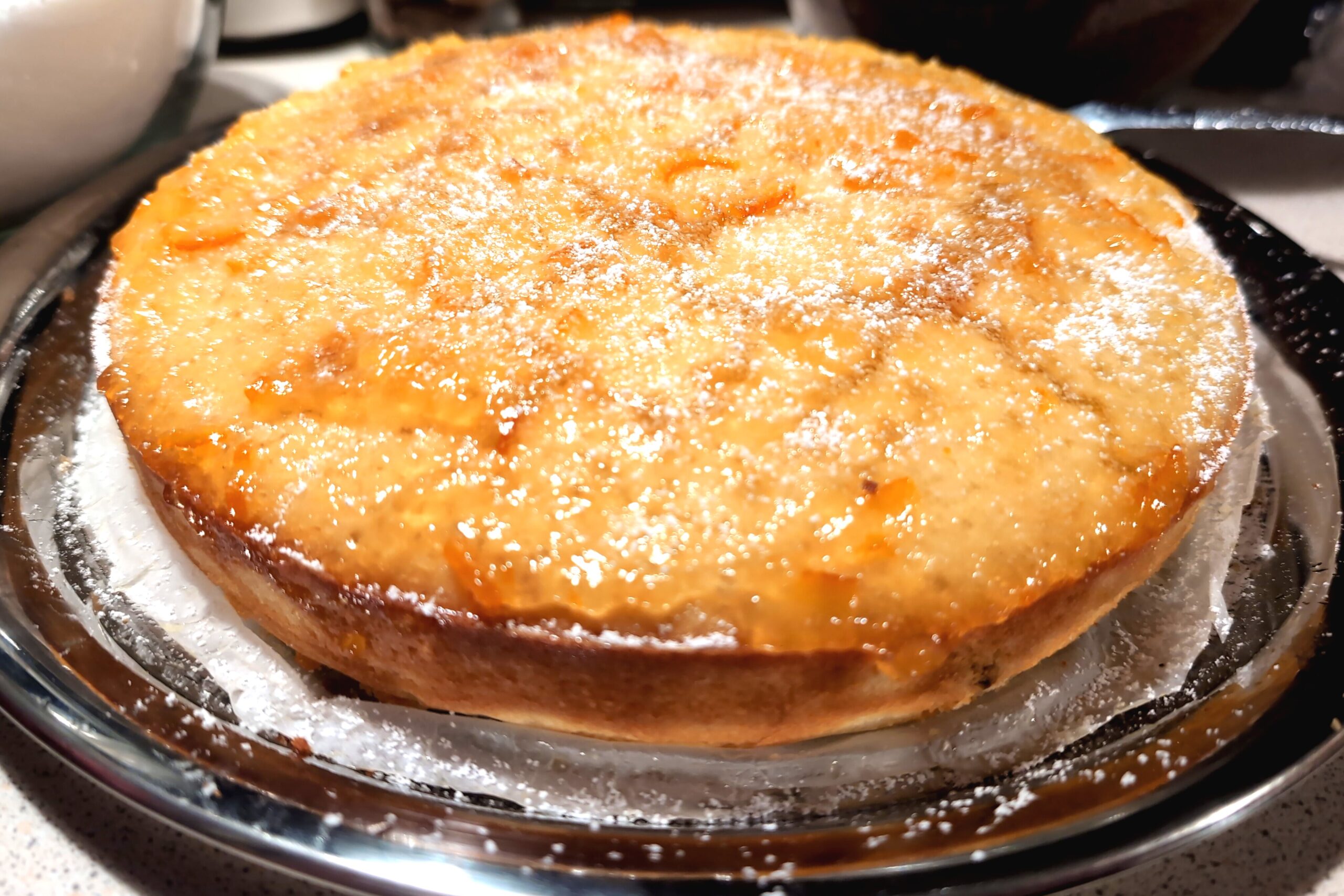
Golden, buttery and filled with little pieces of apricot, this is a generously old-fashioned cake with a soft crumb, a beautifully cracked golden crust and a glistening marmalade topping.
It looks rather grand sitting on a glass cake plate, although there is nothing particularly complicated about making it. No elaborate icing, no piping bags and no decorating skills required.
The secret is in the whisking. The eggs, sugar, melted butter and milk are thoroughly whisked together before the flour and fruit are added. The mixture goes into a generously lined cake tin and bakes until its golden crust begins to split.
Then comes the finishing touch: a thin layer of Mackays Dundee Marmalade spread across the top, followed by a delicate dusting of icing sugar. The slightly bitter Seville orange provides a lovely contrast to the sweetness of the apricots.
And if somebody happens to wander into the kitchen just as the coffee is ready, all the better.
Mrs Bruce’s Dundee Sunshine Cake
Preparation: Approximately 20 minutes
Baking: Approximately 50–65 minutes (estimated)
Oven: 180°C conventional / 160°C fan / 350°F / Gas Mark 4
Cake tin: 23 cm / 9-inch round, deep-sided
Serves: 10–12 thin slices
Ingredients
| Ingredient | UK Measurement | US Measurement |
|---|---|---|
| Large eggs | 3 | 3 |
| Caster or granulated sugar | 200 g | 1 cup |
| Unsalted butter, melted | 225 g | 1 cup |
| Whole milk | 240 ml | 1 cup |
| Strong white bread flour | 250 g | 2 cups |
| Baking powder | 12 g | 1 tablespoon |
| Chopped apricots | Approximately 150–165 g | 1 cup |
| Salt | 1 teaspoon | 1 teaspoon |
| Vanilla or almond extract (optional) | 5 ml | 1 teaspoon |
| Mackays Dundee Marmalade | 2–3 tablespoons | 2–3 tablespoons |
| Icing sugar (powdered sugar) | For dusting | For dusting |
Alternative: Instead of melted butter, use 240 ml (1 US cup) of a mild vegetable oil or another suitable baking oil.
You will also need: A little additional butter or oil for preparing the cake tin, baking parchment for the bottom and sides, a mixing bowl, whisk and cake skewer.
How to Make Mrs Bruce’s Dundee Sunshine Cake
1. Prepare the oven and cake tin
Preheat your oven to 180°C conventional, 160°C fan or 350°F.
Generously grease a deep, round 23 cm (9-inch) cake tin with butter or oil.
Cut baking parchment to fit the bottom and sides of the tin. Use a little extra butter or oil to help the paper adhere neatly to the sides. This makes removing the finished cake much easier.
2. Whisk the eggs
Crack three large eggs into a generous mixing bowl.
Add one teaspoon of salt and, if desired, a teaspoon of vanilla or almond extract.
Whisk thoroughly until the eggs are completely combined.
3. Add the sugar
Pour in one cup of sugar.
Whisk very well until the mixture becomes smooth, lighter in colour and slightly thickened.
There is no need to rush this step. Thorough whisking helps produce an evenly mixed batter.
4. Add the melted butter
Melt one cup of butter and allow it to cool slightly so that it is warm rather than hot.
Gradually add the melted butter to the egg and sugar mixture, whisking very thoroughly until everything is smoothly combined.
If you prefer, substitute one cup of a mild cooking oil for the butter.
5. Add the milk
Pour in one cup of milk.
Whisk very well again until the mixture is smooth and evenly blended.
6. Add the first cup of flour
Combine one cup of bread flour with one tablespoon of baking powder.
Add this to the wet mixture and whisk until the flour is incorporated and there are no visible dry patches.
7. Add the apricots
Chop one cup of apricots into small pieces.
Add the chopped fruit to the batter and stir until evenly distributed.
Try to keep the pieces fairly small so that they are spread throughout the finished cake.
8. Add the second cup of flour
Add the remaining cup of bread flour.
Mix until everything is thoroughly combined and the batter is smooth, with the apricot pieces evenly distributed.
Once the flour has been incorporated, avoid unnecessary additional beating.
9. Fill the cake tin
Pour the finished batter into the prepared cake tin.
Spread it evenly with the back of a spoon or spatula.
Gently tap the tin against the worktop to release any large trapped air bubbles.
10. Bake until the golden crust begins to split
Place the cake on the middle shelf of the preheated oven.
Allow approximately 50–65 minutes for baking, although the exact time will depend on your oven, cake tin and the moisture in the fruit.
Mrs Bruce’s sign that the cake is nearly ready is the top crust beginning to split.
As the cake rises and develops its beautiful golden surface, the crust begins to crack naturally. This is part of the cake’s old-fashioned character.
Once the crust has split and the top is golden, insert a skewer into the centre. If it comes out without wet batter, the cake is ready. A few moist crumbs are perfectly acceptable.
If the centre still needs more time, continue baking and check again after five minutes.
Should the top begin browning too quickly, loosely cover it with foil while the centre finishes baking.
11. Cool and remove the baking parchment
Remove the cake from the oven and allow it to rest in its tin for approximately 15 minutes.
Carefully lift or turn it out and gently peel away the baking parchment from the bottom and sides.
Transfer to a wire rack and allow it to cool.
12. Add the Dundee marmalade
Place two or three tablespoons of Mackays Dundee Marmalade in a small bowl.
Warm it gently, if necessary, until it becomes easily spreadable.
Using the back of a spoon or a pastry brush, spread a thin, even layer across the top of the cooled cake.
The idea is to create a delicate, glossy orange glaze rather than a thick coating.
The marmalade brings a distinctly Scottish touch, with its characteristic balance of sweet and bitter Seville orange.
OR – IF YOU HAVE FRESH SCOTTISH STRAWBERRIES, SKIP THE MARMALADE AND TOP THE CAKE WITH CREAM AND STRAWBERRIES INSTEAD. YOU COULD ALSO SKIP THE APRICOTS AND JUST MAKE IT A PLAIN CAKE TOPPED WITH STRAWBERRIES.
13. Finish with icing sugar
Allow the marmalade to settle before lightly dusting the top with icing sugar, also known as powdered sugar in America.
A light dusting is all that is needed. The golden crust and glossy marmalade should still be visible beneath it.
How to Serve
Place the finished cake on a serving plate and cut into thin slices.
Serve with freshly brewed tea or a good, strong cup of coffee.
The richness of the butter, the sweetness of the apricots and the slightly bitter orange marmalade make a lovely combination.
There is no need for whipped cream, custard or any elaborate accompaniments.
Just a thin slice, a hot drink and a few minutes to sit down.
And should there happen to be a second slice, I certainly wouldn’t make a fuss about it.
From Mrs Bruce’s kitchen — enjoy!
“`