
The Government Refused a Public Inquiry
On the morning of 8 May 1884, an explosion tore through a small wooden building at Alfred Nobel’s explosives works on the Ardeer peninsula in Ayrshire.
Four young women working inside Cartridge Hut No. 7 were killed. Flames and burning material spread to neighbouring huts, where another six women lost their lives.
Ten were dead and four others injured in one of the most devastating industrial accidents in nineteenth-century Scotland.
Before the cause had been established, suspicion was already falling on the women themselves.
An account published the following day suggested that the explosion might have resulted from the workers behaving improperly while handling dynamite. The suggestion was unsupported by any completed investigation, but the four women in the destroyed hut could no longer defend themselves.
Four days after the disaster, an MP demanded an independent public investigation in the House of Commons.
The Home Secretary refused.
The exchange is preserved in the parliamentary record of 12 May 1884, providing a direct account of how the British Government responded to the deaths of ten Scottish workers.
It is only one part of a story that would remain painful in the communities around Stevenston for generations.
The Factory on the Sand Dunes
Alfred Nobel established his British dynamite manufacturing operation at Ardeer in 1871.
The location was deliberately remote. The peninsula offered extensive sand dunes and open ground where dangerous industrial processes could be separated from nearby settlements.
The factory became an important supplier of explosives for mining, quarrying, railway construction and other engineering industries.
Dynamite had transformed the ability of workers to excavate rock and undertake large construction projects. It could make previously difficult operations possible, but its manufacture required the handling of extremely hazardous substances.
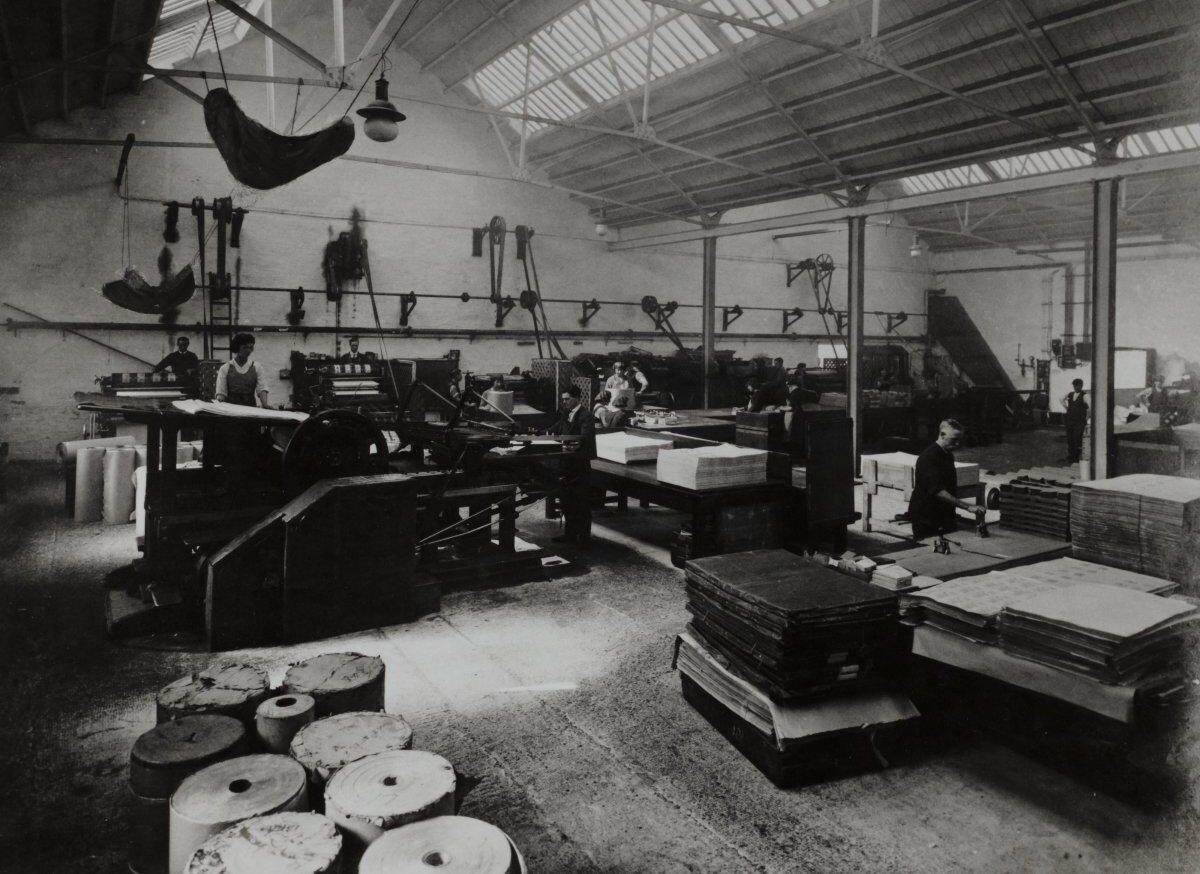
At Ardeer, different stages of production took place in separate buildings, reducing the likelihood that an accident in one structure would destroy the entire works.
Among those buildings were approximately thirty small cartridge huts, where women prepared dynamite for commercial use.
They were physically separated by sandhills and open spaces, but the precautions did not eliminate the risk.
The women employed in these huts were generally young. Some were still in their teens, and the youngest victim of the 1884 disaster was reported to have been just fourteen.
The workforce was not incidental to the success of Nobel’s enterprise. These women performed skilled, repetitive work directly involving an explosive material that would later be used in mines and engineering projects throughout the country.
They were also paid less than male workers.
Accounts examined by the Scottish Parliament in 2022 suggest that experienced female cartridge workers might earn around fifteen shillings a week during the 1880s.
For many households, such earnings represented an important source of income.
The Morning of 8 May
The explosion occurred at approximately 8.40am.
The first blast destroyed Cartridge Hut No. 7, where four women were working.
They were sisters Annie and Mary Brannan, Mary McAdam and Rachel Allison.
Mary Brannan and Rachel Allison were eighteen years old. Annie Brannan and Mary McAdam were twenty.
The hut was obliterated.
Burning fragments were thrown into neighbouring buildings, causing fires in three other cartridge huts.
Two women died in Hut No. 5: Mary Ann Peters and Martha McAllister.
Two more died in Hut No. 6: Elizabeth Love and Martha Haggerty.
In Hut No. 8, the victims were Isabella Longridge and Isabella McCall.
The names and some spellings vary slightly between historical accounts, but the identities of the ten women are recorded in material reproduced in the Scottish Parliament’s proceedings.
Four other workers were injured: Sarah Ann McKane, Jessie Craig, Mary Banks and Rose Ann Murphy.
The separation of the huts helped prevent a larger chain of explosions, but it could not protect the women caught in the burning buildings.
The disaster devastated families in Stevenston and the surrounding communities, where the works was an important employer.
The dead were young people whose working lives had barely begun.
The Accusation Against the Dead
The morning after the explosion, the local press published an account of the disaster.
It described the destruction of the huts, identified the victims and reported the circumstances as they were then understood.
But the report also suggested that the women in Hut No. 7 might have been responsible.
It raised the possibility of workers “larking around” or committing some other irregularity.
At that point, investigators had not established the cause of the explosion.
The suggestion therefore amounted to speculation, yet it introduced an explanation that directed attention towards the conduct of the workers rather than the equipment, processes or management of the factory.
Those accused could not respond.
This feature of the original reporting later became central to efforts to restore the women’s reputations.
The accusation was especially consequential because the blast had destroyed much of the evidence in the building where the incident began.
Establishing precisely what happened would prove difficult.
A Question in the House of Commons
On 12 May 1884, four days after the disaster, Dr Charles Cameron raised the explosion in the House of Commons.
Cameron asked Home Secretary Sir William Harcourt whether the government would order an independent and public investigation.
His question referred specifically to the absence of coroners in Scotland, where the arrangements for investigating deaths differed from those in England.
He also invoked the precedent of the Daphne disaster in Glasgow, where a serious maritime tragedy had prompted an official investigation.
Harcourt explained that Colonel Ford, one of the government’s inspectors of explosives, had travelled to Ayrshire to investigate.
Cameron pressed him on whether the investigation would be public.
The Home Secretary’s answer was unambiguous.
“No, Sir.”
Harcourt then read an explanation supplied by Colonel Vivian Majendie, the Chief Inspector of Explosives.
The argument was that the investigation had to be conducted inside an operational explosives factory. Inspectors would need to examine dangerous manufacturing processes, including potentially experimental work.
Allowing members of the public into those buildings, the government maintained, would be unsafe.
Cameron subsequently asked whether the inspector’s report would be published.
Harcourt said he would consider the matter.
The exchange demonstrates that an official investigation was underway, but an independent public inquiry had been refused.
It also reveals the government’s reasoning: the dangerous nature of the factory was considered sufficient grounds for keeping the investigation closed to public attendance.
Whether evidence could have been examined through other public procedures was not resolved in that brief parliamentary exchange.
What the Inspector Actually Found
The eventual investigation did not establish that the four women had caused the explosion through deliberate misconduct.
Its treatment of responsibility was nevertheless complicated.
The inspector considered the possibility that a machine had fallen, that a lever handle had fractured and dropped, or that some other mechanical problem had occurred.
In the Scottish Parliament’s 2022 examination of the disaster, ministers quoted from the historical report, including passages in which the inspector discussed those possibilities.
The report did not conclusively determine which explanation was correct.
Despite this uncertainty, it found no grounds for attaching blame to Nobel’s Explosives Company.
It also left open the possibility that one of the dead workers had mishandled her machine, although that possibility was explicitly described as conjecture.
The inspector further discussed the behaviour of the young women, including allegations that they sometimes engaged in horseplay while their foreman was absent.
He recommended improved supervision.
The contrast is important.
The available evidence did not establish that the young women caused the disaster, yet their conduct remained under suspicion. At the same time, the company was absolved of responsibility.
The report’s discussion of machinery also undermines any simple account that the explosion was definitely the result of misconduct by the women.
However, it would be equally inaccurate to say that the inspector conclusively proved a particular mechanical defect caused the blast.
The surviving passages establish uncertainty, not certainty.
They also show how that uncertainty was treated differently when considering the employer and its workers.
The Attitudes of Another Century
One of the most revealing passages from the historical inspection report concerns the physical effects of working with nitroglycerine.
The inspector acknowledged that the chemical could cause severe headaches and sickness when workers first handled it.
He nevertheless presented the occupation in remarkably favourable terms, even suggesting that the women working in the factory appeared healthier than others in the district.
These observations were revisited with astonishment during the Scottish Parliament’s debate of September 2022.
By modern standards, exposure to a poisonous substance causing severe physical symptoms would raise immediate questions about occupational health, protective equipment and the adequacy of safeguards.
The historical report’s treatment of those symptoms illustrates how differently industrial hazards could be understood and accepted.
The women were handling dangerous substances as part of their everyday employment. The apparent normality of that arrangement did not make the work safe.
Nor did the fact that explosions were relatively uncommon eliminate the possibility of catastrophic failure.
A Factory That Shaped Generations
Despite the 1884 disaster, Ardeer continued to grow.
The works eventually became part of Imperial Chemical Industries and developed into an enormous industrial complex.
At its peak, the site employed approximately 13,000 people and was one of the most important employers in the surrounding area.
Its influence extended far beyond the factory gates.
Families depended on its wages. Workers travelled from communities across Ayrshire. The site’s industrial, sporting and social institutions became part of local life.
For generations, Ardeer was associated simultaneously with employment, technical innovation and industrial danger.
Other serious accidents followed.
A 2024 academic study of the peninsula’s industrial heritage records fatal explosions in subsequent decades, including incidents in 1901, 1913, 1914 and 1937.
As industrial production declined during the later twentieth century, much of the works eventually closed or was dismantled.
The surviving landscape contains ruins and traces of an enterprise that once occupied a central place in the economy of North Ayrshire.
But industrial buildings are only one part of its history.
The names of those who died deserve preservation alongside the achievements of the company.
The Women Return to Public Memory
In 2022, the story of the four women in Cartridge Hut No. 7 returned to public attention through a theatrical production.
The Girls of Cartridge Hut No. 7, written by Jack Dickson and directed by Mary McCluskey, used historical research, community involvement and music to reconstruct the women’s experiences.
The production drew on the memories of local people and the participation of descendants.
It was performed at Ardeer Community Centre, with approximately 2,000 people attending ten performances over five days, according to the Scottish Parliament.
Later that year, Ruth Maguire MSP secured a parliamentary debate recognising the production and the history behind it.
Members from different political parties examined the accident, the initial accusations and the failure of the historical investigation to establish wrongdoing by the women.
The debate also brought the names of the victims back into an official public record, 138 years after their deaths.
The descendants of Annie and Mary Brannan were represented in the public gallery.
The occasion was not a judicial reconsideration of the original investigation. It did not establish a new legal verdict or produce a definitive reconstruction of the explosion.
It did, however, recognise the injustice of allowing an unsupported accusation to define the memory of women who had died at work.
The Question That Remains
The Ardeer disaster is sometimes remembered as an explosion caused by a faulty machine. That account reflects the mechanical explanations discussed by the inspector, but the precise cause was not conclusively established in the passages subsequently examined by Parliament.
What is certain is that ten young women died while manufacturing dynamite.
It is also certain that suspicion fell on the workers before a proper investigation had been completed, that the Home Secretary refused a public inquiry, and that the official report subsequently absolved the employer while preserving conjecture about the conduct of the dead.
Those are not minor distinctions.
They show how the interpretation of an industrial disaster can be shaped by the authority of employers, government investigators and the assumptions of the period in which an accident occurs.
The ten victims were Annie Brannan, Mary Brannan, Mary McAdam, Rachel Allison, Mary Ann Peters, Martha McAllister, Elizabeth Love, Martha Haggerty, Isabella Longridge and Isabella McCall.
Their lives were part of the history of Scotland’s industrial development, just as surely as the inventions, factories and fortunes associated with Alfred Nobel.
The machinery of Ardeer has largely disappeared.
Their names should not.
Sources
Explosives Acts — Dynamite Explosion in Ayrshire. House of Commons, Hansard, 12 May 1884. https://api.parliament.uk/historic-hansard/commons/1884/may/12/explosives-acts-dynamite-explosion-in
Ardeer Girls: Meeting of the Scottish Parliament. Scottish Parliament Official Report, 22 September 2022. https://www.parliament.scot/chamber-and-committees/official-report/search-what-was-said-in-parliament/meeting-of-parliament-22-09-2022?iob=125972&meeting=13896
Ardeer Girls Take Centre Stage, Motion S6M-04642. Scottish Parliament, 7 June 2022. https://www.parliament.scot/chamber-and-committees/votes-and-motions/S6M-04642
ICI Industrial Collections. North Ayrshire Heritage. https://naheritage.co.uk/collections/ici
The Melody That’s Sweetly Played in Tune: The Heritage Ecologies of the Ardeer Peninsula, North Ayrshire, Scotland. Landscape Research, 2024. https://doi.org/10.1080/01426397.2024.2416408
Explosives Act 1875, Section 66. UK Legislation. https://www.legislation.gov.uk/ukpga/Vict/38-39/17/body/made