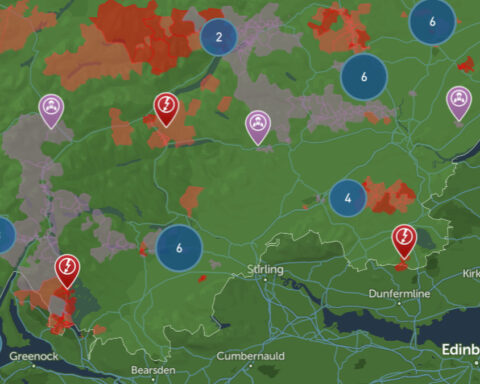


BT’s old landline network is scheduled to close on 31 January 2027, including in Scottish communities where households cannot rely on a mobile signal. Those customers will still need to move off the retiring network, but their providers must address how they will contact the emergency services when the electricity fails.
The closure does not abolish home telephone services, and a digital landline does not need mobile reception to work over a fixed broadband connection. The change is in how the call is carried and, for many households, where the telephone obtains its power. A service that could previously operate during a household power cut may depend instead on a powered router and backup equipment.
Ofcom’s severe-weather advice, published on 13 October and updated on 22 October, warns that rural areas are more likely to experience disruption to communications. It reiterates that people who depend on their landline and lack a working mobile phone or reliable mobile reception must be offered a free backup solution allowing emergency calls for at least one hour.
Consumer Scotland has already questioned whether that minimum is sufficient where power failures last for hours or days. There are interim telephone services that can retain power through the line for some customers, but they are not available to everyone and do not cancel the January deadline.
What Is Being Switched Off
The Public Switched Telephone Network, usually shortened to PSTN, is the older system underpinning traditional telephone calls. The industry announced its retirement in 2017. The UK Government says replacement parts are increasingly unavailable and repairs have become dependent on components recovered from decommissioned equipment.
The digital replacement carries speech as data, using a technology called Voice over Internet Protocol. For a typical household already using broadband, the practical change may be to connect the telephone to the provider’s router rather than directly to the wall socket. Existing handsets can often be retained, although an adapter or other equipment may be needed.
The 31 January deadline concerns the old BT/Openreach network, including services sold by other telephone companies using that network. It is not a single shutdown date for every telephone system in Britain. Ofcom’s current guidance says other operators with their own networks, including Virgin Media O2 and KCOM, also intend to retire older systems but have not yet set their shutdown dates.
Nor does the change mean every property must receive full-fibre broadband before it can have a digital telephone. Openreach says other digital services can support calls where full fibre is unavailable. The telephone migration and the replacement of every remaining copper connection are not the same operation.
Why a Power Cut Changes the Calculation
A basic corded telephone on a traditional line could receive its power through that line rather than from a household socket. That did not make the old network immune to storm damage or faults. Nor did it keep an ordinary cordless telephone working if its mains-powered base station lost electricity.
BT’s Digital Voice service requires its Smart Hub to be powered. Where the connection uses a separate Openreach fibre modem, that equipment also needs electricity. BT’s battery-backup instructions therefore cover powering both the hub and the modem. A charged cordless handset alone does not maintain the connection.
It matters when assessing backup equipment. Households need to know which devices a battery will power, whether anything else in the calling arrangement needs a separate supply, and how long the complete system is expected to operate. The advertised endurance of one component is not necessarily the endurance of the whole telephone service.
There is also equipment outside the home. Government resilience guidance identifies backup power at exchanges and cabinets as part of providers’ preparations for disruption. A household battery cannot repair a damaged cable or restore a failed part of the wider network. Keeping the router running and keeping the route to the emergency services available are related, but separate, requirements.
Scotland’s Mobile Coverage Gaps Remain
Consumer Scotland’s report published on 26 September 2026, drawing on Ofcom’s spring figures, puts geographic 4G coverage from all operators at 71 per cent of Scotland’s landmass. Coverage from at least one operator is approximately 91 per cent. Scotland remains behind the other UK nations on these measures.
Those figures describe land area, not the proportion of Scottish households without a telephone signal. A gap in 4G coverage is not automatically a gap in every form of mobile voice service. Equally, national coverage percentages do not establish whether a particular resident can make a dependable call from inside their home.
For a household with no usable mobile reception, advice to keep a mobile charged does not provide an alternative calling route. Ofcom explains that a mobile emergency call can use another available network when the customer’s usual network is unavailable. That still requires another usable network to be present.
Wi-Fi calling is not an independent backup when it uses the same home broadband connection. It may help where mobile reception is poor while the broadband works, but it cannot bypass a failed router or a loss of that broadband service.
One Hour of Backup Is Not Three Days of Communication
Storm Éowyn demonstrated the duration of some Scottish electricity failures. Consumer Scotland reported that more than 200,000 properties lost power during the January 2025 storm, with almost 6,000 still disconnected three days later.
In its February 2025 response, the organisation called for backup solutions that went beyond the one-hour minimum, particularly where outages could last several hours or multiple days. The issue is not whether a battery can support a short emergency call immediately after the lights go out. It is whether a working means of calling remains available when help is needed much later.
The minimum does not mean every customer will receive equipment that stops after exactly an hour. Ofcom says some providers offer backup lasting up to seven hours. The actual arrangement, equipment and operating time need to be established with the telephone company rather than assumed from the minimum provision.
For homes without a mobile alternative, providers need to address the circumstances of the property. That includes the equipment being installed and what the customer should do if an outage outlasts its backup. A successful call on installation day does not demonstrate how the service will behave during a prolonged interruption to electricity.
Working Red Phone Boxes Are Affected Too
Working public payphones, including telephones inside BT’s traditional red kiosks, also have to be accommodated as the old network closes. Ofcom says digital migration requires call-box equipment to be upgraded. That does not mean every red telephone box will close in January: essential public telephones have separate protections against removal.
Under Ofcom’s rules, a last-at-a-site public call box — one more than 400 metres’ walking distance from the next — is protected if any of four conditions apply. These are missing coverage from one or more UK-wide mobile networks; a high frequency of accidents or suicides in the area; at least 52 calls in the preceding 12 months; or other evidence of reasonable need, such as use during flooding or for helpline calls.
If none of those criteria applies, BT must still consult the relevant local authority before removing the last box at a site and consider the evidence received. Boxes that are not the last at a site can be removed without that consultation.
These rules cover payphones on public land accessible at all times. They do not cover every payphone on private land, such as those inside railway stations or airports.
Red kiosks adopted for community use are different. Under BT’s adoption scheme, the telephone equipment is removed and the structure can be reused, for example as a library or defibrillator cabinet. Preserving a red kiosk does not necessarily preserve an emergency telephone.
Phone Boxes Have a Different Power-Cut Standard
For public call boxes likely to be needed during an outage, Ofcom’s guidance says the backup solution should keep emergency calls available for at least three hours. That is distinct from the one-hour minimum for eligible household landlines, but it is still not a guarantee of service throughout a prolonged storm.
Ofcom expects at least one call box at a site without coverage from any UK mobile network to have an emergency-access solution. Its assessment also identifies remote rural settlements, places with frequent or prolonged electricity failures, and areas with high accident rates.
The guidance goes further for longer outages. It expects additional measures where necessary to maintain emergency access beyond three hours, giving replacement batteries delivered by engineers and mobile generators as examples. These are expectations placed on the provider, not evidence that those arrangements are already installed or available at every Scottish kiosk.
Ofcom also says boxes without a backup solution should display a prominent warning that they will not work during a power cut, with directions to a nearby backed-up box where relevant. Those with backup should display its minimum operating duration.
A community relying on its public telephone therefore needs more than confirmation that the kiosk will remain. It needs to establish with BT whether the telephone works, what will power it during an outage and what happens when that backup runs out. Protection against removal does not, by itself, establish how long the telephone will work without mains power.
An Interim Line-Powered Service Exists
Some customers can be moved off the retiring network without immediately adopting a router-dependent telephone at home. BT’s Pre-Digital Phone Line, or PDPL, is an interim service that retains an analogue connection into the premises while replacing the underlying PSTN service.
The UK Government’s description of the product says the line continues to receive power during a household electricity cut. The service is expected to remain available until the end of 2030. It is therefore an important exception to the assumption that every affected household will lose line-powered calling in January.
BT Wholesale describes PDPL as suitable for circumstances where broadband cannot yet support internet-based voice calls. However, it is intended for single-line, voice-only connections, not a line carrying broadband. It is not available or suitable for every customer, and older connected equipment still needs appropriate testing.
Households should ask their provider whether this or another supported service is appropriate for their address. They should not assume that declining a digital upgrade will automatically place them on PDPL, or that its existence gives everyone a right to retain their present telephone arrangement until 2030.
The January Safety Net Has Limits
Openreach reported on 24 September that approximately 1.2 million lines remained on its older telephone network, including connections serving around 350,000 business premises. These are figures across its network, not Scottish totals.
It has announced a separate, temporary emergency service, known as EVAc, for eligible lines that have not migrated by the closure. Openreach says it will preserve associated broadband where technically possible, but describes the arrangement as a last resort rather than a replacement for completing migration.
The limitations are explicit: EVAc cannot be ordered in advance, its capacity is not unlimited, and capacity cannot be reserved. Openreach says single lines that cannot be transferred to it will be ceased in stages if their provider has not already ceased them. Households should therefore not rely on being automatically placed on an emergency service after January.
What Households Should Establish Now
The first contact should be the telephone company named on the bill. Customers should establish whether their line has already changed, what service is proposed, when the individual migration will happen and what equipment will be required. The absence of mobile reception needs to be recorded explicitly, rather than left for the provider to infer from an address.
The UK Government says landline-only services will remain an option for people who do not want a general internet connection. That does not mean every company will offer the same product. Customers should ask for the available telephone-only arrangement and its price before agreeing to a wider broadband package.
Providers also have responsibilities to identify people needing support. The voluntary Fixed Telecoms Modernisation Charter, updated on 13 October, commits its signatories to extensive efforts to identify and engage with customers, including vulnerable customers, before migration or cessation. It also provides for appropriate solutions for people needing additional assistance, including battery backup for those dependent on a landline. These commitments sit alongside Ofcom’s regulatory requirements, rather than replacing them.
People using a care alarm, health pendant or other telephone-connected device should tell both their telephone company and the organisation responsible for that equipment before the line changes. An ordinary voice call working on the new service does not establish that an alarm can reliably contact its monitoring centre.
For the household itself, the questions are practical: which equipment will remain powered, for how long, who maintains the battery, and what arrangements apply when its power runs out? Where an interim service is proposed, the customer also needs its end date and the plan for replacing it.
Ofcom’s storm guidance advises households to agree how relatives or neighbours can help if communications fail, provided it is safe to do so. Such an arrangement does not replace the provider’s obligations. It addresses the period in which neither a home telephone nor a mobile may be usable.
Customers who cannot obtain a satisfactory answer about their service should use their provider’s formal complaints process and retain a record of the response. Unresolved complaints can be taken to an independent dispute-resolution scheme after six weeks, or sooner following a deadlock letter. Ofcom can receive reports of problems but does not resolve individual telephone or broadband complaints.
Sources
Your landline is going digital: what you need to know
Ofcom, updated 26 August 2026.
https://www.ofcom.org.uk/phones-and-broadband/landline-phones/future-of-landline-calls
Stay connected in severe weather
Ofcom, 13 October 2026; updated 22 October 2026.
https://www.ofcom.org.uk/phones-and-broadband/vulnerable-customers/stay-connected-in-severe-weather
Moving landlines to digital technologies
UK Government, 28 May 2025.
https://www.gov.uk/guidance/moving-landlines-to-digital-technologies
Switching off the Public Switched Telephone Network across the UK
Openreach, undated; accessed 28 October 2026.
https://www.openreach.com/big-switch-off
Digital Voice: Will my service work in a power cut?
BT, undated; accessed 28 October 2026.
https://www.bt.com/help/home-phone/digital-voice/will-my-digital-voice-service-work-in-a-power-cut
Set up a Battery Back Up
BT, undated; accessed 28 October 2026.
https://www.bt.com/help/home-phone/set-up-battery-back-up
Connected consumers: Making telecommunications markets work for consumers in Scotland
Consumer Scotland, 26 September 2026.
https://consumer.scot/publications/connected-consumers-making-telecommunications-markets-work-for-consumers-in-scotland-html/
Power cuts and lost connections: protecting consumers as landlines go digital
Consumer Scotland, 4 February 2025.
https://consumer.scot/blog-posts/power-cuts-and-lost-connections-protecting-consumers-as-landlines-go-digital/
Pre-digital Phone Line
BT Wholesale, undated; accessed 28 October 2026.
https://www.btwholesale.com/products-and-services/voice/pre-digital-phone-line.html
Telecare National Action Plan: protecting telecare users through the digital phone switchover — technical description of Pre-Digital Phone Line
UK Government, 11 February 2025; the care action plan applies to England.
https://www.gov.uk/government/publications/telecare-national-action-plan-protecting-telecare-users-throughout-the-digital-phone-switchover/telecare-national-action-plan-protecting-telecare-users-through-the-digital-phone-switchover
Openreach to protect broadband connections as PSTN closure approaches
Openreach, 24 September 2026.
https://www.openreach.com/news/openreach-to-protect-broadband–connections-as-pstn-closure—approaches/
UK transition from analogue to digital landlines
UK Government, published 6 January 2023; updated 28 February 2024; accessed 28 October 2026.
https://www.gov.uk/guidance/uk-transition-from-analogue-to-digital-landlines
Fixed Telecoms Modernisation Charter
UK Government, updated 13 October 2026.
https://www.gov.uk/government/publications/fixed-telecoms-modernisation-charter/fixed-telecoms-modernisation-charter
Communication providers: ensuring telecom services are resilient
UK Government, 22 August 2025.
https://www.gov.uk/government/publications/communication-providers-how-to-ensure-networks-are-resilient/communication-providers-ensuring-telecom-services-are-resilient
Protecting essential phone boxes
Ofcom, 8 August 2023; accessed 28 October 2026.
https://www.ofcom.org.uk/phones-and-broadband/phone-numbers/public-call-boxes
Stronger protections for thousands of essential phone boxes
Ofcom, 8 June 2022; updated 16 March 2023.
https://www.ofcom.org.uk/phones-and-broadband/phone-boxes/stronger-protections-for-essential-phone-boxes
Review of the telephony universal service obligation: updating the rules on public call boxes
Ofcom, 8 June 2022. Used for the public-call-box rules and resilience provisions, not the superseded network-closure date stated in that document.
https://www.ofcom.org.uk/siteassets/resources/documents/consultations/category-1-10-weeks/227665-review-of-the-telephony-universal-service-obligation/associated-documents/telephony-uso-statement.pdf?v=327998
Guidance on public call boxes
Ofcom, issued with the 8 June 2022 decision; paragraphs 1.16–1.21 cover power-cut resilience and notices. Accessed 28 October 2026.
https://www.ofcom.org.uk/siteassets/resources/documents/phones-telecoms-and-internet/information-for-industry/general-authorisation-regime/uso/guidance-public-call-boxes.pdf?v=328411