
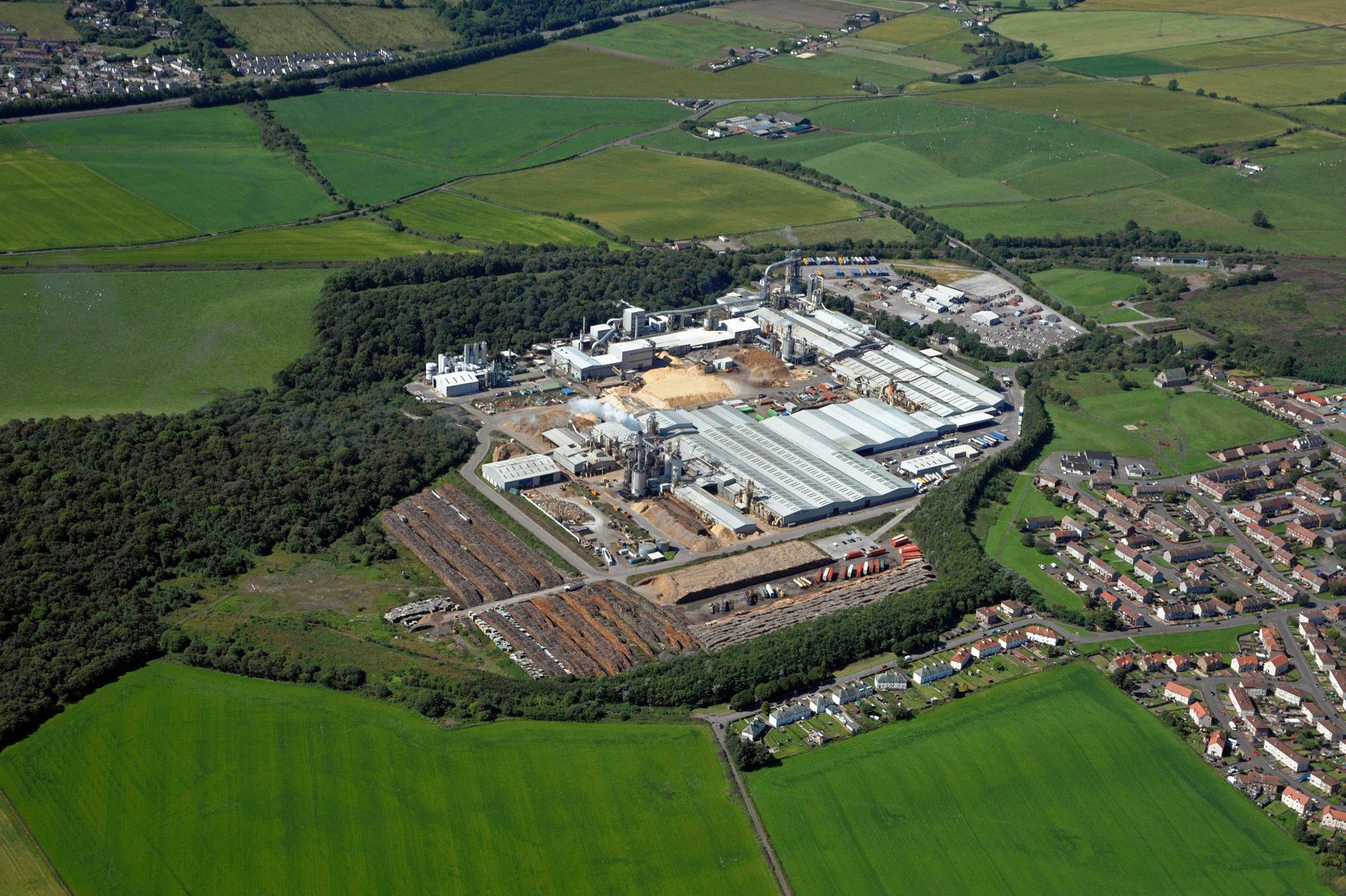
Scotland’s environmental regulator has reported the highest national total for industrial cadmium emissions to air in its pollution inventory, but has warned that the estimate was affected by shortcomings in monitoring at a wood-panel manufacturing plant near Stirling.
The Scottish Environment Protection Agency (SEPA) published its 2025 Scottish Pollutant Release Inventory on 17 November, identifying West Fraser’s factory at Cowie as the source of an unusually high reported cadmium figure.
According to SEPA, the estimated annual emissions were influenced by one high sample value. The agency identified shortcomings in the monitoring process and said the resulting estimate was unlikely to represent emissions across the full year.
The published information does not establish the actual annual quantity of cadmium released by the facility.
The findings raise questions about the monitoring arrangements used to calculate industrial emissions and the reliability of figures subsequently entered into Scotland’s official pollution records.
Cadmium in Wood-Panel Manufacturing
Cadmium is a toxic heavy metal historically used in products including certain paints, pigments and wood preservatives.
Its compounds can persist in the environment, and exposure at sufficient concentrations can damage human health.
West Fraser’s Cowie facility manufactures engineered wood panels, including products using recycled wood material.
SEPA explained that waste wood entering panel manufacturing processes can contain residues from older treatments and coatings.
The regulator requires incoming wood to be screened to remove unsuitable materials and contaminants before processing.
However, small quantities of cadmium may remain in material entering the manufacturing process.
SEPA said these residues could potentially be released during processing or through emissions associated with combustion when waste wood is used as fuel.
The agency has not established in its published statement that a particular batch of contaminated wood caused the reported high sample result.
One Sample Affected the Annual Estimate
Industrial emissions reporting can involve continuous monitoring, periodic sampling, calculations based on operating processes or estimates using recognised methodologies.
The Scottish Pollutant Release Inventory brings together annual returns from regulated facilities.
Operators must report releases of specified pollutants when the quantities exceed reporting thresholds.
At Cowie, SEPA identified one elevated cadmium sample value that affected the reported annual estimate.
Its statement did not provide the sampling date, the actual measurement recorded, the number of samples taken or the precise shortcomings in the monitoring process.
Nor did it state whether subsequent sampling had established a more representative annual emissions figure.
The reported national record must therefore be considered alongside SEPA’s warning about the measurement.
A high figure in the inventory does not, by itself, demonstrate that Scotland experienced its highest actual cadmium emissions during 2025.
What the Inventory Can Establish
The Scottish Pollutant Release Inventory is intended to make information about industrial emissions and waste transfers publicly accessible.
It records releases from regulated facilities and allows comparisons between sites, industries and reporting years.
However, SEPA states that the inventory does not establish whether a facility has complied with its environmental permit.
It also does not provide an assessment of the health or environmental effects of the reported releases.
Such assessments would require additional information, including emission concentrations, duration, dispersion, exposure pathways and conditions surrounding the site.
The newly released Cowie figures therefore cannot establish whether residents were exposed to cadmium at a harmful concentration.
They also cannot independently establish a breach of environmental regulations.
Those matters require evidence beyond the annual inventory.
Industrial Emissions Fall Across Scotland
The Cowie monitoring issue appears in a national report showing a reduction in greenhouse gas emissions from SEPA-regulated industrial facilities.
According to the regulator, the combined global warming potential of industrial greenhouse gas emissions decreased by more than 12% between 2024 and 2025.
The total for 2025 was 8.22 million tonnes of carbon dioxide equivalent.
In 2007, the corresponding figure stood at 28.7 million tonnes, representing a reduction of 71.4% over the reporting period.
The energy industry remained Scotland’s largest industrial contributor to greenhouse gas emissions, although its reported total fell by 23.6% in 2025.
The chemical sector recorded a 10.9% reduction.
Methane emissions from landfill sites fell by 12%, continuing a longer-term decrease in reported landfill emissions.
Hydrofluorocarbons were the only group of greenhouse gases reported by SEPA that did not decrease during 2025, rising to 0.0243 million tonnes of carbon dioxide equivalent.
Changes at Grangemouth Influenced the Results
SEPA’s Chief Regulator, Professor Paul Dale, said the 2025 reduction in industrial greenhouse gas emissions was influenced partly by changes in industrial activity and energy generation.
He specifically identified changes at Grangemouth.
The cessation of crude oil refining at Grangemouth in 2025 altered the scale and type of industrial activity taking place at the site.
A reduction caused by industrial operations closing or changing is recorded in the emissions inventory alongside reductions achieved through alterations to equipment, fuels and production methods.
The national totals therefore reflect both changes in industrial output and measures affecting emissions from continuing operations.
Monitoring Questions Remain
SEPA’s 2025 inventory includes information from 1,282 regulated industrial facilities across Scotland.
The published records cover 44 pollutants released to air and 58 released to water, together with reported transfers of hazardous and non-hazardous waste.
The Cowie entry forms part of those official records despite the regulator’s stated concerns about the annual cadmium estimate.
SEPA’s publication does not explain what corrective action has been required following the monitoring shortcomings, or whether an amended annual estimate will be produced.
It also does not establish whether the unusually high sample was an accurate measurement of a short-duration event or was affected by the identified monitoring problems.
The original monitoring records, subsequent test results and any regulatory correspondence would be required to establish those matters.
The 2025 inventory remains publicly available, including the Cowie estimate and SEPA’s qualification concerning its reliability.
Sources
Scotland’s Industrial Greenhouse Gas Emissions Revealed for 2025
Scottish Environment Protection Agency, 17 November 2026
https://beta.sepa.scot/news/2026/scotland-s-industrial-greenhouse-gas-emissions-revealed-for-2025/
Scottish Pollutant Release Inventory — Methods and Methodologies
Scottish Environment Protection Agency
https://beta.sepa.scot/a-to-z-topics/environmental-data-and-reporting/spri/spri-methods-and-methodologies/
Scottish Pollutant Release Inventory — Official Statistics and Reporting Information
Scottish Environment Protection Agency
https://shiny.data.gov.scot/sepa/spri/about.html
Environmental Data and Public Access
Scottish Environment Protection Agency
https://www.sepa.org.uk/environment/environmental-data/
Scottish Pollutant Release Inventory — Reporting Requirements
UK Government
https://www.gov.uk/find-licences/pollution-data-reporting-scotland