
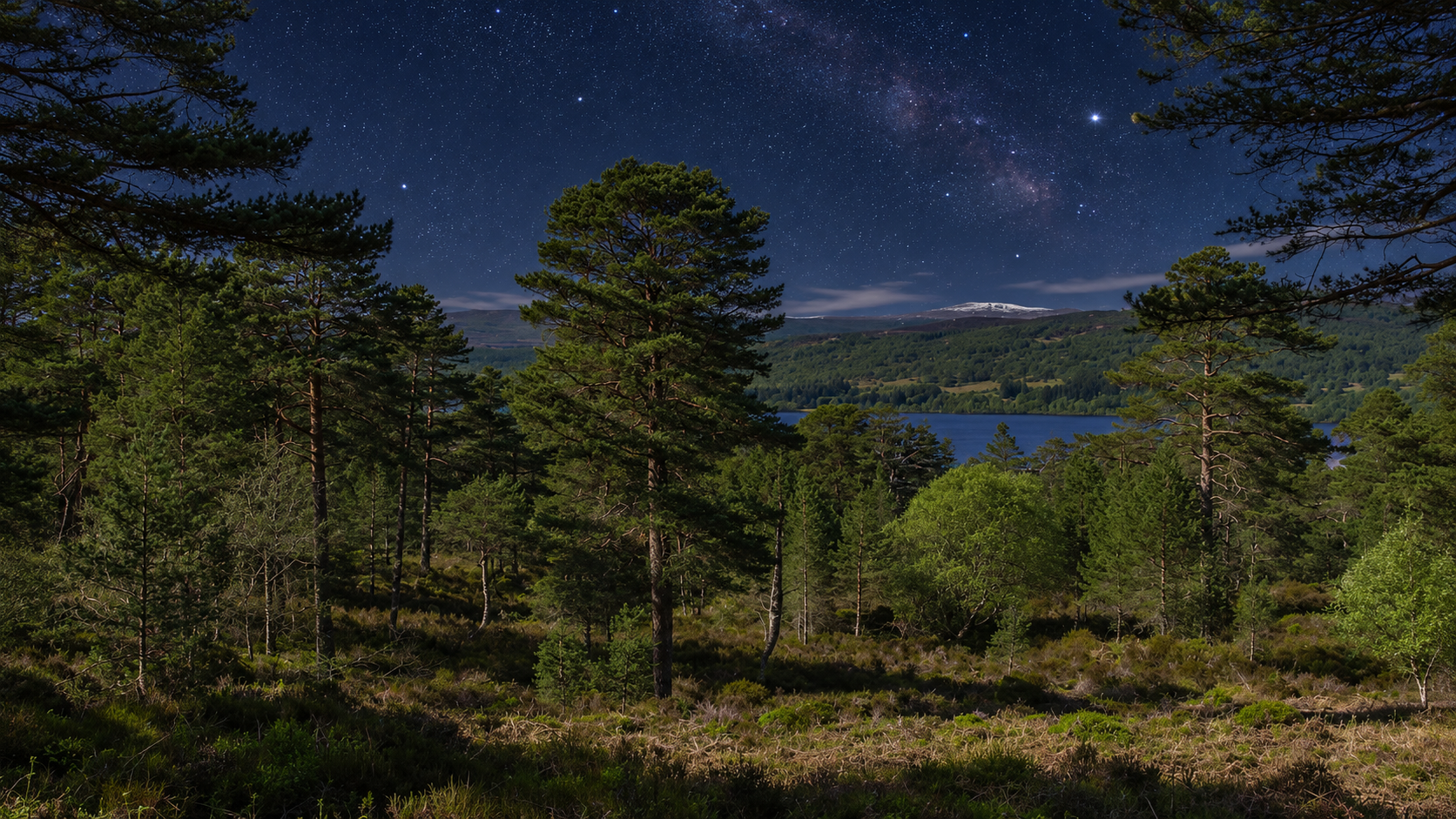
More than 5,000 hectares of publicly managed forest around Loch Rannoch could undergo a gradual transformation from commercial plantations towards native woodland under a new long-term plan intended to reconnect some of Perthshire’s surviving ancient Caledonian forest.
Forestry and Land Scotland has brought together three forest areas surrounding Loch Rannoch into a single management proposal covering 5,052 hectares.
The proposed area includes the Black Wood of Rannoch, the largest surviving remnant of Caledonian pinewood in Perthshire, together with extensive commercial plantations established during the twentieth century.
The plan, announced on 18 November, would guide woodland management over the next 20 to 30 years. It includes the restoration of former ancient woodland sites, expansion of native trees and improvements to peatland and other habitats.
The Black Wood is designated both a Site of Special Scientific Interest and a Special Area of Conservation, reflecting the ecological significance of its surviving native pinewood.
Some of its oldest trees, often known as granny pines, are estimated to be between 250 and 300 years old.
These trees survive within a landscape that has experienced centuries of change through woodland exploitation, agriculture, grazing and commercial forestry.
Forestry and Land Scotland’s proposals seek to expand the native woodland surrounding the ancient trees rather than confine conservation work to the existing protected area.
The three forest blocks included in the new plan are South Rannoch, Talladh-a-Bheithe on the northern shore of the loch, and Rannoch Lodge at its western end.
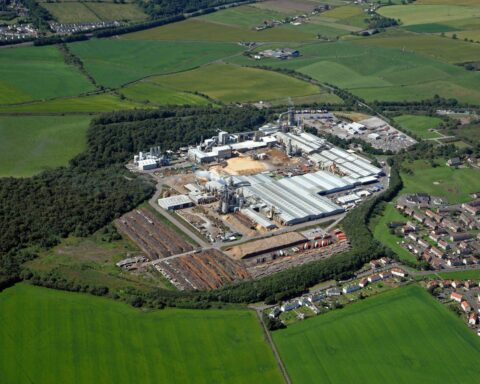
Much of the surrounding commercial forestry was planted between the 1940s and 1980s.
South Rannoch contains extensive areas planted during the 1960s, with an older section established during the 1950s now reaching maturity.
More than 500 hectares of this earlier planting occupy sites identified as ancient woodland.
Such locations are classified as Plantations on Ancient Woodland Sites, where commercial planting replaced woodland that had existed for a much longer period.
Restoration involves more than removing mature commercial trees.
Decisions must be made about which existing trees to retain, which species should replace harvested timber, how soils and watercourses will be protected and whether natural regeneration can establish new native woodland.
The management of deer browsing and other pressures on young trees can influence whether regeneration succeeds.
Forestry and Land Scotland proposes reviewing commercial crops as they reach maturity and progressively changing the species planted in selected areas.
Timber production will continue, but the proportion of land managed principally for native woodland restoration is expected to increase over time.
The northern forest block at Talladh-a-Bheithe presents a different management history.
More than half its area was planted during the 1980s with species including Douglas fir, Scots pine, lodgepole pine, Sitka spruce and larch.
The area also contains extensive ancient birchwood, while Rannoch Lodge includes peatland and heathland habitats.
Those existing habitats provide opportunities to connect woodland restoration with measures intended to improve peatland condition.
Peatland restoration can involve blocking artificial drainage channels, repairing eroded surfaces and restoring water levels to conditions better suited to peat-forming vegetation.
The forests occupy a landscape whose environmental importance extends beyond their individual boundaries.
Most of the proposed management area lies within the Glen Lyon and Loch Rannoch National Scenic Area.
Changes to woodland cover, harvesting patterns and replacement planting therefore have implications for the surrounding landscape as well as the ecological condition of the forest.
Forestry and Land Scotland has identified landscape-sensitive harvesting and species selection among the objectives of the new programme.
The proposals also follow consultation undertaken earlier in 2026.
An initial consultation began in March and closed in April, with respondents identifying native woodland restoration, wildlife habitat, landscape protection and recreational access among their priorities.
The forestry agency says the initial feedback provided support for gradually restoring native woodland around the Black Wood.
However, the present plan remains a proposal. Detailed changes to harvesting, regeneration and management must be considered through the relevant planning and approval procedures.
Forestry and Land Scotland has scheduled a public drop-in event at Kinloch Rannoch Village Hall on Thursday, 26 November, between noon and 7pm.
Residents and other interested parties will be able to examine the proposals and discuss the future management of the forests with the organisation’s planning team.
The draft is intended to support a succession of ten-year management plans, allowing individual operations to be reviewed while maintaining the longer-term restoration programme.
Scottish Forestry will be responsible for considering the submitted forest management plan under the applicable regulatory arrangements.
The programme has not yet established a final total expenditure figure for the proposed 20- to 30-year transition.
Nor does the announcement identify how much of the present commercial forestry will ultimately be retained, replaced or managed through natural regeneration.
Those decisions will influence the future timber resource, the cost of restoration and the extent to which surviving ancient woodland can expand into surrounding forest.
The immediate decision concerns the proposed management framework for the 5,052-hectare estate, which will determine how future harvesting and restoration are carried out around the Black Wood of Rannoch.
Sources
FLS Unveils Long-Term Vision to Expand Caledonian Pinewoods Around Loch Rannoch — Forestry and Land Scotland, 18 November 2026
Rannoch Forest and the Blackwood Long Term Plan — Forestry and Land Scotland, 2026